
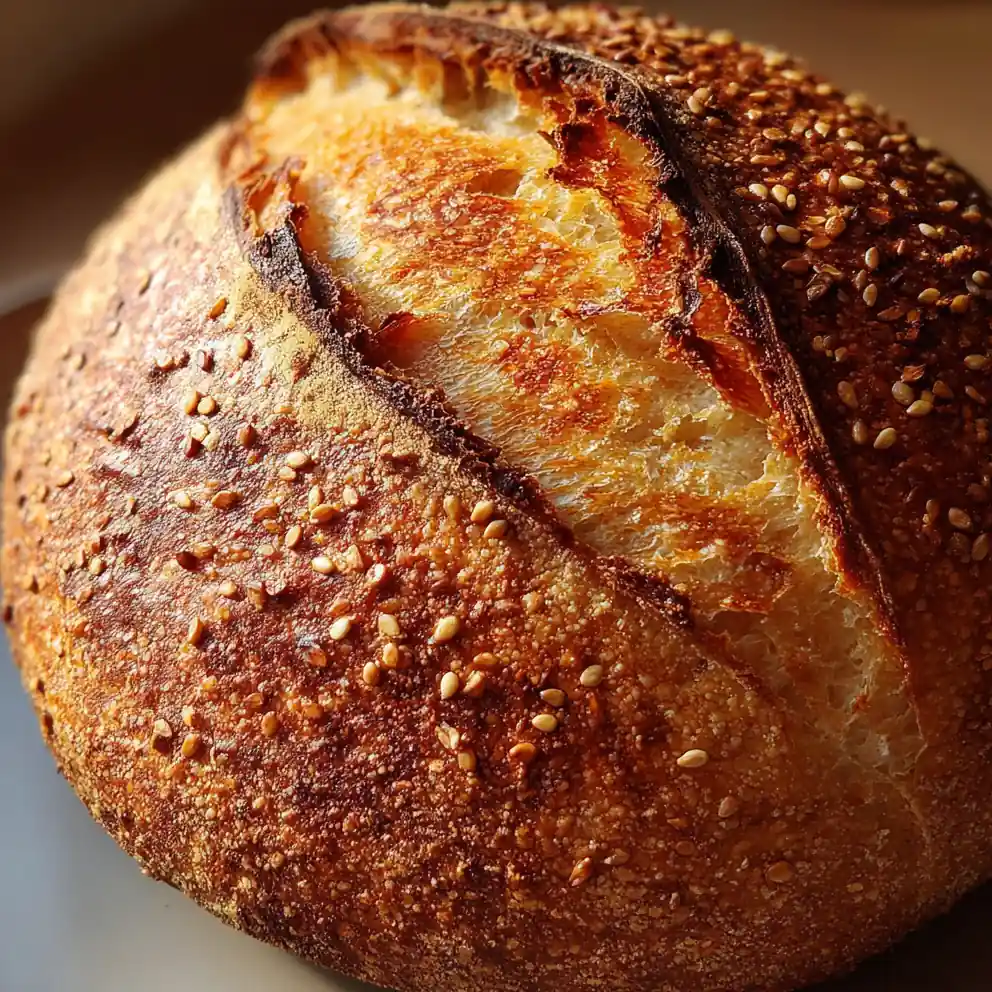
I’ve spent years perfecting the art of baking artisan bread at home, and I’m excited to share this foolproof method with you. The aroma of freshly baked bread, with its crispy edges and a creamy center, is simply unmatched. This simple sourdough loaf recipe for a Blistered Crust with Sesame Freckles is perfect for busy families, offering a wholesome, homemade option without a store run. My method streamlines the process, ensuring a gorgeous, flavorful loaf every time.
Key Ingredients and Better Choices
Crafting this amazing sourdough loaf recipe starts with quality ingredients. Each component plays a vital role in texture and flavor. Always measure precisely for best results.
Core list with short explanations
- Active Sourdough Starter: 150g (⅔ cup), bubbly and active. This is your leavening agent, providing the characteristic tang and rise.
- Bread Flour: 400g (3¼ cups), high protein content for superior structure and a chewy crumb. (All-purpose flour works too if that’s what’s on hand).
- Water: 300g (1¼ cups), filtered and lukewarm. Hydrates the flour and activates your starter’s yeast.
- Fine Sea Salt: 10g (2 tsp), unrefined. Essential for flavor, strengthening the gluten, and regulating fermentation.
- Sesame Seeds: 1 Tbsp, white or black. For the signature ‘freckles’ and a nutty flavor on your sourdough loaf recipe. (Poppy seeds also provide a lovely freckled look).
Better-for-you upgrades
Elevate your bread with conscious choices for enhanced nutrition and purity.
- Organic Flour Options: Choose organic bread or all-purpose flours for a cleaner product, free from pesticides.
- Ancient Grain Flours: Incorporate a portion of spelt or whole wheat flour into your blend for added nutrition and fiber.
- Filtered Water: Using filtered water ensures no chlorine interferes with your starter’s delicate ecosystem.
Smart swaps for special diets
- Gluten-Free Flour Blends: Use a cup-for-cup gluten-free bread flour blend, noting that hydration adjustments may be needed; add liquid slowly.
- Different Seeds for ‘Freckles’: Experiment with nigella, caraway, or a blend of seeds if you prefer a different flavor profile.
Freshness tips and sourcing advice
Proper ingredient storage and sourcing make a real difference in your final loaf.
- Storing Flour Properly: Keep flours in airtight containers in a cool, dark pantry to prevent oxidation and pests.
- Quality Starter: Ask a friend for a portion of their established starter, find a local bakery offering starter, or easily cultivate your own with flour and water.
- Online Grocery Options: For specialty flours or specific seed varieties, online grocers offer convenience and wider selections.
Easy Step-by-Step Directions
This sourdough loaf recipe for a Blistered Crust with Sesame Freckles takes time, but most of it is hands-off. Follow these steps for a perfect bake.
- Mixing the Dough: Combine flour, water, and starter in a large bowl. Mix until just shaggy, ensuring no dry spots remain. Cover and let rest for 30 minutes (autolyse). Add the salt, then mix thoroughly, squeezing and folding the dough for 5-7 minutes until the salt is fully incorporated and the dough feels slightly more cohesive. If your dough feels too stiff, I’ve found adding a teaspoon of water at a time helps achieve the right consistency.
- Bulk Fermentation & Stretch and Folds: Place the dough in a lightly oiled bowl. Over 2-3 hours, perform 3-4 sets of ‘stretch and folds’ every 30-45 minutes. Gently pull a portion of the dough up from the edge, stretch it, and fold it over the center. Rotate the bowl and repeat until you’ve gone all the way around. The dough will become smooth, elastic, and airy.
- Shaping the Loaf: Turn the dough onto a lightly floured surface. Gently pre-shape it into a round and let it rest, uncovered, for 15 minutes. Then, perform a final shape into a taut boule (round) or batard (oval). Ensure the surface is tight and smooth, with the seam side up.
- Cold Proofing: Place the shaped dough, seam-side up, into a generously floured banneton or a bowl lined with a floured kitchen towel. Cover and refrigerate overnight for 8-12 hours. The dough will firm up and develop depth of flavor, becoming easier to handle. This extended cold proof is key for developing that amazing flavor in your sourdough loaf recipe.
- Preheating Oven & Dutch Oven: About 45 minutes before baking, preheat your oven to 450°F (230°C) with a Dutch oven inside. Carefully remove the screaming hot Dutch oven. Gently invert your chilled loaf into it. Using a sharp blade or lame, score the top with a desired pattern. Sprinkle generously with sesame seeds for those ‘freckles’ that enhance the visual appeal. This scoring helps achieve the Blistered Crust.
- Baking: Bake the loaf covered for 30 minutes. Uncover and continue baking for another 20-25 minutes until the crust is a deep golden brown and sounds hollow when tapped. This stage is crucial for the signature Blistered Crust with Sesame Freckles.
- Cooling: Carefully remove the bread from the Dutch oven and cool it completely on a wire rack for at least 1-2 hours. The crust will crisp further as it cools, and the crumb will set, ensuring the best texture and flavor for your sourdough loaf recipe.
Inline variation notes for flavor or diet preferences
- Add ¼ cup dried herbs (like rosemary or thyme) or ½ cup grated hard cheese (such as Parmesan) during the initial mixing for a savory loaf.
- Adjust bulk proofing times based on your kitchen’s temperature; warmer conditions mean faster fermentation, so observe the dough’s rise rather than strictly following the clock.
Quick-fix hacks for busy cooks
- For minimal handling, adapt a no-knead sourdough method: simply mix ingredients, let rest longer, and reduce the number of stretch and folds.
- If you don’t own a Dutch oven, bake on a preheated pizza stone or baking steel with a shallow pan of water placed on the bottom rack for steam.
Best Ways to Serve and Store It
Our sourdough loaf recipe results in a versatile bread. Its crisp Blistered Crust and tender interior elevate any dish, making it a family-friendly choice.
Occasions:
- Everyday dinners: Serve alongside comforting soups, hearty stews, or use for robust sandwiches.
- Holiday tables: This homemade sourdough bread creates an impressive centerpiece for special gatherings.
- Kids’ lunches: Ideal toasted with favorite spreads or cut into small, fun shapes for mini-sandwiches.
Pairing suggestions:
- Sauces & Dips: Enjoy with high-quality olive oil, rich balsamic vinegar, or creamy homemade hummus.
- Sides: Complements fresh green salads, roasted seasonal vegetables, and artisanal cheeses beautifully.
- Drinks: A fantastic companion to coffee, tea, or a full-bodied red wine.
Storage and reheating:
Proper storage maintains the freshness of your sourdough loaf. This makes it excellent for meal prep recipes, ensuring you have delicious bread all week.
- Fridge/freezer duration: Store the loaf at room temperature, cut-side down, for 2-3 days. For longer storage, freeze sliced or whole, tightly wrapped, for up to 3 months.
- Containers: Use a bread bag, beeswax wrap, or an airtight container to prevent drying.
- Reheating: Re-crisp a frozen or day-old loaf in a preheated oven (350°F/175°C) for 5-10 minutes.
Wellness & Lifestyle Benefits of This Sourdough Loaf Recipe
Baking this sourdough loaf recipe offers more than just incredible taste; it supports a healthy lifestyle. It’s a mindful activity that brings wholesome nutrition to your table.
Show how it fits into health goals:
- Better digestion: Fermentation breaks down gluten and phytic acid, potentially aiding easier digestion.
- Balanced diet: Provides complex carbohydrates for sustained energy, supporting an active routine.
- Lower glycemic index: Sourdough often has a lower glycemic index compared to many commercially produced breads, beneficial for blood sugar management.
Convenience, nutrition, or family value:
- Healthy meal prep: Bake a large sourdough loaf at the start of the week for easy dinner ideas, sandwiches, and toast.
- Family-friendly meals: A satisfying, wholesome base for countless dishes that everyone will love.
- Enjoying quality ingredients: You control the ingredients, allowing you to choose organic options for your family’s food.
Everyday Advantages of Making This Recipe
Making this sourdough loaf at home is a smart choice for many reasons, from budget to nutrition.
- Cost-savings: Significantly more affordable than purchasing artisan loaves from a specialty bakery.
- Convenience: Always have fresh, delicious bread on hand without needing an extra store run.
- Better ingredients: Freedom to choose organic or specialty flours like spelt for enhanced nutrition.
- Useful for busy schedules: Much of the sourdough process, like proofing, is hands-off, fitting into daily routines.
- Supports fitness goals: A healthier, more nutrient-dense carbohydrate source than many processed options, supporting a balanced diet.
Tips, Variations, and Dietary Adjustments
Refine your baking with these expert tips and customize your homemade sourdough.
Pro kitchen advice for texture, flavor, or plating:
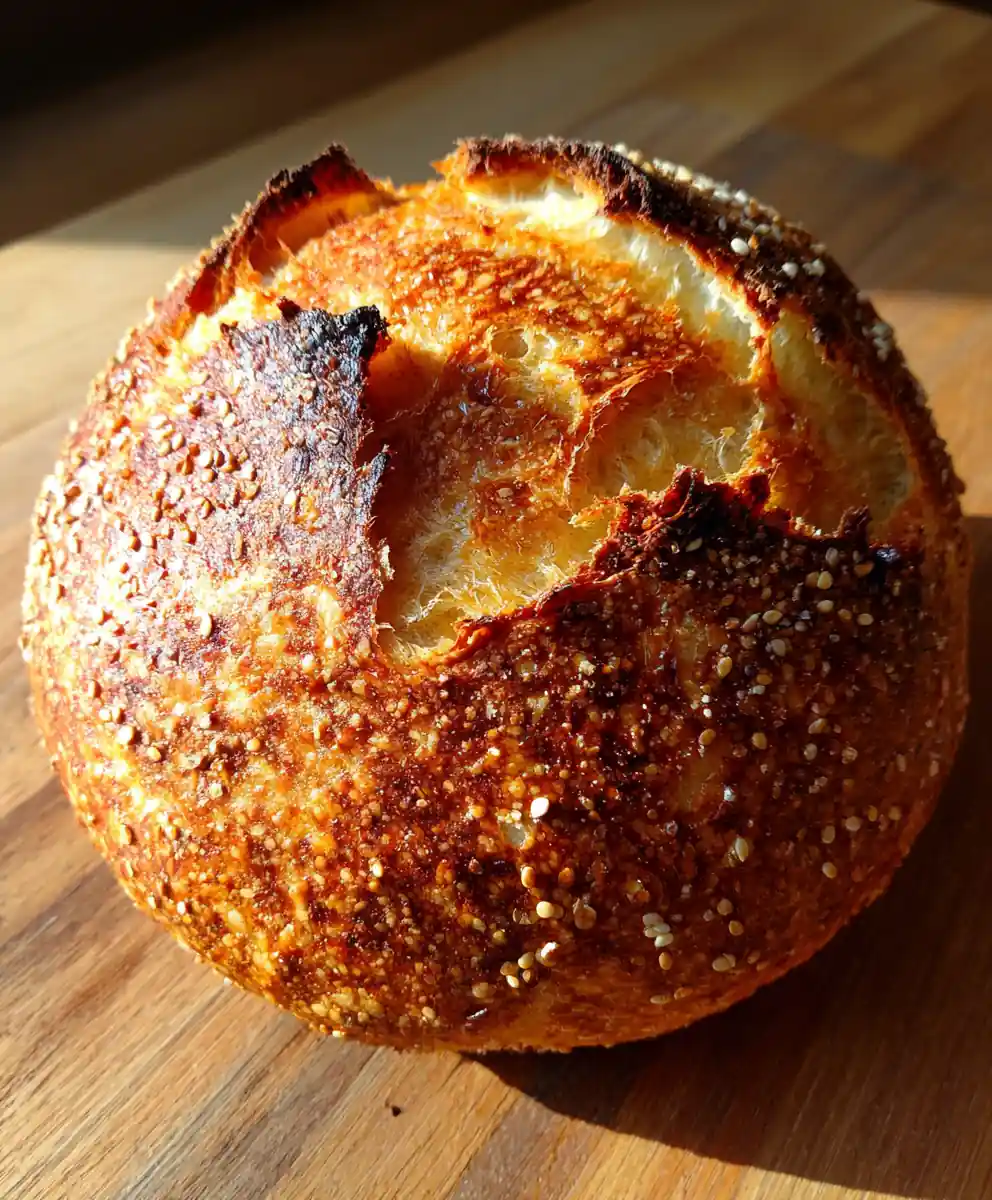
- Achieving a darker, more Blistered Crust: Ensure your Dutch oven is fully preheated and use plenty of steam during the initial bake. I always add a few ice cubes to the Dutch oven just before covering for maximum steam.
- Getting a beautiful open crumb: Focus on proper hydration and gentle handling of the dough during shaping.
- Making scoring patterns stand out: Score deeply and confidently with a sharp lame or razor blade.
Customizations for diets:
- Vegan: This homemade sourdough is naturally vegan, using only flour, water, salt, and starter.
- Diabetic-friendly: Sourdough’s fermentation process can improve glucose response. Consider using a 50/50 blend of all-purpose and whole-grain flour to further enhance fiber content for blood sugar management.
- Kid-approved: Serve your delicious sourdough bread with fun spreads, as ‘toast soldiers’ with soft-boiled eggs, or as mini-pizza bases.
Allergy-safe swaps:
- Nut-free: This recipe is naturally nut-free.
- Seed allergies: Omit the sesame seeds or use a different topping like rolled oats, flax seeds, or poppy seeds for those without specific seed allergies.
FAQs
Find answers to common questions about baking and enjoying this delicious sourdough loaf.
Can this sourdough loaf be part of a weight loss plan?
Yes, homemade sourdough can fit into a balanced weight loss plan. It offers complex carbohydrates and is often more satiating than refined bread. Consider using a 50/50 blend of all-purpose and whole-grain flour to increase fiber for satiety and blood sugar control.
What’s the best way to buy sourdough loaf ingredients online?
Many specialty grocers and flour mills sell high-quality organic flour online. You can also find active sourdough starter cultures from artisan bakeries or online marketplaces, often with helpful guides on refreshing them.
Is this sourdough loaf recipe good for weekly meal prep?
Absolutely. Baking a large sourdough loaf allows you to have fresh bread for sandwiches, toast, or alongside meals throughout the week. Slice and freeze portions for ultimate convenience, perfect for easy dinner ideas on busy nights.
How do I get a really Blistered Crust on my sourdough?
Getting a truly Blistered Crust requires intense heat and steam; I’ve found preheating the Dutch oven for a full 45 minutes at 450°F (230°C) and baking covered for 30 minutes works best to trap moisture effectively.
What if my sourdough starter isn’t active enough?
If your starter isn’t bubbly and active, it might need another feeding. Discard all but a small amount (about ¼ cup), feed it equal parts flour and water, and let it sit at warm room temperature for 6-8 hours until it’s very bubbly and smells slightly tangy. Then try the sourdough loaf again.
How long does homemade sourdough bread last?
Homemade sourdough bread lasts 2-3 days at room temperature when stored properly, ideally cut-side down on a cutting board or in a bread bag. For longer storage, slice and freeze the loaf. It will maintain its quality for up to 3 months, ready for quick meals or healthy snacks.
Conclusion
Baking this sourdough loaf recipe for a Blistered Crust with Sesame Freckles is a simple pleasure that brings incredible flavor and satisfaction to your kitchen. You’ll love the fresh taste and the pride of serving homemade bread. Don’t forget to save this rewarding recipe to your Pinterest board for easy access!
Print
sourdough loaf recipe Blistered Crust with Sesame Freckles
- Total Time: 1015 minutes
- Yield: 1 loaf 1x
- Diet: General
Description
This recipe guides you through baking an artisan sourdough loaf with a crispy, blistered crust and sesame (freckles). It simplifies the process for home bakers, ensuring a flavorful homemade bread with a chewy crumb.
Ingredients
- 150 g active sourdough starter (0.66 cup), bubbly and active
- 400 g bread flour (3.25 cups), or all-purpose flour
- 300 g filtered water (1.25 cups), lukewarm
- 10 g fine sea salt (2 tsp), unrefined
- 1 Tbsp sesame seeds, white or black (or poppy seeds)
Instructions
- Mix Dough: Combine flour, water, and starter in a large bowl. Mix until shaggy, ensuring no dry spots. Cover and rest for 30 minutes (autolyse). Add salt, then mix thoroughly, squeezing and folding for 5-7 minutes until cohesive.
- Bulk Fermentation & Stretch and Folds: Place dough in a lightly oiled bowl. Over 2-3 hours, perform 3-4 sets of (stretch and folds) every 30-45 minutes until smooth, elastic, and airy.
- Shape Loaf: Turn dough onto a lightly floured surface. Gently pre-shape into a round and rest, uncovered, for 15 minutes. Perform a final shape into a taut boule (round) or batard (oval), seam side up.
- Cold Proof: Place shaped dough, seam-side up, into a generously floured banneton or a floured kitchen towel-lined bowl. Cover and refrigerate overnight for 8-12 hours.
- Preheat Oven & Dutch Oven: About 45 minutes before baking, preheat oven to 450F (230C) with a Dutch oven inside. Carefully remove the hot Dutch oven. Gently invert chilled loaf into it. Score top and sprinkle generously with sesame seeds.
- Bake Loaf: Bake covered for 30 minutes. Uncover and continue baking for another 20-25 minutes until deep golden brown and hollow when tapped.
- Cool Bread: Carefully remove bread from the Dutch oven and cool completely on a wire rack for at least 1-2 hours for best texture and flavor.
Notes
Adjust bulk proofing based on kitchen temperature; warmer conditions mean faster fermentation. For a no-knead method, reduce stretch and folds and allow longer rest. If no Dutch oven, use a pizza stone with a pan of water for steam. Add 0.25 cup dried herbs or 0.5 cup grated hard cheese during initial mixing for savory variations. Proper flour storage in airtight containers in a cool, dark pantry prevents oxidation and pests.
- Prep Time: 30 minutes
- Cook Time: 55 minutes
- Category: Bread
- Method: Baking
- Cuisine: European
Nutrition
- Serving Size: 1 slice (80 g)
- Calories: 230 calories
- Sugar: 1 g
- Sodium: 250 mg
- Fat: 3 g
- Saturated Fat: 0.5 g
- Unsaturated Fat: 2 g
- Trans Fat: 0 g
- Carbohydrates: 45 g
- Fiber: 2 g
- Protein: 9 g
- Cholesterol: 0 mg
FREE PRINTABLE RECIPE
Get the Printable Recipe PDF (Free)
Enter your email and we’ll send you the ingredients + step-by-step instructions as a clean PDF you can save to your phone.
- ✅ Printable PDF (ingredients + steps)
- ✅ Save it to your phone (no long scrolling)
- ✅ Includes cook time + servings
- ✅ Easy to follow
FAQ
Where’s the full recipe?
It’s delivered as a printable PDF so you can save it and cook without scrolling.
I didn’t get the email.
Check Spam/Promotions and search your inbox for your site name. Then click Confirm to receive the PDF.