
This efficient peach cobbler utilizes a prepared baking mix to reduce preparation time significantly. It combines warm autumn spices with juicy fruit for a classic dessert profile.
List of ingredients
- 1 1/3 cup Original Bisquick™ mix – provides the structure for the crust.
- 1 cup milk (2% is recommended) – ensures the batter reaches the correct consistency.
- 1/2 cup butter (melted) – adds richness and creates a tender crumb.
- 1/2 tsp cinnamon – provides a warm, aromatic flavor.
- 1/4 tsp nutmeg – adds a subtle earthy sweetness.
- 1/2 tsp vanilla extract – enhances the overall dessert aroma.
- 3/4 cup white sugar – sweetens the peach filling.
- 1/4 cup brown sugar – adds a deeper caramel note to the fruit.
- 2 cups sliced peaches (29 ounce can, drained, or fresh, peeled) – the primary fruit component.
step-by-step instructions
- Prepare Oven: Preheat your oven to 350 degrees.
- Mix Batter: In a large bowl, stir together the Bisquick mix, milk, vanilla, cinnamon, and nutmeg.
- Transfer to Pan: Pour the batter into an ungreased 8x8x2 inch square baking dish.
- Add Butter: Melt the butter and stir it directly into the batter until the mixture is blended.
- Prepare Filling: In a separate bowl, stir together the white sugar, brown sugar, and sliced peaches.
- Layer Fruit: Spoon the peach mixture evenly over the top of the batter.
- Bake: Bake for 50 to 60 minutes or until the crust is golden brown.
Selecting the Best Peaches
Using Fresh Seasonal Peaches
Fresh peaches are best when they yield slightly to gentle pressure. Peel them using a vegetable peeler or by blanching them in boiling water for 30 seconds followed by an ice bath. Slice them into uniform pieces to ensure even cooking throughout the cobbler.
Preparing Canned Peaches
Canned peaches are a convenient year-round option. Always drain the syrup thoroughly to prevent the batter from becoming too watery. If the peaches are packed in heavy syrup, rinse them slightly to control the total sugar content of the dish.
Handling Frozen Peaches
Frozen peaches can be used if they are thawed completely before mixing with sugar. Pat them dry with paper towels to remove excess moisture. This prevents the fruit from releasing too much liquid during the baking process, which could make the crust soggy.
Flavor Customization and Spices
Incorporating Citrus Zest
Adding one teaspoon of fresh lemon zest to the peach mixture enhances the natural acidity of the fruit. This balances the sweetness of the brown sugar. Lemon juice can also be added to fresh peaches to prevent oxidation.
Adjusting the Warm Spice Blend
While cinnamon and nutmeg are standard, a pinch of ground ginger adds a subtle heat. Cardamom is another alternative that provides a floral note. Ensure spices are fresh to maintain a potent aroma in the finished dessert.
Alternative Extract Options
Almond extract is a highly compatible substitute for vanilla extract in peach recipes. Use it in a 1:2 ratio compared to vanilla, as almond flavor is more intense. This creates a professional, bakery-style flavor profile.
Baking Pan Selection and Heat
Using Glass Baking Dishes
Glass pans retain heat longer than metal pans. This means the cobbler will continue to cook for several minutes after it is removed from the oven. Be careful not to overbake if using a heavy glass Pyrex dish.
Using Metal Baking Pans
Metal pans conduct heat quickly and are more likely to produce a browned, crisp bottom. They are ideal for those who prefer a more toasted crust. Ensure the pan is the exact 8×8 size to maintain the correct batter depth.
Using Ceramic Bakeware
Ceramic dishes provide the most even heat distribution. They reduce the risk of hot spots that can burn the edges of the batter. Ceramic is an excellent choice for slower, more consistent baking.
Optimizing Texture and Consistency
Preventing Overmixing the Batter
Stir the Bisquick mixture only until the ingredients are combined. Overmixing develops too much gluten in the flour, which can result in a tough, rubbery crust rather than a tender one. Stop stirring as soon as no dry streaks remain.
Managing Fruit Moisture
Excess liquid from the peaches can sink into the batter and create an uncooked layer. If using very juicy fresh peaches, consider tossing them with a teaspoon of cornstarch before adding them to the pan. This thickens the juices into a syrup.
Determining the Correct Doneness
The cobbler is done when the edges are deep golden brown and the center is set. A toothpick inserted into the crust portion should come out clean. The peach juices should be bubbling around the edges of the pan.
Serving and Pairing Suggestions
Traditional Dairy Toppings
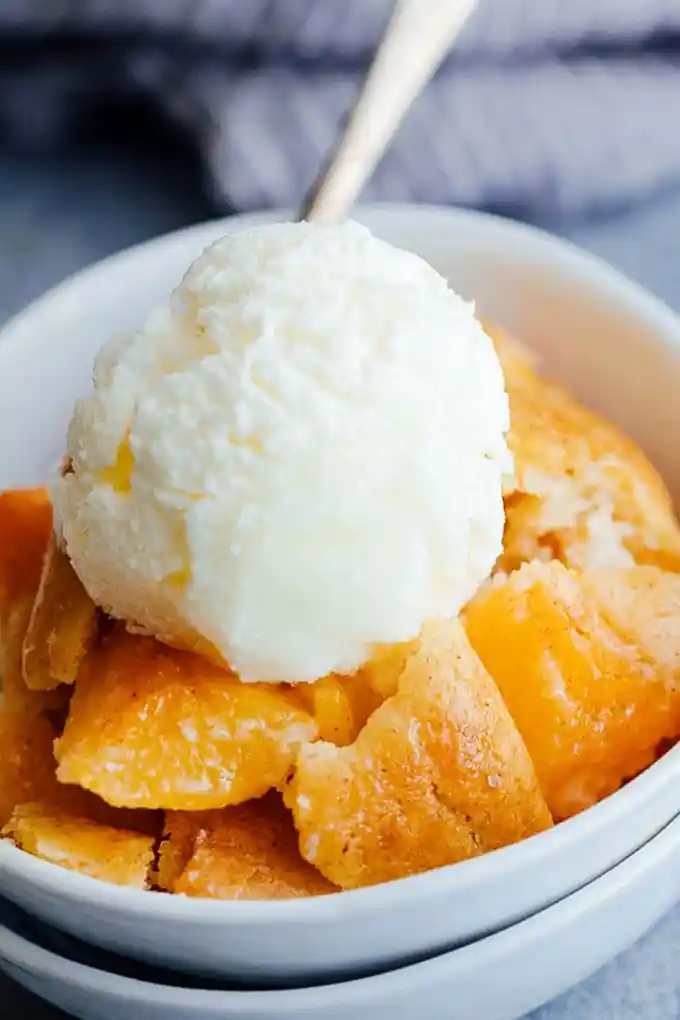
A scoop of cold vanilla bean ice cream provides a temperature contrast to the warm cobbler. The creaminess of the ice cream cuts through the density of the crust. Freshly whipped cream is a lighter alternative.
Adding a Texture Contrast
Toasted sliced almonds or chopped pecans can be sprinkled on top before baking for added crunch. This adds a savory element that complements the sweet peaches. A sprinkle of coarse sea salt can also enhance the flavor.
Fresh Herb Garnishes
A small sprig of fresh mint added to the plate provides a bright visual contrast. The peppermint aroma cleanses the palate between bites of the rich dessert. Fresh raspberries can also be added for a tart balance.
Storage and Preservation
Room Temperature Storage
Store the cobbler in an airtight container at room temperature for up to 24 hours. Ensure the dessert is completely cooled before sealing the container to prevent condensation. Condensation can make the crust soft.
Refrigeration Guidelines
Refrigerated cobbler lasts for 3 to 5 days. Store it in a sealed glass container to prevent the dessert from absorbing odors from other foods. The crust will firm up significantly when chilled.
Freezing for Long Term Use
Slice the cobbler into individual portions and wrap them tightly in plastic wrap. Place the wrapped portions in a freezer-safe bag. This method preserves the quality for up to three months.
Reheating Instructions
Oven Reheating Method
Preheat the oven to 300 degrees. Place a slice of cobbler on a baking sheet and heat for 10 to 15 minutes. This method is best for restoring the crispness of the crust.
Microwave Reheating Method
Heat a slice on high for 30 to 60 seconds. This is the fastest method, though it may make the crust softer. Let it stand for one minute before serving to redistribute the heat.
Make-Ahead Strategies
Prepping the Fruit Filling
The peach and sugar mixture can be prepared 24 hours in advance. Store it in a sealed container in the refrigerator. This allows the sugars to macerate, drawing more juice out of the peaches for a syrupier filling.
Dry Ingredient Batching
You can whisk together the Bisquick, cinnamon, and nutmeg in a jar and store them in the pantry. This reduces the prep time further when you are ready to bake. Only add the milk and vanilla immediately before pouring into the pan.
Troubleshooting Common Issues
Why is my crust soggy?
Sogginess usually occurs due to too much liquid from the peaches or underbaking. Ensure canned peaches are fully drained. If the problem persists, increase the baking time by 5 minutes or use a higher rack in the oven.
Why is the top burning too quickly?
A burnt top often happens if the oven rack is too high. Move the pan to the center rack to ensure even heat. You can also loosely cover the top with aluminum foil if the crust browns before the center is cooked.
Why did the peaches sink to the bottom?
Peaches sink if the batter is too thin or if they are added too aggressively. Pour the batter first and gently spoon the peaches on top. Do not stir the fruit into the batter; they should remain as a separate layer.
Frequently Asked Questions
Can I use a different baking mix?
While this recipe is designed for Original Bisquick, other pancake mixes can work. However, different brands have varying amounts of leavening agents and salt, which may alter the rise and taste of the crust.
Do I need to peel the peaches?
Peeling is recommended for a smoother texture. If you prefer the skin for added nutrients and color, you can leave it on. Be aware that the skin can sometimes be tougher than the fruit itself.
Can I substitute the milk?
You can use buttermilk for a tangier flavor and a more tender crust. Alternatively, unsweetened almond or soy milk can be used as a dairy-free substitute without significantly changing the outcome.
Print
Quick Bisquick Peach Cobbler
- Total Time: 1 hour 5 minutes
- Yield: 8 servings 1x
- Diet: General
Description
Bisquick Peach Cobbler is a classic dessert that is comforting, quick, and easy and is sure to be huge back to school hit at your dinner table!
Ingredients
- 1 1/3 cup Original Bisquick™ mix
- 1 cup milk (2% recommended)
- 1/2 cup butter (melted)
- 1/2 tsp cinnamon
- 1/4 tsp nutmeg
- 1/2 tsp vanilla extract
- 3/4 cup white sugar
- 1/4 cup brown sugar
- 2 cups sliced peaches (29 ounce can, drained, or fresh, peeled)
Instructions
- Step: Preheat oven to 350 degres.
- Step: In a large bowl, stir together Bisquick mix, milk, vanilla, cinnamon, and nutmeg
- Step: Pour into an ungreased square baking dish, 8x8x2 inches.
- Step: Melt butter, and stir into the batter, until blended.
- Step: In a separate bowl, stir together sugars and peaches;
- Step: Spoon over batter.
- Step: Bake 50 to 60 minutes or until golden.
Notes
This recipe works with fresh, canned, or frozen peaches. For the best experience, serve with a scoop of homemade ice cream.
- Prep Time: 10 minutes
- Cook Time: 55 minutes
- Category: Dessert
- Method: Baking
- Cuisine: American
Nutrition
- Serving Size: 1 serving
- Calories: 299 kcal
- Sugar: 31 g
- Sodium: 307 mg
- Fat: 14 g
- Saturated Fat: 8 g
- Unsaturated Fat: 6 g
- Trans Fat: 0 g
- Carbohydrates: 40 g
- Fiber: 2 g
- Protein: 2 g
- Cholesterol: 33 mg