
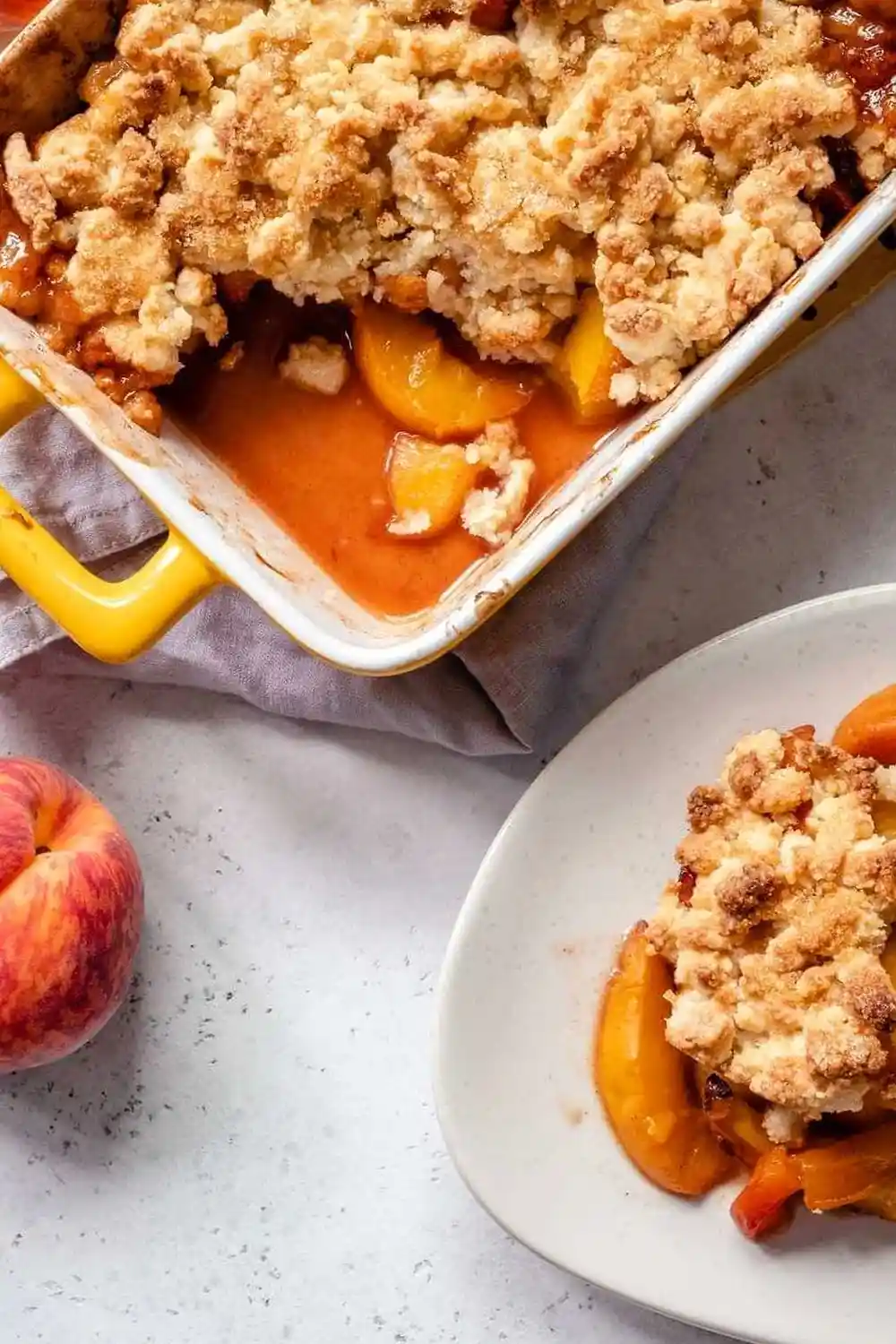
This simple peach cobbler utilizes canned peaches to create a sweet, comforting dessert with minimal effort. It is an ideal choice for quick weekday treats or holiday gatherings when time is limited.
List of ingredients
- 1 stick unsalted butter (about 113 grams) – used to create a rich base in the pan.
- 1 cup all-purpose flour – provides the structure for the cobbler topping.
- 2 teaspoons baking powder – ensures the batter rises for a fluffy texture.
- 1/4 teaspoon salt – enhances the flavors of the fruit and sugar.
- 3/4 cup sugar – sweetens the dough.
- 1/4 teaspoon ground cinnamon (or more to taste) – adds a warm, spicy note.
- 1 cup milk – binds the dry ingredients into a smooth batter.
- 2 (15-ounce) cans peaches (420 grams each) – includes the syrup for sweetness and moisture.
step-by-step instructions
- Preheat Oven: Set your oven to 350 F to ensure it is hot enough for baking.
- Melt Butter: Place the stick of butter in a 9 x 13 inch baking dish. Put the dish in the oven while it preheats until the butter is completely melted.
- Prepare Pan: Carefully remove the baking dish from the oven once the butter is liquid.
- Mix Batter: In a mixing bowl, combine the flour, baking powder, salt, sugar, and cinnamon. Stir in the milk and mix until the batter is smooth.
- Layer Batter: Pour the prepared batter directly over the melted butter in the pan.
- Add Fruit: Spoon the canned peaches and their syrup evenly over the top of the batter. Be careful not to stir the peaches into the batter.
- Bake: Place the dish in the oven and bake for 45-50 minutes until the top is golden brown.
- Serve: Remove from the oven and serve warm with a dollop of whipped cream or ice cream.
Fruit Customization and Alternatives
Preparing Fresh Peaches
To use fresh fruit, slice five large peaches into bite-sized pieces. Cook them in a pan with 3/4 cup sugar, 1/4 teaspoon salt, and a dash of cinnamon for a few minutes until the sugar dissolves. Allow this mixture to cool to room temperature before layering it over the batter.
Using Frozen Peaches
Thaw frozen peach slices completely before adding them to the recipe. Toss the thawed fruit with a small amount of sugar and a squeeze of lemon juice to brighten the flavor. Using frozen fruit that is still cold can lower the oven temperature and increase the total baking time.
Switching to Other Fruits
This recipe works well with various other fruits such as blackberries, blueberries, or strawberries. For firmer fruits like apples or pears, slice them very thin and sauté them briefly first to ensure they soften during the baking process. Cherries also make a great substitute for a tart and sweet contrast.
Batter Enhancements and Substitutions
Substituting Self-Rising Flour
You can replace the all-purpose flour and baking powder with self-rising flour. If you choose this option, omit the 2 teaspoons of baking powder from the ingredient list. This simplifies the mixing process while maintaining the same rise and fluffiness.
Making the Cobbler Vegan
To make a plant-based version, replace the unsalted butter with a high-quality vegan margarine. Substitute the cow’s milk with an unsweetened plant-based alternative such as soy, almond, or oat milk. Ensure that the sugar used is certified vegan to avoid animal-derived processing agents.
Adjusting the Syrup Consistency
If you prefer a thicker filling and want to avoid a soupy center, reduce the amount of syrup poured from the cans. For an even thicker result, stir one tablespoon of cornstarch into the peach mixture before adding it to the batter. This helps the juices bind and thicken as the cobbler heats up.
Serving and Pairing Suggestions
Classic Cold Toppings
A scoop of vanilla bean ice cream is the most traditional pairing, as the cold cream melts into the warm crust. Freshly whipped cream provides a lighter, airier alternative that complements the sweetness of the peaches. For a tangy twist, a dollop of Greek yogurt or crème fraîche works well.
Sweet Syrups and Drizzles
Enhance the presentation by drizzling salted caramel or butterscotch sauce over individual servings. A thin stream of maple syrup or honey can add a deeper, floral sweetness to the dish. These additions are especially useful if you reduced the canned syrup during preparation.
Adding Texture and Spice
Sprinkle a small amount of brown sugar on top of the batter before baking to create a caramelized, crunchy crust. A light dusting of extra cinnamon or nutmeg over the peaches can intensify the aromatic profile. For those who enjoy a crunch, a handful of toasted almond slivers added at the end adds a nice contrast.
Storage and Maintenance
Short-Term Room Temperature Storage
This cobbler is best enjoyed immediately, but it can be kept on the kitchen counter for up to 24 hours. Keep it covered with a cake dome or aluminum foil to prevent the crust from drying out. Note that the crust will soften slightly as it sits.
Refrigeration and Longevity
For longer storage, wrap the baking dish tightly with cling wrap and store it in the refrigerator. The cobbler will remain safe to eat for 4 to 5 days. Refrigeration helps preserve the fruit, though the batter may become denser.
Freezing Instructions
You can freeze leftovers by placing individual slices in airtight containers or freezer bags. Label them with the date and store them for up to three months. Thaw the slices in the refrigerator overnight before reheating them.
Reheating Methods
Microwave Reheating
For a quick warm-up, place a portion of the cobbler on a microwave-safe plate. Heat in 30-second intervals, checking frequently to avoid overcooking the fruit. This method is fast but may make the crust softer than the original bake.
Oven Reheating
To restore the crispness of the edges, reheat the cobbler in the oven at 325 F. Cover the dish with foil to prevent the top from burning and heat for 10 to 15 minutes. This is the best method for maintaining the textural integrity of the batter.
Troubleshooting Common Issues
Preventing a Soggy Bottom
Ensure the butter is fully melted and evenly spread across the pan before adding the batter. If the batter is too thin, it may sink; make sure you measure the flour accurately using the spoon-and-level method. Avoid over-mixing the batter, as this can lead to a dense, gummy texture.
Fixing a Pale Crust
If the cobbler is not browning sufficiently after 45 minutes, move the pan to the upper rack of the oven. This exposes the top to more direct heat. You can also briefly turn on the broiler for 1 to 2 minutes, but watch it closely to prevent burning.
Dealing with Fruit Sinking
To prevent the peaches from sinking deep into the batter, pour the batter first and let it settle for a moment. Gently spoon the peaches on top rather than dumping them in one spot. The batter should be thick enough to support the weight of the fruit slices.
Frequently Asked Questions
Do I need to peel the peaches if using fresh fruit?
Peeling is not necessary because the skins soften significantly during the baking process. If you prefer them removed, blanch the peaches in boiling water for 30 seconds, then plunge them into ice water to slip the skins off easily.
Can I use a different size baking pan?
A 9 x 13 inch pan is ideal for the specified quantities to ensure the correct thickness. If you use a smaller pan, such as an 8 x 8 inch square, you may need to increase the baking time and check for doneness more frequently.
Can I add nuts to the cobbler?
Yes, adding chopped pecans or walnuts to the batter or sprinkling them on top adds a great crunch. Stir them into the flour mixture before adding the milk to ensure they are evenly distributed throughout the crust.
Is it possible to use pear nectar instead of syrup?
While you can use other fruit syrups, using the syrup that comes with the canned peaches provides the most authentic flavor. If you substitute, keep the total liquid amount the same to avoid altering the batter’s balance.
Print
Easy Canned Peach Cobbler Recipe
- Total Time: 85 minutes
- Yield: 6 servings 1x
- Diet: General
Description
Pioneer Woman’s Peach Cobbler With Canned Peaches recipe is an easy and delicious dessert that is perfect for any occasion. If you are looking for easy dessert recipes to have any time of the year, you should try this one.
Ingredients
- 1 stick unsalted butter (about 113 grams)
- 1 cup all-purpose flour
- 2 teaspoons baking powder
- ¼ teaspoon salt
- ¾ cup sugar
- ¼ teaspoon ground cinnamon
- 1 cup milk
- 2 (15-ounce) cans peaches (420 grams each)
Instructions
- Preheat: Preheat the oven to 350 F.
- Melt: Place the butter in a baking dish (around 9 x 13 inches). While the oven is preheating, place the pan in the oven until the butter is melted.
- Remove: Remove the pan from the oven.
- Mix: Mix the flour with the baking powder, salt, sugar, and cinnamon in a bowl. Add the milk and mix until smooth.
- Layer: Pour the batter over the melted butter.
- Top: Pour the canned peaches and syrup on top of the batter in an even layer, being careful not to mix them into the batter.
- Bake: Bake the cobbler for around 45-50 minutes.
- Serve: Serve with a dollop of ice cream or whipped cream.
Notes
Adding more peaches to the recipe will make your cobbler sweeter, but do not add more syrup. Use only a small amount of syrup if you don’t want a gooey center. Adding more cinnamon to the peaches before baking will enhance their flavor.
- Prep Time: 20 minutes
- Cook Time: 65 minutes
- Category: Dessert
- Method: Baking
- Cuisine: American
Nutrition
- Serving Size: 1 serving
- Calories: 259 kcal
- Sugar: 39 g
- Sodium: 273 mg
- Fat: 20 g
- Saturated Fat: 13 g
- Unsaturated Fat: 7 g
- Trans Fat: 0.3 g
- Carbohydrates: 58 g
- Fiber: 3 g
- Protein: 5 g
- Cholesterol: 30 mg