
Create a restaurant-quality meal at home with this quick and flavorful beef pepper rice. This one-pan dish combines tender beef, aromatic garlic rice, and sweet corn in a savory pepper sauce.
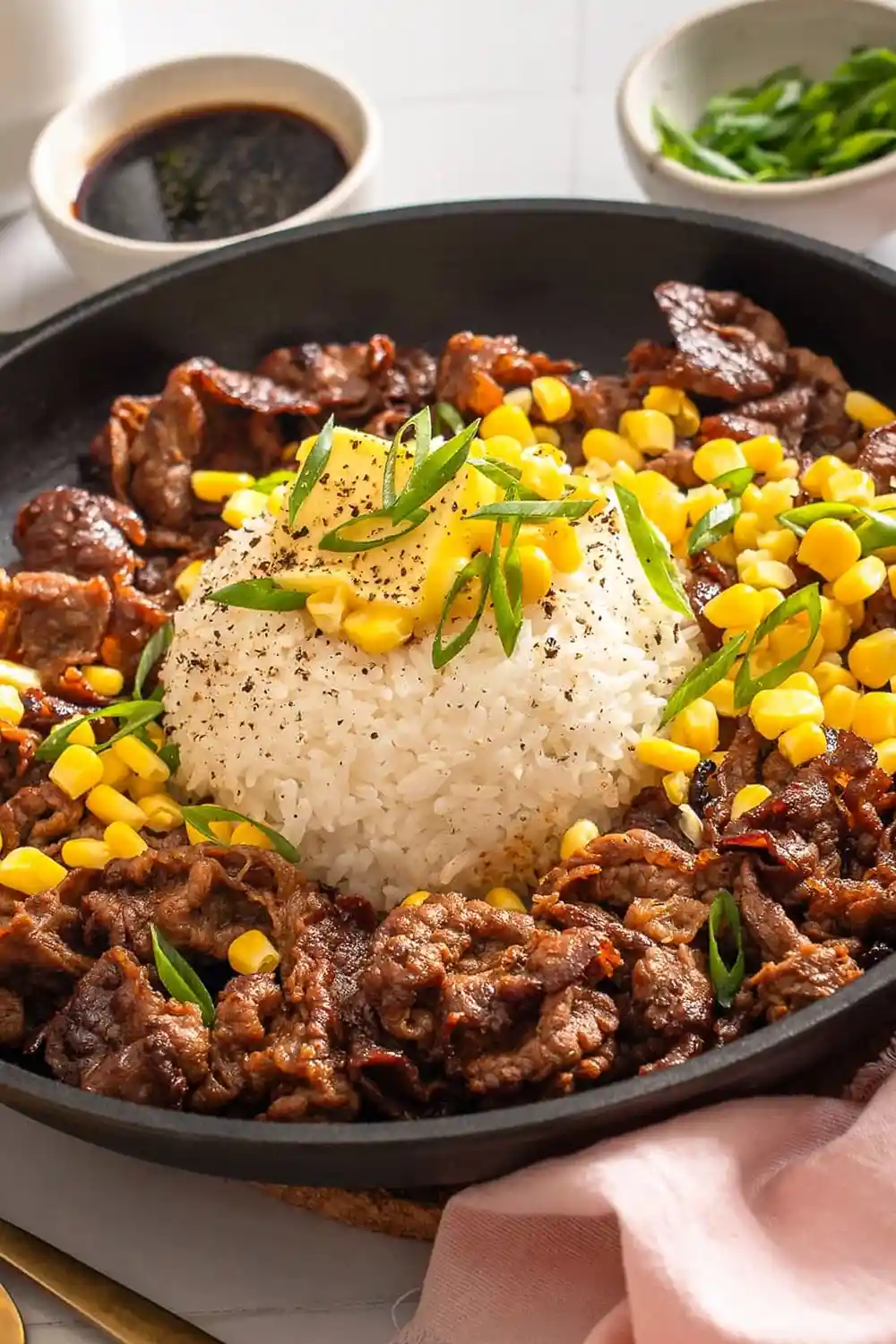
List of ingredients
- 1 lb thinly sliced beef (rib eye or top blade) – ensures quick cooking and tenderness.
- 2 tablespoons butter (divided) – used for sautéing and final richness.
- 1/2 small yellow onion (thinly sliced) – provides a sweet, caramelized base.
- 2 cups cooked white jasmine rice – the primary base for absorbing flavors.
- 2 cloves garlic (grated) – adds a sharp, aromatic punch to the sauce.
- 2 tablespoons soy sauce – provides salty umami depth.
- 1 tablespoon oyster sauce – adds thickness and a savory profile.
- 1/2 tablespoon rice vinegar – cuts through the richness with acidity.
- 2 tablespoons honey – balances the salty soy with floral sweetness.
- 1/4 teaspoon black pepper – integrates a warm heat into the sauce.
- 1/3 cup yellow corn (frozen or canned) – adds sweetness and textural contrast.
- 2 stalks green onion (thinly sliced) – used as a fresh, colorful garnish.
- Freshly cracked black pepper – added at the end for a bold, peppery finish.
step-by-step instructions
- Prepare the sauce: In a medium mixing bowl, combine the grated garlic, soy sauce, oyster sauce, rice vinegar, honey, and black pepper. Mix until the honey is fully dissolved and the sauce is smooth.
- Sauté the onions: Place a medium pan or hot plate over medium heat and melt 1 tablespoon of butter or add cooking oil. Add the sliced onions and sauté for about 5 minutes until they are golden brown and lightly caramelized.
- Arrange beef and rice: Push the caramelized onions to the center of the pan. Place a serving of cooked jasmine rice directly on top of the onions, then arrange the thinly sliced beef around the rice so the meat makes direct contact with the hot pan surface.
- Finish and serve: Pour the prepared sauce over the rice based on your taste preference. Garnish with the yellow corn, sliced green onions, the remaining tablespoon of butter, and a generous amount of freshly cracked black pepper. Mix all ingredients thoroughly, remove from heat, and serve immediately.
Optimal Beef Selection
Using Rib Eye for Maximum Tenderness
Rib eye is highly marbled, which means it contains significant intramuscular fat. This fat melts during the quick searing process, resulting in a juicy and tender bite. It is the ideal choice for a luxurious restaurant-style experience.
Top Blade as a Leaner Alternative
Top blade is a great option if you prefer a meatier texture with less fat than rib eye. It still provides excellent flavor and remains tender when sliced thinly. This cut is often more budget-friendly while maintaining high quality.
The Importance of Thin Slicing
Slicing the beef very thinly, similar to shabu-shabu style, allows the meat to cook in seconds. This prevents the beef from becoming tough or overcooked. If slicing at home, partially freeze the meat for 30 minutes to make precise thin cuts easier.
Sauce Customization and Adjustments
Substituting Honey with Other Sweeteners
If you do not have honey, granulated sugar or brown sugar are effective replacements. Brown sugar adds a slightly deeper, molasses-like sweetness that complements the soy sauce. Use an equal amount of sugar to maintain the balance of the sauce.
Replacing Oyster Sauce for Different Profiles
For a different depth of flavor, you can use a vegetarian mushroom sauce instead of oyster sauce. This maintains the thick consistency and umami punch without changing the overall salt level. Ensure the replacement is savory rather than sweet.
Balancing Acidity with Rice Vinegar
Rice vinegar provides a subtle tang that prevents the dish from feeling too heavy. If you find the sauce too sharp, reduce the vinegar slightly. Conversely, adding an extra teaspoon can brighten the flavors if the beef is particularly fatty.
Managing Saltiness with Soy Sauce
The salt level depends on the brand of soy sauce used. If you are using a dark soy sauce, which is more intense, you may want to reduce the quantity slightly. Taste the sauce before pouring it over the rice to ensure it is not overly salty.
Vegetable Add-ins for Nutrition
Incorporating Sautéed Mushrooms
Adding sliced shiitake or button mushrooms adds an earthy flavor and a meaty texture. Sauté them along with the onions until they release their moisture and brown. This increases the overall umami profile of the meal.
Adding Colorful Bell Peppers
Thinly sliced red or green bell peppers provide a fresh crunch and vibrant color. Add them to the pan just before the beef to ensure they stay crisp. They add a mild sweetness that pairs well with the black pepper.
Using Fresh Spinach for Greens
Adding a handful of fresh spinach at the very end allows the residual heat to wilt the leaves. This adds a nutritional boost and a pop of green to the dish. Stir the spinach in quickly so it does not overcook.
Adding Carrots for Texture
Finely julienned carrots add a subtle sweetness and a satisfying snap. Sauté them with the onions for 2-3 minutes before adding the rice. This ensures the carrots are tender but not mushy.
Protein Alternatives
Adapting the Recipe for Chicken Thighs
Chicken thighs can be used instead of beef for a different protein profile. Slice the thighs into very thin strips to ensure they cook quickly. Note that chicken requires a longer cooking time than thinly sliced beef to ensure safety.
Preparing Shrimp for Pepper Rice
Shrimp is a fast-cooking alternative that works well with the garlic soy sauce. Sauté the shrimp until they turn pink and opaque before adding the rice and corn. Avoid overcooking the shrimp to keep them succulent.
Cooking Tofu for a Plant-Based Version
Extra-firm tofu, sliced into thin planks, can be used as a protein substitute. Pan-fry the tofu until the edges are golden brown and crispy before adding the sauce. This provides a great textural contrast to the soft rice.
Cooking Technique Refinements
Achieving the Correct Pan Temperature
The pan must be very hot before adding the beef to achieve a proper sear. A sizzling pan creates a charred exterior on the meat, which mimics the teppanyaki style. If the pan is too cool, the beef will steam in its own juices rather than brown.
Preventing the Rice from Burning
Place the rice on top of the caramelized onions to create a protective layer. This prevents the rice from sticking directly to the hot metal and burning. The onions act as a buffer while the rice warms through.
Layering the Beef for Even Searing
Arrange the beef in a single layer around the edges of the rice. Avoid piling the meat on top of itself, as this will lead to uneven cooking. A single layer ensures every piece of beef gets direct contact with the heat.
Timing the Butter Addition
Adding the final tablespoon of butter at the very end allows it to melt into the hot rice and beef. This creates a silky emulsion with the sauce and enhances the richness of the dish. Stir it in rapidly for a glossy finish.
Serving and Pairing Ideas
Pairing with Japanese Cucumber Salad
A chilled Sunomono salad, made with sliced cucumbers and rice vinegar, provides a refreshing contrast. The cool, crisp nature of the salad cuts through the richness of the buttery beef. It cleanses the palate between bites.
Adding a Fried Egg on Top
A sunny-side-up egg with a runny yolk adds an extra layer of creaminess. Break the yolk and stir it into the rice and beef for a richer, more indulgent sauce. This also adds additional protein to the meal.
Complementing with Miso Soup
A bowl of hot miso soup is a traditional accompaniment that adds a salty, fermented depth. The warmth of the soup complements the peppery heat of the beef. It makes the meal feel more like a complete Japanese set.
Using Kimchi for a Spicy Kick
Adding a side of spicy fermented kimchi provides a sharp, acidic contrast to the savory beef. The cabbage’s crunch and the chili heat enhance the overall flavor profile. You can also mix chopped kimchi directly into the rice.
Storage and Reheating Guide
Refrigeration Timeline and Safety
Store leftover beef pepper rice in an airtight container in the refrigerator. It will remain fresh and safe to eat for up to 5 days. Ensure the food is cooled slightly before sealing the container to prevent excess moisture.
Best Practices for Wok Reheating
For the best texture, reheat leftovers in a wok or skillet over medium heat. Add a teaspoon of water or a small knob of butter to prevent the rice from sticking. Toss frequently until the beef is heated through.
Microwave Reheating Tips
When using a microwave, cover the dish with a damp paper towel or a lid. Add a few drops of water over the rice to create steam. This prevents the jasmine rice from drying out and becoming hard.
Freezing for Long-Term Storage
You can freeze the prepared meal in a freezer-safe container for up to 3 months. Thaw the container in the refrigerator overnight before reheating. Reheat using the wok method for the best results.
Common Troubleshooting
Fixing a Sauce That is Too Sweet
If the honey makes the sauce too sweet, add a small amount of extra soy sauce or a pinch of salt. A few drops of additional rice vinegar can also help balance the sweetness. Adjust in small increments until the taste is balanced.
Handling Beef That Releases Too Much Water
If the beef releases too much liquid, increase the heat to high to evaporate the moisture quickly. This allows the meat to start searing rather than boiling. Ensure you do not crowd the pan too much.
Correcting Over-salted Rice
If you accidentally add too much sauce and the rice becomes too salty, stir in a small amount of unseasoned steamed rice. You can also add more corn or sautéed vegetables to dilute the saltiness. A squeeze of lime juice can also mask excess salt.
Dealing with Undercooked Onions
If the onions are not caramelized enough, they will taste raw and pungent. Take more time to sauté them on medium heat until they are translucent and brown. This step is crucial for the foundational sweetness of the dish.
Frequently Asked Questions
Do I need a sizzling plate to make this?
No, a sizzling plate is not required. Any heavy-bottomed skillet or cast iron pan will work perfectly to achieve the necessary heat for searing the beef and warming the rice.
Can I use brown rice instead of white rice?
Yes, you can use brown rice, although it has a nuttier flavor and a firmer texture. Since brown rice is denser, ensure it is fully cooked and moist before adding it to the pan.
How do I get the beef thinly sliced at home?
The best method is to place the beef in the freezer for about 30 to 60 minutes until it is firm but not frozen solid. Use a very sharp knife to cut across the grain into paper-thin slices.
What is the best type of butter to use?
Unsalted butter is recommended so you can control the total sodium level of the dish. However, salted butter can be used if you slightly reduce the amount of soy sauce in the recipe.
Print
Savory Beef Pepper Rice
- Total Time: 15 minutes
- Yield: 2 servings 1x
- Diet: General
Description
Sizzling hot beef, buttery corn, black pepper, and steamed rice are tossed together in a savory umami sauce for a delicious restaurant-quality meal at home.
Ingredients
- 1 lb thinly sliced beef (rib eye or top blade)
- 2 tablespoon butter, divided
- 1/2 small yellow onion, thinly sliced
- 2 cups cooked white jasmine rice
- 2 cloves garlic, grated
- 2 tablespoons soy sauce
- 1 tablespoon oyster sauce
- 1/2 tablespoon rice vinegar
- 2 tablespoon honey
- 1/4 teaspoon black pepper
- 1/3 cup yellow corn (frozen or canned)
- 2 stalks green onion, thinly sliced
- Freshly cracked black pepper
Instructions
- Make sauce: In a medium mixing bowl, add garlic, soy sauce, oyster sauce, rice vinegar, honey, and black pepper. Mix until combined and set aside.
- Saute the onions: In a medium pan or hot plate, over medium heat, add 1 tablespoon of butter or cooking oil. Add the sliced onion and saute until lightly caramelized and golden brown, about 5 minutes.
- Add the beef and rice: Move the onions to the center of the skillet and place a serving of rice on top. Then, add the thinly sliced steak around the rice, allowing the beef to touch the pan.
- Serve: Pour the sauce over the rice to taste and garnish with corn, green onions, remaining butter, and more freshly cracked black pepper on top. Mix thoroughly, remove from the heat, and serve immediately.
Notes
Use thinly sliced shabu shabu beef for best results. Ensure the skillet is hot before adding ingredients for a better sear.
- Prep Time: 5 minutes
- Cook Time: 10 minutes
- Category: Dinner
- Method: Sautéing
- Cuisine: Japanese
Nutrition
- Serving Size: 1 serving
- Calories: 995 kcal
- Sugar: 19 g
- Sodium: 1485 mg
- Fat: 46 g
- Saturated Fat: 22 g
- Unsaturated Fat: 22 g
- Trans Fat: 0.5 g
- Carbohydrates: 91 g
- Fiber: 4 g
- Protein: 56 g
- Cholesterol: 169 mg