
I know how intimidating making sourdough can sound, but this easy sourdough bread recipe is all about maximizing flavor with minimal effort, resulting in a perfectly crusty loaf with a soft, aromatic crumb. We’re taking a classic method and adding a generous swirl of roasted garlic and fresh rosemary, transforming a standard loaf into something truly special for family dinners. This recipe focuses on maximizing hands-off time with a cold proof, resulting in deep flavor and a dough that is much easier to work with. Follow these straightforward steps to achieve a beautiful, delicious loaf with minimal stress and maximum flavor, perfect for healthy eating at home.
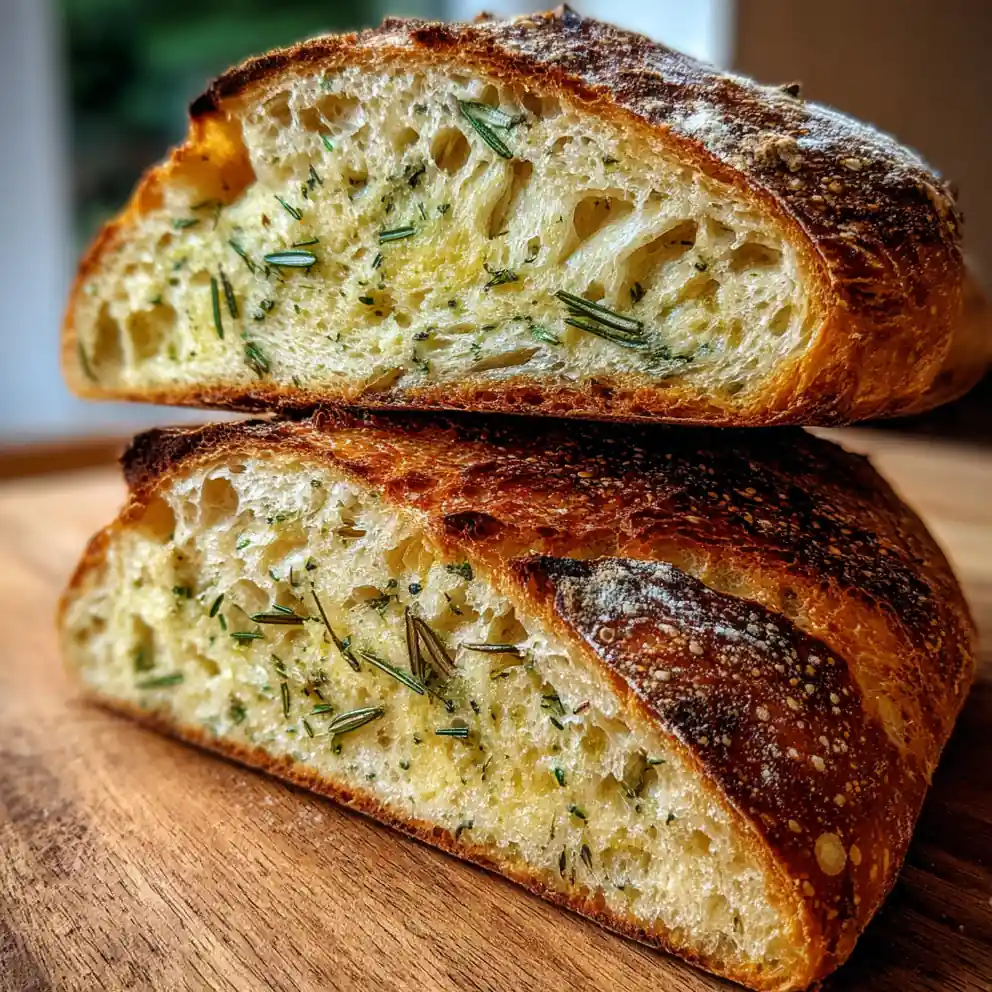
Ingredients for Roasted Garlic and Rosemary Sourdough
- 350 ml (1 ½ cups) warm water (approximately 28-32°C / 82-90°F)
The temperature is critical to activate the starter and begin fermentation. Do not use boiling hot or ice-cold water, which can kill the live cultures. - 100 g (½ cup) active sourdough starter
Ensure your starter has been fed recently and is active, bubbly, and doubled in size. This is essential for a good rise and open crumb structure. - 500 g (4 cups) strong bread flour
Use high-protein bread flour (12%+ protein) for the necessary gluten development. Do not use all-purpose flour, as it will result in a flatter loaf and denser crumb for this easy sourdough bread recipe. - 10 g (1 ½ teaspoons) fine sea salt
Salt controls the fermentation rate and adds necessary flavor. Do not add the salt directly to the starter and water mixture initially; wait until after the initial autolyse rest. - 2 heads garlic, unpeeled
Roasting whole heads of garlic mellows the flavor and creates a soft, sweet paste. Use firm, fresh garlic heads for the best results. - 15 ml (1 tablespoon) olive oil, plus more for coating
Use high-quality olive oil for roasting and coating the dough. This adds richness and prevents sticking during handling. - 15 g (2 tablespoons) fresh rosemary, finely chopped
Fresh rosemary provides a powerful aroma and better flavor than dried rosemary. Finely chop the leaves to distribute the flavor evenly throughout the dough swirl. - Rice flour or semolina, for dusting
Use to dust the proofing basket (banneton) to prevent the wet dough from sticking. Avoid regular flour, which absorbs moisture and can glue the dough to the basket.
Step-by-Step Instructions
- Prepare Roasted Garlic
Preheat your oven to 200°C (400°F). Slice the tops off the garlic heads to expose the cloves, drizzle with 1 tablespoon of olive oil, and wrap them tightly in aluminum foil. Roast for 40-50 minutes, or until the cloves are very soft and golden brown; let cool, then squeeze the roasted garlic from the skins and mash into a smooth paste. Set aside the paste and reserve a few whole roasted cloves for garnish if desired for this easy sourdough bread recipe. - Mix Dough (Autolyse)
In a large mixing bowl, combine the warm water and your active sourdough starter; stir gently until the starter is mostly dissolved. Add the bread flour and salt to the bowl; mix with a spoon or your hands until a shaggy, cohesive dough forms and no dry flour remains. Cover the bowl with a clean kitchen towel or plastic wrap and let the dough rest for 30 minutes (autolyse) to allow the flour to fully hydrate before kneading. - Bulk Fermentation and Stretch and Folds
Over the next 3-4 hours, perform 4 sets of stretch and folds every 30-45 minutes; this builds gluten structure and strength. For each set, wet your hands, gently pull a section of the dough up from the bowl, and fold it over itself towards the center; rotate the bowl and repeat this process 3-4 times until all sides have been folded. The dough should become smoother, more elastic, and start to develop air bubbles as bulk fermentation progresses for this easy sourdough bread recipe. - Incorporate Flavor Twist (First Shaping)
Lightly flour your clean work surface and gently turn the dough out onto it, being careful not to degas it excessively as you handle it. Gently stretch the dough into a rough rectangle, approximately 30×20 cm (12×8 inches), maintaining a smooth surface. Evenly spread the mashed roasted garlic paste over the dough surface, leaving a small border around the edges, then sprinkle the finely chopped rosemary over the garlic paste. - Shape Dough for Swirl
Starting from one of the longer sides of the rectangle, gently roll the dough tightly into a log, sealing the seam along the bottom as you go to maintain the swirl. Lightly flatten the log slightly with your hands; then gently fold the log in half, bringing one end over to meet the other. Gently cup your hands around the dough and pull it towards you across the work surface to create surface tension, forming a taut round loaf (boulé). - Second Proof (Cold Fermentation)
Generously flour a proofing basket (banneton) with rice flour or semolina to prevent sticking. Carefully transfer the dough, seam-side up, into the prepared banneton; cover with a plastic bag or plastic wrap and refrigerate for 12-18 hours (cold proof). This slow, cold fermentation develops deeper, more complex flavors and makes the dough much easier to handle when baking. I find that this cold proofing step not only makes the dough manageable for me, but also enhances the high-protein qualities of the sourdough by developing complex flavors overnight. - Preheat Oven and Dutch Oven
When ready to bake, place a lidded Dutch oven (or other lidded oven-safe pot) inside your oven and preheat to 230°C (450°F) for at least 30 minutes. This ensures the pot is extremely hot, which creates a crisp crust and significant oven spring (the final rise) for your easy sourdough bread recipe. - Score and Bake Covered
Carefully remove the hot Dutch oven from the oven (use oven mitts!) and gently invert the cold dough from the banneton directly into the pot. Score the top of the dough with a sharp knife or razor blade in a decorative pattern (a simple cross or single slash works well). Cover the Dutch oven with its lid and bake for 30 minutes; the lid traps steam, helping the crust to develop and preventing it from hardening too quickly. If your dough spreads out too quickly when inverted, it likely needs more surface tension during shaping; try tighter folds next time. - Bake Uncovered and Cool Completely
Remove the lid from the Dutch oven and continue baking for another 20-25 minutes, or until the crust is a deep golden brown and the internal temperature reaches 96-100°C (205-210°F). Carefully remove the finished loaf from the Dutch oven and transfer it to a wire rack to cool completely for at least 2 hours before slicing. Cooling is crucial for the crumb structure to set properly and for the flavors to fully develop after making this easy sourdough bread recipe.
Troubleshooting Your Sourdough Bake
Even experienced bakers sometimes encounter challenges; here are a few solutions to common sourdough issues that can affect your final result.
- My bread came out flat and dense: This usually means your sourdough starter wasn’t strong enough or the bulk fermentation time was too short. Be sure your starter has been fed recently and is very active before starting, and allow the dough to at least double in size during bulk fermentation, even if it takes longer than 4 hours in a cool kitchen.
- The dough was too sticky to shape: Sourdough dough, especially with high hydration, can be very wet; the cold proof in this recipe helps to make it easier to handle. If it’s still sticky, use wet hands during stretch and folds instead of adding flour, which can change the hydration ratio and make the final loaf too dense.
- I don’t have a Dutch oven: You can create steam in a conventional oven by placing a shallow baking pan on the bottom rack and pouring hot water into it just before placing the dough on a baking steel or stone. The steam is essential for creating a crisp crust and a good rise.

Serving and Pairing Suggestions
The robust garlic and rosemary flavors make this loaf a versatile accompaniment to many easy dinner ideas and family meals. Here are some of my favorite ways to serve it.
- Pair with soups and stews: The garlic and rosemary pair perfectly with hearty tomato soup, lentil stew, or a classic French onion soup.
- Serve alongside a cheese board: The rustic flavors make a great addition to a cheese board, complementing aged cheddar, goat cheese, or a creamy brie.
- Make it the star of a meal: This loaf is delicious enough to be enjoyed on its own with just a little butter or used for gourmet sandwiches. For an easy high-protein snack, try topping slices with hummus and sliced tomatoes. My family also loves using this bread to make grilled cheese sandwiches.
FAQs about Sourdough Baking
Do I need to use fresh rosemary?
While fresh rosemary is highly recommended for its powerful aroma, you can substitute 1-2 teaspoons of dried rosemary if necessary, though the flavor will be less prominent in the final loaf.
What is a banneton and do I have to use one?
A banneton is a proofing basket that gives the dough shape during the second rise and adds a rustic pattern. If you don’t have one, you can line a bowl with a well-floured cloth napkin or kitchen towel instead.
Can I skip the cold fermentation step?
Skipping the cold proof will result in less flavor depth and a stickier, more difficult dough to handle; while possible, it’s not recommended for this specific recipe, as the cold proof makes this easy sourdough bread recipe much more manageable.
How do I store leftover sourdough bread?
Store the cooled bread cut-side down on a cutting board, or wrap it tightly in a clean linen towel or bread bag. Avoid plastic bags, which can soften the crust. For longer storage, you can freeze individual slices in an airtight container for up to 3 months.
How do I know when the bread is done baking?
The best indicator is internal temperature; a reading of 96-100°C (205-210°F) ensures it is fully cooked. The crust should also be deep golden brown and sound hollow when tapped.
Can I make this with discard instead of active starter?
Using discard will not result in a properly leavened loaf. You must use an active starter that has doubled in size after feeding to achieve the necessary rise for this bread, especially in a recipe where you’re aiming for an open crumb structure.
Can I reduce the salt in this recipe?
While salt controls fermentation and adds flavor, reducing it too much can cause a quick and uncontrolled rise, potentially resulting in a flat loaf. I always use the full amount of salt in my easy sourdough bread recipe, but you can decrease it by 1-2 grams if you are watching your sodium intake.
Conclusion
This easy sourdough bread recipe proves that creating a spectacular, flavorful loaf at home is entirely achievable, even for new bakers. The hands-off cold proofing method enhances the flavor profile of the roasted garlic and rosemary, making this a rewarding recipe without excessive effort, perfect for family-friendly healthy eating. Save this recipe to your Pinterest board for quick meals, and enjoy this hearty loaf anytime you need comfort food.
Print
easy sourdough bread recipe
- Total Time: 960 minutes
- Yield: 1 loaf 1x
- Diet: Vegetarian
Description
A classic sourdough bread recipe enhanced with a swirl of roasted garlic and fresh rosemary, resulting in a perfectly crusty loaf with a soft, aromatic crumb.
Ingredients
- 1.5 cups warm water (approx. 82-90°F)
- 0.5 cup active sourdough starter
- 4 cups strong bread flour
- 1.5 teaspoons fine sea salt
- 2 heads garlic, unpeeled
- 1 tablespoon olive oil, plus more for coating
- 2 tablespoons fresh rosemary, finely chopped
- Rice flour or semolina, for dusting proofing basket
Instructions
- Prepare Roasted Garlic: Preheat your oven to 400°F (200°C). Slice the tops off the garlic heads, drizzle with 1 tablespoon of olive oil, and wrap them tightly in aluminum foil. Roast for 40-50 minutes until soft. Let cool, then squeeze the roasted garlic from the skins and mash into a smooth paste.
- Mix Dough (Autolyse): In a large mixing bowl, combine the warm water and active sourdough starter; stir gently until dissolved. Add the bread flour and salt; mix until a shaggy, cohesive dough forms. Cover and let the dough rest for 30 minutes to hydrate the flour.
- Bulk Fermentation and Stretch and Folds: Over the next 3-4 hours, perform 4 sets of stretch and folds every 30-45 minutes to build gluten structure. Wet your hands, fold sections of the dough over themselves, rotating the bowl each time.
- Incorporate Flavor Twist (First Shaping): Lightly flour your work surface and turn the dough out. Gently stretch the dough into a rough 12×8 inch rectangle. Spread the mashed roasted garlic paste and chopped rosemary evenly over the dough surface, leaving a small border.
- Shape Dough for Swirl: Roll the rectangle tightly into a log, starting from one of the longer sides. Seal the seam along the bottom. Fold the log in half, bringing one end over to meet the other. Create surface tension by cupping your hands around the dough and pulling it towards you across the work surface, forming a taut round loaf.
- Second Proof (Cold Fermentation): Generously dust a proofing basket (banneton) with rice flour or semolina. Transfer the dough, seam-side up, into the prepared banneton. Cover and refrigerate for 12-18 hours.
- Preheat Oven and Dutch Oven: When ready to bake, place a lidded Dutch oven inside your oven and preheat to 450°F (230°C) for at least 30 minutes.
- Score and Bake Covered: Carefully remove the hot Dutch oven. Gently invert the cold dough into the pot. Score the top of the dough with a sharp knife or razor blade. Cover with the lid and bake for 30 minutes.
- Bake Uncovered and Cool Completely: Remove the lid and continue baking for another 20-25 minutes, until the crust is a deep golden brown and the internal temperature reaches 205-210°F. Transfer the finished loaf to a wire rack to cool completely for at least 2 hours before slicing.
Notes
To achieve a crispy crust and significant oven spring, ensure the Dutch oven is extremely hot before adding the dough. Cooling completely for at least 2 hours before slicing is crucial for the crumb structure to set properly. Use high-protein bread flour (12%+) for the necessary gluten development in this recipe.
- Prep Time: 60 minutes
- Cook Time: 55 minutes
- Category: Bread
- Method: Baking
- Cuisine: American
Nutrition
- Serving Size: 1 slice (1/12th loaf)
- Calories: 160 calories
- Sugar: 0 g
- Sodium: 270 mg
- Fat: 1.5 g
- Saturated Fat: 0.2 g
- Unsaturated Fat: 1.3 g
- Trans Fat: 0 g
- Carbohydrates: 30 g
- Fiber: 1 g
- Protein: 5 g
- Cholesterol: 0 mg
FREE PRINTABLE RECIPE
Get the Printable Recipe PDF (Free)
Enter your email and we’ll send you the ingredients + step-by-step instructions as a clean PDF you can save to your phone.
- ✅ Printable PDF (ingredients + steps)
- ✅ Save it to your phone (no long scrolling)
- ✅ Includes cook time + servings
- ✅ Easy to follow
FAQ
Where’s the full recipe?
It’s delivered as a printable PDF so you can save it and cook without scrolling.
I didn’t get the email.
Check Spam/Promotions and search your inbox for your site name. Then click Confirm to receive the PDF.