
This Thai red curry is a rich, one-pot meal that combines tender chicken with a variety of fresh vegetables in a coconut milk base. It is a practical dinner option that delivers authentic flavors with a simple cooking process.
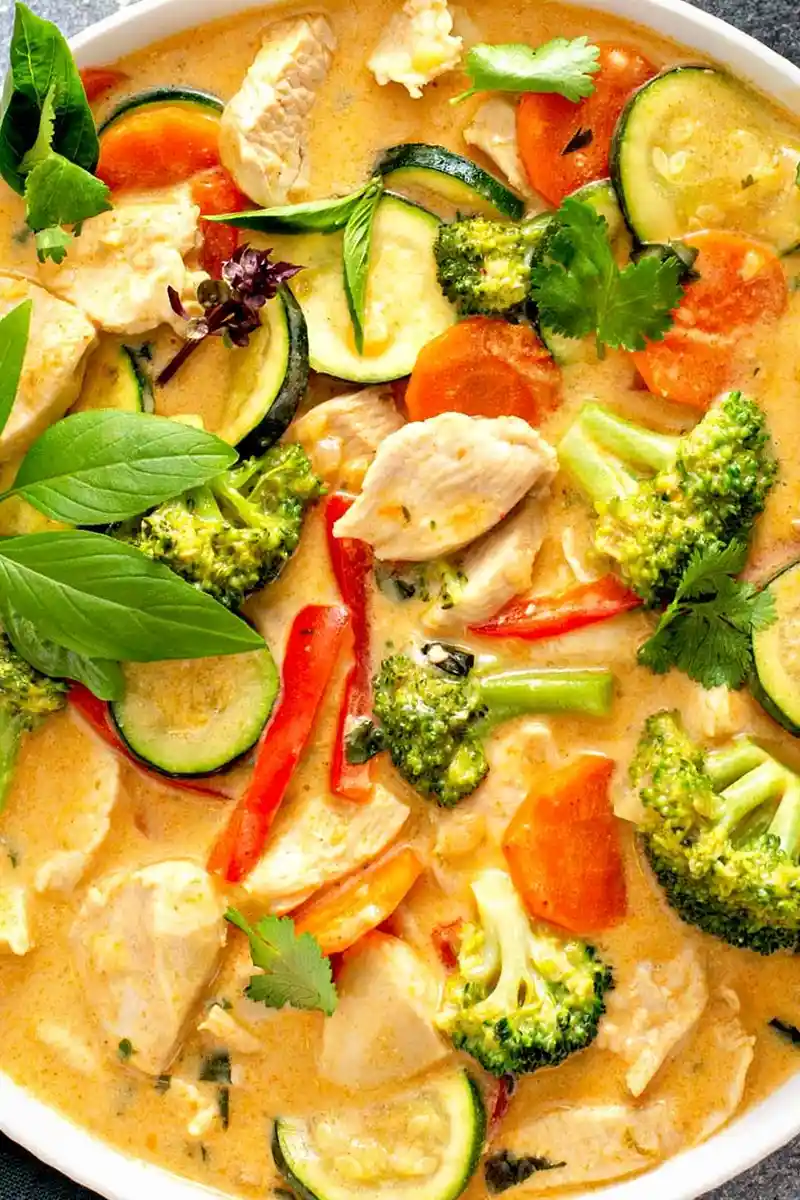
List of ingredients
- 1 tablespoon coconut oil, vegetable oil, or olive oil – used for sautéing aromatics.
- 4 garlic cloves, peeled and minced – adds a pungent base flavor.
- 1-inch piece ginger, peeled and minced – provides a fresh, zingy heat.
- 1 small onion or shallot, chopped finely or sliced – adds sweetness and depth.
- 2 stalks lemongrass, white parts only, cut into 2-4 inch pieces, pounded and bruised – essential for citrusy notes.
- 1-2 tablespoons Thai red curry paste – adjust based on your desired spice level.
- 2 14 oz cans full-fat coconut milk – creates a thick and creamy sauce.
- 4 Kaffir lime leaves or zest of one lime – optional for added aromatic brightness.
- 1 cup chicken broth – balances the richness of the coconut milk.
- 3 tablespoons fish sauce – provides a salty, umami depth.
- 1 teaspoon soy sauce or tamari – adds color and savory saltiness.
- 2 tablespoons brown sugar – balances the spice and salt.
- 2 carrots, peeled and thinly sliced into 1/4-inch rounds – adds crunch and sweetness.
- 4 boneless and skinless chicken breasts, cut into thin bite-size slices – the primary lean protein.
- 1 small red bell pepper, cut into thin strips – adds color and mild flavor.
- 1 small zucchini, cut into 1/4-inch rounds – adds texture and freshness.
- 1-2 cups broccoli florets – absorbs the sauce well.
- 4 sprigs Thai basil or regular Italian basil, roughly chopped – provides a fragrant finish.
- 1/4 cup cilantro, chopped, plus more for garnish – adds a fresh, herbal note.
- Lime wedges – used for fresh acidity before serving.
- Brown or white rice – suggested side for serving.
step-by-step instructions
- Sauté Aromatics: Heat the oil in a Dutch oven or large heavy-bottomed pan over medium-low heat. Add the minced garlic, ginger, chopped onions (or shallots), and bruised lemongrass, sautéing for 2-3 minutes until onions soften. Avoid letting the garlic brown or burn.
- Cook Curry Paste: Stir in the Thai red curry paste and sauté for approximately 2 minutes to release the oils and aromas.
- Build the Sauce: Stir in the full-fat coconut milk, optional Kaffir lime leaves, chicken broth, fish sauce, soy sauce, and brown sugar. Mix thoroughly to combine all liquids.
- Simmer and Thicken: Bring the mixture to a quick boil, then immediately lower the heat. Simmer for about 10 minutes or until the sauce has thickened slightly.
- Cook Chicken and Hard Veggies: Add the sliced carrots and chicken pieces. Cook for 5-6 minutes or until the chicken is just cooked through.
- Add Soft Vegetables: Stir in the red bell pepper and zucchini. Cook for about 4 minutes until these vegetables begin to soften.
- Final Simmer: Stir in the broccoli florets, chopped basil, and cilantro. Mix well, cover the pot, and simmer for about 2 minutes. Monitor the broccoli closely so it does not overcook.
- Finish and Serve: Remove the woody lemongrass stalks from the pot before serving. Garnish with extra basil, cilantro, and fresh lime wedges. Serve over a bed of white or brown rice.
Expert Cooking Advice for Better Curry
Prepare Your Ingredients in Advance
This recipe moves quickly once the heat is on. Chop all vegetables, slice the chicken, and mince the aromatics before starting to prevent the garlic or curry paste from burning while you prep other items.
Manage the Heat Level Carefully
Thai red curry paste varies in intensity by brand. Start with one rounded tablespoon and taste the sauce after simmering; you can stir in additional paste at the end if you prefer a spicier dish.
Follow the Vegetable Addition Order
To ensure all vegetables maintain a pleasant texture, add them based on their density. Carrots go in first, followed by peppers and zucchini, and finally broccoli, which cooks the fastest.
Shake Coconut Milk Containers
Full-fat coconut milk often separates in the can, with a thick cream layer at the top. Shake the can vigorously before opening to ensure a smooth, emulsified consistency in your sauce.
Protein and Ingredient Substitutions
Use Chicken Thighs for More Flavor
If you prefer a richer taste and juicier meat, swap the chicken breasts for boneless, skinless chicken thighs. Thighs are more forgiving during the simmering process and stay tender longer.
Alternative Protein Options
You can replace chicken with large shrimp, scallops, or firm white fish like cod or mahi mahi. For a plant-based version, use extra-firm tofu cubes or canned chickpeas and replace fish sauce with soy sauce or coconut aminos.
Replace Fresh Lemongrass
If fresh lemongrass is unavailable, use a combination of lime zest and finely chopped ginger. While not identical, this mix mimics the citrusy and pungent notes found in the original stalks.
Substitute Kaffir Lime Leaves
Kaffir lime leaves provide a distinct aroma, but they can be hard to find. Use the zest of one fresh lime as a practical alternative to achieve a similar bright, citrusy flavor.
Gluten-Free Adjustments
To make this recipe gluten-free, ensure your red curry paste is certified gluten-free. Replace the soy sauce with tamari or coconut aminos to remove wheat-based ingredients.
Creative Recipe Variations
Try Different Curry Pastes
You can easily adapt this recipe by using Thai green or yellow curry paste. Green curry is typically spicier and more herbal, while yellow curry is milder and often contains more turmeric.
Add Leafy Green Vegetables
For extra nutrition, stir in a handful of fresh spinach or chopped kale during the final two minutes of cooking. These greens wilt quickly and blend well with the creamy coconut sauce.
Incorporate Root Vegetables
Adding small cubes of sweet potato or butternut squash creates a heartier meal. Ensure these are cut into very small pieces and added at the same time as the carrots to ensure they cook through.
Increase the Umami Profile
If you want a deeper savory flavor, add a teaspoon of tomato paste when sautéing the curry paste. This adds a subtle richness that complements the coconut milk and fish sauce.
Serving and Pairing Suggestions
Pair with Aromatic Jasmine Rice
Long-grain Jasmine rice is the traditional pairing for Thai curry due to its fragrant aroma and ability to soak up the sauce. Steam it until fluffy for the best experience.
Use Low-Carb Cauliflower Rice
For a lower-calorie or keto-friendly option, serve the curry over sautéed cauliflower rice. This provides the necessary base to hold the sauce without the heavy carbohydrates of grain.
Serve with Crusty Bread
Although not traditional, a piece of toasted French or Italian bread is excellent for dipping into the thick curry sauce. This is a great way to ensure no sauce is left in the bowl.
Add Toasted Nuts for Texture
Garnish the finished dish with toasted cashew nuts or sliced almonds. The crunch of the nuts provides a contrasting texture to the tender chicken and creamy sauce.
Storage and Reheating Guidelines
Refrigerating Leftovers
Store any remaining curry in an airtight container in the refrigerator for up to four days. Let the curry cool completely before sealing the lid to prevent condensation from affecting the flavor.
Reheating on the Stovetop
For the best results, reheat the curry in a pan over low heat. Stir occasionally and add a splash of chicken broth or water if the sauce has thickened too much during storage.
Microwave Reheating Tips
Heat leftovers in the microwave in short 60-second intervals. Stir between each interval to ensure the heat is distributed evenly and the coconut milk does not separate.
Freezing the Curry
This curry can be frozen for up to three months. Place it in a freezer-safe container, leaving a small amount of room at the top for expansion as the liquid freezes.
Troubleshooting Common Issues
Fixing a Sauce That Is Too Thin
If the sauce is too watery, simmer it uncovered for an additional 5-10 minutes. This allows the liquid to reduce and the coconut milk to thicken the consistency.
Reducing Excessive Saltiness
If you accidentally add too much fish sauce, stir in a tablespoon of brown sugar or a splash of extra coconut milk. The sweetness and creaminess will help neutralize the salt.
Preventing Burnt Aromatics
If the garlic or ginger begins to brown too quickly, immediately add a tablespoon of water or coconut milk to the pan. Lower the heat to maintain a gentle sauté.
Handling Separated Coconut Milk
If the sauce looks oily or separated after reheating, whisk it vigorously over low heat. The emulsification will return as the sauce reaches a gentle simmer.
Frequently Asked Questions
Is red Thai curry spicier than green curry?
Generally, green curry is considered spicier than red curry because it uses fresh green chilies. However, the heat level of red curry depends entirely on the amount of paste you use.
Can I use curry powder instead of red curry paste?
No, curry powder is used in Indian cuisine and has a completely different flavor profile. Thai curries rely on fresh pastes made from lemongrass, galangal, and shrimp paste.
Do I need to peel the lemongrass?
You do not need to peel the outer layer, but you should only use the pale, inner white part of the stalk. Pounding the stalk with a mallet or rolling pin helps release the essential oils.
How long does this curry last in the fridge?
When stored in an airtight container, this chicken curry will remain fresh and safe to eat for up to four days.
Print
Creamy Thai Red Curry Chicken
- Total Time: 40 minutes
- Yield: 6 servings 1x
- Diet: General
Description
Thai Chicken Curry with coconut milk and vegetables is a one-pot meal that is healthy, lusciously creamy, fragrant, delicious and incredibly easy to make.
Ingredients
- 1 tablespoon coconut oil, vegetable oil or olive oil
- 4 garlic cloves, peeled and minced
- 1-inch piece ginger, peeled and minced
- 1 small onion or shallot, chopped finely or sliced
- 2 stalks lemongrass, white parts only cut into 2–4 inch pieces, pounded and bruised
- 1–2 tablespoons Thai red curry paste
- 2 14 oz cans full-fat coconut milk
- 4 Kaffir lime leaves or zest of a lime (optional)
- 1 cup chicken broth
- 3 tablespoons fish sauce
- 1 teaspoon soy sauce or tamari
- 2 tablespoons brown sugar
- 2 carrots, peeled and thinly sliced into ¼-inch thick rounds
- 4 boneless and skinless chicken breasts, cut into thin slices (bite size)
- 1 small red bell pepper, cut into thin strips
- 1 small zucchini, cut into ¼-inch rounds
- 1–2 cups broccoli florets
- 4 sprigs Thai basil or regular basil (italian), roughly chopped
- ¼ cup cilantro, chopped plus more for garnish
- Lime wedges for garnishing
- Brown or white rice for serving
Instructions
- Sauté: In a Dutch oven or large heavy bottom pan, heat the oil over medium-low heat. Add the garlic, ginger, onions (or shallots) and lemongrass and sauté stirring frequently for about 2-3 minutes or until the onions start to soften and the rest of the ingredients become aromatic.
- Paste: Stir in the red curry paste and sauté for about 2 minutes.
- Simmer: Stir in the coconut milk, Kaffir lime leaves (optional), chicken broth, fish sauce, soy sauce and brown sugar. Mix to combine. Bring the mixture to a quick boil, lower the heat and simmer for about 10 minutes or until the sauce thickens a bit.
- Cook Protein and Veggies: Add the carrots and chicken and cook for about 5 – 6 minutes or until the chicken is just cooked through. Add the red bell pepper and zucchini and cook for about 4 minutes or until the vegetables soften.
- Finish: Add the broccoli florets, basil and cilantro. Mix well, cover the pot and simmer for about 2 minutes.
- Serve: Before serving, remove the lemongrass. Garnish with additional basil, cilantro and lime wedges.
Notes
Slice carrots thinly for crisp-tender results. Shake the coconut milk can before opening. Remove woody lemongrass stalks before serving. Prep all aromatics, protein, and vegetables beforehand to prevent burning.
- Prep Time: 10 minutes
- Cook Time: 30 minutes
- Category: Dinner
- Method: Stovetop
- Cuisine: Thai
Nutrition
- Serving Size: 1 serving
- Calories: 169 kcal
- Sugar: 8 g
- Sodium: 1018 mg
- Fat: 4 g
- Saturated Fat: 2 g
- Unsaturated Fat: 2 g
- Trans Fat: 0 g
- Carbohydrates: 13 g
- Fiber: 2 g
- Protein: 18 g
- Cholesterol: 48 mg