
I think this authentic lo mein recipe is one of the best ways to get a restaurant-quality meal on the table in under 30 minutes.
We’re recreating that delicious takeout experience with a rich, savory fermented chili glaze that coats every noodle perfectly, giving it a depth of flavor that’s hard to find in simpler recipes. This authentic lo mein recipe focuses on simple, fresh ingredients that create complex flavors, plus we add a crispy shallot garnish for amazing texture. It’s hearty enough for a family dinner and easily adaptable to different proteins and vegetables, making it a game-changer for quick, healthy weeknight meals when you’re craving something warm and comforting.
Ingredients
- 450 g (1 lb) fresh lo mein noodles: Look for fresh, refrigerated noodles in the ethnic food aisle of your grocery store. Fresh noodles have a superior chewy texture and absorb the sauce better than dried varieties, making this authentic lo mein recipe truly special.
- 450 g (1 lb) boneless, skinless chicken breast, thinly sliced against the grain: Slice the chicken thinly and uniformly to ensure fast, even cooking and tender results. Cutting against the grain breaks down the muscle fibers, resulting in a more tender bite.
- 15 mL (1 tablespoon) light soy sauce and 5 mL (1 teaspoon) cornstarch (for chicken marinade): The cornstarch forms a protective layer on the chicken, keeping it juicy and tender during stir-frying. The light soy sauce adds a foundational layer of savory flavor to the chicken pieces before cooking.
- 120 mL (1/2 cup) vegetable oil, divided: Used for frying the shallots, stir-frying the chicken, and sautéing the vegetables. A neutral-flavored oil like vegetable or canola oil allows the other flavors to shine through.
- 3 large shallots, thinly sliced into rings: Shallots provide a delicate onion flavor and are fried first to create a crispy garnish and infuse the oil with flavor. If shallots are unavailable, you can substitute 1/4 cup of thinly sliced yellow onion, though the flavor will be slightly stronger.
- 3 cloves garlic, minced and 2.5 cm (1-inch) piece fresh ginger, grated: These aromatic building blocks form the base flavor for the stir-fry. Fresh ginger adds a bright, slightly spicy element that distinguishes authentic lo mein from simpler noodle dishes.
- 2 large carrots, peeled and julienned: Carrots add a touch of sweetness and vibrant color to the vegetable mix. Juliennes ensure they cook quickly and maintain a slight crispness in the final dish.
- 200 g (7 oz) Napa cabbage, roughly chopped and 1 red bell pepper, deseeded and thinly sliced: Napa cabbage wilts quickly and provides a sweet, soft texture. Red bell pepper adds a gentle sweetness and bright color contrast.
- 100 g (3.5 oz) snow peas, trimmed and 4 scallions, green and white parts separated, thinly sliced: Snow peas add a crisp, fresh snap; trim the ends before adding to the wok. The white parts of the scallion are stir-fried first for flavor, and the green parts are used as a fresh garnish.
- Glaze Ingredients: 60 mL (1/4 cup) light soy sauce, 30 mL (2 tablespoons) dark soy sauce, 30 mL (2 tablespoons) Doubanjiang (fermented chili bean paste), 15 mL (1 tablespoon) sugar, 180 mL (3/4 cup) vegetable broth, 30 mL (2 tablespoons) vegetarian oyster sauce (mushroom-based), 15 mL (1 tablespoon) cornstarch, 15 mL (1 tablespoon) toasted sesame oil, 10 mL (2 teaspoons) toasted white sesame seeds. Doubanjiang is the key ingredient, providing a rich, savory, and slightly spicy depth; look for it in Asian markets. The dark soy sauce provides a rich, caramel color to the noodles, while the cornstarch creates a silky, thick texture for the glaze.
Instructions
- Marinate the Chicken: In a small bowl, combine the thinly sliced chicken with 15 mL (1 tablespoon) light soy sauce and 5 mL (1 teaspoon) cornstarch. Stir well to coat all pieces evenly, then set it aside to marinate for at least 15 minutes while you prepare the remaining ingredients. This velveting technique keeps the chicken moist and tender during cooking.
- Prepare Crispy Shallots and Infused Oil: Heat 60 mL (1/4 cup) vegetable oil in a large wok or skillet over medium-low heat. Add the thinly sliced shallots and fry gently, stirring frequently, until they turn golden brown and crispy (about 8-10 minutes). Using a slotted spoon, remove the crispy shallots and spread them on a paper towel-lined plate to drain; reserve the infused oil in the wok for maximum flavor.
- Cook the Chicken: Increase the heat in the wok to medium-high. Add the marinated chicken to the wok and stir-fry for 3-4 minutes until it is cooked through and lightly browned on the edges. Remove the chicken from the wok and set it aside with the crispy shallots.
- Cook the Noodles: Bring a large pot of water to a boil and cook the fresh lo mein noodles according to the package directions until they are al dente (about 2-3 minutes). Drain the noodles well in a colander and immediately toss them with a small drizzle of vegetable oil to prevent them from sticking together. Do not rinse the noodles after draining, as this removes flavor and prevents the sauce from clinging properly.
- Prepare the Fermented Chili Glaze: In a medium bowl, whisk together all the glaze ingredients: light soy sauce, dark soy sauce, Doubanjiang, sugar, vegetable broth, vegetarian oyster sauce, cornstarch, toasted sesame oil, and toasted white sesame seeds. Whisk thoroughly until the cornstarch is dissolved and the glaze mixture is smooth. Reserve approximately 30 mL (2 tablespoons) of this glaze mixture for drizzling on top of the finished dish later.
- Stir-Fry Aromatics and Vegetables: Add 30 mL (2 tablespoons) of fresh vegetable oil to the wok and increase the heat to high. Add the minced garlic and grated ginger, stirring continuously for 30 seconds until fragrant. Add the julienned carrots, sliced red bell pepper, and the white parts of the scallions; stir-fry for 2-3 minutes until they begin to soften slightly.
- Add Remaining Vegetables: Add the chopped Napa cabbage and snow peas to the wok. Stir-fry for another 2-3 minutes until the Napa cabbage has wilted down and the snow peas are bright green. The vegetables should remain slightly crisp to retain texture in the final authentic lo mein recipe.
- Combine Ingredients and Thicken Glaze: Return the cooked chicken to the wok; add the cooked lo mein noodles to the wok on top of the chicken and vegetables. Pour the main portion of the prepared glaze over the noodles and vegetables. Using tongs or chopsticks, toss everything together continuously for 1-2 minutes, allowing the glaze to thicken and coat all ingredients evenly.
If the glaze seems too thick, add a splash of vegetable broth to loosen it slightly; if it’s too thin, let it simmer for another minute to reduce.
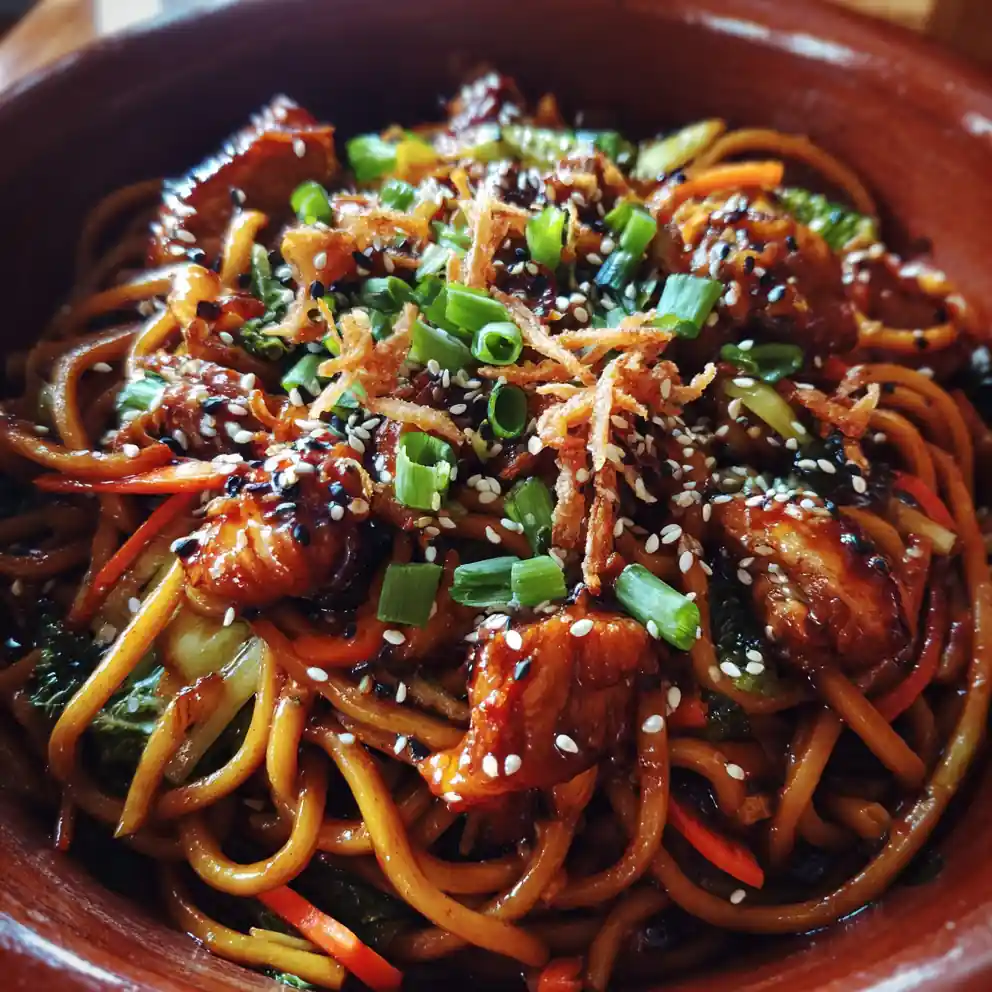
- Serve and Garnish: Plate the authentic lo mein in a wide, shallow white ceramic bowl, gently coiling the noodles to form a mound. Drizzle the reserved Fermented Chili Glaze artfully over the top of the noodles, allowing it to pool slightly. Scatter the crispy fried shallots generously over the noodles, then finish with remaining toasted sesame seeds and fresh chopped scallion greens for a final pop of color and texture.
Lo Mein Variations and Substitutions
This authentic lo mein recipe provides a flexible base for customization. You can easily adapt it based on what ingredients you have available or to fit different dietary needs, making it a truly versatile family dinner.
Swapping Protein
Easily swap the chicken breast for thinly sliced flank steak, ground meat, shrimp, or firm tofu. For a high-protein vegetarian option, firm tofu works perfectly, absorbing the sauce beautifully during the stir-fry process.
Vegetable Additions
To make this a complete family-friendly meal, add more vegetables. Sliced mushrooms (shiitake or cremini), broccoli florets, bok choy, or snap peas work well and add nutritional benefits. Add them during step 7 along with the cabbage and snow peas, ensuring everything cooks evenly.
Adjusting Spice Level
The Doubanjiang provides a rich, savory heat. If you prefer less spice, reduce the amount to 1 tablespoon; for more heat, add a pinch of chili flakes during the stir-fry along with the aromatics.

Make-Ahead Tips and Leftover Storage
This recipe works well for meal prep recipes and leftovers when handled correctly. Keep the noodles separate when storing for the best results to avoid sogginess.
Keeping Noodles Separate
If preparing ahead of time for healthy eating throughout the week, store the cooked lo mein noodles separately from the sauce in an airtight container. This prevents the noodles from absorbing too much liquid and becoming overly soft.
Reheating
Reheat individual portions in a skillet with a splash of water or broth, stirring constantly until heated through. This method preserves the noodle texture and prevents them from becoming rubbery. I find that microwaving lo mein noodles results in a mushier texture, so I always use the stovetop method instead.
Freezing
This dish is best enjoyed fresh or refrigerated for up to 3 days. Freezing can change the texture of the vegetables and noodles, making them less enjoyable upon thawing. If you must freeze, keep the sauce separate from the noodles and vegetables for best results.
FAQs
What kind of noodles should I use for authentic lo mein?
Fresh, thin egg noodles (often labeled as lo mein or canton noodles) are preferred for their superior chewy texture and ability to absorb the sauce. Look for them in the refrigerated section of your grocery store near other Asian ingredients.
What is Doubanjiang and where do I find it?
Doubanjiang (fermented chili bean paste) is a key ingredient in Sichuan cooking, made from fermented broad beans, soybeans, and chili peppers. It provides a rich, savory, and slightly spicy depth. Find it in most large Asian markets or online specialty stores for this authentic lo mein recipe.
Can I make this recipe without the dark soy sauce?
Yes, you can omit the dark soy sauce, but your authentic lo mein will have a lighter brown color. The flavor difference will be minimal as the dark soy sauce is primarily for aesthetic purposes in this specific recipe.
Why do my noodles get sticky or clump together?
This happens when noodles are overcooked or not properly tossed with oil after draining. Ensure you cook only until al dente and add a light drizzle of vegetable oil immediately after draining. I find that even a minute of waiting causes the fresh noodles to start sticking together, so I make sure to oil them right away.
How do I make this vegetarian or vegan?
Replace the chicken with firm tofu or seitan, ensure you are using vegetarian oyster sauce (mushroom-based), and check the Doubanjiang label for any non-vegan ingredients. The rest of the ingredients in this authentic lo mein recipe are typically plant-based.
Conclusion
This easy authentic lo mein recipe delivers on flavor and texture, proving that restaurant-quality results are achievable in your own kitchen for quick meals. Save this family-friendly recipe to Pinterest so you can easily find it for your next weeknight meal.
Print
authentic lo mein recipe
- Total Time: 30 minutes
- Yield: 4 servings 1x
- Diet: General
Description
This recipe creates a restaurant-quality lo mein dish using a rich fermented chili glaze and fresh ingredients, finished with crispy shallots for texture. It’s a quick and easy weeknight meal that can be customized with various proteins and vegetables.
Ingredients
- 1 lb fresh lo mein noodles
- 1 lb boneless, skinless chicken breast, thinly sliced against the grain
- 1 tbsp light soy sauce (for chicken marinade)
- 1 tsp cornstarch (for chicken marinade)
- 0.5 cup vegetable oil, divided
- 3 large shallots, thinly sliced into rings
- 3 cloves garlic, minced
- 1-inch piece fresh ginger, grated
- 2 large carrots, peeled and julienned
- 7 oz Napa cabbage, roughly chopped
- 1 red bell pepper, deseeded and thinly sliced
- 3.5 oz snow peas, trimmed
- 4 scallions, green and white parts separated, thinly sliced
- 0.25 cup light soy sauce (for glaze)
- 2 tbsp dark soy sauce (for glaze)
- 2 tbsp Doubanjiang (fermented chili bean paste)
- 1 tbsp sugar (for glaze)
- 0.75 cup vegetable broth (for glaze)
- 2 tbsp vegetarian oyster sauce (mushroom-based)
- 1 tbsp cornstarch (for glaze)
- 1 tbsp toasted sesame oil (for glaze)
- 2 tsp toasted white sesame seeds (for glaze)
Instructions
- Marinate the Chicken: In a small bowl, combine the thinly sliced chicken with 1 tbsp light soy sauce and 1 tsp cornstarch. Stir to coat evenly, then set aside for at least 15 minutes while preparing the remaining ingredients.
- Prepare Crispy Shallots and Infused Oil: Heat 0.25 cup vegetable oil in a large wok or skillet over medium-low heat. Add the thinly sliced shallots and fry gently, stirring frequently, until they turn golden brown and crispy (about 8-10 minutes). Remove the crispy shallots with a slotted spoon and drain on paper towels; reserve the infused oil in the wok.
- Cook the Chicken: Increase the heat in the wok to medium-high. Add the marinated chicken and stir-fry for 3-4 minutes until cooked through and lightly browned. Remove the chicken from the wok and set aside with the crispy shallots.
- Cook the Noodles: Bring a large pot of water to a boil and cook the fresh lo mein noodles according to package directions until al dente (about 2-3 minutes). Drain well and immediately toss with a small drizzle of vegetable oil to prevent sticking. Do not rinse the noodles.
- Prepare the Fermented Chili Glaze: In a medium bowl, whisk together all the glaze ingredients: light soy sauce, dark soy sauce, Doubanjiang, sugar, vegetable broth, vegetarian oyster sauce, cornstarch, toasted sesame oil, and toasted white sesame seeds. Whisk until smooth and the cornstarch is dissolved. Reserve approximately 2 tbsp of the glaze mixture for drizzling later.
- Stir-Fry Aromatics and Vegetables: Add 2 tbsp of fresh vegetable oil to the wok and increase the heat to high. Add the minced garlic and grated ginger, stirring continuously for 30 seconds until fragrant. Add the julienned carrots, sliced red bell pepper, and the white parts of the scallions; stir-fry for 2-3 minutes until they begin to soften slightly.
- Add Remaining Vegetables: Add the chopped Napa cabbage and snow peas to the wok. Stir-fry for another 2-3 minutes until the Napa cabbage has wilted and the snow peas are bright green, but still retain some crispness.
- Combine Ingredients and Thicken Glaze: Return the cooked chicken to the wok. Add the cooked lo mein noodles to the wok on top of the chicken and vegetables. Pour the main portion of the prepared glaze over the ingredients. Using tongs, toss everything together continuously for 1-2 minutes, allowing the glaze to thicken and coat all ingredients evenly. If the glaze is too thick, add a splash of vegetable broth to loosen it.
- Serve and Garnish: Plate the lo mein and drizzle the reserved glaze over the top. Scatter the crispy fried shallots, remaining toasted sesame seeds, and fresh chopped scallion greens over the noodles before serving.
Notes
To achieve the best results, use fresh lo mein noodles rather than dried ones. The cornstarch marinade technique (velveting) keeps the chicken moist and tender during cooking. To avoid a gummy texture, do not rinse the noodles after draining. Ensure vegetables retain some crispness by not overcooking them in the stir-fry process.
- Prep Time: 15 minutes
- Cook Time: 15 minutes
- Category: Main Course
- Method: Stir-frying
- Cuisine: American Chinese
Nutrition
- Serving Size: 1 serving (approx. 450 g)
- Calories: 580 calories
- Sugar: 5 g
- Sodium: 600 mg
- Fat: 25 g
- Saturated Fat: 6 g
- Unsaturated Fat: 15 g
- Trans Fat: 0 g
- Carbohydrates: 60 g
- Fiber: 4 g
- Protein: 30 g
- Cholesterol: 65 mg
FREE PRINTABLE RECIPE
Get the Printable Recipe PDF (Free)
Enter your email and we’ll send you the ingredients + step-by-step instructions as a clean PDF you can save to your phone.
- ✅ Printable PDF (ingredients + steps)
- ✅ Save it to your phone (no long scrolling)
- ✅ Includes cook time + servings
- ✅ Easy to follow
FAQ
Where’s the full recipe?
It’s delivered as a printable PDF so you can save it and cook without scrolling.
I didn’t get the email.
Check Spam/Promotions and search your inbox for your site name. Then click Confirm to receive the PDF.