
I always find myself turning to simple noodle dishes when I need a quick win on a busy weeknight. This recipe for Gochujang Peanut Noodles hits all the right notes: a rich, savory glaze, tender rice noodles, and crispy tofu that delivers big flavor without a big time commitment. If you’re looking for new rice noodle recipe ideas that are family-friendly and healthier than takeout, this one is perfect. I often make a double batch of the sauce for quick rice noodle recipe ideas later in the week.
Ingredients
- Flat Rice Noodles: 200 g (7 oz) flat rice noodles. These are quick-cooking and perfect for soaking up the thick sauce. Look for flat noodles (like Pad Thai style) rather than thin vermicelli for the best texture. Cook according to package directions and rinse immediately after draining to prevent sticking.
- Crispy Tofu: 400 g (14 oz) extra-firm tofu, pressed and cut into 2 cm (¾ inch) cubes. Pressing the tofu thoroughly removes excess moisture, ensuring a truly crispy exterior. Cut into uniform cubes to guarantee even cooking in the skillet. Tofu provides a great plant-based source of protein that perfectly balances the rich sauce.
- Fresh Vegetables and Aromatics: 1 medium red bell pepper, thinly sliced; 1 medium yellow bell pepper, thinly sliced; 150 g (5 oz) snap peas; 2 cloves garlic, minced; 15 g (1 tablespoon) fresh ginger, grated. Sliced bell peppers and snap peas provide a vibrant color contrast and crisp-tender texture. The combination of garlic and fresh ginger builds the aromatic foundation of the dish. For extra color and nutrients, consider adding thinly sliced carrots or chopped broccoli florets, making this one of my favorite healthy rice noodle recipe ideas.
- Spicy Gochujang Peanut Glaze: 60 g (¼ cup) creamy peanut butter; 30 g (2 tablespoons) Gochujang; 30 ml (2 tablespoons) alcohol-free soy sauce; 15 ml (1 tablespoon) alcohol-free rice vinegar; 15 ml (1 tablespoon) maple syrup; 120 ml (½ cup) vegetable broth; 5 ml (1 teaspoon) toasted sesame oil; 10 ml (2 teaspoons) cornstarch. Gochujang: This Korean chili paste adds complex heat and a fermented flavor. Peanut Butter: Use creamy, natural peanut butter (without added sugar or oils if possible) to create a smooth, rich base for the sauce. Maple Syrup: You can use honey or agave syrup instead. Cornstarch Slurry: The cornstarch is essential for thickening the sauce to create a glossy glaze that clings perfectly to the noodles. The Gochujang glaze is a versatile foundation for many healthy rice noodle recipe ideas.
- For Cooking and Garnish: 30 ml (2 tablespoons) vegetable oil, plus more for cooking; 30 g (2 tablespoons) roasted peanuts, roughly chopped; 15 g (¼ cup) fresh cilantro, roughly chopped; lime wedges (optional). The oil is needed for creating crispy tofu and sautéing the vegetables. The roasted peanuts provide a crucial contrasting crunch and nutty finish. Fresh cilantro adds brightness, and a squeeze of lime at the end cuts through the richness of the glaze.
Instructions
1. Prepare the Noodles: Bring a large pot of water to a boil and cook the 200g (7 oz) flat rice noodles according to package directions (usually 5-7 minutes). Once cooked, drain immediately in a colander and rinse thoroughly with cold water to halt the cooking process and prevent the noodles from sticking together. Set the rinsed noodles aside in the colander while you prepare the remaining components. This prevents the noodles from clumping, which is key for successful rice noodle recipe ideas.
2. Cook the Tofu: Heat 30 ml (2 tablespoons) vegetable oil in a large non-stick skillet or wok over medium-high heat. Add the pressed 400g (14 oz) tofu cubes in a single layer, ensuring not to overcrowd the pan. Cook, stirring occasionally, for 8-10 minutes until all sides are golden brown and crispy; then remove the tofu from the skillet and set aside.
3. Sauté the Aromatics and Vegetables: Add a little more vegetable oil to the same skillet if needed. Add the minced garlic and grated ginger and sauté for 30 seconds until fragrant (be careful not to burn the garlic). Add the sliced red and yellow bell peppers and snap peas; stir-fry for 3-4 minutes until the vegetables reach a tender-crisp texture. Remove the vegetables and set them aside with the tofu.
4. Prepare the Spicy Gochujang Peanut Glaze: In a medium bowl, whisk together the peanut butter, Gochujang, alcohol-free soy sauce, alcohol-free rice vinegar, maple syrup, vegetable broth, and toasted sesame oil until smooth. In a small separate bowl, dissolve the cornstarch in 15 ml (1 tablespoon) cold water to create a slurry. Add the cornstarch slurry to the glaze mixture and whisk again until fully incorporated.
5. Thicken the Glaze: Pour the glaze mixture into the empty skillet (no need to clean from the previous step). Cook over medium heat, stirring constantly, for 2-3 minutes, until the glaze thickens to a glossy, pourable consistency. Remove the skillet from the heat immediately once thickened to avoid burning the sauce. If the glaze gets too thick, add a splash of broth or water to thin it out.
6. Combine and Glaze: Add the cooked rice noodles, crispy tofu, and sautéed vegetables back into the skillet with the thickened Gochujang Peanut Glaze. Toss gently but thoroughly to ensure all the noodles and components are evenly coated with the rich, glossy glaze. Toss for no more than 60 seconds to prevent the noodles from overcooking or breaking.
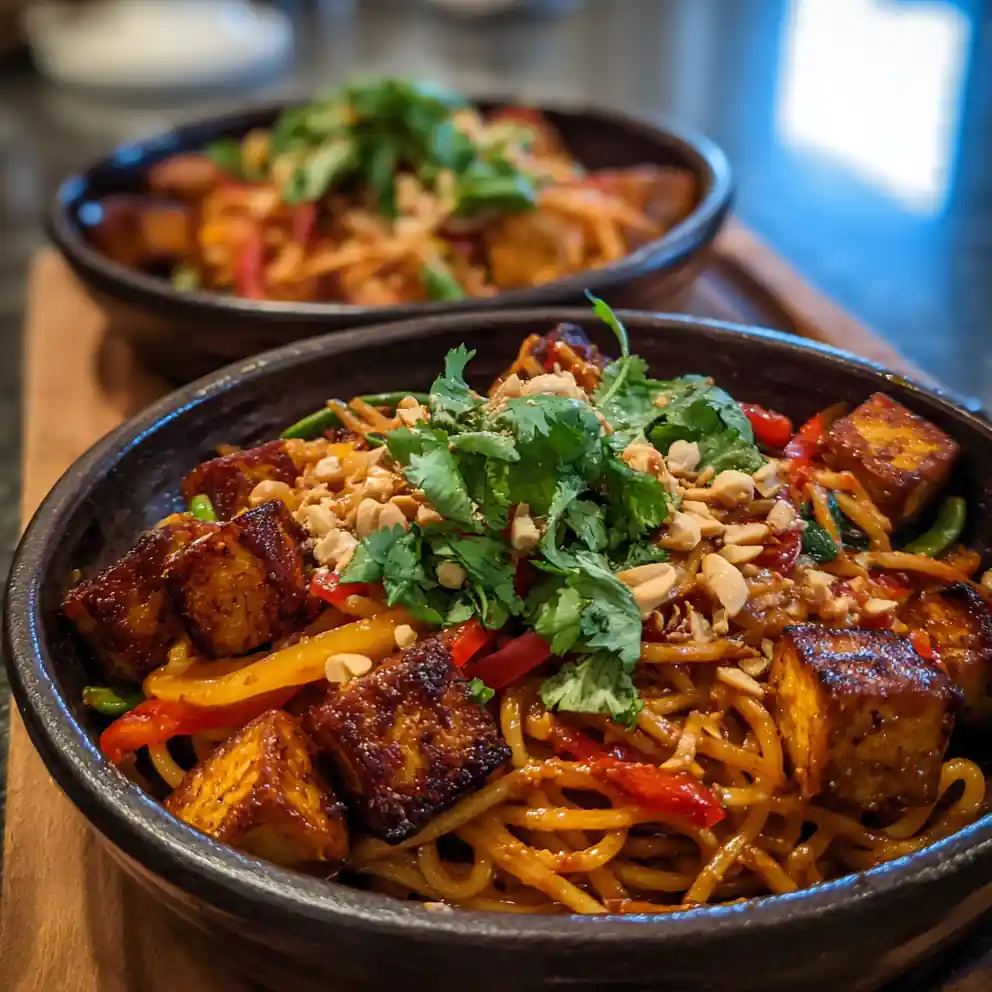
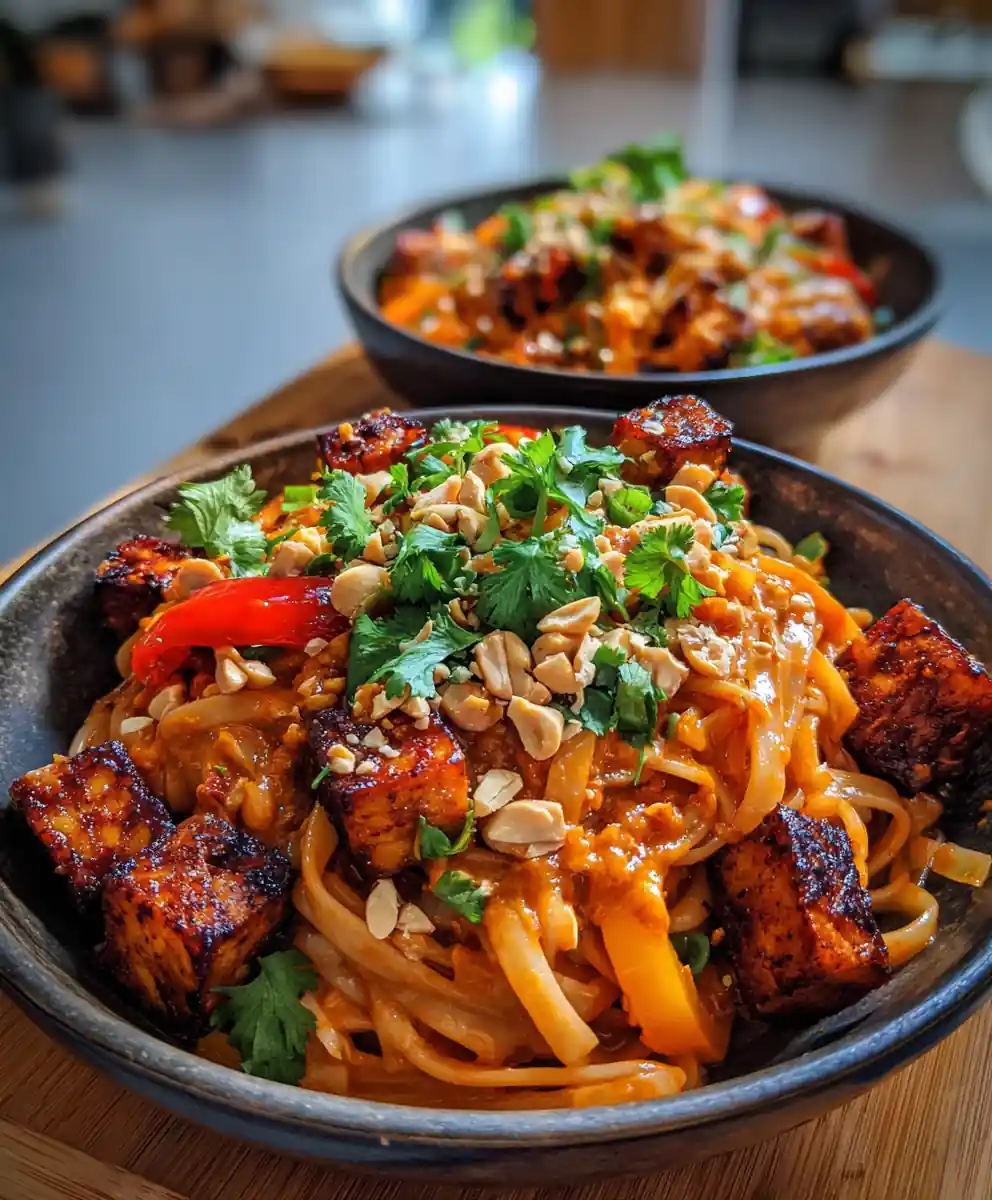
7. Plating & Visual Styling: Serve the glazed rice noodles immediately in shallow bowls. Arrange the noodles to create a slight mound, ensuring the glossy, reddish-orange glaze shines through. Garnish generously with the roughly chopped roasted peanuts and fresh cilantro; serve with lime wedges on the side for an optional burst of freshness.
Simple Variations for This Gochujang Rice Noodle Recipe
This recipe is incredibly versatile and allows for easy substitutions based on your family’s preferences or what you have available. When looking for new rice noodle recipe ideas, try swapping out different ingredients to make it feel fresh every time.
- Change the Protein: This dish is equally delicious with other quick-cooking proteins. Try swapping the tofu for 400g (14 oz) of shrimp, pan-seared chicken breast, or even shredded beef.
- Add More Veggies: Customize based on what you have in the fridge. Broccoli florets, bok choy, mushrooms, or green onions (added at the end) work beautifully with the Gochujang glaze. I often toss in some chopped mushrooms when I make this for a quick weeknight dinner, as my kids love the extra texture.
- Adjust the Heat: Gochujang varies in spice level. If you prefer less heat, start with 1 tablespoon and add more later. If you like it spicier, add a pinch of chili flakes or a small amount of Sriracha.
- Make it Creamier: If you want a richer sauce, replace some of the vegetable broth with canned coconut milk. The creaminess complements the peanut butter and Gochujang beautifully.
Quick Meal Prep Tips for Busy Weeknights
A big reason I love this recipe is how easily it adapts to meal prepping for healthy eating throughout the week.
- Prepare Components Separately: To save time, you can prep the ingredients in advance. Cook the tofu and vegetables, and store them in separate containers in the refrigerator for up to 3 days.
- Pre-Mix the Sauce: Whisk together all the Gochujang glaze ingredients (except the cornstarch slurry) ahead of time and keep them chilled. When ready to cook, add the cornstarch slurry just before thickening in the skillet.
- Storage and Reheating: Leftovers can be stored in an airtight container for 3-4 days. To reheat, add a splash of water or broth and microwave until heated through, then toss to re-coat the noodles and ingredients evenly.
FAQs
Q: How do I cook rice noodles so they don’t stick together?
A: The most important step is to rinse them thoroughly with cold water immediately after draining. This removes excess starch and cools them down, preventing them from continuing to cook and clump together into a solid mass.
Q: Can I use different noodles for this recipe?
A: Yes, you can. While rice noodles provide the classic texture for this dish, you can easily swap them for spaghetti, linguine, or even wide egg noodles. Adjust cooking times according to package directions, as this will vary significantly from a typical rice noodle recipe idea.
Q: How spicy is Gochujang?
A: Gochujang has a mild to medium heat level, but it’s more known for its complex, savory-sweet flavor than its intense spice. If you are sensitive to heat, start with half the recommended amount and increase to taste.
Q: Can I make this with chicken instead of tofu?
A: Absolutely. Cut boneless, skinless chicken breast or thighs into 1-inch pieces. Cook them in the skillet first until browned and cooked through before removing and proceeding with the vegetables.
Q: How do I get truly crispy tofu?
A: First, make sure you press the extra-firm tofu to remove as much moisture as possible before cooking. Second, ensure your skillet is preheated to medium-high heat and don’t overcrowd the pan, which can lower the temperature and lead to steaming rather than searing. I also recommend using a high-heat oil like avocado oil to prevent burning.
Q: Is this recipe suitable for meal prepping?
A: Yes, it holds up reasonably well for meal prep. Store the components separately (noodles, sauce, and veggies/tofu) for best results. The noodles can sometimes dry out when reheated, so add a small amount of water or broth to loosen everything up.
Q: What is a good substitute for maple syrup?
A: You can use honey or agave syrup instead of maple syrup to add the necessary sweetness that balances the spice of the Gochujang.
Conclusion
If you’re looking for flavorful, quick, and satisfying rice noodle recipe ideas, this Gochujang Peanut Tofu dish is a must-try. Save this recipe to Pinterest so you can find this healthy, easy dinner idea whenever you need it most.
Print
rice noodle recipe ideas
- Total Time: 40 minutes
- Yield: 4 servings 1x
- Diet: Vegetarian
Description
A quick and easy weeknight dish featuring rice noodles, crispy tofu, and fresh vegetables coated in a rich and spicy Gochujang peanut sauce.
Ingredients
- 200 g flat rice noodles (7 oz)
- 400 g extra-firm tofu (14 oz), pressed and cut into 2 cm (¾ inch) cubes
- 1 medium red bell pepper, thinly sliced
- 1 medium yellow bell pepper, thinly sliced
- 150 g snap peas (5 oz)
- 2 cloves garlic, minced
- 15 g fresh ginger, grated (1 tablespoon)
- 60 g creamy peanut butter (¼ cup)
- 30 g Gochujang (2 tablespoons)
- 30 ml alcohol-free soy sauce (2 tablespoons)
- 15 ml alcohol-free rice vinegar (1 tablespoon)
- 15 ml maple syrup (1 tablespoon)
- 120 ml vegetable broth (½ cup)
- 5 ml toasted sesame oil (1 teaspoon)
- 10 ml cornstarch (2 teaspoons)
- 30 ml vegetable oil (2 tablespoons), plus more for cooking
- 30 g roasted peanuts (2 tablespoons), roughly chopped
- 15 g fresh cilantro (¼ cup), roughly chopped
- Lime wedges (optional)
Instructions
- Prepare the Noodles: Cook the flat rice noodles according to package directions in a large pot of boiling water (typically 5-7 minutes). Drain immediately and rinse thoroughly with cold water to prevent sticking; set aside.
- Cook the Tofu: Heat 30 ml vegetable oil in a large non-stick skillet over medium-high heat. Add the pressed tofu cubes in a single layer and cook for 8-10 minutes, stirring occasionally, until all sides are golden brown and crispy. Remove the tofu from the skillet and set aside.
- Sauté Vegetables and Aromatics: Add a little more vegetable oil to the skillet if needed. Add the minced garlic and grated ginger and sauté for 30 seconds until fragrant. Add the sliced bell peppers and snap peas and stir-fry for 3-4 minutes until they are tender-crisp. Remove the vegetables and set aside with the tofu.
- Prepare the Glaze: In a medium bowl, whisk together the peanut butter, Gochujang, soy sauce, rice vinegar, maple syrup, vegetable broth, and toasted sesame oil until smooth. In a small separate bowl, dissolve the cornstarch in 15 ml cold water to create a slurry. Add the cornstarch slurry to the glaze mixture and whisk again until fully incorporated.
- Thicken the Glaze: Pour the glaze mixture into the empty skillet. Cook over medium heat, stirring constantly, for 2-3 minutes until the glaze thickens to a glossy, pourable consistency. Remove the skillet from the heat immediately once thickened.
- Combine Ingredients: Add the cooked rice noodles, crispy tofu, and sautéed vegetables back into the skillet with the thickened Gochujang Peanut Glaze. Toss gently but thoroughly to ensure all ingredients are evenly coated with the glaze (toss for no more than 60 seconds).
- Garnish and Serve: Serve immediately in shallow bowls. Garnish generously with roughly chopped roasted peanuts and fresh cilantro; serve with lime wedges on the side for an optional burst of freshness.
Notes
To make this recipe ahead, prepare a double batch of the Gochujang glaze and store it separately in an airtight container for up to 5 days. For variation, substitute the maple syrup with honey or agave syrup, and add other vegetables like thinly sliced carrots or chopped broccoli florets when stir-frying.
- Prep Time: 20 minutes
- Cook Time: 20 minutes
- Category: Main Course
- Method: Stovetop
- Cuisine: Asian
Nutrition
- Serving Size: 1 serving (approx 450 g)
- Calories: 475 calories
- Sugar: 15 g
- Sodium: 700 mg
- Fat: 20 g
- Saturated Fat: 5 g
- Unsaturated Fat: 12 g
- Trans Fat: 0 g
- Carbohydrates: 45 g
- Fiber: 5 g
- Protein: 14 g
- Cholesterol: 0 mg
FREE PRINTABLE RECIPE
Get the Printable Recipe PDF (Free)
Enter your email and we’ll send you the ingredients + step-by-step instructions as a clean PDF you can save to your phone.
- ✅ Printable PDF (ingredients + steps)
- ✅ Save it to your phone (no long scrolling)
- ✅ Includes cook time + servings
- ✅ Easy to follow
FAQ
Where’s the full recipe?
It’s delivered as a printable PDF so you can save it and cook without scrolling.
I didn’t get the email.
Check Spam/Promotions and search your inbox for your site name. Then click Confirm to receive the PDF.