
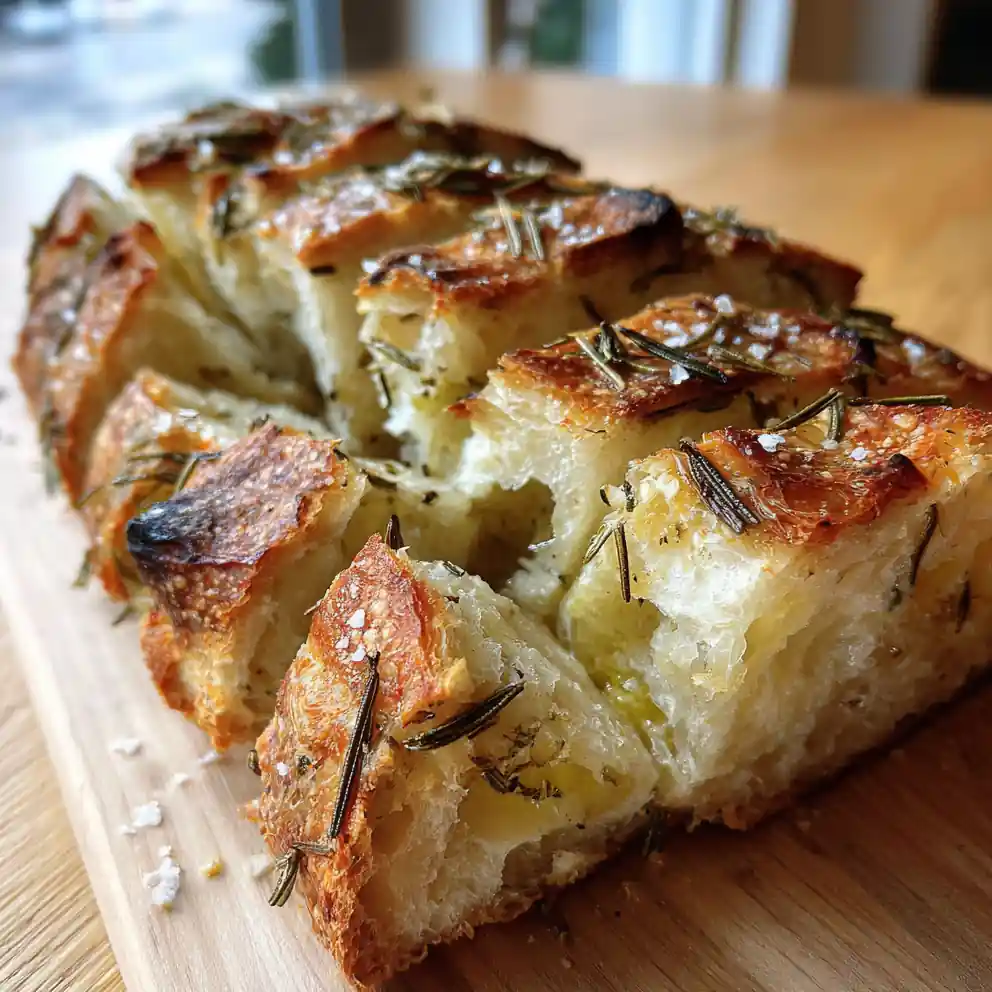
I think a truly great loaf of homemade sourdough can elevate almost any meal. This roasted garlic and rosemary infusion creates a warm, savory aroma in the kitchen that’s simply irresistible. If you’re looking to turn your active starter into a truly spectacular loaf, this easy sourdough recipe with starter is exactly what you need to impress at your next gathering. This hearty bread is perfect for dipping in olive oil or serving alongside pasta for a healthy, satisfying dinner.
Ingredients
- Active Sourdough Starter | 100 g (0.4 cup) | Use a healthy, active starter that has been fed 4-12 hours prior to mixing.
To test for readiness, drop a small amount in water; it should float immediately.
To ensure a strong rise, avoid using a starter that has been in the fridge for more than a few days without feeding. - Bread Flour | 350 g (2.8 cups) | Choose high-protein bread flour (12-14%) for best structure and spring.
Avoid all-purpose flour, as it results in a denser loaf.
Weighing with a kitchen scale (grams) is highly recommended for accuracy. - Warm Water | 250 g (1 cup + 2 tbsp) | Ensure the water temperature is between 30-32°C (86-90°F) to activate the starter and yeast efficiently.
Do not use water that is too hot, as it can kill the starter.
Tap water works fine, but filtered water can be used for purer results in this sourdough recipe with starter. - Fine Sea Salt | 7 g (1.2 tsp) | Use fine sea salt or kosher salt; avoid iodized table salt.
Salt is essential for flavor and controlling the fermentation rate.
Do not add the salt at the very beginning; it should be added after the autolyse stage. - Garlic Heads | 2 medium heads | Choose fresh, firm heads of garlic without green sprouts.
Roasting transforms the flavor from sharp to sweet and creamy.
This recipe uses all 2 heads, some mashed and some whole. - Fresh Rosemary | 2 sprigs | Use fresh rosemary for a vibrant aroma and flavor.
Finely chop the leaves to ensure even distribution and avoid large, woody pieces.
If substituting with dried rosemary, reduce the amount to 1 teaspoon. - Extra Virgin Olive Oil | 30 ml (2 tbsp), divided | Used to roast the garlic and for the final presentation.
A good quality olive oil will add depth to the overall flavor profile.
A small amount is reserved for serving to finish the bread. - Flaky Sea Salt | 5 g (1 tsp) | Used as a garnish for the final presentation.
The larger crystals add a pleasant crunch and visual appeal.
If you don’t have flaky salt, you can skip this step or use coarse sea salt.
Instructions
- Roast the Garlic | Preheat your oven to 200°C (400°F).
Slice off the very top of each garlic head to expose the cloves, place on aluminum foil, drizzle with 1 tablespoon of olive oil, and wrap tightly.
Roast for 35-45 minutes, or until the cloves are very soft and fragrant; let cool completely before squeezing out the cloves and mashing two-thirds into a paste. - Autolyse | In a large mixing bowl, combine the bread flour and warm water until no dry spots remain and a shaggy dough forms.
Cover the bowl and let the mixture rest for 30 minutes.
This step allows the flour to fully hydrate and gluten development to begin before adding the starter. - Mix Starter and Salt | Add the active sourdough starter and fine sea salt to the dough.
Mix thoroughly by hand for 5-7 minutes, until the salt is fully incorporated and the dough begins to develop some elasticity.
Cover and let rest for 30 minutes after mixing. - First and Second Stretch and Folds | Over the next 2.5-3 hours, perform 4 sets of stretch and folds spaced 30 minutes apart.
For the first two folds, gently stretch one side of the dough up and fold it over the other side, rotating the bowl a quarter turn and repeating 3-4 times.
The dough will be sticky initially but gain strength with each fold. - Add Inclusions during Third Stretch and Fold | Gently flatten the dough on a lightly floured surface before the third stretch and fold.
Spread the mashed roasted garlic paste, the whole/chopped roasted garlic cloves, and the finely chopped rosemary evenly over the surface.
Fold the dough over itself and continue the stretch and fold process to integrate the ingredients, making this sourdough recipe with starter truly memorable. - Bulk Fermentation | After the final set of stretch and folds, cover the bowl and allow the dough to bulk ferment at room temperature (20-24°C / 68-75°F).
Let it ferment for an additional 1-2 hours, or until it has increased in volume by about 30-40% and is visibly gassy and jiggly.
A slightly cooler room may require longer bulk fermentation; aim for visual cues over exact time. - Pre-shape and Shape | Gently transfer the dough onto a lightly floured surface.
Pre-shape the dough into a loose round or rectangle and let it rest, uncovered, for 20-30 minutes to relax the gluten.
Shape the dough into a tight boule (round) or batard (oval) before placing it seam-side up in a floured banneton or bowl lined with a floured tea towel. - Cold Proof | Cover the banneton with plastic wrap or a shower cap and refrigerate for 12-18 hours for a cold proof.
This long, cold rest develops a deep, complex flavor and makes the dough much easier to handle for scoring in this sourdough recipe with starter.
Do not skip this step; it’s essential for both flavor and oven spring. - Preheat Oven and Dutch Oven | Preheat your oven to 230°C (450°F) with a Dutch oven inside for at least 30 minutes.
The Dutch oven must be very hot to achieve a superior crust and oven spring.
Ensure the oven has ample time to reach and hold temperature. - Score and Bake | Carefully remove the hot Dutch oven from the oven, invert the cold dough into it, and score the top of the dough with a sharp razor blade or knife.
Cover the Dutch oven and bake for 25 minutes.
Remove the lid, reduce the oven temperature to 220°C (425°F), and continue baking for another 20-25 minutes, or until the crust is deeply golden brown and the internal temperature reaches 96-99°C (205-210°F). If you find the crust is getting too dark, turn down the oven temperature slightly or place a sheet pan on a rack above the loaf. - Cool Completely | Carefully remove the bread from the Dutch oven and transfer it to a wire rack to cool completely for at least 2-3 hours before slicing.
Slicing too early releases steam and results in a gummy texture.
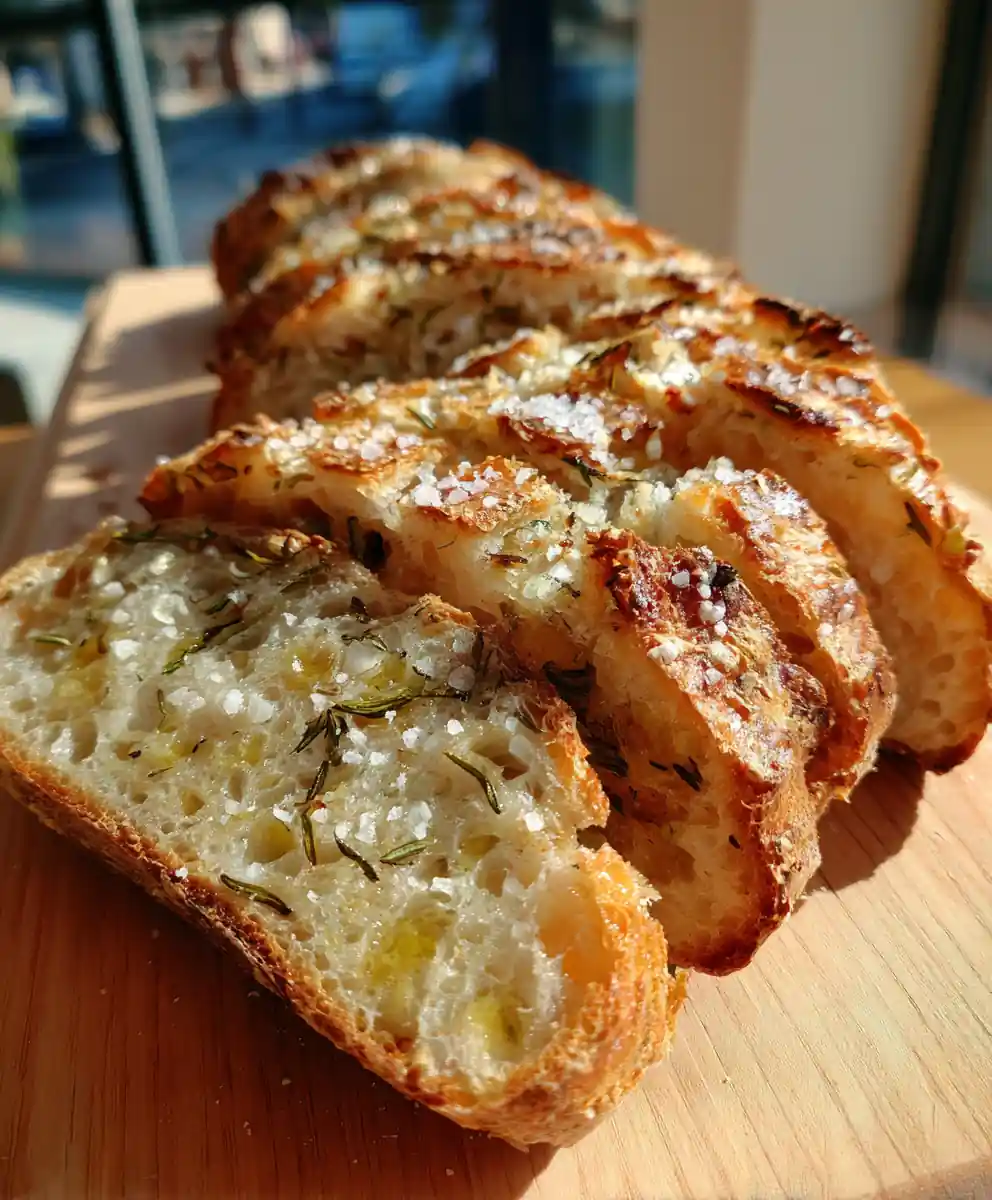
Be patient; this cooling time is just as crucial as the baking. - Serve with Garnish | Slice the cooled sourdough loaf into thick pieces and arrange them on a cutting board.
Drizzle the remaining 1 tablespoon of extra virgin olive oil lightly over the cut surfaces and crust of the bread.
Finish with a generous sprinkle of flaky sea salt for added texture and visual appeal.
Troubleshooting Sourdough Rise and Oven Spring
My dough didn’t rise enough during bulk fermentation.
A cooler room (below 68°F or 20°C) requires more time for bulk fermentation, sometimes significantly longer. Ensure your starter was active and bubbly (the float test helps verify this) before starting this sourdough recipe with starter. If your starter isn’t vigorous, the dough won’t rise well.
My dough spread flat when I put it on the counter (overproofed).
Overproofing happens when the dough runs out of energy before baking. Reduce bulk fermentation time, especially if your kitchen is warm; aim for a 30-40% volume increase rather than strict timing. The dough should still have some structure when shaping.
My oven spring was poor (flat bread).
Poor oven spring is commonly caused by underproofing (not enough gas built up) or overproofing (not enough energy left to expand). Insufficient steam during baking (not using a Dutch oven or adding water for steam) can also prevent a proper rise. Ensure your Dutch oven is fully preheated and that you don’t skip the cold proof.
The crust is too pale or soft.
Bake uncovered for longer during the final stage. The internal temperature must reach 96-99°C (205-210°F) to ensure it is fully cooked, but color is also key for flavor. Make sure you don’t reduce the temperature too early in the bake. This particular sourdough recipe with starter creates a beautiful deep crust when baked properly.
How to Serve and Store Your Roasted Garlic Sourdough
Best Pairings
This flavorful loaf pairs perfectly with a charcuterie board, used as croutons for a winter soup, or alongside a hearty pasta dish for a satisfying family dinner. The rich garlic and rosemary flavors mean it stands well on its own as a simple appetizer. You could also slice this sourdough loaf for high-protein sandwiches.
Long-Term Storage (Freezing)
To store for later, slice the cooled loaf and wrap the slices tightly in parchment paper, then place them in a freezer bag. Freeze for up to 3 months. To serve, toast directly from frozen or thaw overnight for an easy meal prep solution.
Short-Term Storage (Counter)
Keep the loaf at room temperature, cut-side down on a cutting board. Avoid refrigerating, which quickly dries out bread. The loaf will stay fresh for 2-3 days.
FAQs about Sourdough Recipe with Starter
Q: Can I use dried rosemary instead of fresh?
A: Yes, you can substitute dried rosemary, but reduce the amount significantly. Use about 1 teaspoon of dried rosemary to replace the two fresh sprigs to avoid overpowering the bread, as dried herbs are more concentrated.
Q: Why do I need to roast the garlic first?
A: Roasting the garlic mellows its sharpness and caramelizes the sugars, giving it a sweet, creamy, and nutty flavor. If you added raw garlic to the dough, it would have an acrid, pungent taste that would not be pleasant in the final bread. This step transforms the flavor profile of this sourdough recipe with starter.
Q: What if I don’t have a Dutch oven?
A: While a Dutch oven provides the best results for steam and crust development, you can create steam by placing a baking sheet on the bottom rack with hot water poured on it when you put the bread in. Bake at 230°C (450°F) initially, then reduce to 220°C (425°F) after 25 minutes.
Q: Can I use all-purpose flour instead of bread flour?
A: Bread flour has higher protein content (12-14%) which is crucial for building gluten strength in sourdough. Using all-purpose flour (10-11.5%) will result in a flatter, denser loaf with less chew. For best results, stick with bread flour. This ensures a successful sourdough recipe with starter.
Q: How do I know when my starter is ready to use?
A: Your starter is ready when it has doubled in volume after being fed and looks active and bubbly. The easiest way to verify is the float test: drop a small spoonful into a glass of water; if it floats, it’s ready. I always perform this test just before mixing to ensure a successful sourdough recipe with starter.
Conclusion
This roasted garlic and rosemary sourdough recipe with starter creates a truly special loaf that elevates a simple meal into something memorable. While sourdough requires patience, the flavor payoff from this recipe is well worth the time spent. Save this high-protein sourdough recipe with starter for easy family dinners by pinning it to your favorite board!
Print
sourdough recipe with starter
- Total Time: 1080 minutes
- Yield: 1 loaf 1x
- Diet: Vegan
Description
This easy sourdough recipe infuses the loaf with roasted garlic and rosemary, resulting in a savory, aromatic bread that is perfect for dipping in olive oil or serving alongside pasta. The recipe features a long, cold proof to develop deep flavor and improve texture.
Ingredients
- 100 g active sourdough starter
- 350 g high-protein bread flour
- 250 g warm water (30-32°C)
- 7 g fine sea salt
- 2 medium garlic heads, roasted
- 2 sprigs fresh rosemary, finely chopped
- 30 ml extra virgin olive oil, divided
- 5 g flaky sea salt, for garnish
Instructions
- Roast the Garlic: Preheat the oven to 200°C (400°F). Slice off the tops of the garlic heads, drizzle with 1 tablespoon of olive oil, wrap tightly in foil, and roast for 35-45 minutes until soft. Let cool, then mash two-thirds of the cloves into a paste.
- Autolyse: Combine flour and water in a bowl until shaggy. Cover and let rest for 30 minutes to hydrate the flour.
- Mix Starter and Salt: Add the active starter and fine sea salt to the dough. Mix thoroughly by hand for 5-7 minutes until the salt is incorporated and the dough gains elasticity. Rest for 30 minutes.
- Perform Stretch and Folds: Perform two sets of stretch and folds, spaced 30 minutes apart, to build strength in the dough.
- Add Inclusions: Gently flatten the dough and spread the mashed roasted garlic paste, remaining whole cloves, and chopped rosemary over the surface. Fold the dough to incorporate the inclusions, then perform a final set of stretch and folds.
- Bulk Fermentation: Cover the bowl and let the dough rise at room temperature (20-24°C) for 1-2 hours, until it increases in volume by 30-40%.
- Pre-shape and Shape: Transfer the dough to a lightly floured surface. Pre-shape into a round, rest for 20-30 minutes. Shape into a tight boule and place seam-side up in a floured banneton or proofing basket.
- Cold Proof: Cover the banneton and refrigerate for 12-18 hours to develop flavor and make handling easier.
- Preheat Oven and Dutch Oven: Preheat the oven to 230°C (450°F) with a Dutch oven inside for at least 30 minutes.
- Score and Bake: Invert the cold dough into the hot Dutch oven and score the top. Bake covered for 25 minutes. Remove the lid, reduce the oven temperature to 220°C (425°F), and continue baking for another 20-25 minutes until the crust is deeply golden brown (internal temperature 96-99°C).
- Cool Completely: Remove the bread from the Dutch oven and cool on a wire rack for 2-3 hours before slicing to avoid a gummy texture.
- Garnish and Serve: Drizzle the remaining olive oil over the cut loaf and sprinkle with flaky sea salt before serving.
Notes
To achieve a strong rise, ensure your starter passes the float test before beginning. For best results, use high-protein bread flour and weigh ingredients for accuracy. The long cold proof is crucial for flavor development and a better texture. Avoid slicing the bread too early, as it can result in a gummy crumb. If using dried rosemary, reduce the amount to 1 teaspoon.
- Prep Time: 60 minutes
- Cook Time: 50 minutes
- Category: Bread
- Method: Baking, Fermentation
- Cuisine: European
Nutrition
- Serving Size: 1 slice (1/12 of loaf)
- Calories: 160 kcal
- Sugar: 1 g
- Sodium: 200 mg
- Fat: 2 g
- Saturated Fat: 0 g
- Unsaturated Fat: 2 g
- Trans Fat: 0 g
- Carbohydrates: 30 g
- Fiber: 2 g
- Protein: 5 g
- Cholesterol: 0 mg
FREE PRINTABLE RECIPE
Get the Printable Recipe PDF (Free)
Enter your email and we’ll send you the ingredients + step-by-step instructions as a clean PDF you can save to your phone.
- ✅ Printable PDF (ingredients + steps)
- ✅ Save it to your phone (no long scrolling)
- ✅ Includes cook time + servings
- ✅ Easy to follow
FAQ
Where’s the full recipe?
It’s delivered as a printable PDF so you can save it and cook without scrolling.
I didn’t get the email.
Check Spam/Promotions and search your inbox for your site name. Then click Confirm to receive the PDF.