
This versatile basil pesto is a bright, flavorful condiment that comes together in just a few minutes. It works perfectly as a fresh pasta sauce, a gourmet sandwich spread, or a marinade for grilled proteins.
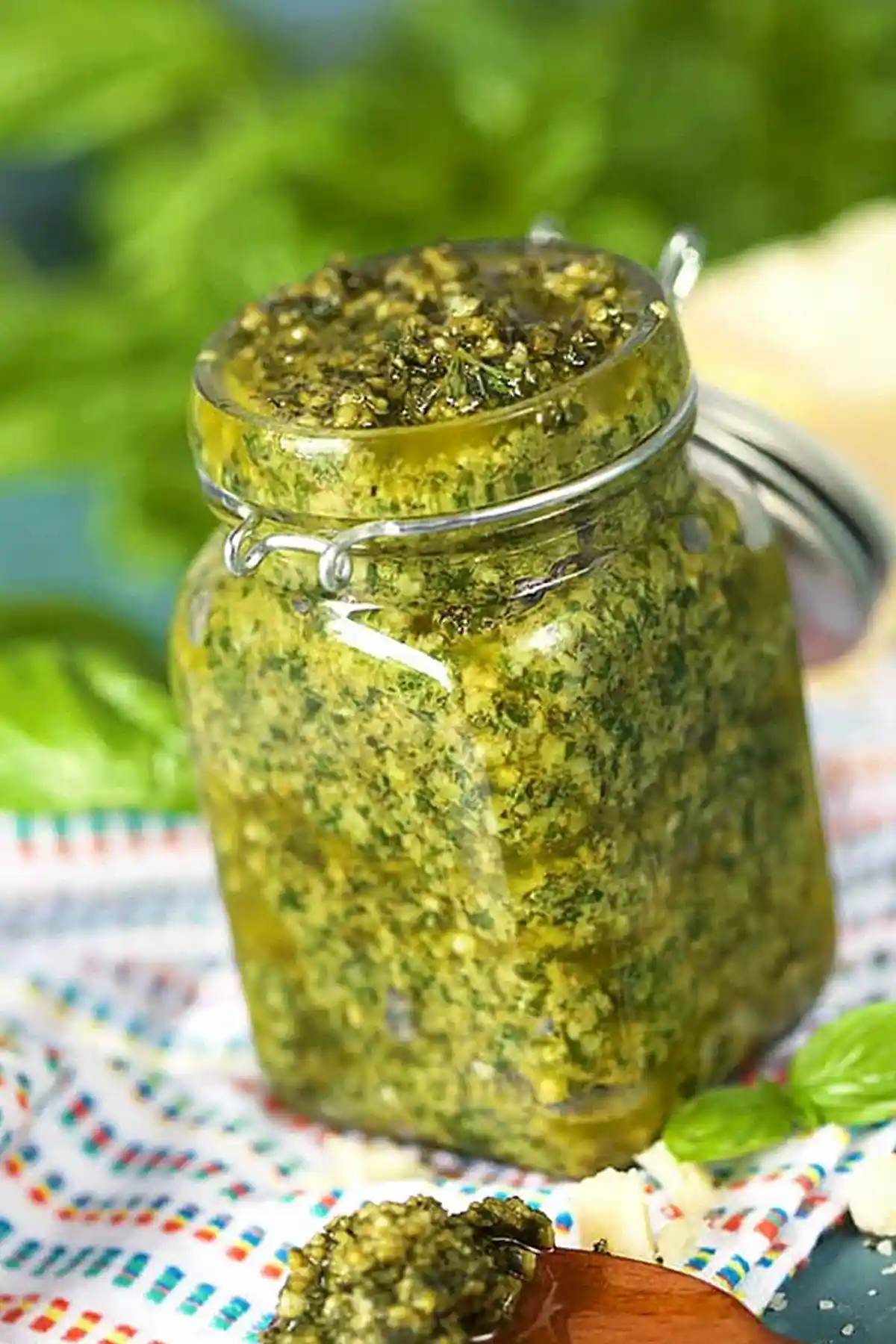
List of ingredients
- 4 ounces pine nuts – toasted for a deeper, nuttier flavor.
- 4 cups fresh basil – lightly packed to ensure the correct ratio.
- 3 garlic cloves – peeled and left whole.
- 1 cup coarsely grated parmesan cheese – use microbial-rennet variety.
- 1 tbsp lemon zest – adds brightness and preserves the green color.
- 1 cup olive oil – high-quality extra virgin olive oil is recommended.
- Kosher salt and fresh ground pepper – added to taste for final seasoning.
step-by-step instructions
- Toast the nuts: Place pine nuts in a small skillet over medium heat. Toast for 2 to 3 minutes until lightly golden brown and fragrant, then set aside to cool slightly to prevent wilting the basil.
- Initial blend: Combine half of the toasted pine nuts, 3 cups of the fresh basil, 2 garlic cloves, 1/2 cup of the parmesan cheese, and the lemon zest in a food processor. Process for approximately 30 seconds or until the ingredients are finely chopped.
- Emulsify with oil: While the food processor is running on low speed, slowly drizzle in 3/4 cup of the olive oil. Continue processing until a loose, mostly smooth paste forms, stopping to scrape down the sides as needed.
- Add remaining ingredients: Place the remaining pine nuts, 1 cup of basil, 1 garlic clove, and 1/2 cup of parmesan into the bowl. Pulse the mixture until combined but still slightly textured.
- Final touch: Use a rubber spatula to transfer the pesto to a mixing bowl. Stir in the remaining 1/4 cup of olive oil and season with kosher salt and black pepper to taste.
- Storage: Place the finished pesto in an airtight container. Keep it in the refrigerator for up to 5 days or freeze for longer preservation.
Professional Tips for Texture and Color
Deepen Flavor by Toasting Pine Nuts
Toasting the pine nuts activates their natural oils and creates a rich, nutty base. This prevents the pesto from tasting raw and adds a layer of complexity that store-bought versions lack. Keep them moving in the pan to avoid burning.
Use Lemon Zest for Vibrancy
Adding lemon zest provides a necessary acidic lift that cuts through the richness of the oil and cheese. Beyond flavor, the citric acid helps the basil maintain its bright green color for a longer period. Always zest the lemon before juicing it.
Process Ingredients in Stages
Blending half the ingredients first creates a smooth base while pulsing the rest ensures a rustic texture. This method prevents the pesto from becoming a uniform, flat puree. It allows you to experience distinct bites of nuts and cheese.
Select High-Quality Fresh Basil
Use only bright green leaves and discard any that are wilted or blackened. Dark spots on basil can introduce bitter notes and dull the overall color of the sauce. Fresh, crisp leaves provide the cleanest flavor profile.
Nut and Seed Substitutions
Substituting with Walnuts
Walnuts are an excellent and more affordable alternative to pine nuts. They offer an earthier, slightly more bitter taste that pairs well with the sweetness of fresh basil. Ensure you toast them briefly to mellow the bitterness.
Using Sunflower Seeds for Nut-Free Options
For a nut-free version, sunflower seeds provide a similar creamy texture and mild flavor. They are an ideal choice for those with allergies while maintaining the structural integrity of the sauce. Roast them lightly for better taste.
Incorporating Pepitas
Pumpkin seeds, or pepitas, add a distinct green hue and a subtle crunch to the pesto. They have a slightly sweeter profile than walnuts and a lighter taste than pine nuts. These work well in a more modern, fusion-style pesto.
Customizing with Different Greens
Adding Peppery Arugula
Replacing a portion of the basil with arugula introduces a sharp, peppery kick. This variation is excellent for topping grilled fish or steak. Balance the pepperiness by adding a small pinch of extra salt.
Blending in Fresh Spinach
Spinach is a great way to add nutrients while maintaining a vibrant green color. It has a milder flavor than basil, making the overall sauce more subtle. This is a great option for children who may be sensitive to strong basil tastes.
Using Kale for Heartiness
Kale adds a robust texture and a deeper, earthier flavor to the pesto. Since kale is tougher than basil, you may need to process it slightly longer in the first stage. It pairs exceptionally well with whole-grain pasta.
Dairy-Free and Diet Adjustments
Using Nutritional Yeast as a Cheese Substitute
For a dairy-free alternative, replace the parmesan cheese with a few tablespoons of nutritional yeast. This provides a savory, nutty, and cheese-like flavor without the animal products. It integrates seamlessly into the olive oil emulsion.
Omitting the Cheese Entirely
You can simply leave out the cheese to create a lighter, vegan-friendly version of the sauce. To compensate for the lost saltiness and depth, increase the amount of lemon zest and add a pinch more kosher salt. This emphasizes the pure taste of the basil.
Long-Term Preservation Techniques
Optimizing Refrigeration
Store your pesto in a glass jar with a tight-fitting lid to minimize air exposure. Glass is preferable to plastic as it does not absorb odors and keeps the sauce colder. Use a clean spoon every time to prevent contamination.
Creating an Olive Oil Barrier
After filling your container, smooth the surface of the pesto and pour a thin layer of olive oil over the top. This creates an airtight seal that prevents oxygen from reaching the basil. This simple step significantly slows down the browning process.
Freezing in Ice Cube Trays
Spoon the pesto into ice cube trays and freeze until solid before transferring the cubes to a freezer bag. This allows you to thaw exactly the amount you need for a single meal. This method prevents the waste associated with thawing a large batch.
Proper Thawing Procedures
Thaw frozen pesto cubes in the refrigerator overnight to maintain the best emulsion. Alternatively, you can drop a frozen cube directly into a hot pan of pasta. Avoid thawing in the microwave as excessive heat can cause the oil to separate.
Versatile Serving Suggestions
Classic Pasta Pairings
Toss this pesto with long noodles like fettuccine or twisted shapes like trofie for maximum sauce adherence. Stir in a splash of reserved pasta water to create a creamier consistency. Serve immediately while the pasta is hot.
Enhancing Grilled Proteins
Use the pesto as a topping for grilled chicken breasts or salmon fillets during the last two minutes of cooking. The heat slightly caramelizes the cheese and nuts. It also works well as a marinade if applied 30 minutes before grilling.
Gourmet Sandwich Spreads
Replace mayonnaise or mustard with pesto on Caprese sandwiches with fresh mozzarella and tomato. It also adds a sophisticated layer to turkey wraps or grilled chicken paninis. The acidity of the lemon helps cut through the richness of the meats.
Roasted Vegetable Accompaniments
Drizzle pesto over roasted carrots, asparagus, or cauliflower after they come out of the oven. The residual heat releases the aroma of the basil. It also serves as a great dip for raw crudités or toasted crostini.
Frequently Asked Questions
Why does my pesto turn brown?
Browning is caused by oxidation when basil is exposed to air. You can prevent this by adding lemon zest and sealing the top of the container with a thin layer of olive oil.
How should I measure the basil leaves?
Basil should be lightly packed into the measuring cup. Do not press the leaves down firmly, as this will result in too much basil and can make the pesto too thick or overly potent.
How long does homemade pesto stay fresh?
When stored in an airtight container in the refrigerator, homemade pesto lasts about 5 days. For longer storage, freeze it in portions for up to 3 months.
Can I use a blender instead of a food processor?
Yes, a blender works well, but be cautious not to over-process the ingredients. Blend on the lowest setting and use the pulse function to avoid turning the pesto into a completely smooth paste.
Print
Homemade Basil Pesto Recipe
- Total Time: 5 minutes
- Yield: 12 servings 1x
- Diet: Vegetarian
Description
Made with fresh basil, toasted pine nuts, parmesan, garlic, lemon, and olive oil, this basil pesto recipe is bright, flavorful, and easy to make in just a few minutes. It’s perfect for pasta, sandwiches, chicken, and freezing for later.
Ingredients
- 4 ounces pine nuts
- 4 cups fresh basil (lightly packed)
- 3 garlic cloves
- 1 cup coarsely grated parmesan cheese (microbial-rennet)
- 1 tbsp lemon zest
- 1 cup olive oil
- kosher salt and fresh ground pepper, to taste
Instructions
- Step: Add the pine nuts to a small skillet over medium heat and toast until lightly golden brown and fragrant, about 2 to 3 minutes. Set aside to cool slightly.
- Step: In the bowl of a food processor, add half of the pine nuts, 3 cups of basil, 2 garlic cloves, 1/2 cup of parmesan, and the lemon zest. Process for about 30 seconds, or until finely chopped.
- Step: With the food processor running on low speed, slowly drizzle in 3/4 cup of olive oil and continue processing until a loose, mostly smooth paste begins to form. Stop and scrape down the sides of the bowl as needed.
- Step: Add the remaining pine nuts, basil, garlic, and parmesan to the bowl. Pulse until combined but still slightly textured.
- Step: Transfer the pesto to a bowl with a rubber spatula and stir in the remaining olive oil. Season with kosher salt and black pepper to taste.
- Step: Store the basil pesto in an airtight container in the refrigerator for up to 5 days, or freeze for longer storage.
Notes
Walnuts can be used instead of pine nuts. For a brighter flavor, don’t skip the lemon zest. Use fresh, vibrant basil leaves for the best color and flavor. To help prevent the pesto from oxidizing, smooth the surface and add a thin layer of olive oil before storing. To freeze, spoon the pesto into ice cube trays and freeze until firm. Transfer the cubes to a freezer bag or airtight container. Freeze for up to 3 months for the best flavor.
- Prep Time: 5 minutes
- Cook Time: 3 minutes
- Category: Condiment
- Method: Food Processor
- Cuisine: Italian
Nutrition
- Serving Size: 1 serving
- Calories: 115 kcal
- Sugar: 0 g
- Sodium: 134 mg
- Fat: 10 g
- Saturated Fat: 2 g
- Unsaturated Fat: 8 g
- Trans Fat: 0 g
- Carbohydrates: 2 g
- Fiber: 0 g
- Protein: 4 g
- Cholesterol: 5 mg