
This hearty chicken noodle soup is a soothing meal perfect for cold weather or when you need a comforting dish. It features tender chicken thighs and rotini pasta simmered in a savory, nutrient-rich broth.
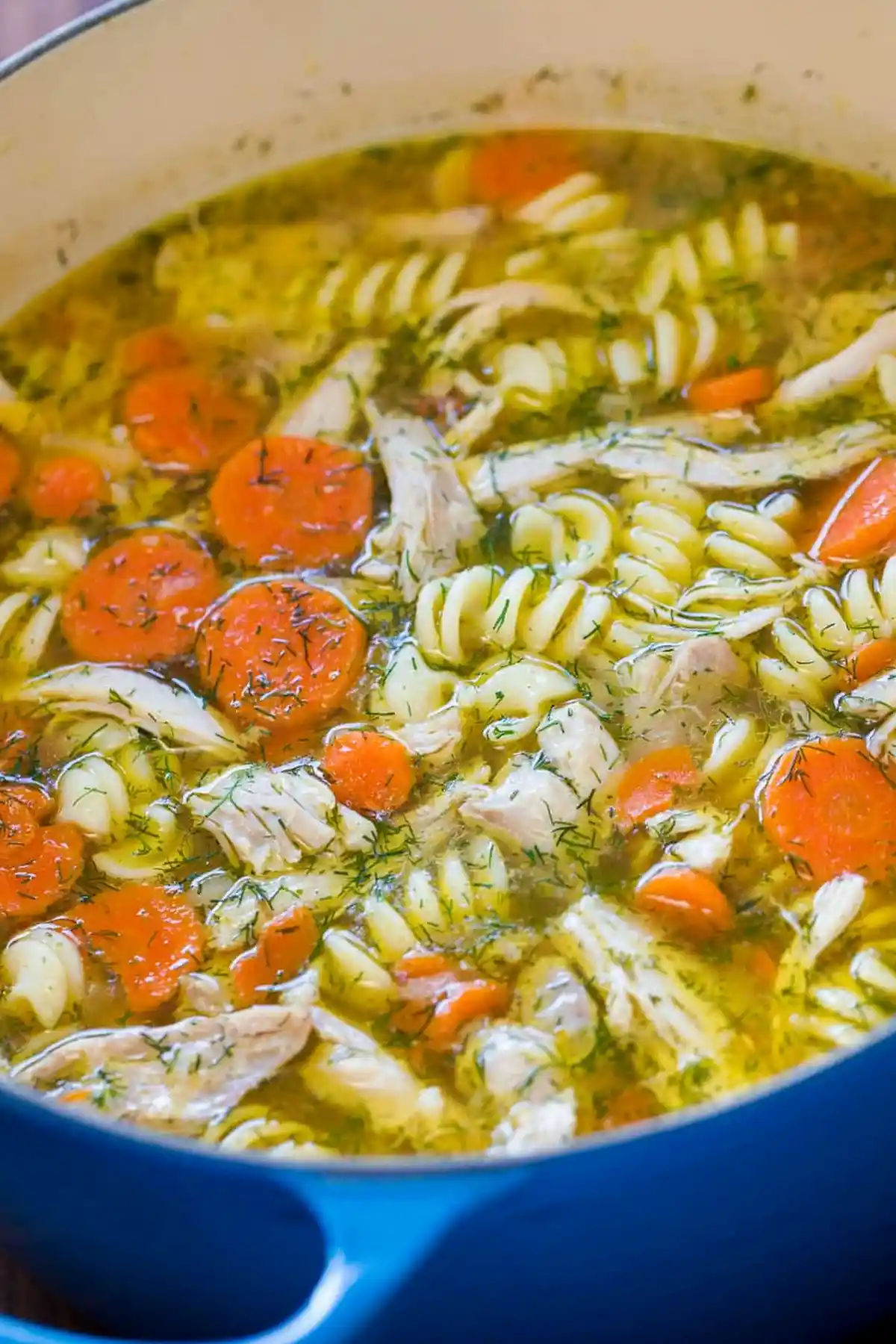
List of ingredients
- 4 chicken thighs (skins removed, bone-in or boneless) – thighs ensure the meat stays juicy.
- 8 cups chicken broth (low sodium) – provides the savory base.
- 6 cups water – balances the intensity of the broth.
- 2 Tbsp olive oil – used for sautéing the aromatic vegetables.
- 1 medium onion (finely chopped) – adds a foundational sweetness.
- 2 medium celery sticks (finely chopped) – contributes a classic savory note.
- 2 carrots (sliced into rings) – adds color and natural sweetness.
- 6 oz rotini pasta – these spiral noodles hold onto the broth well.
- 3 Tbsp fresh or frozen dill – adds a bright, herbaceous finish.
- 1 tsp Mrs. Dash (or a favorite salt-free seasoning) – for added depth without extra sodium.
- 1 Tbsp sea salt (or to taste) – essential for bringing out all the flavors.
- 1 garlic clove (pressed) – adds a pungent, aromatic kick at the end.
step-by-step instructions
- Boil the Base: Combine 6 cups of water, 8 cups of chicken broth, and 1 Tbsp of sea salt in a large soup pot. Bring the mixture to a boil, then add the chicken thighs and simmer partially covered for 20 minutes, skimming any foam from the surface.
- Sauté Aromatics: While the chicken is boiling, heat 2 Tbsp of olive oil in a large skillet over medium-high heat. Sauté the finely chopped onion and celery until they are softened, then transfer them directly into the soup pot.
- Cook Pasta and Carrots: Add the rotini pasta and sliced carrots to the pot. Continue cooking at a low boil for about 15 minutes, or until the pasta reaches your preferred level of softness.
- Prepare the Chicken: While the pasta finishes cooking, remove the chicken thighs from the pot. Use your hands or two forks to shred the meat, discarding any bones and excess fat, then return the shredded chicken to the pot.
- Final Seasoning: Stir in 1 tsp of Mrs. Dash and additional salt if needed. Press in one fresh garlic clove and stir in 3 Tbsp of dill, then immediately remove the pot from the heat to preserve the fresh flavors.
Expert Techniques for Enhanced Flavor
Use Chicken Thighs for Maximum Juiciness
Choosing chicken thighs over breasts is essential for this recipe. Thighs have a higher fat content and more connective tissue, which prevents the meat from becoming dry or stringy during the simmering process. This results in tender, flavorful pieces of chicken in every spoonful.
Skim the Broth for Clarity
When boiling chicken, proteins often rise to the surface as a greyish foam. Using a spoon or a fine mesh skimmer to remove this foam ensures your broth remains clear and has a clean taste. This simple step prevents the soup from having a cloudy appearance.
Sautéing Vegetables for Depth
Sautéing the onion and celery in olive oil before adding them to the pot develops a deeper, more complex flavor than boiling them. This process, known as sweating the vegetables, releases their natural sugars. Using oil instead of butter is recommended to avoid fat solidification when the soup is chilled.
Timing the Pasta Addition
Adding the pasta during the last 15 minutes of cooking prevents it from becoming mushy. If you overcook the noodles, they release too much starch, which can make the broth overly thick. Always cook them just until al dente for the best texture.
Adding Fresh Aromatics at the End
Adding the pressed garlic and dill at the very end of the cooking process is a critical step. These ingredients have volatile oils that evaporate and lose their potency if boiled for too long. Stirring them in just before removing the heat keeps the flavors bright and vibrant.
Controlling the Boil Temperature
Maintain a low boil or simmer once the vegetables and pasta are added. A violent boil can break the pasta pieces and cause the broth to reduce too quickly, making the soup overly salty. A gentle simmer ensures an even cook for the carrots and noodles.
Selecting a High-Quality Broth
Using a low-sodium chicken broth allows you to control the salt levels more precisely. You can enhance the flavor by using a homemade bone broth, which adds more body and nutrients to the soup. If using store-bought, look for brands with minimal additives.
Optimizing the Shredding Process
Removing the chicken from the pot to shred it prevents the meat from overcooking. Shredding with two forks allows you to easily separate the meat from the bone and remove any large chunks of fat. This creates a more consistent texture throughout the dish.
Customizing Your Soup Ingredients
Gluten-Free Pasta Alternatives
To make this recipe gluten-free, replace the rotini with your favorite gluten-free noodle or pasta. Chickpea or brown rice pasta are excellent choices that hold their shape well. Be mindful that gluten-free pastas often have different cooking times and may require more frequent stirring.
Exploring Different Noodle Shapes
While rotini is suggested, wide egg noodles are a classic alternative for this style of soup. Orzo or ditalini pasta also work well for a different mouthfeel. The key is to choose a shape that is proportional to the size of the vegetable pieces.
Integrating Extra Vegetables
You can easily boost the nutritional value by adding other vegetables to the pot. Fresh spinach or kale added in the final minute of cooking provides a pop of color and nutrients. Frozen peas or diced turnips can also be added during the pasta cooking stage.
Substituting Fresh Dill
If fresh dill is unavailable, you can use dried dill weed, though you should reduce the quantity to 1 tablespoon. Dried herbs are more concentrated than fresh ones. Alternatively, fresh parsley can be used for a more neutral, clean herbal note.
Adjusting the Salt-Free Seasoning
While Mrs. Dash is used here, any salt-free herb blend will work. A mixture of dried thyme, oregano, and a pinch of black pepper can mimic the flavor profile. Always taste the soup before adding additional sea salt to avoid over-seasoning.
Adding a Touch of Acidity
Adding a squeeze of fresh lemon juice or a teaspoon of apple cider vinegar at the end can brighten the overall flavor. Acidity cuts through the richness of the chicken thighs and lifts the savory notes of the broth. This is a professional trick to make the soup taste more balanced.
Increasing the Protein Content
For a heartier meal, you can increase the number of chicken thighs to five or six. You can also add shredded rotisserie chicken if you are short on time. Just ensure the added chicken is heated through during the final simmering stage.
Creating a Creamier Texture
If you prefer a richer soup, stir in a small amount of heavy cream or a dollop of sour cream before serving. This transforms the clear broth into a creamy base. Keep the cream separate if you plan on freezing the soup, as dairy can separate during the freezing process.
Storage and Preservation Methods
Refrigeration and Noodle Quality
When storing soup in the fridge, the pasta will continue to absorb liquid over time. To prevent the noodles from becoming mushy, it is best to store the broth and the cooked noodles in separate containers. Recombine them only when you are ready to reheat and serve.
Freezing the Soup Base
You can freeze the chicken and broth mixture for up to three months. However, you should avoid freezing the noodles, as they will lose their structure and become soggy upon thawing. Cook a fresh batch of pasta to add to the soup after reheating the frozen base.
Proper Reheating on the Stovetop
Reheat the soup in a pot over medium heat, adding a splash of water or additional broth to compensate for evaporation. Stir gently to avoid breaking the shredded chicken or pasta. Heat until the soup reaches a simmer before serving.
Using a Microwave for Quick Heating
For individual portions, use a microwave-safe bowl and heat in short intervals, stirring in between. This ensures that the heat is distributed evenly and prevents hot spots. Cover the bowl with a lid or paper towel to retain moisture.
Cooling the Soup Safely
Do not place a large pot of hot soup directly into the refrigerator, as this can raise the internal temperature of the fridge. Divide the soup into smaller, shallow containers to allow it to cool more quickly. This reduces the risk of bacterial growth.
Troubleshooting and Frequently Asked Questions
Why is my soup too salty?
Excess salt usually comes from the combination of store-bought broth and added sea salt. To fix this, add an extra cup of water or unsalted broth to dilute the concentration. Adding a peeled, raw potato to simmer in the soup for 15 minutes can also help absorb some of the salt.
How do I prevent the noodles from absorbing all the broth?
Pasta acts like a sponge and will eventually soak up the liquid if left to sit. The best solution is to undercook the pasta slightly and store it separately from the liquid. If the soup has already thickened, simply stir in a bit of warm water or broth before reheating.
Can I use chicken breasts instead of thighs?
You can use breasts, but they tend to dry out and become tough when boiled. To mitigate this, reduce the initial boiling time and add the shredded breast meat only during the final stages of cooking. Using thighs is strongly recommended for the best texture.
How can I make the broth richer and more opaque?
To achieve a richer broth, use bone-in chicken thighs and simmer them for a longer period. You can also add a small amount of cornstarch slurry (cornstarch mixed with water) toward the end of cooking. This will slightly thicken the liquid and give it a more velvety feel.
What should I do if the carrots are still hard?
If your carrots are not tender after 15 minutes, they may have been cut too thick. Continue simmering for another 5-10 minutes, or slice them into thinner rings next time. Ensure the pot is at a consistent low boil to cook the vegetables through.
Can I use a slow cooker for this recipe?
Yes, you can adapt this for a slow cooker by adding the chicken, broth, water, and vegetables at the start. Cook on low for 6-8 hours or high for 3-4 hours. Add the pasta and fresh herbs during the last 30 minutes of cooking to avoid overcooking the noodles.
Print
Comforting Homemade Chicken Noodle Soup
- Total Time: 1 hour 5 minutes
- Yield: 10 servings 1x
- Diet: General
Description
This easy Chicken Noodle Soup recipe is exactly what you imagine when you think of homemade chicken noodle soup – soothing, warming, comforting and rich in flavor. It is loaded with juicy chicken and tender noodles.
Ingredients
- 4 chicken thighs, skins removed (bone-in or boneless)
- 8 cups chicken broth
- 6 cups water
- 2 Tbsp olive oil
- 1 medium onion, finely chopped
- 2 medium celery sticks, finely chopped
- 2 carrots, sliced into rings
- 6 oz rotini pasta
- 3 Tbsp fresh or frozen dill
- 1 tsp Mrs. Dash
- 1 Tbsp sea salt
- 1 garlic clove, pressed
Instructions
- Step 1: In a large soup pot, combine 6 cups water with 8 cups chicken broth and 1 Tbsp sea salt. Bring to a boil then add chicken thighs and boil partially covered 20 min while you prep the vegetables, skimming off any foam that rises to the top.
- Step 2: In a large skillet over medium/high heat, add 2 Tbsp olive oil and sauté onion and celery until softened then transfer to the pot.
- Step 3: Add pasta and sliced carrots to the soup pot and continue cooking for 15 min at a low boil or until pasta is at the desired softness.
- Step 4: While pasta is cooking, remove chicken thighs from the pot and use either forks or your hands to shred the chicken, discarding any bones and fat which should come off easily. Return shredded chicken to the pot.
- Step 5: Season soup with 1 tsp Mrs. Dash (or your favorite seasoning) and more salt to taste if needed. Press in 1 garlic clove. Finally, add 3 Tbsp dill and remove from heat.
Notes
To make this recipe gluten-free, substitute with your favorite gluten-free noodles. If storing for more than 1-2 days, store the soup and noodles separately to prevent the pasta from becoming mushy.
- Prep Time: 15 minutes
- Cook Time: 50 minutes
- Category: Soup
- Method: Stovetop
- Cuisine: American
Nutrition
- Serving Size: 1 serving
- Calories: 249 kcal
- Sugar: 2 g
- Sodium: 807 mg
- Fat: 12 g
- Saturated Fat: 3 g
- Unsaturated Fat: 9 g
- Trans Fat: 0 g
- Carbohydrates: 22 g
- Fiber: 1 g
- Protein: 14 g
- Cholesterol: 44 mg