
This creamy pasta combines sautéed eggplant and tangy sun-dried tomatoes in a rich ricotta sauce. It is a satisfying vegetarian meal that comes together in approximately 20 minutes.
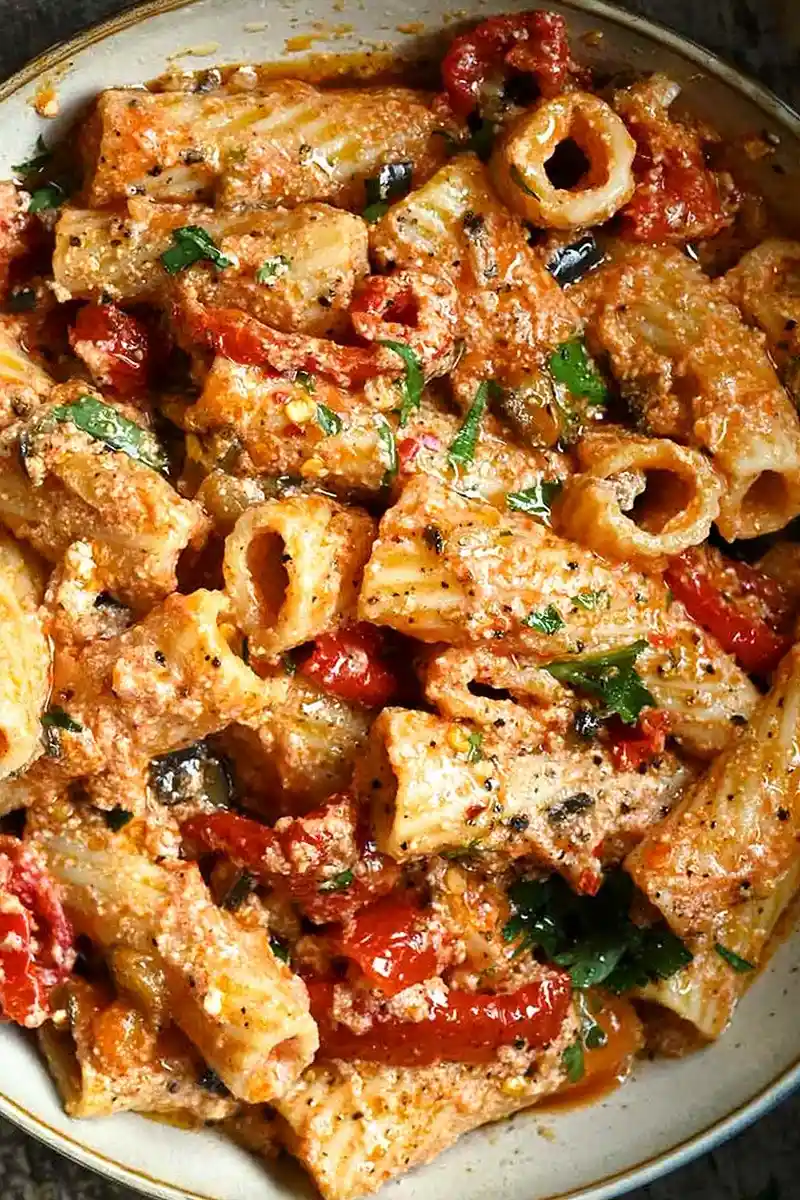
List of ingredients
- 9 ounces rigatoni – use a sturdy pasta to hold the sauce.
- 1 eggplant – finely diced for quick cooking.
- 1 cup sun-dried tomatoes packed in oil – drained, but reserve the oil.
- 1 shallot – finely chopped for mild flavor.
- 3 garlic cloves – minced.
- 1 cup puréed tomatoes – provides the base for the sauce.
- 5 ounces ricotta – adds creaminess and body.
- 1/2 tsp crushed red pepper flakes – adds a gentle heat.
- 1 tsp smoked paprika – provides a subtle woodsy flavor.
- salt – to taste.
- black pepper – to taste.
step-by-step instructions
- Boil the pasta: Cook the rigatoni in a pot of salted boiling water until al dente. Drain the pasta, ensuring you reserve 1/4 cup of the cooking water.
- Sauté aromatics: Heat 5 tbsp of the reserved sun-dried tomato oil in a skillet over medium heat. Add the minced garlic and chopped shallot, cooking for about 3 minutes until soft and fragrant.
- Cook eggplant: Add the finely diced eggplant to the skillet and sauté for 3 minutes.
- Incorporate tomatoes: Stir in the drained sun-dried tomatoes along with any remaining oil. Cook the mixture for another 5 minutes.
- Simmer sauce: Pour in the tomato puree and bring the mixture to a boil. Lower the heat and simmer for 5 minutes, then season with red pepper flakes, smoked paprika, salt, and black pepper.
- Combine and finish: Stir in the ricotta cheese and the cooked pasta. If the sauce is too thick, add a splash of the reserved pasta water. Stir for 1 minute until everything is well-coated and heated through.
- Serve: Taste and adjust salt if necessary, then serve immediately.
Expert Ingredient Selection
Choosing the Right Eggplant
Select a firm eggplant with a smooth, glossy purple skin. Avoid specimens with soft spots or deep bruising, as these indicate the vegetable is overripe and may be bitter.
Selecting Oil-Packed Sun-Dried Tomatoes
Use sun-dried tomatoes packed in oil rather than dry-packed versions. The oil adds a deeper flavor profile and serves as the primary cooking fat for the dish.
Picking High-Quality Ricotta
Choose a whole-milk ricotta for the creamiest results. If you prefer a lighter sauce, part-skim ricotta works well, though it may be slightly less luscious.
Selecting the Best Tomato Puree
Use a smooth tomato puree or passata without added sugar. This ensures the natural acidity of the tomatoes balances the richness of the ricotta.
Optimizing Pasta Choice
Rigatoni is recommended because its wide tubes and ridges capture the thick ricotta sauce. Other large tubular pastas like penne or tortiglioni are suitable alternatives.
Advanced Preparation Tips
Perfecting the Eggplant Dice
Dice the eggplant into very small, uniform cubes. This increases the surface area, allowing the vegetable to soften and caramelize quickly without requiring excessive oil.
Handling Sun-Dried Tomatoes
Drain the tomatoes thoroughly using a fine-mesh strainer. Ensure you save the oil in a separate bowl, as it contains concentrated tomato essences used for sautéing.
Mincing Garlic and Shallots
Mince the garlic very finely to prevent large burnt pieces. Chop the shallots into a consistent small dice so they melt into the sauce during the initial sauté.
Preparing the Pasta Water
Salt the pasta water generously until it tastes like the sea. This is the only opportunity to season the pasta itself, which enhances the overall flavor of the finished dish.
Cooking Technique Guidance
Controlling Sauté Temperatures
Keep the skillet on medium heat when sautéing the aromatics. If the oil is too hot, the garlic will burn and become bitter before the shallots have softened.
Achieving the Right Eggplant Texture
Sauté the eggplant until it is tender and slightly browned. If the eggplant seems too dry, add a small amount of additional tomato oil to help it soften.
Emulsifying the Sauce
When adding the reserved pasta water, stir vigorously. The starch in the water helps the ricotta and tomato puree bind together into a smooth, cohesive emulsion.
Integrating the Ricotta
Add the ricotta at the very end over low heat. Overcooking ricotta can cause it to grain or separate, so only heat it until it is melted and incorporated.
Flavor Variations and Customizations
Incorporating Fresh Herbs
Stir in freshly chopped basil or parsley just before serving. These herbs add a bright, fresh contrast to the deep flavors of the sun-dried tomatoes.
Adjusting the Spice Level
Increase the crushed red pepper flakes to a full teaspoon for a spicier kick. Alternatively, add a pinch of cayenne pepper for a different type of heat.
Adding Hearty Vegetables
Sauté diced zucchini or baby spinach along with the eggplant. These vegetables complement the ricotta and add extra nutritional value to the meal.
Adding Protein Boosts
To make the dish more filling, stir in grilled chicken breast or sautéed mushrooms. These options add texture and protein while keeping the flavor profile balanced.
Substituting the Cheese
If ricotta is unavailable, use mascarpone for a richer, buttery taste. Goat cheese can also be used for a tangier, more pungent flavor profile.
Complementary Serving Ideas
Pairing with Fresh Greens
Serve this pasta alongside a crisp arugula salad with a lemon vinaigrette. The peppery greens and citrus acidity cut through the richness of the ricotta.
Adding Garlic Bread
Pair the meal with toasted garlic focaccia or ciabatta. The bread is perfect for scooping up any remaining creamy sauce from the plate.
Selecting a Side Vegetable
Roasted asparagus or steamed broccoli are excellent side options. These vegetables provide a crunch that contrasts with the soft texture of the eggplant.
Storage and Preservation
Refrigerating Leftovers
Store leftover pasta in an airtight glass or plastic container. Cool the pasta quickly before sealing the lid to prevent excess moisture buildup.
Maximum Storage Duration
Keep the refrigerated pasta for up to three days. Beyond this time, the pasta may absorb too much sauce and lose its texture.
Why Freezing is Not Recommended
Avoid freezing this dish because ricotta cheese often separates upon thawing. This results in a grainy texture and a broken sauce that is difficult to fix.
Reheating Instructions
Stovetop Reheating Method
Place the pasta in a skillet over low heat. Add a tablespoon of water or milk to loosen the sauce, stirring gently until heated through.
Microwave Reheating Tips
Heat the pasta in short 30-second bursts. Stir between intervals to ensure the heat is distributed evenly and the ricotta does not clump.
Maintaining Sauce Consistency
If the sauce appears too thick after reheating, stir in a small amount of warm water. This restores the creamy consistency without altering the flavor.
Troubleshooting Common Issues
Fixing a Watery Sauce
If the sauce is too thin, simmer the tomato puree for an additional two minutes before adding the ricotta. This reduces the water content and concentrates the flavor.
Managing Overly Soft Eggplant
If the eggplant becomes too mushy, reduce the sauté time. Ensure the heat is high enough to brown the edges rather than just steaming the vegetable.
Balancing Excess Saltiness
If the dish is too salty, stir in an extra tablespoon of ricotta cheese. The creaminess of the cheese helps neutralize the salt levels.
Preventing Sauce Separation
Avoid boiling the sauce once the ricotta has been added. Keep the heat low to ensure the cheese melts smoothly into the tomato base.
Frequently Asked Questions
Can I use a different pasta shape?
Yes, any short pasta like penne, fusilli, or farfalle will work. Avoid long pastas like spaghetti, as they do not hold the chunky eggplant and ricotta as well.
How do I prevent eggplant from absorbing too much oil?
Dice the eggplant very small and ensure the pan is sufficiently hot before adding it. This sears the outside quickly, reducing the amount of oil absorbed.
Can I make this recipe vegan?
Replace the ricotta with a cashew-based vegan ricotta and use a plant-based butter if needed. The rest of the ingredients are already naturally vegan.
What can I use if I don’t have shallots?
A small finely diced yellow onion or a red onion can be used as a substitute. Red onions provide a slightly sweeter taste that works well with tomatoes.
How can I make the sauce smoother?
You can blend the sautéed vegetables and tomato puree before stirring in the ricotta. This creates a uniform, creamy texture while retaining the flavor.
Print
Creamy Eggplant and Sun-Dried Tomato Ricotta Pasta
- Total Time: 25 minutes
- Yield: 2 servings 1x
- Diet: Vegetarian
Description
Sautéed eggplant and sun-dried tomatoes in a luscious ricotta sauce with pasta. This satisfying vegetarian dinner is ready in about 20 minutes—a deliciously simple option for a perfect weeknight meal.
Ingredients
- 9 ounces rigatoni
- 1 eggplant, finely diced
- 1 cup sun-dried tomatoes packed in oil, drained, oil reserved
- 1 shallot, finely chopped
- 3 garlic cloves, minced
- 1 cup puréed tomatoes
- 5 ounces ricotta
- ½ tsp crushed red pepper flakes
- 1 tsp smoked paprika
- salt to taste
- black pepper to taste
Instructions
- Boil: Boil the pasta in salted water until al dente. Drain, reserving 1/4 cup of the cooking water.
- Sauté: Heat 5 tbsp oil from the sun dried tomatoes in a skillet over medium heat. Add garlic and shallot, cook until soft and fragrant, about 3 minutes. Add eggplant, sauté for 3 minutes. Stir in the sun dried tomatoes with their remaining oil. Cook for 5 minutes.
- Simmer: Add the tomato puree and bring to a boil, simmer for 5 minutes. Season with chili flakes, paprika, salt and pepper.
- Combine: Stir in the ricotta and pasta. If needed, add a big splash of the reserved cooking water. Stir so everything is well-coated, and cook until heated through and the flavors melt, for about 1 minute. Taste and adjust salt.
- Serve: Serve immediately.
Notes
Dice the eggplant very finely to ensure it cooks quickly and achieves a buttery texture. Store leftovers in an airtight container and refrigerate for up to 3 days.
- Prep Time: 10 minutes
- Cook Time: 15 minutes
- Category: Dinner
- Method: Sautéing
- Cuisine: Italian
Nutrition
- Serving Size: 1 serving
- Calories: 672 kcal
- Sugar: 13 g
- Sodium: 75 mg
- Fat: 12 g
- Saturated Fat: 6 g
- Unsaturated Fat: 6 g
- Trans Fat: 0 g
- Carbohydrates: 115 g
- Fiber: 12 g
- Protein: 28 g
- Cholesterol: 36 mg