
This creamy salmon pasta with spinach is a nutritious and satisfying meal that comes together in just 30 minutes. It features tender salmon flakes and fresh baby spinach folded into a rich Parmesan cream sauce.
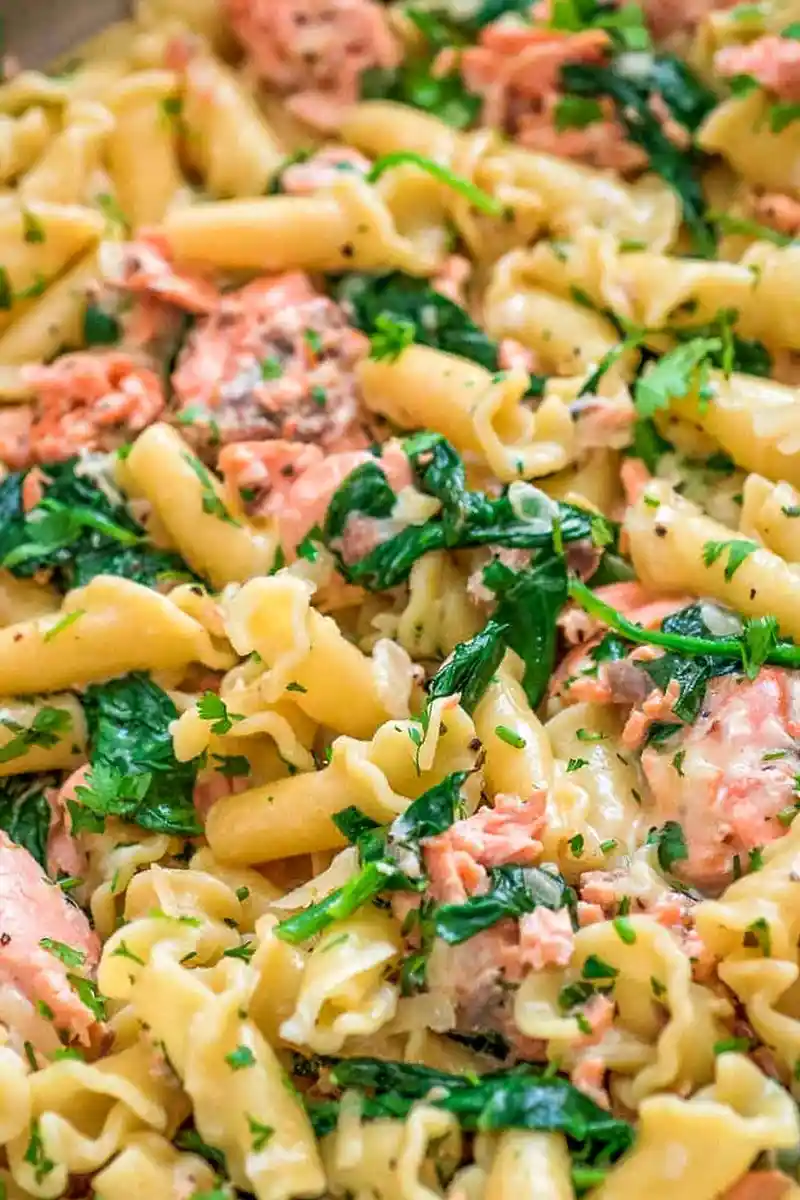
List of ingredients
- 1 lb. salmon (skinless and boneless) – cut into bite-sized pieces.
- 8 oz. uncooked pasta (campanelle preferred) – any medium-sized shape works.
- 3 tbsp. butter – used for sautéing the aromatics.
- 1 medium onion (chopped) – provides a sweet flavor base.
- 6 oz. baby spinach – fresh leaves for the best texture.
- 1 cup heavy cream – creates a thick, velvety sauce.
- 1 cup Parmesan cheese (grated) – adds a salty, nutty finish.
- 2 garlic cloves (minced) – for essential aromatic depth.
- 2 tbsp. parsley (chopped) – used for freshness and garnish.
- 1/2 tsp. salt – or adjusted to your preference.
- 1/4 tsp. pepper – or adjusted to your preference.
step-by-step instructions
- Boil Pasta: Cook the pasta in a large pot of salted water until al dente, following the package directions.
- Sauté Onion: Melt butter in a large skillet over medium heat and cook the chopped onion for 4-5 minutes until softened.
- Cook Salmon: Add the salmon pieces to the skillet and cook for 5-7 minutes, gently breaking them into flakes as they cook.
- Wilt Spinach: Stir in the baby spinach and cook for 1-2 minutes until the leaves have just wilted.
- Simmer Sauce: Add the heavy cream, Parmesan, garlic, salt, and black pepper; stir and bring the mixture to a gentle simmer. You may add 1/4 tsp. of red pepper flakes here for a bit of spice.
- Combine: Fold in the cooked pasta and chopped parsley, mixing thoroughly to ensure the sauce coats everything.
- Finish: Garnish with additional parsley and grated Parmesan before serving immediately.
Choosing the Best Salmon
Prioritize Wild-Caught Fillets
Wild-caught salmon typically offers a firmer texture and a more intense flavor compared to farmed varieties. It is often leaner and contains a higher concentration of naturally occurring omega-3 fatty acids. Look for labels that specify the origin to ensure quality.
Inspecting Color and Texture
Fresh salmon should have a bright, vibrant pink or orange-red color without any pale spots. The flesh should feel firm to the touch and spring back when pressed lightly. Avoid any fillets that appear dull, slimy, or have a strong, overly fishy odor.
Preparing the Fillets
Ensure your salmon is completely skinless and boneless before starting the recipe to make it easier to eat. If you buy whole fillets, use a sharp knife to remove any pin bones. Cutting the fish into uniform cubes ensures they cook evenly in the skillet.
Optimal Pasta Selection
Using Campanelle for Sauce Retention
Campanelle pasta is shaped like a cone with a ruffled edge, which is perfect for trapping creamy sauces. The nooks and crannies hold onto the Parmesan cream and spinach bits in every bite. This ensures a balanced flavor ratio throughout the dish.
Exploring Medium-Sized Pasta Shapes
If you do not have campanelle, other medium shapes like penne, rigatoni, or farfalle are excellent alternatives. These shapes are sturdy enough to hold the salmon flakes without breaking. Avoid very small pastas like orzo, as they can get lost in the thick sauce.
Whole Grain Pasta Substitutions
Whole wheat pasta is a great way to add more fiber and a nuttier flavor to this meal. Keep in mind that whole grain varieties often require a slightly longer cooking time. Adjust your boiling time accordingly to reach the desired al dente texture.
Gluten-Free Pasta Considerations
Brown rice or chickpea pastas work well as gluten-free substitutes for this recipe. Because these pastas can release more starch or break easily, cook them carefully. Avoid overcooking them, as they may become mushy when tossed in the simmering cream sauce.
Creamy Sauce Customizations
Substituting Heavy Cream with Half and Half
For a slightly lighter sauce, you can replace the heavy cream with half and half. Note that the sauce will be thinner and less rich than the original version. You may need to simmer it for an extra minute or two to achieve a thicker consistency.
Using Full-Fat Coconut Milk for Dairy-Free
Full-fat canned coconut milk is a suitable alternative for those avoiding dairy. It provides a similar creaminess, though it adds a subtle coconut flavor to the dish. Pair this with a dairy-free Parmesan alternative to maintain the salty profile.
Replacing Parmesan with Pecorino Romano
Pecorino Romano is a great substitute if you prefer a sharper, saltier taste. Since Pecorino is more pungent than Parmesan, you may want to reduce the added salt in the recipe. Grate it finely to ensure it melts smoothly into the cream.
Adding Lemon Zest for Brightness
Adding a teaspoon of fresh lemon zest and a squeeze of lemon juice can cut through the richness of the cream. This citrus element brightens the flavor of the salmon and spinach. Stir it in right before adding the pasta for the freshest taste.
Incorporating Red Pepper Flakes for Heat
A pinch of red pepper flakes adds a subtle spicy kick that complements the savory Parmesan. Add the flakes during the simmer stage so the heat infuses into the cream. Adjust the amount based on your personal heat tolerance.
Using Non-Alcoholic Substitutes for Depth
To add a complex acidity without using wine, use a splash of non-alcoholic white grape juice or a bit of extra vegetable broth. Stir this in while sautéing the onions to deglaze the pan. This adds a layered flavor profile to the overall sauce.
Working with Spinach and Greens
The Benefits of Fresh Baby Spinach
Fresh baby spinach is preferred because it is tender and wilts quickly without becoming slimy. It retains a bright green color and a mild flavor that doesn’t overpower the salmon. Always wash the leaves thoroughly before adding them to the pan.
Using Frozen Spinach Correctly
If using frozen spinach, make sure to thaw it completely and squeeze out all excess water. Adding watery spinach will dilute the cream sauce and make it runny. Stir it in during the same step as the fresh spinach, but cook it slightly longer to heat through.
Substituting with Kale or Swiss Chard
Kale or Swiss chard can be used for a heartier texture and a more robust flavor. These greens take longer to cook than baby spinach, so add them before the salmon. Sauté them until they are tender before proceeding with the sauce.
Timing the Spinach Addition
Add the spinach only after the salmon is cooked to prevent the greens from overcooking. You only want the leaves to wilt slightly, which preserves their nutrients and color. Overcooking the spinach can make the dish look murky.
Professional Cooking Techniques
Salting the Pasta Water Heavily
Adding a generous amount of salt to the boiling water is the only chance to season the pasta itself. This prevents the noodles from tasting bland, regardless of how flavorful the sauce is. The water should taste like seawater for the best results.
Achieving the Perfect Al Dente Texture
Cook your pasta for one minute less than the package instructions suggest. Since the pasta will continue to cook when tossed in the simmering sauce, this prevents it from becoming soft. Al dente pasta provides a satisfying bite that contrasts with the creamy sauce.
Sautéing Onions for Maximum Sweetness
Cook the onions slowly over medium heat until they are translucent and slightly golden. This process caramelizes the natural sugars, adding a subtle sweetness to the dish. Avoid using high heat, as burnt onions will taste bitter.
Preventing Salmon from Overcooking
Salmon can become dry if cooked for too long, so watch the timing closely. Remove the heat or move to the next step as soon as the salmon flakes easily with a fork. The residual heat from the sauce will finish the cooking process.
Emulsifying the Cheese and Cream
Stir the Parmesan cheese into the cream gradually over low to medium heat. Constant stirring prevents the cheese from clumping and ensures a smooth, emulsified sauce. If the sauce seems too thick, add a tablespoon of pasta water.
Serving and Pairing Ideas
Pairing with Garlic Bread
Crusty garlic bread or warm breadsticks are ideal for soaking up the extra Parmesan cream sauce. Use a French baguette brushed with melted butter and minced garlic, then toasted in the oven. This adds a crunchy texture to the meal.
Serving with Fresh Garden Salads
A light, acidic salad balances the richness of the cream and salmon. A simple mix of arugula, cherry tomatoes, and a lemon vinaigrette works perfectly. The acidity of the dressing cleanses the palate between bites of pasta.
Complementary Roasted Vegetable Sides
Roasted broccoli or asparagus provides a healthy, earthy accompaniment to the dish. Toss the vegetables in olive oil and salt, then roast at 400°F until tender. This adds variety to the plate and increases the nutritional value.
Non-Alcoholic Beverage Pairings
A sparkling water with a twist of lime or a chilled glass of non-alcoholic white grape juice pairs well. The bubbles or fruitiness complement the buttery notes of the salmon. Iced tea with lemon is another refreshing option.
Storage and Preservation
Proper Refrigeration Methods
Store any leftovers in an airtight container to prevent the pasta from drying out. Ensure the dish is cooled slightly before sealing the lid to avoid excessive condensation. This helps maintain the texture of the salmon and pasta.
Maximum Storage Duration
This salmon pasta will remain safe to eat in the refrigerator for 3 to 4 days. Because of the cream and fish, it is best consumed as soon as possible. If the sauce begins to separate, it can be fixed during reheating.
Freezing Guidelines for Salmon Pasta
Freezing is generally not recommended for cream-based pasta dishes. The cream sauce often separates and becomes grainy upon thawing, and the salmon may lose its texture. For the best experience, enjoy the dish fresh or refrigerated.
Reheating Instructions
Using the Stovetop Method
Reheating on the stove over low heat is the most effective way to restore the sauce. Add a small splash of milk or water to the pan to loosen the thickened cream. Stir gently to avoid breaking the salmon flakes further.
Using the Microwave Carefully
If using a microwave, heat the pasta in short intervals, stirring in between. Use a microwave-safe cover to trap steam and keep the pasta moist. Be careful not to overheat, as this can make the salmon rubbery.
Adding Liquid to Restore Creaminess
Cream sauces naturally thicken as they cool in the fridge. Adding a teaspoon of water, milk, or a small knob of butter during reheating helps recreate the original velvety consistency. This prevents the pasta from tasting dry.
Meal Prep and Planning
Pre-Chopping Aromatics
You can chop the onion, mince the garlic, and chop the parsley several hours in advance. Store them in separate small containers in the refrigerator. This reduces the active prep time when you are ready to cook.
Preparing Pasta in Advance
If you are short on time, you can boil the pasta ahead of time and toss it in a bit of olive oil. Store it in the fridge and add it to the sauce at the very end. Be sure to undercook it slightly more than usual since it will be reheated.
Making the Sauce Base Ahead
The onion and garlic base can be sautéed and stored in the fridge for up to two days. When ready to eat, simply heat the base and proceed with adding the salmon and cream. This streamlines the cooking process on busy weeknights.
Troubleshooting Common Issues
Fixing a Sauce That Is Too Thin
If the sauce is too runny, allow it to simmer for a few more minutes without the lid on. This evaporates excess moisture and thickens the cream. You can also stir in an extra tablespoon of grated Parmesan to bind the sauce.
Correcting an Overly Salty Sauce
If you accidentally add too much salt, add a splash of heavy cream or a squeeze of lemon juice. The fat in the cream or the acidity in the lemon helps neutralize the saltiness. Avoid adding more water, as this may dilute the flavor too much.
Resolving Grainy Parmesan Texture
Graininess usually happens if the cheese is added to boiling liquid or if the heat is too high. Lower the temperature and stir vigorously to incorporate the cheese. Using finely grated Parmesan instead of pre-shredded versions helps prevent this.
Preventing Salmon from Disintegrating
To keep larger chunks of salmon, avoid stirring too aggressively once the fish is in the pan. Gently fold the ingredients together using a spatula. Let the salmon sear undisturbed for a few minutes before flipping it.
Frequently Asked Questions
Can I use leftover cooked salmon?
Yes, you can use leftover cooked salmon. Add it during the stage where you would normally cook raw salmon, but only heat it through for 2-3 minutes so it does not overcook.
How do I store the leftovers safely?
Place the pasta in an airtight glass or plastic container and refrigerate it immediately after the meal. Ensure it is stored at or below 40°F to maintain food safety.
Can I add other vegetables to this dish?
Absolutely. Peas, sliced mushrooms, or sun-dried tomatoes are excellent additions. Sauté them with the onions before adding the salmon for the best flavor integration.
What is the best way to peel garlic quickly?
Smash the garlic clove with the flat side of a chef’s knife to break the skin. This allows the clove to slip right out of the husk without needing a peeler.
Can I use a different type of cream?
You can use half and half or full-fat coconut milk. Avoid using skim milk, as it will not thicken and will result in a watery sauce.
Print
Salmon Pasta with Spinach
- Total Time: 30 minutes
- Yield: 4 servings 1x
- Diet: General
Description
This Salmon Pasta with Spinach is a deliciously easy pasta recipe with chunks of tender salmon and spinach in a scrumptious, creamy Parmesan sauce!
Ingredients
- 1 lb. salmon (skinless and boneless)
- 8 oz. uncooked pasta
- 3 tbsp. butter
- 1 medium onion (chopped)
- 6 oz. baby spinach
- 1 cup heavy cream
- 1 cup Parmesan cheese (grated)
- 2 garlic cloves (minced)
- 2 tbsp. parsley (chopped)
- 1/2 tsp. salt
- 1/4 tsp. pepper
Instructions
- Step 1: Cook pasta until al dente according to the package instructions in a large pot of salted water.
- Step 2: Meanwhile, sauté the onion in butter in a large skillet over medium heat for 4-5 minutes.
- Step 3: Add the salmon and keep cooking for another 5-7 minutes, breaking it into flakes as it cooks.
- Step 4: Add the spinach and cook it for 1-2 minutes, until wilted.
- Step 5: Add the heavy cream, Parmesan, garlic, salt and black pepper. Stir and bring to a gentle simmer.
- Step 6: Add the cooked pasta and chopped parsley. Mix everything thoroughly. Garnish with parsley and grated Parmesan. Serve.
Notes
This salmon pasta will keep in the fridge for 3-4 days. Reheat on the stove over low heat, adding a splash of water if necessary. Leftover salmon can be used by adding it in Step 3 and heating through.
- Prep Time: 10 minutes
- Cook Time: 20 minutes
- Category: Main Course
- Method: Sautéing
- Cuisine: Italian
Nutrition
- Serving Size: 1 serving
- Calories: 655 kcal
- Sugar: 6 g
- Sodium: 840 mg
- Fat: 31 g
- Saturated Fat: 15 g
- Unsaturated Fat: 13 g
- Trans Fat: 0.4 g
- Carbohydrates: 51 g
- Fiber: 4 g
- Protein: 43 g
- Cholesterol: 124 mg