
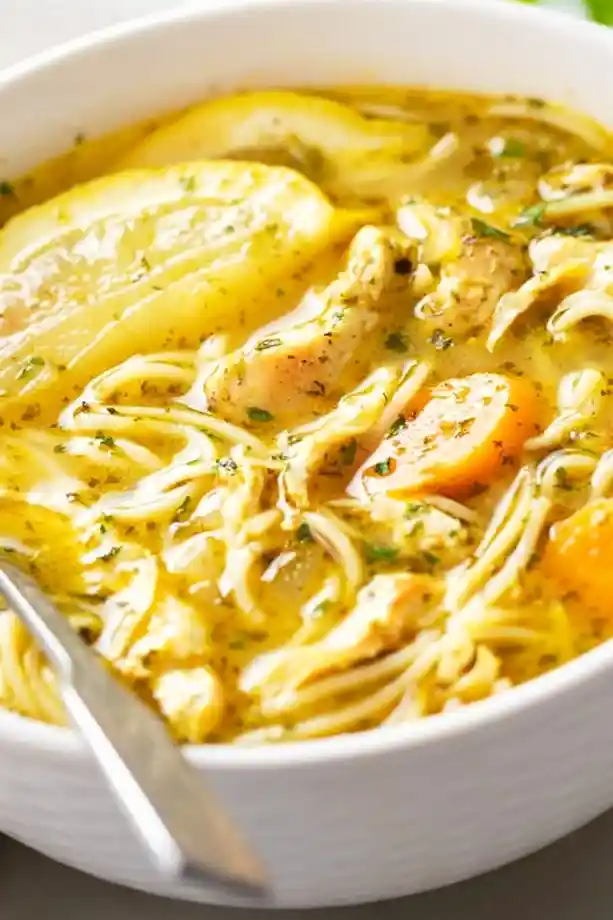
This zesty lemon chicken soup is a comforting meal featuring a savory broth and tender noodles. It combines fresh citrus notes with a rich Parmesan finish for a cozy dinner. This recipe is straightforward to prepare and perfect for cold weather.
List of ingredients
- 1-2 tablespoons olive oil – used for searing the chicken.
- 1 ¼ lbs. boneless skinless chicken breast – sliced lengthwise if thick.
- Lemon pepper seasoning – to taste for seasoning the chicken.
- ½ cup chicken broth – used for deglazing the pan.
- 2 tablespoons butter – for sautéing the vegetables.
- 1 small yellow onion – diced for the mirepoix base.
- ¼ cup carrots – diced.
- 2 sticks celery – diced.
- 3 cloves garlic – minced.
- 7 cups chicken broth – the main soup base.
- ½ chicken bouillon cube – to enhance the savory flavor.
- 1 teaspoon soy sauce – adds umami depth.
- Juice of 1 lemon (3-4 tbsp.) – for brightness and acidity.
- ½ cup microbial-rennet Parmesan cheese – grated.
- 1 microbial-rennet Parmesan cheese rind – optional for added richness.
- 4 oz. angel hair pasta – cooked separately.
- ¼ teaspoon dried parsley – for herbaceous flavor.
- ¼ teaspoon dried basil – for sweetness.
- ¼ teaspoon dried oregano – for earthiness.
- ¼ teaspoon mustard powder – to elevate overall taste.
- 1 pinch turmeric – for color and warmth.
- Salt and pepper – to taste.
step-by-step instructions
- Prepare the Broth Base: Combine the 7 cups of chicken broth, bouillon cube, soy sauce, lemon juice, parsley, basil, oregano, mustard powder, and turmeric in a bowl or measuring cup and set aside.
- Season the Chicken: Slice thick chicken breasts in half lengthwise to ensure even cooking. Pat the meat dry with paper towels and season both sides generously with lemon pepper seasoning.
- Sear the Meat: Heat olive oil over medium-high heat in a large pot. Sear the chicken for 3-4 minutes per side until golden brown, then remove it from the pot and let it rest for 10 minutes before dicing or shredding.
- Sauté the Vegetables: Add the ½ cup of chicken broth to the skillet over medium heat and scrape the bottom to release the brown bits. Stir in the butter, diced onions, carrots, celery, and minced garlic, cooking until softened and the liquid has reduced by half, about 5-6 minutes.
- Simmer the Base: Pour in the prepared chicken broth mixture and add the Parmesan cheese rind if you are using one. Bring the liquid to a boil, then immediately reduce the heat to a simmer.
- Finish Cooking Chicken: Return the diced or shredded chicken to the pot. Simmer gently for 15-20 minutes to let the flavors concentrate and ensure the chicken is fully cooked through.
- Prepare the Pasta: In a separate pot of salted boiling water, cook the angel hair pasta for about 4 minutes or according to the package directions. Drain the pasta immediately and place portions directly into serving bowls.
- Add Finishing Touches: Remove the soup pot from the heat. Gradually stir in the grated microbial-rennet Parmesan cheese and discard the cheese rind.
- Serve: Taste the soup and add salt or pepper if needed. Ladle the hot soup over the noodles in the bowls and garnish with fresh parsley.
Maximizing Flavor and Texture
Preventing Starchy Pasta from Absorbing Broth
Cooking the angel hair pasta in a separate pot is essential for maintaining the soup’s consistency. If the pasta cooks in the broth, it releases starch that thickens the soup and absorbs the liquid, leaving the dish mushy. By adding cooked noodles directly to the bowl, the broth remains clear and light.
Enhancing Acidity with Freshly Squeezed Lemon
Using fresh lemon juice provides a vibrant, bright flavor that bottled concentrates cannot replicate. Fresh juice contains natural oils and a balanced acidity that cuts through the richness of the Parmesan cheese. Always squeeze the lemon immediately before adding it to the broth mixture.
Choosing High-Quality Microbial-Rennet Parmesan
Selecting a Parmesan cheese made with microbial rennet ensures the recipe stays consistent with dietary preferences while providing a salty, nutty profile. Freshly grated cheese melts more smoothly into the hot broth than pre-shredded versions. Pre-shredded cheeses often contain anti-clumping agents that can prevent a seamless blend.
Developing Depth Through Chicken Searing
Searing the chicken breasts at the start creates a flavorful fond, which are the brown bits stuck to the bottom of the pot. These bits are packed with concentrated flavor from the Maillard reaction. Deglazing these bits with broth incorporates that savory essence back into the entire soup.
Ingredient Modifications and Substitutions
Incorporating Fresh Spinach or Kale
To add more nutrients and color, stir in two cups of fresh baby spinach or chopped kale during the last two minutes of simmering. The residual heat will wilt the greens without overcooking them. This adds a mild bitterness that balances the lemon and cheese.
Utilizing Pre-Cooked Chicken for Faster Prep
If you are short on time, you can use 3-4 cups of pre-cooked rotisserie chicken. Skip the searing process and the initial deglazing step, and simply add the shredded meat during the final simmering stage. This reduces the active cooking time by about 20 minutes.
Swapping Angel Hair for Different Noodle Types
While angel hair is traditional for its lightness, you can substitute it with ditalini, orzo, or small shell pasta. Keep the cooking time separate to avoid broth absorption. Heavier noodles provide a heartier texture and are better for those who prefer a more filling soup.
Managing Salt Levels in Commercial Broths
Since bouillon, soy sauce, and Parmesan are all salty, be cautious when choosing your chicken broth. Use low-sodium broth to maintain control over the seasoning. Taste the soup only after the cheese has been stirred in before adding additional salt.
Serving and Pairing Suggestions
Pairing with Crusty Artisan Bread
A toasted baguette or a slice of sourdough bread complements the acidity of the lemon broth. The crunch of the bread provides a textural contrast to the tender chicken and noodles. Dipping the bread into the savory broth is a traditional way to enjoy this meal.
Adding Fresh Herbs for a Brighter Finish
While dried herbs are used in the simmering process, adding a handful of freshly chopped parsley or chives at the end elevates the dish. Fresh herbs provide a burst of color and a clean, peppery flavor. This garnish makes the soup feel more restaurant-quality.
Creating a Balanced Side Salad Pairing
A simple side salad with a light vinaigrette pairs well with this soup. Use mixed greens, sliced cucumbers, and a touch of lemon juice in the dressing to echo the flavors of the soup. This adds a fresh, crisp element to the meal.
Storage and Preservation
Storing Soup in Airtight Containers
Place the leftover soup, minus the pasta, into airtight glass or plastic containers. Ensure the soup has cooled slightly before sealing to prevent excessive condensation. This method keeps the flavors fresh for up to three days in the refrigerator.
Freezing Broth Without the Pasta
To freeze this soup, store only the chicken and broth mixture in freezer-safe bags or containers. Pasta does not freeze well and becomes mealy upon thawing. Freeze the base for up to three months for a quick future meal.
Optimizing Refrigeration Life
Store the cooked pasta in a separate container from the soup base in the fridge. When you are ready to eat, reheat the broth and the pasta independently. This prevents the noodles from absorbing all the broth while sitting in the refrigerator.
Reheating Instructions
Reheating Using the Stovetop Method
Pour the chilled soup base into a pot over medium-low heat. Stir occasionally to ensure the Parmesan cheese is evenly redistributed and the soup doesn’t scorch. Heat until it reaches a gentle simmer before ladling it over fresh or reheated noodles.
Using a Microwave for Quick Warm-ups
Transfer a serving of soup base to a microwave-safe bowl and heat in 1-minute intervals. Stir between each interval to avoid hot spots. Once hot, add the soup to your pre-warmed noodles to maintain the correct temperature.
Cooking Troubleshooting
Fixing Overly Salty Broth
If the soup tastes too salty, add a small amount of unsalted chicken broth or water to dilute the concentration. Alternatively, adding a squeeze of extra lemon juice can help mask the saltiness. The acidity of the lemon distracts the palate from the excess sodium.
Thickening a Thin Soup Base
If you prefer a thicker consistency, you can blend a small amount of the cooked carrots and celery and stir them back into the pot. This adds body without needing flour or cornstarch. Another option is to increase the amount of grated Parmesan cheese.
Correcting an Overly Tart Flavor
If the lemon flavor is too dominant, balance it by adding a tiny pinch of sugar or more Parmesan cheese. The fats in the cheese and the sweetness of the sugar neutralize the sharp acidity. Add these in very small increments to avoid altering the flavor too much.
Frequently Asked Questions
Can I freeze this soup?
Yes, you can freeze the soup base and chicken for up to three months. However, you must remove the pasta before freezing, as it will lose its texture. Boil fresh pasta when you reheat the soup for the best results.
How do I make it creamier?
To achieve a creamier texture, you can stir in a tablespoon of heavy cream or a dollop of Greek yogurt just before serving. This adds a velvety mouthfeel that complements the lemon acidity. Stir it in off the heat to prevent curdling.
What if I don’t have angel hair pasta?
You can use any small pasta shape, such as orzo, ditalini, or even broken spaghetti. Ensure you cook the pasta separately and drain it well. The key is to keep the noodle size small enough to fit comfortably on a soup spoon.
Can I use chicken thighs instead of breasts?
Yes, boneless skinless chicken thighs are a great alternative and often stay juicier than breasts. Follow the same searing and simmering instructions. Thighs may take slightly longer to dice, but they provide a richer flavor.
How do I prevent the lemon from being too tart?
Add the lemon juice gradually and taste as you go. If you find it too tart, balance the flavor with a bit more butter or Parmesan cheese. The richness of the fats helps mellow out the citrus notes.
Print
Zesty Lemon Chicken Soup with Parmesan
- Total Time: 60 minutes
- Yield: 6 servings 1x
- Diet: General
Description
This Lemon Chicken Soup recipe has savory broth, simple seasonings, lemon, chicken, and noodles. It’s easy to make and super cozy!
Ingredients
- 1–2 tablespoons olive oil
- 1 ¼ lbs. boneless skinless chicken breast
- Lemon pepper seasoning
- ½ cup chicken broth (substitute for wine)
- 2 tablespoons butter
- 1 small yellow onion, diced
- ¾ cup carrots, diced
- 2 sticks celery, diced
- 3 cloves garlic, minced
- 7 cups chicken broth
- ½ chicken bouillon cube
- 1 teaspoon soy sauce
- Juice of 1 lemon (3–4 tbsp.)
- ½ cup Parmesan cheese, grated
- 1 Parmesan cheese rind, optional
- 4 oz. angel hair
- ¾ teaspoon dried parsley
- ¾ teaspoon dried basil
- ¾ teaspoon dried oregano
- ¾ teaspoon mustard powder
- 1 pinch turmeric
- Salt and pepper, to taste
Instructions
- Step: Combine the chicken broth, bouillon, soy sauce, lemon juice, parsley, basil, oregano, mustard powder, and turmeric and set aside.
- Step: If using thick chicken, slice it in half lengthwise. Pat it dry and season each side with lemon pepper seasoning.
- Step: Heat olive oil over medium-high heat. Add the chicken and sear on each side for 3-4 minutes, until a golden color has developed. Remove and let rest for 10 minutes, then dice or shred.
- Step: Add chicken broth (substitute for wine) to the skillet over medium heat and use a silicone spatula to “clean” the bottom and sides of the pot. Add the butter, onions, carrots, celery, and garlic. Cook until the vegetables are softened and the liquid is reduced by half, about 5-6 minutes.
- Step: Add the chicken broth mixture (from step 1), and the cheese rind, if using.
- Step: Bring to a boil, then reduce to a simmer.
- Step: Add the chicken back and simmer gently for 15-20 minutes to concentrate the flavor and finish cooking the chicken.
- Step: Boil angel hair in a separated pot of salted, boiling water for 4 minutes or as indicated on package. Drain and add directly to serving bowls.
- Step: Remove the soup from the heat and gradually stir in the grated Parmesan cheese. Discard the rind.
- Step: Taste and season with salt/pepper if desired. Ladle the soup over the pasta noodles and garnish with parsley.
Notes
Cook pasta separately to prevent it from becoming mushy and absorbing too much broth. For the best flavor, use freshly squeezed lemon juice and freshly grated Parmesan cheese. Store in an airtight container in the refrigerator for up to 3 days or freeze for up to 3 months.
- Prep Time: 15 minutes
- Cook Time: 45 minutes
- Category: Soup
- Method: Simmering
- Cuisine: American
Nutrition
- Serving Size: 1 serving
- Calories: 284 kcal
- Sugar: 4 g
- Sodium: 1397 mg
- Fat: 8 g
- Saturated Fat: 2 g
- Unsaturated Fat: 4 g
- Trans Fat: 0.01 g
- Carbohydrates: 21 g
- Fiber: 1 g
- Protein: 27 g
- Cholesterol: 73 mg