
This zesty vegan pasta dish combines the tang of lemon with the earthy flavor of artichokes for a bright, satisfying meal. It is a convenient recipe that comes together in about 30 minutes, making it ideal for weeknight dinners.
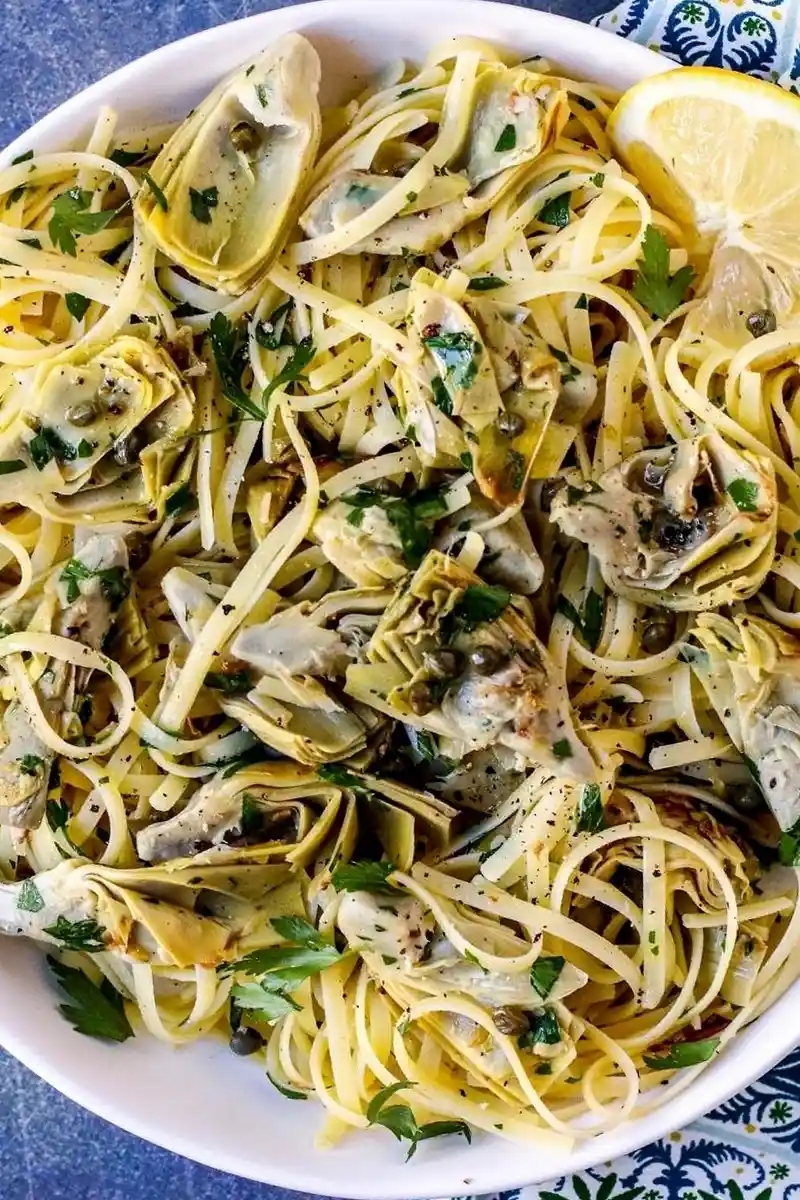
List of ingredients
- 12 ounces pasta – gluten-free linguine, fettuccine, or penne are recommended.
- 2 Tablespoons extra virgin olive oil – divided for sautéing and finishing.
- 3 cloves garlic – minced finely for even distribution.
- 12 ounces frozen artichoke hearts – can be substituted with canned hearts.
- 1 Tablespoon capers – adds a salty, briny punch to the sauce.
- salt and pepper – added to taste for seasoning.
- 2 Tablespoons lemon juice – approximately the juice of one fresh lemon.
- 1 cup fresh parsley – chopped finely for a fresh herbal finish.
step-by-step instructions
- Cook the pasta: Prepare the pasta according to the package directions. Drain the water and return the cooked pasta to the pot.
- Sauté garlic: Heat 1 tablespoon of olive oil in a skillet over medium heat. Add the minced garlic and sauté for about 30 seconds until it becomes fragrant.
- Brown the artichokes: Add the frozen artichoke hearts to the pan. Sauté them until they are heated through and develop a golden brown color on the outside.
- Season the mixture: Stir in the capers along with salt and pepper according to your taste preference.
- Combine ingredients: Transfer the sautéed artichoke and garlic mixture into the pot with the cooked pasta.
- Finish the dish: Pour in the lemon juice, add the remaining tablespoon of olive oil, and stir in the chopped parsley. Toss everything well to combine and serve immediately.
Selecting the Right Pasta Shape
Linguine and Fettuccine for Long-Strand Texture
Long, flat noodles like linguine or fettuccine are excellent for this recipe because they provide a wide surface area for the olive oil and lemon juice to cling to. These shapes create a classic Italian feel and allow the artichoke hearts to nestle between the strands. Ensure you cook them al dente to maintain a firm bite.
Penne and Rotini for Sauce Trapping
Short pasta shapes such as penne or rotini are highly practical for this dish. The hollow center of penne or the spirals of rotini trap the small capers and minced garlic, ensuring every bite is flavorful. These shapes are also easier to toss with the bulky artichoke hearts.
Gluten-Free Pasta Selection and Cooking Tips
Brown rice or corn-based pastas work well as gluten-free alternatives. To prevent these pastas from becoming mushy, rinse them under cold water immediately after draining to remove excess starch. This keeps the noodles distinct and prevents them from clumping in the pot.
Artichoke Preparation Guide
Preparing Frozen Artichoke Hearts for Maximum Sear
Frozen artichoke hearts are convenient and often retain a better texture than canned versions. For the best results, avoid thawing them completely before adding them to the pan. Sautéing them directly from frozen helps them brown more effectively without becoming overly soft.
Draining and Rinsing Canned Artichoke Hearts
If using canned artichokes, drain them thoroughly in a colander. Rinse them under cold water to remove the metallic taste of the canning brine. Pat them dry with a paper towel before sautéing to ensure they sear rather than steam in the pan.
Cleaning and Trimming Fresh Artichokes
Using fresh artichokes requires more effort, as you must trim the thorny tips and remove the fuzzy choke. Steam the hearts until tender before sautéing them in the skillet. This adds a deeper, more complex flavor to the final pasta dish.
Flavor Customizations and Substitutions
Using White Wine Vinegar as a Lemon Substitute
If fresh lemons are unavailable, white wine vinegar can provide the necessary acidity. Use a slightly smaller quantity, about 1 to 1.5 tablespoons, as vinegar is more concentrated than lemon juice. This gives the dish a sharp, tangy profile similar to traditional Mediterranean recipes.
Replacing Fresh Parsley with Dried Herbs
Dried parsley can be used if fresh is not on hand, though the flavor is less vibrant. Use 1 tablespoon of dried parsley for every cup of fresh. Alternatively, a mix of dried oregano and basil can add a more robust herbal note to the sauce.
Substituting Capers with Brined Olives
For a different kind of saltiness, replace the capers with sliced kalamata or green olives. Olives provide a richer, fruitier saltiness that complements the lemon and artichokes. Chop the olives into small pieces to ensure they distribute evenly throughout the pasta.
Adding Chickpeas for Plant-Based Protein
To make the meal more filling, stir in a can of drained chickpeas during the sautéing process. Sauté the chickpeas alongside the artichokes until they are slightly crisp. This adds a nutty flavor and a significant boost of plant-based protein to the dish.
Serving and Pairing Suggestions
Pairing with Mediterranean Green Salads
This pasta pairs perfectly with a crisp cucumber and tomato salad. A simple dressing of olive oil, red wine vinegar, and dried oregano complements the lemon flavors of the pasta. The coolness of the salad balances the warmth and richness of the sautéed artichokes.
Serving with Roasted Zucchini and Tomatoes
For a hearty vegetable side, roast sliced zucchini and cherry tomatoes in the oven with garlic and olive oil. The caramelized sweetness of the roasted tomatoes provides a lovely contrast to the briny capers. Serve these on the side or toss them directly into the pasta.
Preparing Garlic-Toasted Sourdough Bread
Serve the pasta with thick slices of toasted sourdough bread. Rub a raw garlic clove over the toasted bread and drizzle with olive oil for a simple accompaniment. This allows you to soak up any remaining lemon-garlic oil at the bottom of the bowl.
Storage and Reheating Instructions
Storing Leftovers in Airtight Containers
Place leftover pasta in an airtight glass or plastic container and refrigerate. It will stay fresh for up to three days. Keep the pasta well-sealed to prevent the noodles from drying out or absorbing odors from other foods in the fridge.
Reheating Pasta to Maintain Texture
To reheat, place the pasta in a skillet over medium-low heat. Add a splash of water or a teaspoon of olive oil to loosen the sauce and prevent the noodles from sticking. Heat gently until warmed through to avoid overcooking the pasta.
Freezing Artichoke Pasta Guidelines
While pasta can be frozen, the texture of the noodles may change. If you choose to freeze this dish, undercook the pasta by two minutes before assembling. Thaw in the refrigerator overnight before reheating on the stove for the best results.
Cooking Troubleshooting and FAQs
How to Fix Artichokes That Won’t Brown?
If your artichokes are steaming instead of browning, your pan may be too crowded or the heat too low. Increase the heat to medium-high and avoid stirring too frequently. Give the artichokes space in the pan so moisture can evaporate quickly.
How to Prevent Pasta From Clumping?
Pasta often clumps when it sits in the pot after draining. To prevent this, toss the cooked noodles with a small amount of olive oil immediately after draining. This creates a barrier that keeps the strands separate until you are ready to mix in the sauce.
How to Add Creaminess Without Dairy?
For a creamier texture, stir in a tablespoon of nutritional yeast or a dollop of vegan cashew cream at the end. This adds a savory, cheesy depth without using animal products. Stir it in on low heat to ensure it emulsifies with the lemon and oil.
What to Use Instead of Fresh Parsley?
Fresh cilantro or baby spinach are excellent alternatives. Cilantro adds a more pungent, citrusy note, while spinach provides a mild flavor and extra nutrients. If using spinach, stir it in at the very end so it wilts slightly from the residual heat.
Print
Vegan Lemon Artichoke Pasta
- Total Time: 30 minutes
- Yield: 4 servings 1x
- Diet: Vegan
Description
Vegan lemon artichoke pasta is easy to make thanks to frozen artichoke hearts. This flavorful Italian-inspired dish is ready in 30 minutes.
Ingredients
- 12 ounces pasta
- 2 Tablespoons extra virgin olive oil
- 3 cloves garlic, minced
- 12 ounces frozen artichoke hearts
- 1 Tablespoon capers
- salt and pepper, to taste
- 2 Tablespoons lemon juice
- 1 cup fresh parsley, chopped
Instructions
- Step 1: Prepare the pasta according to the package directions. Drain and return to the pot.
- Step 2: Heat 1 tablespoon of olive oil in a skillet over medium heat.
- Step 3: Add the garlic and saute for 30 seconds until fragrant.
- Step 4: Add the frozen artichoke hearts to the pan. Saute until heated through and browned on the outside.
- Step 5: Add the capers and salt and pepper, to taste.
- Step 6: Transfer the artichoke mixture to the pot of pasta.
- Step 7: Add the lemon juice, the remaining tablespoon of olive oil, and the parsley. Toss well to combine and serve.
Notes
If frozen artichoke hearts are unavailable, canned may be used. Leftover pasta will last refrigerated in an airtight container for up to 3 days.
- Prep Time: 5 minutes
- Cook Time: 25 minutes
- Category: Main Course
- Method: Sauteing
- Cuisine: Italian
Nutrition
- Serving Size: 1 serving
- Calories: 482 kcal
- Sugar: 3 g
- Sodium: 393 mg
- Fat: 16 g
- Saturated Fat: 2 g
- Unsaturated Fat: 6 g
- Trans Fat: 0 g
- Carbohydrates: 70 g
- Fiber: 5 g
- Protein: 13 g
- Cholesterol: 0 mg