
This quick shrimp scampi combines fresh garlic, lemon, and butter for a restaurant-quality meal. It takes only 30 minutes to prepare and includes nutritious asparagus for a balanced dinner.
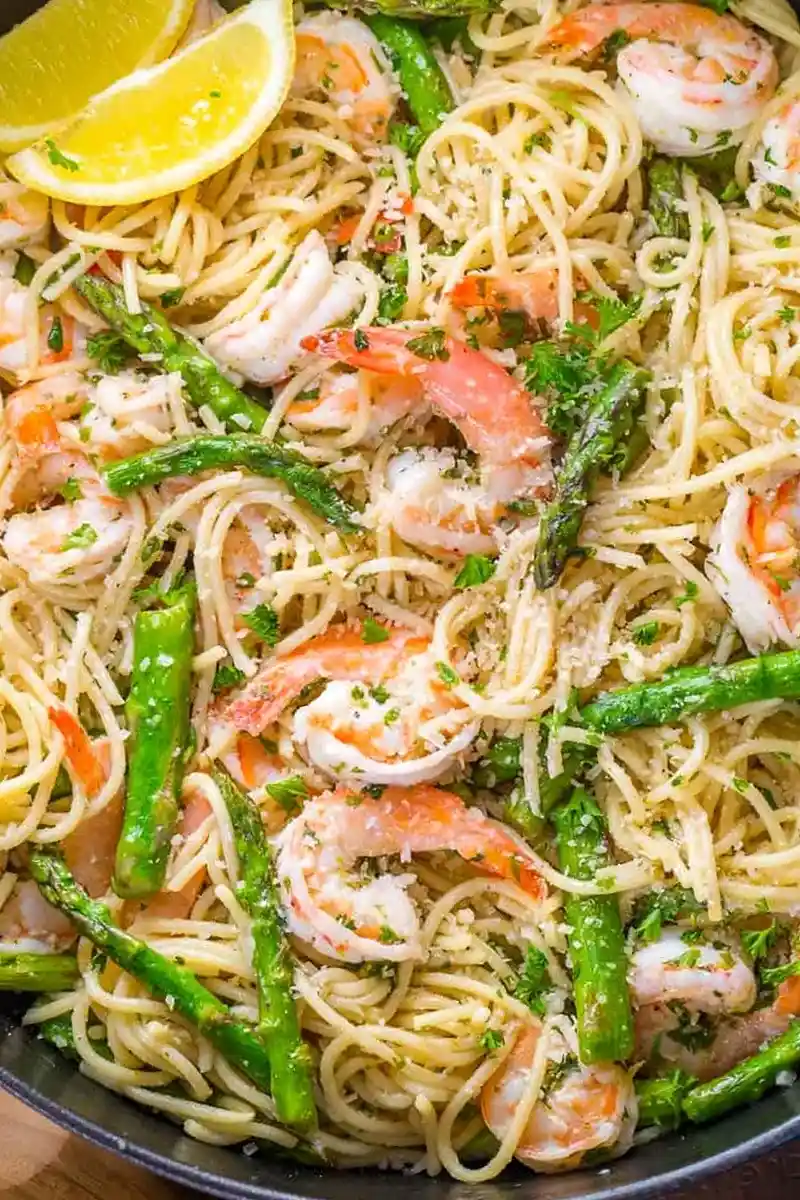
List of ingredients
- 1/2 lb spaghetti (homemade pasta, or your pasta of choice) – provides the base for the sauce.
- 1 lb asparagus (trimmed and cut into 2″ pieces) – adds freshness and color.
- 3 Tbsp unsalted butter (divided) – creates a rich, creamy emulsion.
- 3 Tbsp olive oil (divided) – helps raise the smoke point of the butter.
- 4 cloves garlic (minced, about 1 1/2 Tbsp) – provides the primary aromatic flavor.
- 1/4 tsp red pepper flakes (or added to taste) – adds a subtle heat.
- 1 lb large shrimp (peeled and deveined, 16-20 or 21-25 count) – the main protein.
- 1 1/4 tsp fine sea salt (divided, plus more for cooking pasta) – enhances all flavors.
- 1/4 tsp black pepper (ground, or to taste) – provides a basic spicy note.
- 1 Tbsp grated lemon zest – offers concentrated citrus aroma.
- 1/4 cup fresh lemon juice (from 1 large or 2 small lemons) – adds brightness and acidity.
- 1/3 cup fresh parsley (finely chopped) – adds a fresh herbal finish.
- freshly grated parmesan (to serve) – adds a salty, nutty depth.
step-by-step instructions
- Cook the Pasta: Bring a large pot of water to a boil, add 1 Tbsp salt and cook pasta according to package instructions until Al’dente. Reserve 1/2 cup of pasta water, then drain pasta, return to the pot, and cover to keep warm.
- Sauté the Asparagus: Place a large, deep pan over medium/high heat and add 1 Tbsp olive oil and 1 Tbsp butter. Add asparagus, season lightly with 1/4 tsp salt and 1/8 tsp pepper, and cook uncovered for 5 minutes or until crisp-tender, stirring occasionally. Remove from pan.
- Sear the Shrimp: In the same hot skillet, add 2 Tbsp oil and 2 Tbsp butter. Once the butter is melted, add minced garlic and red pepper flakes if using, and sautee, stirring frequently for 1 minute. Add shrimp in a single layer and season with 1 tsp salt and 1/4 tsp black pepper. Saute until shrimp are pink and not translucent (about 1 minute per side). Be careful not to overcook or the shrimp will be tough.
- Finish and Toss: Turn off the heat and add lemon zest, juice, and parsley, and stir to combine. Add pasta and asparagus, and toss everything to combine. If the sauce seems dry, add some of the hot pasta water. Serve with freshly grated Parmesan cheese.
Optimizing Your Pasta Preparation
Choosing the Right Pasta Shape
While spaghetti is a classic choice, linguine or angel hair work exceptionally well with scampi sauce. Thinner noodles absorb the lemon butter quickly, while wider noodles provide more surface area for the garlic. Penne or bow-tie pasta can also be used if you prefer a heartier bite.
Maintaining Al Dente Texture
Cook your pasta for one to two minutes less than the package directions suggest. Since the pasta will be tossed in a hot pan with the shrimp and sauce, it will continue to cook. This prevents the noodles from becoming mushy or overcooked during the final assembly.
Utilizing Starchy Pasta Water
Always reserve a small amount of the boiling water before draining your noodles. The starch released by the pasta acts as an emulsifier, helping the butter and lemon juice bind together. Adding a splash of this water creates a glossy sauce that clings to the shrimp and pasta.
Working with Shrimp and Asparagus
Selecting High Quality Shrimp
Opt for raw, wild-caught shrimp for the best flavor and texture. A 16-20 or 21-25 count refers to the number of shrimp per pound, which indicates the size. Larger shrimp are less likely to overcook quickly, though they require slightly more time per side.
Techniques for Trimming Asparagus
The bottom ends of asparagus are woody and fibrous, making them unpleasant to eat. You can trim them by snapping the stalk where it naturally breaks or by using a vegetable peeler. Peel the bottom two inches of the stalk to ensure a uniform tenderness throughout.
Preventing Overcooked Shrimp
Shrimp cook very rapidly and can become rubbery if left in the pan too long. They are done as soon as they turn opaque and form a slight ‘C’ shape. If they curl tightly into an ‘O’ shape, they are likely overcooked and will be tough.
Refining the Garlic Lemon Sauce
Preventing Garlic from Burning
Garlic has a low burn point and can become bitter if scorched. Sauté it over medium heat for only about one minute until fragrant but not brown. Stirring frequently ensures that the garlic cooks evenly and doesn’t stick to the pan.
Maximizing Lemon Flavor
Zest your lemons before juicing them, as it is nearly impossible to zest a squeezed lemon. The zest contains essential oils that provide a deep citrus aroma without adding extra acidity. Adding these ingredients after turning off the heat preserves the fresh, bright notes.
The Benefit of Combining Butter and Oil
Butter provides a rich flavor, but it has a lower smoke point than olive oil. Mixing the two prevents the butter from browning too quickly at high temperatures. This allows you to sear the shrimp effectively while still enjoying the creamy taste of butter.
Serving and Pairing Suggestions
Best Side Dish Pairings
Since this dish is rich in butter and garlic, pair it with a light, acidic side. A Caesar salad or a simple caprese salad provides a refreshing contrast. To soak up the extra sauce, serve it with toasted focaccia or garlic bread.
Improving Visual Presentation
Use a wide pasta bowl to allow the shrimp and asparagus to sit on top of the noodles. Garnish with extra chopped parsley and a few lemon wedges for a professional look. This creates a vibrant contrast between the pink shrimp and green vegetables.
Incorporating Fresh Parmesan Cheese
Freshly grated Parmesan is superior to pre-shredded options because it melts more smoothly into the sauce. The saltiness of the cheese complements the acidity of the lemon. Add it right before serving to maintain its distinct flavor profile.
Storage and Reheating Tips
Proper Refrigeration Methods
Store leftovers in an airtight glass container to prevent the seafood from absorbing other odors in the fridge. This dish is best consumed within two to three days. Keep the pasta and sauce together to ensure the flavors remain integrated.
Gentle Reheating Techniques
Avoid high-heat microwaves, as they can make the shrimp rubbery. Instead, reheat the pasta in a skillet over low heat with a tablespoon of water or butter. This gently warms the ingredients without overcooking the seafood.
Managing Sauce Separation
Butter-based sauces often separate or thicken when cooled. When reheating, stir in a small amount of water or a knob of butter to emulsify the sauce again. This restores the glossy consistency of the original dish.
Frequently Asked Questions
Can I use frozen shrimp for this recipe?
Yes, you can use frozen shrimp, but they must be fully thawed and patted completely dry with paper towels. Excess moisture on the shrimp will cause them to steam rather than sear, preventing a golden-brown exterior.
What is a good substitute for asparagus?
If asparagus is unavailable, you can use broccoli florets, snap peas, or zucchini slices. Ensure the vegetables are cut into similar sizes so they cook through in roughly the same amount of time as the original asparagus.
How do I make the sauce creamier?
For a richer sauce, you can stir in a tablespoon of heavy cream or a dollop of mascarpone cheese at the very end. Keep the heat low when adding dairy to prevent the sauce from curdling or breaking.
Print
Shrimp Scampi with Pasta
- Total Time: 30 minutes
- Yield: 4 servings 1x
- Diet: General
Description
Shrimp Scampi with Pasta and Asparagus has a lemon garlic and herb sauce that packs so much fresh and amazing flavor. A 30 minute shrimp scampi pasta recipe!
Ingredients
- 1/2 lb spaghetti
- 1 lb asparagus, trimmed and cut into 2” pieces
- 3 Tbsp unsalted butter, divided
- 3 Tbsp olive oil, divided
- 4 cloves garlic, minced
- 1/4 tsp red pepper flakes
- 1 lb large shrimp, peeled and deveined
- 1 1/4 tsp fine sea salt, divided
- 1/4 tsp black pepper, ground
- 1 Tbsp grated lemon zest
- 1/4 cup fresh lemon juice
- 1/3 cup fresh parsley, finely chopped
- freshly grated microbial-rennet parmesan cheese
Instructions
- Step: Bring a large pot of water to a boil, add 1 Tbsp salt and cook pasta according to package instructions until Al’dente. Reserve 1/2 cup of pasta water, then drain pasta, return to the pot, and cover to keep warm.
- Step: Place a large, deep pan over medium/high heat and add 1 Tbsp olive oil and 1 Tbsp butter. Add asparagus, season lightly with 1/4 tsp salt and 1/8 tsp pepper, and cook uncovered for 5 minutes or until crisp-tender, stirring occasionally. Remove from pan.
- Step: In the same hot skillet, add 2 Tbsp oil and 2 Tbsp butter. Once the butter is melted, add minced garlic and red pepper flakes if using, and sautee, stirring frequently for 1 minute. Add shrimp in a single layer and season with 1 tsp salt and 1/4 tsp black pepper. Saute until shrimp are pink and not translucent (about 1 minute per side).
- Step: Turn off the heat and add lemon zest, juice, and parsley, and stir to combine. Add pasta and asparagus, and toss everything to combine. If the sauce seems dry, add some of the hot pasta water. Serve with freshly grated Parmesan cheese.
Notes
Turn off the heat before adding the lemon zest, juice, and parsley to ensure the most vibrant flavor.
- Prep Time: 10 minutes
- Cook Time: 20 minutes
- Category: Main Course
- Method: Sautéing
- Cuisine: Italian
Nutrition
- Serving Size: 1 serving
- Calories: 493 kcal
- Sugar: 4 g
- Sodium: 1381 mg
- Fat: 21 g
- Saturated Fat: 7 g
- Unsaturated Fat: 14 g
- Trans Fat: 0.4 g
- Carbohydrates: 51 g
- Fiber: 5 g
- Protein: 26 g
- Cholesterol: 165 mg