
This rapid ramen vegetable stir fry uses a pressure cooker to significantly reduce preparation time. It is an ideal solution for a quick lunch or a weeknight dinner that requires minimal cleanup.
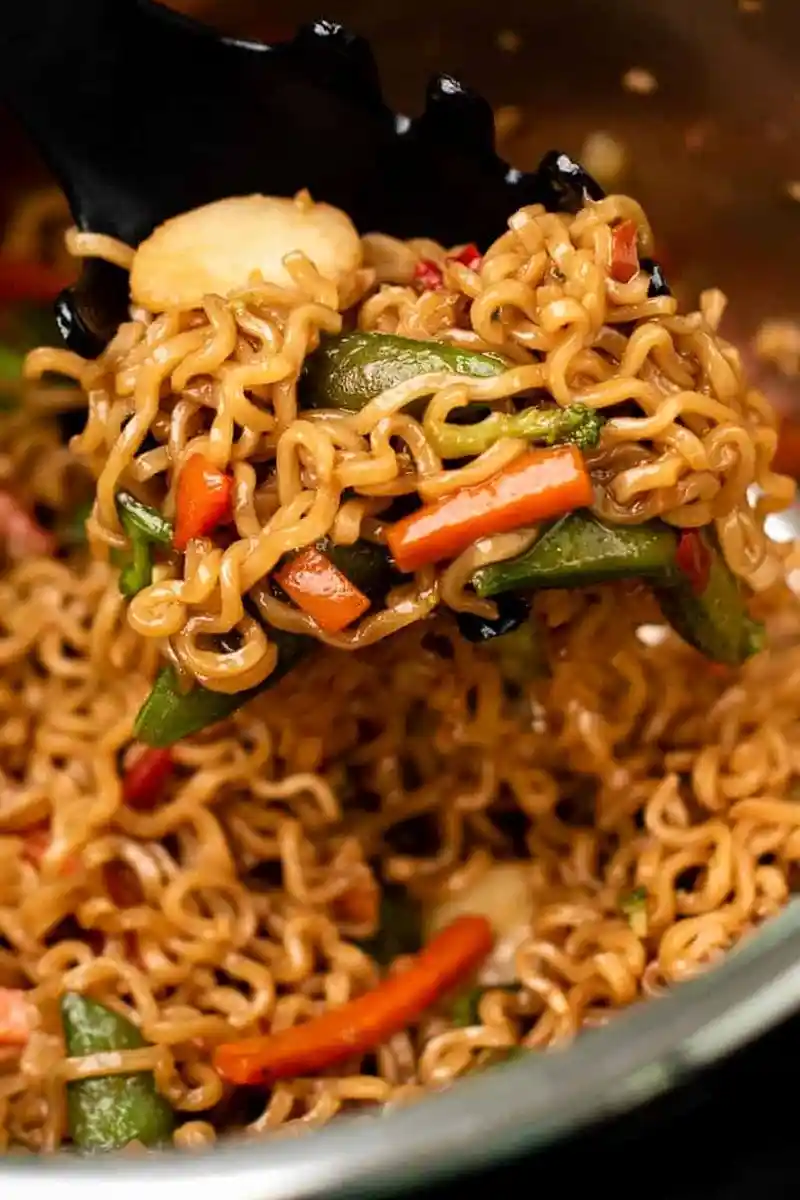
List of ingredients
- 1 ¼ cups vegetable broth (or chicken broth) – provides the steaming liquid.
- 6 cloves garlic, minced – adds a pungent, aromatic base.
- 12 oz frozen stir fry vegetables – provides a convenient mix of textures.
- 6 oz ramen noodles, flavor packet discarded – the main starch of the dish.
- ¼ cup soy sauce – adds salty, umami depth.
- 1 tablespoon sesame oil – used for a toasted finish.
- Sweet chili sauce – used as a final topping for sweetness and heat.
step-by-step instructions
- Prepare Noodles: Break the ramen into small chunks and place them in the bottom of the instant pot insert.
- Add Aromatics and Liquid: Add the minced garlic, then pour over the vegetable broth and soy sauce. Stir the ramen noodles around and flip them so that they get wet on both sides to ensure even cooking.
- Layer Vegetables: Add the frozen vegetables over the top of the ramen, spreading them out to cover the noodles in a completely even layer.
- Pressure Cook: Place the lid on your instant pot and set to sealing. Turn the instant pot to high pressure for 1 minute.
- Release Pressure: After the instant pot comes to pressure and counts down the minute, perform a quick release.
- Final Mix: Once the pin drops, remove the lid and stir the ramen noodles into the vegetables. Stir in the 1 tablespoon of sesame oil.
- Serve: Serve the stir fry topped with sweet chili sauce to taste.
Optimizing Your Vegetable Selection
Working with Fresh Produce
If you prefer fresh vegetables over frozen, slice them into uniform sizes to ensure they cook through in one minute. Dense vegetables like carrots should be julienned, while softer vegetables like bell peppers can be chopped into bite-sized squares.
Managing Dense Root Vegetables
Root vegetables such as parsnips or thick carrots may remain crunchy if not sliced very thin. Consider sautéing these specific items in the Instant Pot using the Sauté function for 2-3 minutes before adding the broth and noodles.
Adding Delicate Leafy Greens
Spinach, kale, or bok choy will overcook if placed under pressure. Instead, stir these greens into the pot immediately after the quick release; the residual heat will wilt them perfectly without turning them into mush.
Using Frozen Mixes Effectively
When using frozen vegetable blends, avoid thawing them first. Adding them frozen keeps the vegetables from breaking down too quickly under high pressure, resulting in a better texture.
Integrating Protein Options
Incorporating Pre-Cooked Chicken
To add chicken, use pre-cooked or grilled strips. Stir them into the pot along with the sesame oil after the pressure cooking cycle is complete to avoid overcooking the meat.
Adding Firm Pressed Tofu
Firm tofu should be pressed to remove excess water and cut into small cubes. Like the chicken, stir the tofu in at the end of the process to maintain its structural integrity.
Stirring in Cooked Shrimp
Shrimp cook very quickly and can become rubbery if pressure cooked for a full minute. Add peeled, deveined shrimp on top of the vegetables during the last 30 seconds of cooking or stir them in immediately after the quick release.
Using Edamame for Plant Protein
Shelled edamame can be added directly to the frozen vegetable layer. Since they are hearty, they withstand the pressure cooking process well and add a nutritional boost to the dish.
Sauce Modifications and Flavor Profiles
Increasing Heat with Chili Paste
For a spicier version, add a tablespoon of Sriracha or Sambal Oelek to the broth and soy sauce mixture before cooking. This distributes the heat evenly throughout the noodles.
Reducing Sodium with Coconut Aminos
To lower the sodium content, replace the soy sauce with coconut aminos. This alternative provides a similar umami flavor with a slightly sweeter profile and significantly less salt.
Creating a Nutty Satay Variation
Whisk a tablespoon of creamy peanut butter into the broth before pouring it over the noodles. This transforms the stir fry into a peanut-style noodle dish with a richer, creamier consistency.
Adjusting the Sweetness Level
If the sweet chili sauce topping is too sweet, balance it by adding a teaspoon of rice vinegar or a squeeze of fresh lime juice to the final stir-fry mixture.
Mastering the Pressure Cooker Process
Preventing the Burn Warning
The ‘Burn’ warning usually occurs when there is not enough thin liquid at the bottom of the pot. Ensure the broth and soy sauce completely coat the ramen noodles before adding the vegetable layer.
The Importance of Proper Layering
Always place the vegetables in an even layer on top of the noodles. This creates a buffer that prevents the noodles from sticking to the bottom of the pot and burning during the high-pressure cycle.
Executing a Perfect Quick Release
A quick release is mandatory for this recipe to stop the cooking process immediately. If you allow the pot to naturally release, the ramen noodles will absorb too much liquid and become overly soft.
Managing the Liquid-to-Noodle Ratio
Stick strictly to the 1 ¼ cups of broth. Too much liquid will result in a soup rather than a stir fry, while too little liquid will prevent the pot from reaching pressure.
Storage and Food Safety
Best Practices for Refrigeration
Store leftovers in an airtight glass container in the refrigerator for up to 3-4 days. Keep the sweet chili sauce separate until you are ready to serve to prevent the noodles from becoming too soggy.
Freezing and Thawing Guidelines
Stir fry with ramen does not freeze well because the noodles lose their texture upon thawing. It is recommended to consume this dish within a few days of preparation rather than freezing it.
Identifying Signs of Spoilage
Discard the stir fry if you notice a sour smell, slimy texture on the vegetables, or any discoloration. Always ensure the food has been cooled quickly before placing it in the refrigerator.
Reheating for Optimal Texture
Using the Microwave Method
Heat portions in a microwave-safe bowl in 30-second intervals. Add a teaspoon of water or broth before heating to create steam, which helps loosen the noodles.
Using a Skillet for Crispiness
For a better texture, reheat the stir fry in a non-stick skillet over medium-high heat. Add a drop of oil and toss the ingredients for 2-3 minutes until the edges of the noodles slightly crisp.
Restoring Moisture During Reheating
Ramen noodles absorb liquid as they sit in the fridge. Adding a small amount of soy sauce or vegetable broth during the reheating process restores the original sauce consistency.
Common Troubleshooting Solutions
Addressing Mushy Ramen Noodles
If the noodles are too soft, you may have missed the quick release window. In the future, ensure the valve is flipped to ‘Venting’ the moment the timer hits zero.
Solving Under-Seasoned Dishes
If the dish tastes bland, stir in an extra tablespoon of soy sauce or a pinch of salt after cooking. Avoid adding more salt during the pressure cooking phase as it can affect the liquid’s boiling point.
Fixing Overcooked Vegetables
Overcooked vegetables usually happen if the vegetables are not frozen or if they are sliced too thin. Ensure you use frozen stir fry mixes and do not increase the cooking time beyond one minute.
Frequently Asked Questions
Can I use whole ramen blocks?
It is better to break the ramen into chunks. Whole blocks tend to clump together in the center, leading to unevenly cooked noodles and potential sticking.
Which soy sauce is best for this?
A standard light soy sauce works best for saltiness, while dark soy sauce can be used if you prefer a deeper color and a slightly more molasses-like flavor.
Can I double the quantity of noodles?
Doubling the recipe can be risky in an Instant Pot as it increases the chance of a burn warning. It is safer to cook the recipe in two separate batches.
Is the flavor packet necessary?
No, the flavor packet is discarded in this recipe. The combination of vegetable broth, soy sauce, garlic, and sesame oil provides all the necessary seasoning.
Print
Instant Pot Ramen Vegetable Stir Fry
- Total Time: 16 minutes
- Yield: 4 servings 1x
- Diet: Vegetarian
Description
This easy instant pot stir fry with ramen noodles is a delicious quick lunch or dinner!
Ingredients
- 1 ¼ cups vegetable broth
- 6 cloves garlic, minced
- 12 oz frozen stir fry vegetables
- 6 oz ramen noodles, flavor packet discarded
- ¼ cup soy sauce
- 1 tablespoon sesame oil
- sweet chili sauce, for serving
Instructions
- Step: Break the ramen into small chunks and place them in the bottom of the instant pot insert.
- Step: Add the minced garlic, then pour over the vegetable broth and soy sauce. Stir the ramen noodles around and flip them so that they get wet on both sides.
- Step: Add the frozen vegetables over the top of the ramen, spreading them out to cover in an even layer.
- Step: Place the lid on your instant pot and set to sealing. Turn the instant pot to high pressure for 1 minute.
- Step: After the instant pot comes to pressure and counts down the minute, do a quick release.
- Step: Once the pin drops, remove the lid and stir the ramen noodles into the vegetables. Stir in the 1 tablespoon of sesame oil.
- Step: Serve the stir fry topped with sweet chili sauce to taste and enjoy!
Notes
Be sure to spread the vegetables in a completely even layer covering the ramen noodles to ensure the noodles cook evenly and do not burn.
- Prep Time: 5 minutes
- Cook Time: 1 minute
- Category: Instant Pot Recipes
- Method: Pressure Cooking
- Cuisine: Asian
Nutrition
- Serving Size: 1 serving
- Calories: 290 kcal
- Sugar: 2 g
- Sodium: 2010 mg
- Fat: 11 g
- Saturated Fat: 4 g
- Unsaturated Fat: 7 g
- Trans Fat: 0 g
- Carbohydrates: 42 g
- Fiber: 5 g
- Protein: 9 g
- Cholesterol: 0 mg