
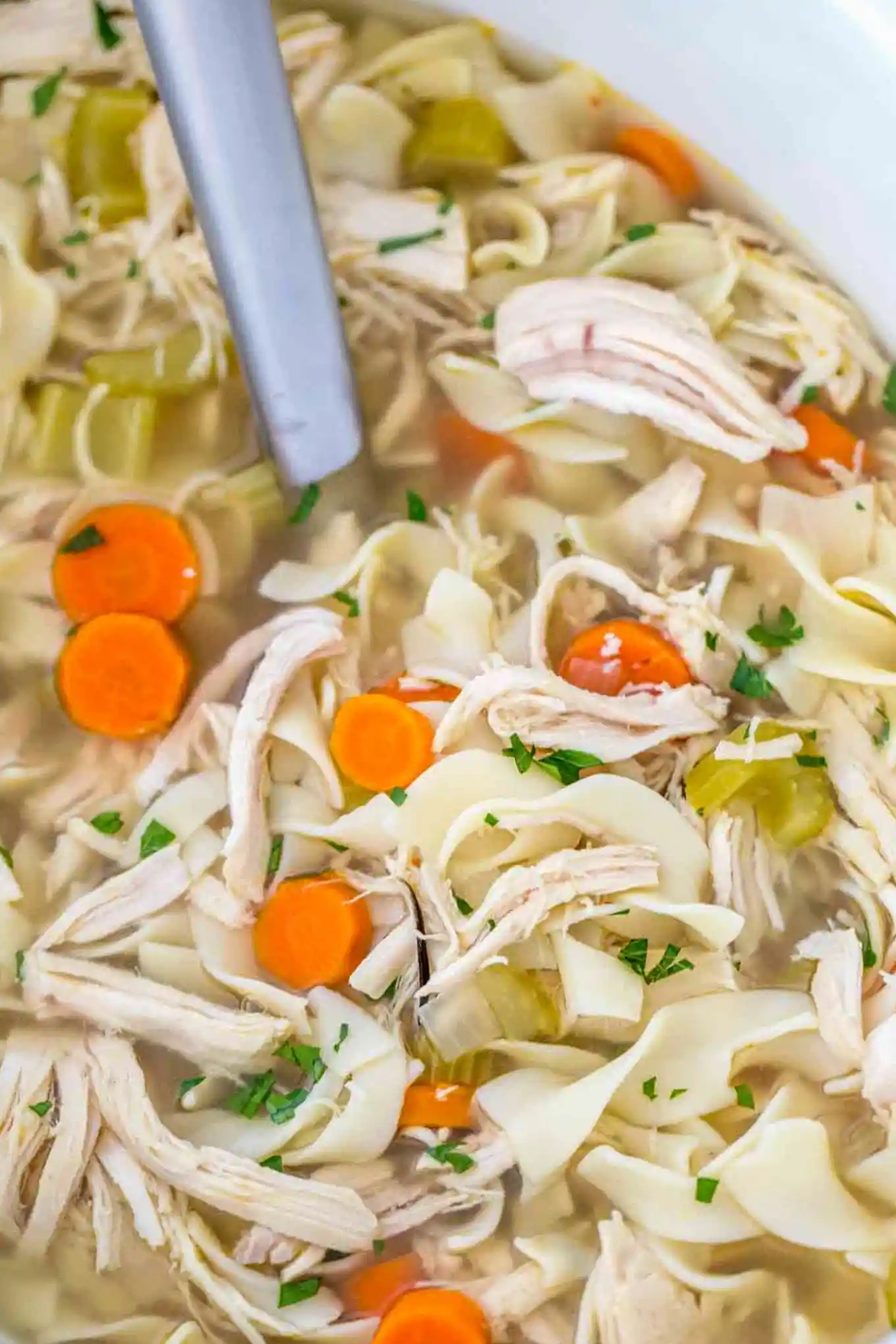
This hearty and nourishing soup is a convenient one-pot meal that simplifies dinner during cold weather. It utilizes a slow cooker to develop deep flavors with minimal active preparation time.
List of ingredients
- 1 1/2 lb. chicken breasts (boneless and skinless) – provides the lean protein base.
- 1 large sweet onion (diced) – adds a mild, aromatic sweetness.
- 5 cloves garlic (minced) – enhances the savory depth of the broth.
- 4 medium carrots (peeled and sliced into rounds) – adds color and natural sweetness.
- 3 stalks celery (cleaned and sliced) – provides an earthy, salty undertone.
- 1 teaspoon dried parsley flakes – offers a subtle herbal note.
- 1/4 teaspoon red pepper flakes – adds a very slight hint of warmth.
- 1/4 teaspoon salt (or to taste) – balances all flavors.
- 1/4 teaspoon ground black pepper (or to taste) – provides a mild spice.
- 8 cups low-sodium chicken broth (more if needed) – the liquid base for the soup.
- Small bunch of fresh thyme – adds a woody, lemony aroma.
- Small bunch of fresh rosemary – provides a strong, pine-like fragrance.
- 3 bay leaves – adds a subtle floral complexity to the broth.
- 8 oz egg noodles (dry) – the primary starch for heartiness.
step-by-step instructions
- Combine Base Ingredients: Place the chicken breasts, diced onion, minced garlic, sliced carrots, and sliced celery into an 8-quart slow cooker.
- Season and Liquidize: Stir in the dried parsley, red pepper flakes, salt, and black pepper. Pour the low-sodium chicken broth over the ingredients.
- Add Aromatics: Place the fresh rosemary, fresh thyme, and bay leaves on top of the mixture.
- Slow Cook: Cover the pot and cook on low for six to seven hours, or on high for approximately three to four hours.
- Prep the Broth: Once cooking is complete, remove and discard the fresh herb bunches and the bay leaves. Taste the broth and adjust the salt and pepper levels as needed.
- Shred the Chicken: Carefully lift the chicken breasts out of the pot and place them on a plate. Use two forks to shred the meat into bite-sized pieces.
- Cook the Noodles: Return the shredded chicken to the slow cooker and stir in the dry egg noodles.
- Final Simmer: Cover and cook on low for 20-30 minutes, or on high for about 15 minutes, until the noodles are al dente.
- Finish and Serve: Garnish the finished soup with fresh parsley before serving.
Professional Cooking Tips for Best Results
Managing Pasta Texture
To prevent noodles from becoming mushy, always add them during the final stage of cooking. Pasta continues to absorb liquid and soften even after the heat is turned off, so monitoring the time is critical. Using the high setting for the final 15 minutes allows for better control over the al dente texture.
Thawing Poultry Safely
Always ensure chicken breasts are fully thawed before placing them in the slow cooker. Adding frozen raw meat to a crockpot can keep the poultry in the bacterial danger zone for too long, which is unsafe. Thaw the meat in the refrigerator overnight or use a cold-water bath before starting the recipe.
Preventing Watery Broth
Slow cookers trap steam, which can lead to excess condensation dripping back into the soup. To prevent a watery consistency, you can place a clean tea towel under the lid to absorb moisture. Alternatively, leave the lid off for the last 30 minutes of cooking to allow some of the liquid to evaporate.
Enhancing the Flavor Base
For a deeper flavor profile, consider sautéing the diced onions and minced garlic in a pan with a small amount of oil before adding them to the slow cooker. This process, known as sweating the aromatics, caramelizes the natural sugars and creates a richer broth. It adds an extra step but significantly improves the complexity of the soup.
Choosing the Right Noodles
Wide egg noodles are recommended because they hold their shape better in a slow cooker environment. Thinner pastas or standard spaghetti can disintegrate quickly and release too much starch, which thickens the broth excessively. Ensure the noodles are dry and uncooked when added to the pot.
Recipe Modifications and Ingredient Swaps
Increasing Vegetable Variety
You can make the soup heartier by adding more vegetables like green beans, corn, or peas. For a winter-style variation, include diced sweet potatoes, zucchini, or butternut squash. Add these firmer vegetables at the start, while softer ones like zucchini should be added during the final hour of cooking.
Creating a Creamy Texture
To transform this into a creamy chicken noodle soup, stir in 1/2 cup of heavy cream during the last 15 minutes of cooking. This adds a rich, velvety mouthfeel and balances the acidity of the broth. Keep the heat on low when adding cream to prevent it from curdling.
Adjusting the Spice Level
If you prefer a spicier soup, increase the amount of red pepper flakes or add a pinch of cayenne pepper. Chopped fresh red chiles added at the beginning of the cooking process will provide a more integrated heat. Be careful not to over-season early, as flavors concentrate as the liquid reduces.
Adding an Italian Flavor Profile
Swap the basic herbs for a teaspoon of Italian seasoning, including oregano and basil. When serving, sprinkle shredded parmesan cheese on top of each bowl. This shift in seasonings changes the flavor profile from traditional American comfort food to a Mediterranean-style broth.
Creating a Taco-Style Variation
For a unique twist, add a teaspoon of taco seasoning instead of the dried parsley and red pepper flakes. Serve the finished soup topped with shredded cheddar cheese and a squeeze of fresh lime juice. This creates a fusion dish that remains hearty while offering a different flavor palette.
Serving and Pairing Recommendations
Best Bread Accompaniments
A crusty bread is the ideal partner for this soup to help soak up the savory broth. Fluffy dinner rolls or homemade breadsticks provide a soft contrast to the noodles and vegetables. A sliced French baguette toasted with a small amount of butter also works well.
Complementary Salad Pairings
Balance the richness of the soup with a light, acidic salad. A simple garden salad with a lemon vinaigrette or a crunchy Mexican-style salad provides a refreshing contrast. The acidity in the dressing helps cleanse the palate between spoonfuls of soup.
Sandwich Pairing Ideas
For a more substantial meal, serve the soup alongside a hearty sandwich. A Caesar wrap or a toasted Italian chopped sandwich complements the chicken and vegetable flavors. Keep the sandwich fillings light to avoid overwhelming the meal.
Simple Dessert Options
Finish the meal with a light dessert to keep the dining experience balanced. A fresh fruit salad or a berry-topped cheesecake salad provides a sweet, refreshing end to the savory meal. These options avoid adding too much heaviness after a filling bowl of soup.
Long-Term Storage and Reheating Guide
Refrigerator Storage
Store leftover soup in an airtight container in the refrigerator for up to one week. Keep the soup chilled at or below 40 degrees Fahrenheit to maintain freshness. Ensure the container is fully sealed to prevent the soup from absorbing other odors in the fridge.
Freezer Storage Guidelines
The soup can be frozen for up to three months in freezer-safe containers or heavy-duty Ziploc bags. To prevent the noodles from becoming too soft upon reheating, it is recommended to freeze the soup base and chicken without the noodles. Store the cooked noodles separately or add fresh ones during the reheating process.
Proper Thawing Methods
Thaw frozen soup overnight in the refrigerator to ensure an even temperature throughout. Avoid thawing on the counter at room temperature, as this can encourage bacterial growth. For faster thawing, place the sealed freezer bag in a bowl of cold water, changing the water every 30 minutes.
Reheating Instructions
Reheat the soup in a saucepan over medium-low heat, stirring occasionally to avoid scorching the bottom. If using a microwave, heat in short intervals of one to two minutes, stirring in between to ensure an even temperature. Add a splash of chicken broth if the soup has thickened too much during storage.
Make-Ahead Freezer Meal Prep
To prepare this as a freezer meal, combine all ingredients except the noodles and cook as directed. Once cooled, portion the mixture into bags and freeze. When ready to eat, thaw the base and simmer it on the stove or in the slow cooker before adding fresh noodles for the final 10 minutes.
Common Questions and Troubleshooting
Why is my soup so watery?
Wateriness usually occurs because slow cookers trap all moisture, and too much broth may have been added. To fix this, leave the lid off for the final 30 minutes of cooking to allow for reduction. You can also simmer the soup on the stove over medium heat to thicken the liquid.
Why are my noodles soggy?
Soggy noodles result from being cooked for too long or added too early in the process. Always add dry noodles during the last 15-30 minutes of cooking. If you are reheating the soup, add the noodles fresh rather than reheating previously cooked ones.
Why did my chicken dry out?
Chicken becomes dry when it is overcooked, causing the muscle fibers to contract and squeeze out moisture. Use a meat thermometer to ensure the chicken reaches an internal temperature of 155 degrees F before removing it for shredding. Avoid cooking the chicken on high for longer than necessary.
What can I add for extra flavor?
Adding more aromatics like extra garlic or a splash of lemon juice at the end can brighten the flavor. Freshly chopped parsley, chives, or green onions added just before serving provide a fresh contrast to the slow-cooked broth. A small amount of butter stirred in at the end can also add richness.
Can I use rotisserie chicken instead?
Yes, you can use leftover rotisserie chicken to save time. In this case, omit the raw chicken breasts at the beginning and add the pre-cooked shredded meat along with the noodles during the final cooking stage. This reduces the total cooking time to just the time needed to soften the vegetables and cook the pasta.
Print
Crockpot Chicken Noodle Soup
- Total Time: 6 hours 30 minutes
- Yield: 8 servings 1x
- Diet: General
Description
Crockpot Chicken Noodle Soup is soothing and hearty, perfect for cold weather.
Ingredients
- 1 1/2 lb. boneless and skinless chicken breasts
- 1 large sweet onion, diced
- 5 cloves garlic, minced
- 4 medium carrots, peeled and sliced into rounds
- 3 stalks celery, cleaned and sliced
- 1 teaspoon dried parsley flakes
- 1/4 teaspoon red pepper flakes
- 1/4 teaspoon salt
- 1/4 teaspoon ground black pepper
- 8 cups low-sodium chicken broth
- Small bunch of fresh thyme
- Small bunch of fresh rosemary
- 3 bay leaves
- 8 oz dry egg noodles
Instructions
- Step: Add chicken breasts, onion, garlic, carrots, and celery to an 8-quart slow cooker. Then, add dried parsley, red pepper flakes, salt, and pepper. Finally, add the broth. Top with fresh rosemary, thyme, and bay leaves.
- Step: Cover and cook on low for six to seven hours or on high for about three to four hours.
- Step: After that, discard the herbs and bay leaves. Taste and adjust for salt and pepper.
- Step: Remove the chicken from the pot, place it on a plate, and shred it with two forks. Return it to the slow cooker and add the dry egg noodles.
- Step: Cover and cook on low until al dente, for about 20-30 minutes or on high for about 15 minutes.
- Step: Garnish with fresh parsley and serve.
Notes
To avoid mushy noodles, add them only during the last 15-30 minutes of cooking. For extra flavor, you can saute the onion and garlic before adding them to the slow cooker.
- Prep Time: 10 minutes
- Cook Time: 6 hours 20 minutes
- Category: Main Course
- Method: Slow Cooker
- Cuisine: American
Nutrition
- Serving Size: 1 serving
- Calories: 254 kcal
- Sugar: 4 g
- Sodium: 1289 mg
- Fat: 4 g
- Saturated Fat: 1 g
- Unsaturated Fat: 3 g
- Trans Fat: 0 g
- Carbohydrates: 28 g
- Fiber: 2 g
- Protein: 24 g
- Cholesterol: 78 mg