
This Ground Beef Vegetable Soup is a nutrient-dense, one-pot meal that combines hearty beef with a variety of seasonal vegetables. It is an efficient way to prepare a filling dinner that is naturally gluten-free and low in carbohydrates.
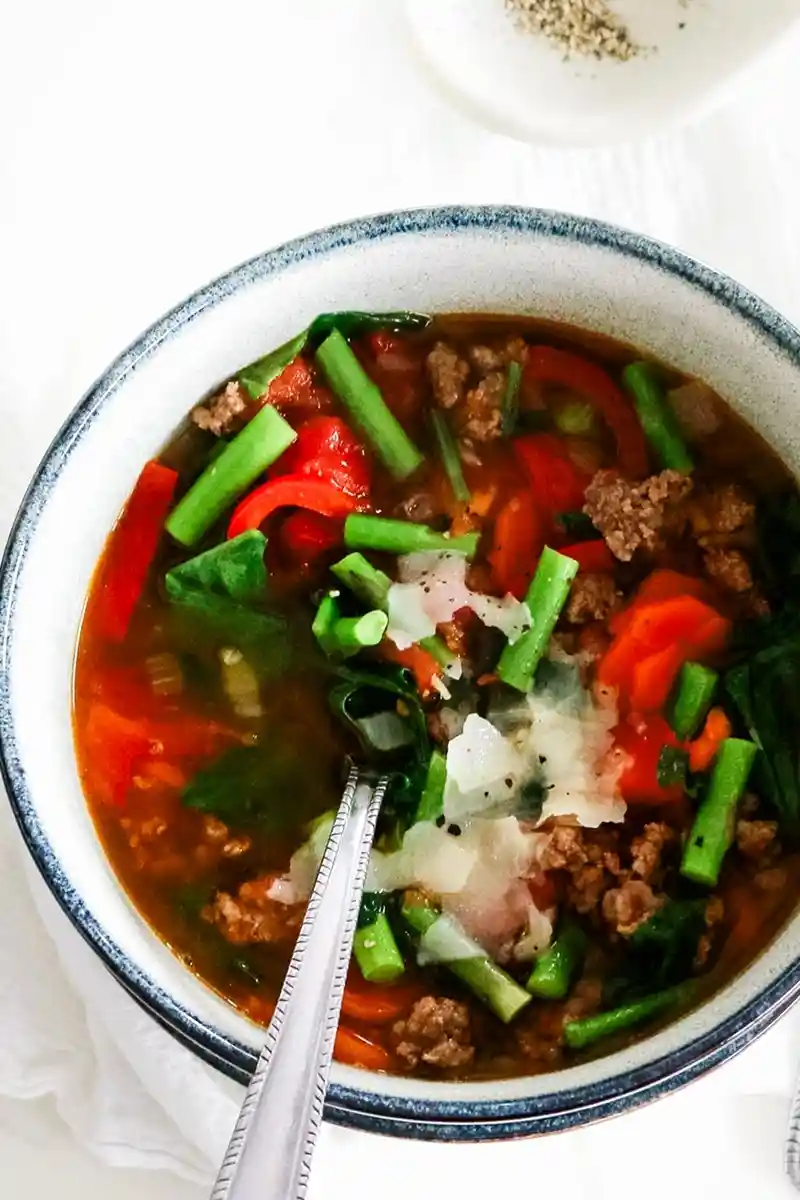
List of ingredients
- 2 tablespoons avocado oil (or lard, tallow, ghee) – used for sautéing.
- 1 ½ pounds ground beef – provides the hearty protein base.
- 1 yellow onion (diced) – adds aromatic sweetness.
- 2 carrots (sliced) – adds color and natural sweetness.
- 2 celery ribs – contributes a classic savory base flavor.
- 2 garlic cloves (minced) – enhances the overall depth of flavor.
- 1 28oz can diced tomatoes – provides acidity and texture.
- 2 quarts beef bone broth – creates a rich, nourishing liquid base.
- 1 green bell pepper (diced or chopped) – adds a bright, crisp flavor.
- 1 ½ cups green beans and/or asparagus (cut into 1-1/2″ pieces) – adds seasonal crunch.
- 1 teaspoon sea salt – basic seasoning to enhance flavors.
- 2 cups baby spinach (or another leafy green like baby kale, collards, chard) – adds vitamins and color.
- 2 tablespoons lemon juice (approximately ¼ of medium lemon) – brightens the final taste.
- salt and pepper (to taste as needed) – for final seasoning adjustments.
- 1 tablespoon shaved microbial-rennet parmesan cheese (for serving) – adds a savory finish.
step-by-step instructions
- Sauté Onions: Heat 2 tablespoons avocado oil in a large dutch oven over medium-high heat. Add 1 yellow onion and cook until translucent.
- Brown the Beef: Push the onions to the sides of the pot and add 1 ½ pounds ground beef to the center. Try to keep the ground beef contained to the center but then it will get mixed with the onions as you stir and break it up. Cook for approximately 10 minutes, until there is almost no more pink in the meat.
- Combine Base Vegetables: Add sliced 2 carrots, 2 celery ribs, 2 garlic cloves, and crushed 1 28oz can diced tomatoes and stir to combine.
- Simmer with Broth: Pour in 2 quarts beef bone broth and bring to a gentle boil. Reduce heat to medium and continue to cook for 10 minutes or until carrots are tender.
- Add Crisp Vegetables: Add 1 green bell pepper and 1 ½ cups green beans and/or asparagus, and cook for another 5 minutes on medium-low heat.
- Final Touch and Serving: Turn off heat, add 2 cups baby spinach or another leafy green and squeeze 2 tablespoons lemon juice. Stir to combine and check for salt and pepper. Serve with 1 tablespoon shaved microbial-rennet parmesan cheese.
Vegetable Customization and Swaps
Using Zucchini and Cauliflower for Low Carb
If you are strictly following a ketogenic diet, replace higher-carb vegetables like carrots with zucchini or cauliflower. Chop them into small cubes to ensure they cook through quickly without becoming too soft. These options maintain the volume of the soup while reducing the total carbohydrate count per serving.
Substituting Butternut Squash for Carrots
For a richer, creamier texture during the autumn months, use cubed butternut squash instead of carrots. Squash takes slightly longer to cook, so add it during the broth simmering stage. This swap adds a subtle sweetness and an orange hue to the broth.
Adding Parsnips for Earthy Depth
Parsnips are an excellent alternative to carrots if you prefer a more peppery, earthy flavor profile. Slice them thinly to ensure they tenderize at the same rate as the celery. They provide a similar textural experience while diversifying the flavor of the soup.
Incorporating Fresh Peas in Spring
During the spring, you can replace green beans with fresh English peas or snap peas. Add these during the last five minutes of cooking to keep them bright green and slightly crisp. This adds a fresh, sweet pop to the savory beef base.
Managing Vegetable Texture
To prevent your vegetables from turning into mush, always add the firmest vegetables first and the softest last. Carrots and celery need the longest simmering time, whereas bell peppers and leafy greens only need a few minutes. This layering technique ensures every bite has a pleasant contrast of textures.
Choosing the Right Tomato Type
While diced tomatoes are standard, fire-roasted tomatoes can add a smoky depth to the recipe. If you prefer a smoother broth, you can use crushed tomatoes instead of diced. Ensure your canned tomatoes do not contain added sugars or artificial preservatives to keep the recipe clean.
Mastering the Beef Preparation
Selecting the Ideal Fat Ratio
Using ground beef with a moderate fat content, such as 80/20, ensures the soup remains moist and flavorful. Fat carries the flavors of the garlic and onion more effectively than very lean meat. If the beef releases too much liquid, you can brown it in batches to achieve a better sear.
Techniques for Proper Browning
Do not rush the browning process, as the Maillard reaction creates deep, savory notes essential for a rich soup. Allow the meat to sit undisturbed for a few minutes before stirring to develop a brown crust. This caramelized surface adds a complexity that cannot be achieved by simply boiling the meat.
Handling Frozen Ground Beef
If using frozen beef, you can place the sealed package in room temperature water while sautéing the onions. Add the partially thawed meat to the pot and use a spatula to chip away at the frozen center as it cooks. Covering the pot briefly with a lid can help the steam thaw the remaining frozen bits faster.
Enhancing Meat Flavor
For extra nutrition and depth, consider using a beef blend that includes a small percentage of organ meats. This adds a mineral richness to the broth and increases the nutrient density of the meal. Ensure the blend is well-mixed so the flavor remains balanced.
Avoiding Overcooking the Beef
While browning is important, avoid cooking the beef until it is dry and crumbly before adding the liquids. Once the pink color has vanished and the meat is browned, move quickly to the vegetable stage. This keeps the beef tender and prevents it from becoming grainy in the finished soup.
Broth and Seasoning Secrets
Using Nutrient-Dense Bone Broth
Beef bone broth is superior to standard stock because it contains collagen and minerals that thicken the soup naturally. It provides a velvet-like mouthfeel and a more robust beefy flavor. If making your own, ensure it is simmered long enough to extract the maximum amount of nutrients.
Balancing Sodium Levels
Canned tomatoes and store-bought broths vary significantly in salt content. Start with a small amount of sea salt and taste the soup frequently throughout the cooking process. It is much easier to add salt at the end than to correct an overly salty broth.
The Importance of Fresh Lemon Juice
The addition of lemon juice at the very end is a professional trick to brighten the heavy flavors of beef and broth. The acidity cuts through the richness of the fat and lifts the taste of the vegetables. Always add this after turning off the heat to prevent the juice from turning bitter.
Layering Garlic for Depth
Adding minced garlic just before the tomatoes ensures the garlic is cooked through but not burnt. Burnt garlic can introduce a bitter taste that ruins the delicate balance of the soup. Stirring it in for about 60 seconds is sufficient to release its aromatic oils.
Adjusting Salt and Pepper
Use freshly cracked black pepper for a more pungent and aromatic heat. If the soup tastes flat despite adding salt, try adding a pinch more pepper or a drop more lemon juice. This balance between salt, acid, and heat is what creates a restaurant-quality flavor.
Using Herb-Infused Broths
If you want a more aromatic soup, you can simmer a bay leaf or a few sprigs of thyme in the broth. Remove these herbs before serving to keep the texture smooth. These subtle additions complement the beef and carrots without overpowering the natural flavors.
Serving and Presentation
Pairing with Gluten-Free Bread
This soup is incredibly filling, but serving it with a side of toasted gluten-free flatbread or a crusty sourdough roll adds a satisfying crunch. Toasted bread can be used to soak up the nutrient-dense bone broth. Brush the bread with a little garlic butter for extra flavor.
Serving Over Rice or Quinoa
For those who want a more substantial meal, serve a ladle of soup over a scoop of cooked brown rice or quinoa. This transforms the soup into a hearty stew and increases the fiber content. The grains absorb the broth, making each bite more filling.
Cheese Garnish Options
Shaved microbial-rennet parmesan cheese adds a salty, umami finish that complements the beef. For a different flavor, you can use a sprinkle of nutritional yeast for a dairy-free cheesy taste. Ensure the cheese is added just before eating so it melts slightly into the broth.
Fresh Herb Garnishes
Adding a sprinkle of chopped fresh parsley or chives on top of the bowl provides a burst of color and freshness. These herbs add a light, grassy note that contrasts well with the richness of the beef. Always add fresh herbs at the table to keep them from wilting.
Serving as a Main Course
Because this soup contains protein, healthy fats, and multiple servings of vegetables, it works perfectly as a standalone dinner. Use a wide, shallow bowl to showcase the variety of colorful vegetables. This presentation makes the meal feel more like a complete entree than a side dish.
Ideal Bowl Sizes for Portioning
To ensure a balanced meal, portion the soup into 12 to 16-ounce bowls. This allows for a good ratio of meat to vegetables in every spoonful. If serving a large group, keep the soup on a low simmer in the Dutch oven for easy refills.
Storage and Meal Prep
Cooling and Refrigeration
Allow the soup to cool completely before transferring it to an airtight glass container. Placing hot soup directly into the fridge can raise the internal temperature of the appliance, potentially risking other foods. Store the soup in the refrigerator for up to four days.
Long-Term Freezing Tips
This soup freezes exceptionally well, making it ideal for batch cooking. Use freezer-safe containers or silicone molds, leaving about an inch of headspace to allow for expansion. For the best quality, freeze the soup without the spinach and lemon juice, adding those fresh upon reheating.
Thawing Procedures
The safest way to thaw frozen soup is to move the container from the freezer to the refrigerator 24 hours before you plan to eat it. This slow thaw preserves the texture of the vegetables. Avoid thawing on the counter to prevent bacterial growth.
Stovetop Reheating Methods
To reheat, transfer the desired portion to a small saucepan over medium heat. Stir occasionally to ensure the beef and vegetables are heated evenly. If the soup has thickened too much in the fridge, add a splash of beef broth or water to restore the consistency.
Microwave Reheating Tips
When using a microwave, heat the soup in 1-minute intervals, stirring in between. This prevents hot spots and ensures the beef is heated through. Cover the bowl with a microwave-safe lid to trap steam and keep the vegetables moist.
Preventing Liquid Evaporation
During reheating, it is common for some of the broth to evaporate, making the soup thicker. Keep a small carton of broth on hand to thin the soup back to its original consistency. This ensures the flavor remains balanced and not overly concentrated.
Troubleshooting and FAQs
What to do if the soup is too salty?
If the broth becomes too salty, you can add a diced potato and simmer it for 10 minutes, as potatoes absorb salt. Alternatively, add a bit more water or unsalted beef broth to dilute the concentration. A squeeze of extra lemon juice can also help mask the saltiness.
How to prevent vegetables from getting mushy?
The key is to add vegetables in stages based on their density. Do not simmer the green beans or bell peppers for more than five to seven minutes. If you are reheating the soup, heat it just until it simmers rather than boiling it vigorously.
What can I use if I don’t have avocado oil?
You can substitute avocado oil with any high-smoke point fat like ghee, lard, or tallow. These animal-based fats add a rich, traditional flavor to the beef. Avoid using extra virgin olive oil for the initial browning as it can smoke at high temperatures.
Can I use a slow cooker for this recipe?
Yes, you can adapt this for a slow cooker by browning the beef and onions in a pan first. Add all other ingredients except the spinach and lemon juice to the crockpot and cook on low for 6-8 hours. Stir in the greens and lemon juice just before serving.
How to fix a bland tasting soup?
If the soup lacks depth, check the salt and acidity levels first. Adding a teaspoon of apple cider vinegar or more lemon juice can wake up the flavors. You can also stir in a small amount of tomato paste to increase the umami profile.
Which greens work best as spinach substitutes?
Kale, collard greens, and Swiss chard are all excellent alternatives to baby spinach. Since kale is heartier than spinach, add it 2-3 minutes before the heat is turned off. This ensures the leaves are tender but still maintain their structure.
Print
Hearty Ground Beef and Vegetable Soup
- Total Time: 40 minutes
- Yield: 8 servings 1x
- Diet: Paleo, Gluten-free, Grain-free
Description
Ground Beef Vegetable Soup with hearty beef, nourishing bone broth, and versatile seasonal vegetables – a simple, flavorful, one-pot meal.
Ingredients
- 2 tablespoons avocado oil, tallow, or ghee
- 1 ½ pounds ground beef
- 1 yellow onion, diced
- 2 carrots, sliced
- 2 celery ribs
- 2 garlic cloves, minced
- 1 28oz can diced tomatoes
- 2 quarts beef bone broth
- 1 green bell pepper, diced or chopped
- 1 ½ cups green beans and/or asparagus, cut into 1–1/2” pieces
- 1 teaspoon sea salt
- 2 cups baby spinach
- 2 tablespoons lemon juice
- salt and pepper to taste
- 1 tablespoon shaved parmesan cheese
Instructions
- Sauté: Heat 2 tablespoons avocado oil in a large dutch oven over medium-high heat. Add 1 yellow onion and cook until translucent.
- Brown: Push the onions to the sides of the pot and add 1 ½ pounds ground beef to the center. Cook for approximately 10 minutes, until there is almost no more pink in the meat.
- Combine: Add sliced 2 carrots, 2 celery ribs, 2 garlic cloves, and crushed 1 28oz can diced tomatoes and stir to combine.
- Simmer: Pour in 2 quarts beef bone broth and bring to a gentle boil. Reduce heat to medium and continue to cook for 10 minutes or until carrots are tender.
- Add Veggies: Add 1 green bell pepper and 1 ½ cups green beans and/or asparagus, and cook for another 5 minutes on medium-low heat.
- Finish: Turn off heat, add 2 cups baby spinach or another leafy green and squeeze 2 tablespoons lemon juice. Stir to combine and check for salt and pepper. Serve with 1 tablespoon shaved parmesan cheese.
Notes
Store in an airtight glass container for up to 4 days in the fridge. To freeze, use freezer-safe containers for up to 3 months. Reheat gently on the stovetop, adding a splash of broth if the soup has thickened.
- Prep Time: 10 minutes
- Cook Time: 30 minutes
- Category: Soup
- Method: Stove-top
- Cuisine: American
Nutrition
- Serving Size: 1 serving
- Calories: 308 kcal
- Sugar: 3 g
- Sodium: 457 mg
- Fat: 21 g
- Saturated Fat: 7 g
- Unsaturated Fat: 14 g
- Trans Fat: 1 g
- Carbohydrates: 6 g
- Fiber: 2 g
- Protein: 24 g
- Cholesterol: 60 mg