
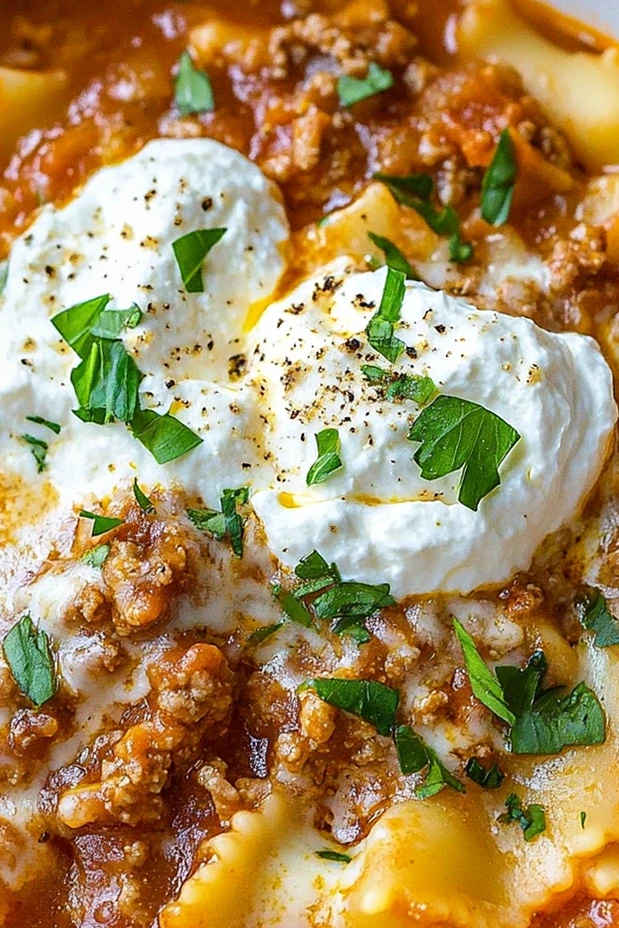
This lasagna soup combines the rich flavors of traditional Italian layers into a single, comforting pot. It is an efficient meal that delivers a hearty result with minimal cleanup.
List of ingredients
- 1-2 tablespoons olive oil (or preferred oil) – used for sautéing the meat and vegetables.
- 1 pound ground beef – provides a rich, savory base.
- 1 large onion, diced – adds aromatic sweetness.
- 4 cloves garlic, minced – enhances the depth of flavor.
- 1 (15-ounce) can diced tomatoes (with juice) – adds texture and acidity.
- 1 (15-ounce) can tomato sauce (or tomato puree) – creates a smooth soup consistency.
- 3 ounces tomato paste (1/4 cup) – intensifies the tomato flavor.
- 4 cups chicken broth – the primary savory liquid base.
- 1-2 cups water (or more, as needed) – used to adjust the final thickness.
- 1 tablespoon Italian seasoning – a blend of classic herbs for authentic taste.
- 1 teaspoon sea salt (or more to taste) – balances the savory notes.
- Black pepper, to taste – adds a subtle warmth.
- 8 ounces bowtie pasta (uncooked) – provides the hearty pasta element.
- 1/2 cup ricotta cheese – adds creaminess to the finish.
- 2 ounces mozzarella cheese, shredded (about 1/2 cup) – creates gooey, melted textures.
- 1/4 cup Parmesan cheese (shaved, shredded, or fresh grated) – provides a salty, nutty finish.
- 1/4 cup fresh parsley, chopped – used for a fresh, bright garnish.
step-by-step instructions
- Prepare the soup base: Heat a 4.5-quart soup pot over medium-high heat. Add olive oil and heat until shimmering.
- Cook the beef and aromatics: Add ground beef, onions, and garlic to the pot. Sauté until the beef is fully cooked, breaking it apart with a spoon as needed. Drain excess fat if necessary to keep the soup from becoming too oily.
- Add the tomatoes and seasoning: Stir in the diced tomatoes (with their juice), tomato sauce, tomato paste, chicken broth, Italian seasoning, salt, and pepper. Mix well to ensure the paste is fully integrated.
- Cook the pasta: Add the uncooked bowtie pasta to the pot. Increase the heat to high and bring the soup to a boil. Reduce the heat to medium and simmer for 10-15 minutes, stirring frequently to prevent pasta from sticking to the bottom. Cook until the pasta reaches your desired texture. Adjust consistency by adding more water or broth, if needed.
- Prepare the toppings: Decide how to incorporate the cheese. Option 1: Stir ricotta, mozzarella, and Parmesan into the entire soup pot for a creamy finish. Option 2: Serve cheeses on the side for individual toppings to maintain texture.
- Garnish and serve: Ladle the soup into bowls. Top with ricotta, mozzarella, Parmesan, and fresh parsley. Serve immediately while hot.
Optimizing the Meat and Base
Achieving a Proper Brown on Ground Beef
To maximize flavor, ensure the ground beef is properly browned rather than steamed. Heat the oil until it is shimmering before adding the meat, and avoid overcrowding the pan. This allows the Maillard reaction to occur, creating a deep, savory crust on the beef.
Timing the Garlic and Onion Sauté
Sauté the onions first until they become translucent and soft. Add the minced garlic only in the final minute of browning the beef. Garlic burns quickly at high temperatures, so adding it late prevents a bitter taste from developing in the base.
Managing Excess Fat in the Pot
Depending on the lean-to-fat ratio of your beef, you may find a significant amount of oil in the pot after browning. Use a spoon to remove excess grease or carefully drain it into a container. This ensures the soup has a clean flavor and does not have an oily film on the surface.
Mastering the Tomato Foundation
The Role of Tomato Paste for Depth
Tomato paste provides a concentrated burst of umami that canned sauce alone cannot achieve. Stirring it in and letting it cook for a minute with the meat helps caramelize the sugars in the paste. This results in a richer, darker red broth with a more complex flavor profile.
Balancing Acidity in the Broth
The combination of diced tomatoes and tomato sauce creates a naturally acidic environment. If the soup tastes too sharp, you can balance it by ensuring the seasonings are well-incorporated. The richness of the cheese added at the end typically neutralizes the acidity perfectly.
Incorporating Italian Seasoning for Aroma
Adding dried Italian seasoning during the simmer allows the herbs to rehydrate and release their essential oils. This infuses the entire broth with notes of oregano, basil, and rosemary. Stirring the seasoning in thoroughly ensures there are no clumps of herbs in the final bowl.
Pasta Cooking Techniques
Choosing the Right Pasta Shape
Bowtie pasta is recommended because its shape holds onto the thick broth and mimics the heartiness of lasagna sheets. However, you can use broken lasagna noodles for a more authentic look. Penne or rotini are also excellent alternatives that provide a satisfying chew.
Timing the Simmer for Al Dente Pasta
Watch the pasta closely during the final 10-15 minutes of cooking. Remove the soup from the heat just as the pasta becomes tender but still has a slight bite. The noodles will continue to cook in the residual heat of the broth as the soup is served.
Preventing Pasta from Sticking to the Bottom
Pasta releases starch as it cooks, which can cause it to clump or stick to the bottom of the pot. Stir the soup every few minutes to keep the bowtie pasta moving. This ensures even cooking and prevents the bottom layer from burning.
Cheese Finishing Options
Creating a Creamy Unified Sauce
Stirring the ricotta, mozzarella, and Parmesan directly into the pot transforms the broth into a creamy, velvety sauce. This method is ideal for those who prefer a consistent texture in every spoonful. The cheeses will emulsify slightly with the tomato base.
Layering Cheese for Textural Contrast
Serving the cheese as a topping allows for a variety of textures in one bowl. A dollop of cold ricotta melting slowly into the hot soup creates pockets of creaminess. The mozzarella provides stretchy, gooey strands, while the Parmesan adds sharp, salty accents.
Using Freshly Grated Parmesan for Better Melting
Whenever possible, grate your Parmesan cheese fresh from a block. Pre-shredded cheeses often contain anti-caking agents that prevent them from melting smoothly. Freshly grated cheese blends seamlessly into the soup for a professional finish.
Flavor Variations and Substitutions
Incorporating Fresh Spinach or Kale
For added nutrition and color, stir in a handful of fresh baby spinach or chopped kale during the last two minutes of simmering. The residual heat will wilt the greens perfectly without overcooking them. This adds a fresh, earthy element to the rich soup.
Using Ground Turkey as a Leaner Alternative
Ground turkey or ground chicken can be substituted for beef to reduce the overall fat content. Since turkey is leaner, you may need to add an extra tablespoon of olive oil to prevent the meat from sticking. The flavor remains hearty and pairs well with the tomato base.
Adding Diced Zucchini for Extra Volume
Diced zucchini is a great way to increase the volume of the soup without adding many calories. Add the zucchini pieces at the same time as the diced tomatoes. They will soften during the simmer, absorbing the savory flavors of the broth.
Serving and Presentation
Preparing Garlic Bread for Dipping
Serve this soup with toasted garlic bread to complement the Italian flavors. Brush thick slices of baguette with garlic butter and toast them in the oven until golden brown. The crunch of the bread provides a perfect contrast to the soft pasta and creamy cheese.
Balancing the Meal with a Crisp Salad
Because lasagna soup is very rich and filling, a side salad is highly recommended. A simple mix of arugula or romaine with a lemon-vinaigrette dressing cuts through the heaviness of the cheese. This creates a balanced dining experience.
Garnish with Fresh Parsley for Brightness
Freshly chopped parsley is more than just a decoration; it adds a bright, peppery note to the dish. Sprinkle it generously over the cheese toppings just before serving. This pop of green makes the dish visually appealing and tastes fresher.
Storage and Preservation
Preventing Pasta from Over-Absorbing Liquid
Pasta continues to soak up liquid even after the heat is turned off. If you plan to store leftovers, consider cooking the pasta separately and adding it to each bowl as needed. This prevents the soup from turning into a thick stew in the refrigerator.
Safe Refrigeration Timelines
Store any leftover soup in an airtight container in the refrigerator for up to 3 to 5 days. Ensure the soup has cooled down slightly before sealing the container to prevent excessive condensation. Keep the cheese toppings separate if they were not stirred in.
Freezing the Soup Base Without Pasta
The soup base freezes exceptionally well, but the cooked pasta does not. To freeze, prepare the soup without adding the bowtie pasta. Store the base in freezer-safe containers for up to 3 months, then add fresh pasta upon reheating.
Reheating Your Soup
Adjusting Consistency on the Stovetop
The best way to reheat this soup is on the stovetop over medium heat. Because the pasta absorbs liquid over time, the soup will likely be thicker than when it was first made. Add a splash of chicken broth or water to restore the original consistency.
Best Microwave Settings for Even Heating
If using a microwave, heat the soup in short 2-minute intervals, stirring in between. This prevents hot spots and ensures the beef and pasta are heated through evenly. Cover the bowl with a damp paper towel to keep the moisture locked in.
Re-adding Cheese After Reheating
If you stored the cheese separately, add it to the bowl after the soup is fully heated. This ensures the mozzarella and ricotta reach the perfect melting point without becoming overcooked or oily. Freshly sprinkle a bit more Parmesan on top for extra flavor.
Troubleshooting Common Issues
Fixing a Soup That Is Too Thick
If the soup becomes too thick due to the pasta starch, simply stir in more liquid. Use chicken broth for more flavor or water for a lighter consistency. Add the liquid gradually, one quarter-cup at a time, until the desired thickness is reached.
Adjusting Over-Salted Broth
If the soup tastes too salty, you can add a small amount of unsalted water or more tomato sauce. Adding a pinch of sugar or a squeeze of lemon juice can also help mask excess salt. Always taste the broth before adding the final pinch of salt.
Managing Mushy Pasta in Leftovers
Mushy pasta occurs when the noodles are overcooked or left in the liquid for too long. To fix this in future batches, undercook the pasta slightly when first preparing the soup. This ensures the texture remains firm after reheating.
Frequently Asked Questions
Can I make Lasagna Soup ahead of time?
Yes, you can prepare the soup base (meat, tomatoes, and broth) in advance. Store the base in the fridge for up to 3 days and cook the pasta and add the cheese only when you are ready to serve the meal.
How do I store leftovers?
Store leftovers in an airtight container in the refrigerator for up to 3-5 days. If possible, store the pasta in a separate container from the liquid to maintain the best noodle texture.
Can I freeze Lasagna Soup?
You can freeze the soup base for up to 3 months. Avoid freezing the pasta, as it becomes mushy upon thawing. Simply thaw the base, reheat it, and add freshly cooked pasta.
Can I make this recipe vegetarian?
Yes, replace the ground beef with plant-based crumbles, finely chopped mushrooms, or extra zucchini. Substitute the chicken broth with vegetable broth to make the dish entirely vegetarian.
What is the best way to reheat Lasagna Soup?
Reheat gently on the stovetop over medium heat. Stir in a small amount of water or broth to loosen the consistency, as the pasta will have absorbed some of the liquid.
Can I use gluten-free pasta?
Gluten-free pasta works well in this recipe. Be aware that some gluten-free varieties cook faster or slower than wheat pasta, so check the package directions and test the texture frequently.
How can I make this soup spicier?
To add heat, stir in a pinch of crushed red pepper flakes during the simmering stage. You can also add a dash of hot sauce or a few drops of sriracha to individual bowls before serving.
Print
Comforting Lasagna Soup
- Total Time: 35 minutes
- Yield: 6 servings 1x
- Diet: General
Description
Lasagna Soup is a comforting, hearty dish that captures all the flavors of traditional lasagna in a one-pot, easy-to-make soup. Topped with creamy ricotta, gooey mozzarella, and sharp Parmesan, it’s perfect for a cozy dinner.
Ingredients
- 1–2 tablespoons olive oil
- 1 pound ground beef
- 1 large onion, diced
- 4 cloves garlic, minced
- 1 (15-ounce) can diced tomatoes with juice
- 1 (15-ounce) can tomato sauce
- 3 ounces tomato paste
- 4 cups chicken broth
- 1–2 cups water
- 1 tablespoon Italian seasoning
- 1 teaspoon sea salt
- Black pepper, to taste
- 8 ounces bowtie pasta, uncooked
- 1/2 cup ricotta cheese
- 2 ounces mozzarella cheese, shredded
- 1/4 cup Parmesan cheese
- 1/4 cup fresh parsley, chopped
Instructions
- Prepare the soup base: Heat a 4.5-quart soup pot over medium-high heat. Add olive oil and heat until shimmering.
- Cook the beef and aromatics: Add ground beef, onions, and garlic to the pot. Sauté until the beef is fully cooked, breaking it apart with a spoon as needed. Drain excess fat if necessary.
- Add the tomatoes and seasoning: Stir in the diced tomatoes (with their juice), tomato sauce, tomato paste, chicken broth, Italian seasoning, salt, and pepper. Mix well.
- Cook the pasta: Add the uncooked bowtie pasta to the pot. Increase the heat to high and bring the soup to a boil. Reduce the heat to medium and simmer for 10–15 minutes, stirring frequently to prevent pasta from sticking. Cook until the pasta reaches your desired texture. Adjust consistency by adding more water or broth, if needed.
- Prepare the toppings: Decide how to incorporate the cheese: Option 1: Stir ricotta, mozzarella, and Parmesan into the entire soup pot. Option 2: Serve cheeses on the side for individual toppings.
- Garnish and serve: Ladle the soup into bowls. Top with ricotta, mozzarella, Parmesan, and fresh parsley. Serve immediately while hot.
Notes
Customize the pasta: Swap bowtie pasta with other shapes like lasagna pieces, penne, or rotini. Storage: Refrigerate for up to 5 days or freeze the soup base (without pasta) for up to 3 months. Make it vegetarian: Replace ground beef with plant-based crumbles and use vegetable broth.
- Prep Time: 10 minutes
- Cook Time: 25 minutes
- Category: Dinner
- Method: Stovetop
- Cuisine: Italian
Nutrition
- Serving Size: 1 bowl
- Calories: 470 kcal
- Sugar: 8 g
- Sodium: 1100 mg
- Fat: 25 g
- Saturated Fat: 10 g
- Unsaturated Fat: 15 g
- Trans Fat: 0 g
- Carbohydrates: 35 g
- Fiber: 4 g
- Protein: 28 g
- Cholesterol: 80 mg