
This one-pot meal delivers the classic taste of lasagna without the tedious layering process. It is a fast and convenient option for busy weeknights that satisfies hearty pasta cravings.
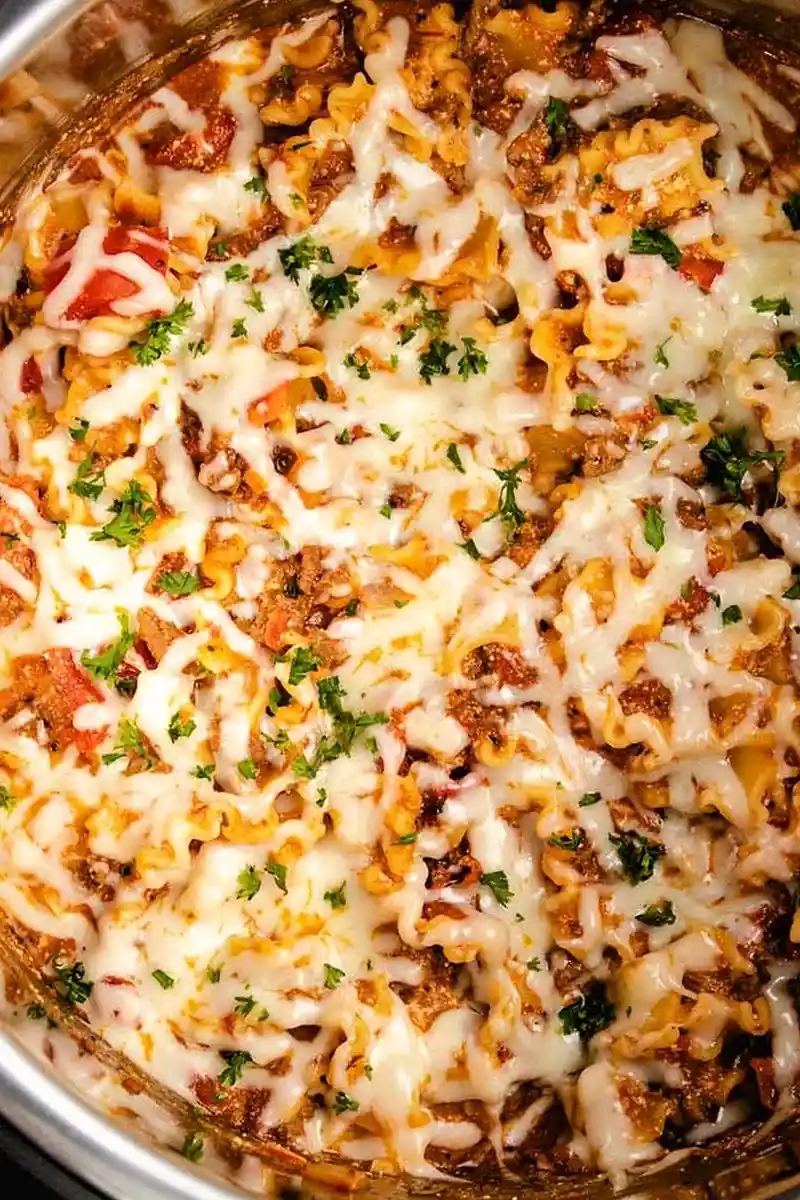
List of ingredients
- olive oil (optional, to sauté very lean ground beef)
- 1 lb lean ground beef or beef-based Italian sausage
- ¼ teaspoon salt
- a few turns freshly ground black pepper
- 1 yellow onion, diced
- 5 cloves garlic, minced
- 3 cups chicken broth (can sub water and adjust salt to taste)
- 22 oz jar marinara sauce (650 ml / 2 ¾ cups)
- 1 15oz can diced tomatoes
- 1 teaspoon dried basil
- 1 teaspoon dried parsley
- ½ teaspoon onion powder
- ½ teaspoon oregano
- ¼ teaspoon red pepper flakes (optional)
- 10-12 oz short Mafalda pasta (mini lasagna noodles)
- 1 cup ricotta cheese (can sub cottage cheese)
- 1 cup freshly grated mozzarella cheese
- Fresh parsley and parmesan cheese for garnish (optional)
step-by-step instructions
- Sauté the Meat: Turn on the Sauté function on the Instant Pot. When the screen says “hot”, add the beef and season it with salt and pepper. Sauté until almost cooked through, breaking the beef into smaller pieces, then add the onion and garlic. Continue to cook until the beef is browned and the onion is softened. Drain grease, if needed.
- Deglaze the Pot: Turn off the Sauté function and add a small amount of broth. Use a flat-bottomed spatula to deglaze the bottom of the insert by scraping up any bits of food that are stuck to the bottom.
- Layer the Ingredients: Add the remaining broth, then layer on the marinara sauce, diced tomatoes, basil, parsley, onion powder, oregano and red pepper flakes. Evenly layer the pasta on top and push them down into the liquid, though they do not need to be fully submerged. Do not stir the layers.
- Pressure Cook: Close the lid and set the vent to sealing. Pressure cook on Manual High pressure for 4 minutes. It will typically take about 15 minutes to come to pressure.
- Finish and Cheese: At the end of cooking time, do a controlled quick release of the pressure to reduce splatter. Open the lid, stir the mixture, then mix in the ricotta cheese and top with grated mozzarella. Set the lid askew on the pot for a few minutes to melt the cheese.
- Serve and Store: Serve immediately with a fresh parsley garnish if desired. Store any leftovers in a sealed container in the refrigerator and consume within 4 days.
Mastering Your Pasta Selection
Using Mafalda Pasta for Authenticity
Mafalda pasta is shaped like mini lasagna noodles with ruffled edges. These ruffles are excellent for trapping the meat sauce and cheese, providing a texture very similar to traditional lasagna.
Substituting Other Short Pasta Varieties
If you cannot find Mafalda, you can use 12 ounces of any short pasta like rotini or penne. Avoid using 10 ounces of other shapes, as Mafalda absorbs more liquid and other pastas may leave the dish too soupy.
Calculating Cook Times for Different Noodles
To adjust the pressure cook time for different pasta shapes, look at the lowest cook time on the package. Divide that number by two, rounding down if it is an odd number, to determine the correct high-pressure setting.
Managing Pasta Quantities for Sauce Texture
Use 10 ounces of pasta if you prefer a saucier, more liquid consistency. Use 12 ounces if you prefer a thicker meal that resembles a traditional baked pasta dish.
Avoiding Long Noodles in the Pressure Cooker
Avoid using spaghetti or long lasagna sheets for this specific lazy method. Longer noodles are more likely to clump together and stick, making the final stir much more difficult.
Customizing Ingredients and Flavor
Choosing Lean Ground Beef or Turkey
Lean ground beef provides a rich flavor, but ground turkey is a great lean alternative. If using very lean meat, you may need a small amount of olive oil during the sauté phase to prevent sticking.
Beef-Based Sausage Alternatives
Using beef-based Italian sausage adds an extra layer of seasoning to the dish. Ensure the sausage is free of pork to maintain the desired dietary profile of the meal.
Swapping Ricotta for Cottage Cheese
If you do not have ricotta, cottage cheese is an excellent substitute. It provides a similar creaminess and tang, though it may result in a slightly more textured consistency.
Using Water Instead of Chicken Broth
You can replace the chicken broth with water if needed. If you make this swap, increase the salt slightly to ensure the pasta and sauce remain well-seasoned.
Selecting the Right Marinara Sauce
Any standard tomato-based pasta sauce works well for this recipe. For a sweeter taste, choose a sauce with added basil or garlic, or use a low-sodium version to control the salt levels.
Essential Pressure Cooker Techniques
Preventing the Burn Warning
The key to avoiding the burn notice is strictly layering the ingredients. Keep the broth at the bottom and the thick tomato sauce and pasta on top without stirring them together before cooking.
Effective Deglazing of the Inner Pot
Deglazing is the process of scraping brown bits off the bottom after sautéing. This ensures that no charred pieces remain, which prevents the pressure cooker from triggering a burn error during the cycle.
Performing a Controlled Quick Release
Instead of opening the valve fully, let the pressure out slowly in bursts. This prevents the hot sauce from spraying and splattering against the underside of the lid.
Utilizing the Sauté Function Correctly
Ensure the pot reaches the “hot” status before adding meat. This creates a proper sear on the beef, which develops deeper flavor profiles than simmering the meat in liquid.
Sealing the Vent for High Pressure
Double-check that the vent is set to the “sealing” position before starting the timer. If the vent is open, the pot will not build pressure and the pasta will remain raw.
Storage and Reheating Guide
Reheating in the Microwave
Place individual portions in a microwave-safe dish and heat for 1 to 2 minutes. Stir the pasta halfway through the heating process to ensure the center is hot and the cheese is melted.
Stovetop Reheating for Better Texture
Warm the lasagna in a saucepan over medium heat. Add a splash of broth or water to loosen the sauce, as the pasta will continue to absorb liquid while stored.
Optimal Refrigerator Storage
Keep leftovers in an airtight container to prevent the pasta from drying out. This dish remains safe and tasty for up to four days when refrigerated properly.
Safe Internal Temperatures for Reheating
When reheating, ensure the internal temperature reaches 165°F. Using a food thermometer is the best way to guarantee the meal is safe for consumption.
Freezing Leftover Lazy Lasagna
While not recommended for the best texture, you can freeze portions in airtight containers. Thaw them in the refrigerator overnight before reheating on the stove to maintain the best consistency.
Serving and Presentation Ideas
Adding Fresh Herb Garnishes
Freshly chopped parsley adds a pop of color and a bright, fresh contrast to the rich sauce. Adding a sprinkle of fresh basil leaves also complements the Italian flavors.
Pairing with Garlic Bread
Serve this dish alongside toasted garlic bread or focaccia. The crunchy bread is perfect for scooping up any remaining sauce from the plate.
Complementing with a Side Salad
A crisp green salad with a light vinaigrette balances the heaviness of the cheese and meat. Use arugula or romaine with cherry tomatoes for a traditional pairing.
Using Parmesan Cheese as a Finisher
Freshly grated parmesan cheese added at the end provides a salty, nutty finish. This enhances the overall savory profile of the ground beef and marinara.
Individual Serving Suggestions
Instead of mixing the mozzarella into the pot, you can sprinkle it on individual bowls and melt it under a broiler for a bubbly, golden-brown crust.
Troubleshooting Common Issues
Fixing a Watery Consistency
If the lasagna is too liquid after cooking, let it sit for 5-10 minutes before serving. The pasta will absorb more sauce as it cools slightly, thickening the dish naturally.
Correcting Overcooked Pasta
Overcooked pasta usually happens if the pressure time is too long. If the noodles are too soft, avoid over-stirring the final product to keep the pieces intact.
Solving Bland Flavor Profiles
If the dish tastes under-seasoned, stir in a pinch more salt or a teaspoon of Italian seasoning after the pressure cycle. A small amount of lemon juice can also brighten the flavors.
Addressing the Burn Signal
If you receive a burn warning, quickly release the pressure and stir the pot. Add a bit more broth, scrape the bottom thoroughly, and restart the pressure cycle for a shorter time.
Fixing Grainy Ricotta Mixtures
If the ricotta appears grainy, ensure it is at room temperature before stirring it in. Mixing it gently into the hot pasta helps it emulsify and become creamy.
Frequently Asked Questions
Can I use whole lasagna noodles?
No, this method is designed for short pasta. Whole noodles would clump together and likely stick to the bottom of the pot, potentially causing a burn warning.
Do I need to pre-boil the pasta?
There is no need to pre-boil the noodles. They cook perfectly within the sauce and broth under pressure, which allows them to absorb more flavor from the ingredients.
Can I add vegetables to the mix?
Yes, you can add chopped spinach or diced zucchini. Stir these in at the very end with the cheeses, as they only need a minute of residual heat to soften.
Is it okay to use water instead of broth?
Yes, water is a perfectly acceptable substitute for chicken broth. Just remember to add a bit more salt or bouillon to maintain the depth of flavor.
How do I adjust the spice level?
To increase the heat, add more red pepper flakes during the layering step. For a milder version, omit the flakes entirely or replace them with a pinch of paprika.
Print
Instant Pot Lazy Lasagna
- Total Time: 34 minutes
- Yield: 6 servings 1x
- Diet: General
Description
The easiest lasagna ever! Made with layers of meat, noodles, sauce, and two types of cheese, it’s a quick and easy one-pot meal.
Ingredients
- Olive oil (optional)
- 1 lb lean ground beef
- 1/4 teaspoon salt
- Freshly ground black pepper
- 1 yellow onion, diced
- 5 cloves garlic, minced
- 3 cups chicken broth
- 22 oz marinara sauce
- 1 15 oz can diced tomatoes
- 1 teaspoon dried basil
- 1 teaspoon dried parsley
- 1/2 teaspoon onion powder
- 1/2 teaspoon oregano
- 1/4 teaspoon red pepper flakes (optional)
- 10–12 oz short Mafalda pasta
- 1 cup ricotta cheese
- 1 cup freshly grated mozzarella cheese
- Fresh parsley and parmesan cheese for garnish (optional)
Instructions
- Sauté: Sauté beef with salt and pepper until almost cooked, then add onion and garlic and cook until browned and softened.
- Deglaze: Turn off Sauté function and deglaze the bottom of the insert with a small amount of broth.
- Layer: Add remaining broth, marinara sauce, diced tomatoes, basil, parsley, onion powder, oregano, and red pepper flakes, then evenly layer pasta on top without stirring.
- Pressure Cook: Seal the lid and pressure cook on Manual High pressure for 4 minutes.
- Finish: Perform a controlled quick release, stir in ricotta cheese, top with mozzarella, and let the cheese melt with the lid askew.
- Serve: Serve immediately with fresh parsley garnish.
Notes
Use 10 oz of pasta for a saucier texture or 12 oz for a thicker consistency. If substituting other short pasta, use 12 oz and calculate cook time by dividing the lowest package cook time by 2.
- Prep Time: 10 minutes
- Cook Time: 4 minutes
- Category: Main Course
- Method: Pressure Cooking
- Cuisine: American, Italian-inspired
Nutrition
- Serving Size: 1 serving
- Calories: 463 kcal
- Sugar: 7 g
- Sodium: 884 mg
- Fat: 15 g
- Saturated Fat: 8 g
- Unsaturated Fat: 6 g
- Trans Fat: 1 g
- Carbohydrates: 47 g
- Fiber: 4 g
- Protein: 35 g
- Cholesterol: 83 mg