
This slow cooker beef stew with mushrooms creates a deeply satisfying, warming meal perfect for busy weeknights or quiet weekends. By combining high-quality chuck roast with earthy mushrooms and tender root vegetables, this dish builds complex layers of savory flavor with minimal hands-on effort. Simply sear the beef, prep the vegetables, and let your slow cooker do the heavy lifting to deliver a restaurant-quality dinner.
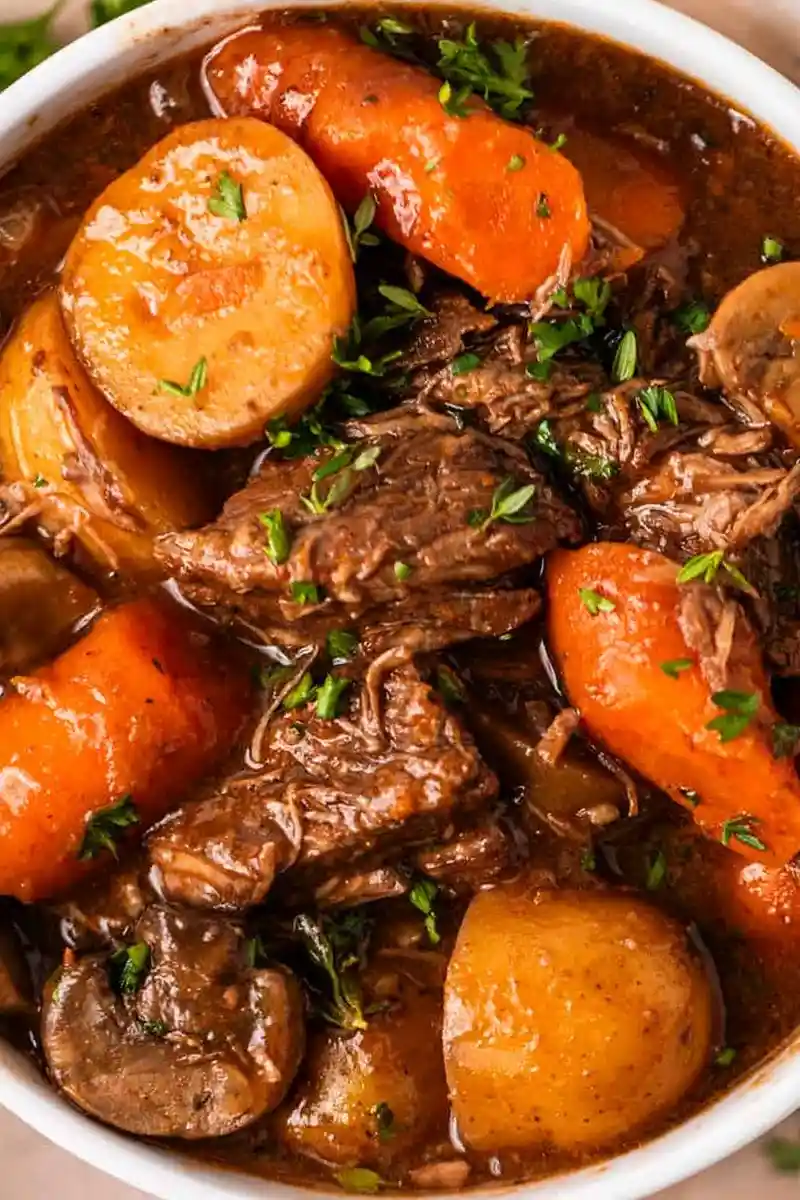
List of ingredients
- 3 lb boneless beef chuck, trimmed and cut into 1 1/2 – 2 inch pieces
- 1/4 cup flour
- 1 tsp salt
- 1 tsp pepper
- 2 Tbsp olive oil
- 1 large onion, chopped
- 6-7 carrots, cut in large chunks
- 1 lb white mushrooms, sliced
- 1 1/2 lb baby Yukon gold potatoes
- 3/4 cup beef broth (replacement)
- 1 tsp balsamic vinegar
- 1 1/2 Tbsp Worcestershire sauce
- 4-5 garlic cloves, minced
- 1 tsp dried oregano
- 1 tsp dried thyme
- 3 Tbsp tomato paste
- 3 cups beef broth
- 3 Tbsp cold water
- 3 Tbsp corn starch
- 1-2 Tbsp butter
step-by-step instructions
- Step: Trim the excess fat and cut the beef into 1 1/2 to 2 inch pieces. Place in a bag with flour, salt, and pepper and shake to coat.
- Step: Add carrots and potatoes to the bottom of the slow cooker.
- Step: Heat olive oil in a pan over medium-high heat. Sear beef in batches for 2 minutes per side and add to the slow cooker.
- Step: In the same pan, sauté onion and mushrooms for 3-5 minutes.
- Step: Add the sautéed mixture to the slow cooker along with tomato paste, beef broth, balsamic vinegar, Worcestershire sauce, garlic, oregano, and thyme. Stir gently.
- Step: Cook on low for 7-8 hours until beef is fork-tender.
- Step: 30 minutes before serving, whisk corn starch with cold water until smooth, then stir into the slow cooker to thicken.
- Step: Stir in the butter just before serving.
Practical Cooking Tips
Achieving Optimal Tenderness
To ensure the beef reaches that ideal melt-in-your-mouth texture, always stick to the low setting on your slow cooker. High heat can cause the exterior of the meat to toughen before the connective tissues have enough time to break down. If your meat still feels slightly resistant after 8 hours, it is almost always safer to cook it for an additional hour rather than rushing the process.
Preventing Vegetable Breakdown
Because slow cookers run for many hours, root vegetables like carrots and potatoes can turn mushy if cut too small. Always aim for large, thick chunks that can withstand extended heat exposure. If you notice your vegetables are becoming soft faster than the meat, consider moving the finished stew to a ‘keep warm’ setting immediately rather than leaving it on the full cooking cycle.
Managing The Liquid Ratio
The moisture content in your slow cooker will change as the vegetables release their natural juices during the cooking process. If you prefer a thinner soup-like consistency, you can slightly reduce the amount of corn starch slurry added at the end. Conversely, for a hearty, gravy-like texture, ensure you use the full amount of thickener and allow the stew to sit undisturbed for a few minutes after the final stir.
Substitutions and Flavor Variations
Alternative Potato Varieties
If you cannot find baby Yukon gold potatoes, red-skinned potatoes are an excellent secondary choice because they hold their shape remarkably well. Avoid using russet or high-starch baking potatoes, as they tend to crumble when simmered for long periods and will cause the stew to become cloudy or grainy. If you must use larger potatoes, quarter them carefully to maintain substantial bite-sized pieces.
Incorporating Fresh Herbs
While the recipe specifies dried oregano and thyme for their concentrated flavor, you can certainly incorporate fresh herbs during the final stages of cooking. Adding a handful of fresh parsley or finely chopped fresh rosemary during the last 15 minutes of cooking provides a bright, herbal note that contrasts beautifully with the deep, savory beef broth. Always add fresh herbs at the very end, as long exposure to direct heat can cause them to lose their vibrant flavor profile.
Vegetable Additions
To increase the nutritional density and texture of your stew, consider adding parsnips or celery when you add the carrots. Parsnips provide a slightly sweeter earthiness that pairs exceptionally well with beef and mushrooms, while celery adds a crisp, aromatic base note. Be sure to cut these additions to a size consistent with your carrots to ensure they cook at the same rate.
Serving and Presentation Ideas
Creating The Perfect Side Pairings
Because this beef stew is naturally rich and thick, it pairs best with starch-based sides that can soak up the flavorful gravy. Freshly baked crusty bread, such as a sourdough loaf or a warm baguette, is the classic choice for dipping. For a slightly more indulgent meal, consider serving the stew over a bed of buttery mashed potatoes or alongside simple herb-buttered biscuits.
Refreshing The Palate
Since the stew is quite savory and heavy, serving it with a light, crisp salad provides a necessary balance. A simple mixed green salad with a sharp vinaigrette or a light cucumber and vinegar salad can cut through the richness of the meat. This ensures that every bite of the stew feels as satisfying as the first, without the meal becoming overly taxing on the palate.
Storage and Reheating Methods
Managing Leftovers
This beef stew is widely considered to taste even better on the second day, as the flavors have more time to meld and the meat continues to soften. Store your leftovers in an airtight glass or plastic container in the refrigerator, where they will remain fresh for up to 4 days. When storing, try to keep the meat and vegetables submerged in the liquid to prevent them from drying out.
Freezing For Future Meals
You can freeze this stew for up to 3 months with great success. To prepare for the freezer, allow the stew to cool completely at room temperature before portioning it into freezer-safe bags or containers. Be sure to leave a small amount of headspace at the top of the container, as the liquid will expand slightly upon freezing. Thaw in the refrigerator overnight before gently reheating on the stovetop.
Proper Reheating Procedures
To reheat, transfer the stew to a heavy-bottomed pot and warm it over medium-low heat on the stove. Stir occasionally to ensure even heating and to prevent the bottom from scorching. If the gravy has thickened too much during storage, add a splash of beef broth or water to bring the consistency back to your desired level of thickness.
Common Kitchen Inquiries
How do I know if the beef is finished cooking?
The beef is ready when you can easily press a fork into a chunk and it separates or shreds with almost no resistance. If the meat offers significant ‘bounce-back’ or remains chewy, it requires more time. Don’t worry about ‘overcooking’ the beef in the slow cooker; it generally benefits from longer, slower heat exposure.
Why is my broth thin after cooking?
The thickness of the broth depends on the ratio of liquid to starch. If the liquid remains thin after adding the corn starch slurry, it may be because the slurry was not sufficiently whisked or the stew did not reach a high enough temperature to activate the starch. Always ensure your slurry is lump-free and stir it into the stew while it is hot, then give it at least 20-30 minutes to properly thicken.
Can I skip the searing step?
While you technically can skip searing the beef and sautéing the aromatics to save time, you will miss out on the deep, caramelized flavor profile that comes from the Maillard reaction. Searing the beef provides a browned crust that adds immense depth to the broth. If you are truly short on time, however, the dish will still be safe to eat, though it will lack that signature complex, roasted flavor note.
Print
Slow Cooker Beef Stew With Mushrooms
- Total Time: 510 minutes
- Yield: 6 servings 1x
- Diet: Dairy-Free Option
Description
This simple and cozy Slow Cooker Beef Stew with Mushrooms is a hearty and comforting meal you and the whole family will love. Melt in your mouth, tender beef, big chunks of vegetables, sautéed mushrooms and a flavorful beef broth that will make any chilly night a little bit warmer!
Ingredients
- 3 lb boneless beef chuck, trimmed and cut into 1 1/2 – 2 inch pieces
- 1/4 cup flour
- 1 tsp salt
- 1 tsp pepper
- 2 Tbsp olive oil
- 1 large onion, chopped
- 6–7 carrots, cut in large chunks
- 1 lb white mushrooms, sliced
- 1 1/2 lb baby Yukon gold potatoes
- 3/4 cup beef broth (replacement)
- 1 tsp balsamic vinegar
- 1 1/2 Tbsp Worcestershire sauce
- 4–5 garlic cloves, minced
- 1 tsp dried oregano
- 1 tsp dried thyme
- 3 Tbsp tomato paste
- 3 cups beef broth
- 3 Tbsp cold water
- 3 Tbsp corn starch
- 1–2 Tbsp butter
Instructions
- Step: Trim the excess fat and cut the beef into 1 1/2 to 2 inch pieces. Place in a bag with flour, salt, and pepper and shake to coat.
- Step: Add carrots and potatoes to the bottom of the slow cooker.
- Step: Heat olive oil in a pan over medium-high heat. Sear beef in batches for 2 minutes per side and add to the slow cooker.
- Step: In the same pan, sauté onion and mushrooms for 3-5 minutes.
- Step: Add the sautéed mixture to the slow cooker along with tomato paste, beef broth, balsamic vinegar, Worcestershire sauce, garlic, oregano, and thyme. Stir gently.
- Step: Cook on low for 7-8 hours until beef is fork-tender.
- Step: 30 minutes before serving, whisk corn starch with cold water until smooth, then stir into the slow cooker to thicken.
- Step: Stir in the butter just before serving.
Notes
If the meat is still tough, cook it longer. It is strongly recommended to cook this on the low setting for the most tender results. If you are in a rush, you can cook on high for 4-6 hours, but the texture may differ.
- Prep Time: 30 minutes
- Cook Time: 480 minutes
- Category: Main Course
- Method: Slow Cooker
- Cuisine: American
Nutrition
- Serving Size: 1 serving
- Calories: 618 kcal
- Sugar: 8 g
- Sodium: 1176 mg
- Fat: 29 g
- Saturated Fat: 12 g
- Unsaturated Fat: 15 g
- Trans Fat: 1 g
- Carbohydrates: 42 g
- Fiber: 6 g
- Protein: 44 g
- Cholesterol: 135 mg