
This slow-cooked pot roast creates a hearty, tender meal with minimal active effort. It combines marbled beef with root vegetables in a rich, savory gravy for a complete dinner.
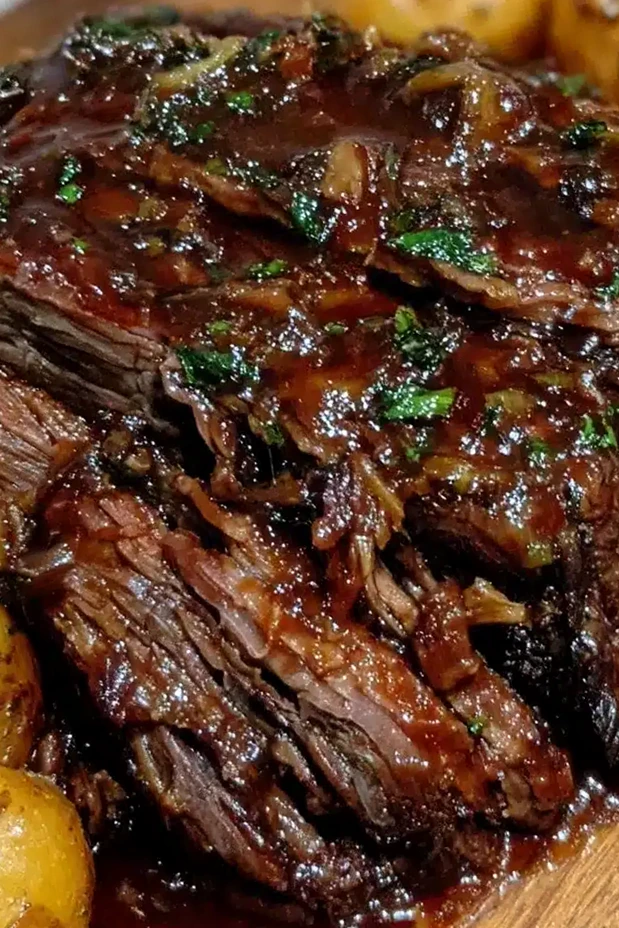
List of ingredients
- 3-4 pounds beef chuck roast (well-marbled) – ensures tenderness and flavor.
- Salt and pepper to taste – for basic seasoning.
- 2 tablespoons olive oil or vegetable oil – used for searing the meat.
- 2 medium yellow onions, sliced – provides a sweet aromatic base.
- 4 large carrots, peeled and cut into chunks – adds color and sweetness.
- 4 medium russet or Yukon Gold potatoes, quartered – keeps shape during slow cooking.
- 2.5 cups beef broth (low-sodium) – replaces the red wine for a rich liquid base.
- 4 garlic cloves, minced – adds pungent depth.
- 2 tablespoons tomato paste – thickens and enriches the sauce.
- 1 tablespoon Worcestershire sauce – adds savory umami notes.
- 3-4 sprigs fresh thyme or 1 teaspoon dried thyme – provides earthy aromatics.
- 2 bay leaves – adds a classic herbal background.
- Optional: 8 oz sliced mushrooms – add in the final hour to maintain texture.
step-by-step instructions
- Prepare the beef: Pat the beef chuck roast dry with paper towels and season generously with salt and pepper on all sides. Dry meat sears better than damp meat.
- Sear the roast: Heat 2 tablespoons of olive oil in a large skillet over medium-high heat. Brown the roast on all sides for 4-5 minutes per side to develop a deep crust.
- Arrange vegetables: Place sliced onions, carrots, and potatoes at the bottom of the crockpot. Layer the seared roast directly on top of the vegetables.
- Prepare braising liquid: In a bowl, whisk together beef broth, tomato paste, minced garlic, and Worcestershire sauce. Pour the mixture over the roast and vegetables, then add thyme and bay leaves.
- Slow cook: Cover and cook on LOW for 7-8 hours or on HIGH for 4-5 hours until the meat is fork-tender. Stir in mushrooms during the last hour if using.
- Extract components: Carefully remove the roast and vegetables from the pot to keep warm. Discard the bay leaves and thyme stems.
- Thicken the gravy: Transfer the cooking liquid to a saucepan and simmer over medium heat. Mix 1 tablespoon cornstarch with 2 tablespoons cold water, then whisk into the liquid until thickened.
- Serve: Slice or shred the roast and plate it with the vegetables. Spoon the rich gravy over the top before serving.
Meat Selection and Preparation
Choosing the Right Beef Cut
Select a well-marbled beef chuck roast for the best results. The intramuscular fat in chuck roast breaks down slowly, which prevents the meat from drying out during the long cooking process. Leaner cuts may become tough or stringy when subjected to slow heat.
Mastering the Searing Process
Searing the meat creates a Maillard reaction, which develops complex flavors and a rich brown color. Use a skillet that can handle high heat, such as cast iron, to ensure an even crust. Avoid overcrowding the pan if you are browning multiple pieces of meat.
Managing Excess Fat
Trim larger chunks of exterior fat from the roast before seasoning, but leave some marbling intact. A small amount of fat is necessary for flavor and moisture. Too much fat can result in an overly greasy gravy that requires skimming before serving.
Vegetable Selection and Prep
Picking the Best Potatoes
Yukon Gold potatoes are ideal because they hold their shape well while maintaining a creamy texture. Russet potatoes are also acceptable but can become grainier and break apart more easily. Ensure they are quartered into similar sizes for even cooking.
Cutting Carrots for Stability
Cut carrots into large, thick chunks rather than thin slices. Small pieces are likely to disintegrate during an 8-hour cook time on low heat. Thick chunks maintain a slight bite and look better on the final plate.
Preparing the Onion Base
Slice the yellow onions into thick half-moons instead of fine dice. This prevents them from completely dissolving into the sauce, allowing them to provide sweet, caramelized pockets of flavor throughout the dish.
Flavoring the Braise
Beef Broth Selection
Use low-sodium beef broth to maintain control over the salt levels. Since the roast is seasoned and the Worcestershire sauce contains salt, using a standard broth can make the final gravy too salty. You can always add salt at the end if needed.
The Role of Tomato Paste
Tomato paste adds a subtle acidity and sweetness that balances the richness of the beef. It also acts as a natural thickening agent for the braising liquid. Ensure it is well-whisked into the broth to avoid clumps in the pot.
Using Fresh vs Dried Thyme
Fresh thyme sprigs offer a brighter, more floral aroma and are easy to remove at the end. If using dried thyme, reduce the quantity to one teaspoon to avoid an overpowering medicinal taste. Both options work well for this slow-cooker method.
Slow Cooker Management
Low vs High Heat Settings
Cooking on LOW for 7-8 hours typically yields the most tender results as the collagen breaks down more gently. The HIGH setting is faster but can occasionally cause the outer layers of the meat to tighten. Use the LOW setting whenever your schedule permits.
Preventing Heat Loss
Avoid opening the lid of the crockpot during the cooking process. Every time the lid is lifted, significant heat escapes, which can add 15 to 30 minutes to the total cooking time. Use a peek-hole if your slow cooker has one.
Timing the Mushroom Addition
Mushrooms have a high water content and can become mushy if cooked for the full duration. Add them during the final hour of cooking to ensure they retain their structure and absorb the savory juices without dissolving.
Gravy Mastery
Creating a Smooth Slurry
Always mix cornstarch with cold water before adding it to the hot liquid. Adding dry cornstarch directly to the gravy will cause immediate clumping that is difficult to whisk out. This slurry ensures a silky, consistent texture.
Simmering for Depth
Transferring the liquid to a saucepan allows you to reduce the sauce through simmering. This concentrates the beef flavors and removes excess water before the thickening agent is added. Simmer for about 5-10 minutes on medium heat.
Natural Thickening Alternatives
If you prefer not to use cornstarch, you can mash one or two of the cooked potatoes directly into the sauce. The released starches will naturally thicken the gravy. This method provides a heartier, more rustic consistency to the sauce.
Recipe Variations
Low-Carb Vegetable Swaps
Replace the potatoes and carrots with cauliflower florets and celery root or turnips. These vegetables provide similar textures while significantly reducing the carbohydrate count. Add them at the same time as the original vegetables.
Adding an Herbaceous Twist
Include a teaspoon of dried oregano or a pinch of rosemary for a more Mediterranean flavor profile. Rosemary is powerful, so use it sparingly to avoid overshadowing the beef. These herbs pair exceptionally well with the existing thyme.
Incorporating Heat
Add a pinch of smoked paprika or a dash of cayenne pepper to the seasoning rub for a subtle warmth. This adds a layer of complexity to the roast without making it spicy. Smoked paprika specifically complements the seared crust of the beef.
Storage and Preservation
Chilling Leftovers
Allow the roast and vegetables to cool slightly before transferring them to airtight containers. Store them in the refrigerator for up to four days. Keeping the meat submerged in its gravy helps prevent it from drying out during storage.
Freezer Duration
This meal freezes well for up to three months when stored in freezer-safe bags or containers. Portion the roast and gravy together so the meat stays moist. Ensure there is enough headspace in the container for expansion during freezing.
Proper Thawing Process
Thaw frozen pot roast in the refrigerator overnight rather than on the counter. This ensures food safety and prevents the meat from developing ice crystals. Slow thawing preserves the texture of the vegetables better than rapid defrosting.
Reheating Techniques
Stove Top Warming
Place the roast, vegetables, and gravy in a covered pot over low heat. Add a splash of beef broth if the sauce has thickened too much in the fridge. This method gently warms the meat without overcooking it.
Microwave Method
Heat in short intervals of 60 to 90 seconds, stirring in between. Cover the dish with a damp paper towel to trap steam, which keeps the beef tender. Avoid high-power settings that can make the meat rubbery.
Preventing Dry Meat
Always reheat the beef with a generous amount of the original gravy. The liquid conducts heat more evenly and replenishes the moisture lost during storage. If the gravy is gone, use a small amount of water or broth.
Serving Suggestions
Plating the Roast
Shred the beef with two forks for a rustic look, or slice it against the grain for a cleaner presentation. Place the meat in the center of the plate and surround it with the carrots and potatoes. Spoon the gravy over the center.
Complementary Side Dishes
Pair the roast with a crisp green salad or steamed green beans to add freshness to the plate. The acidity of a vinaigrette helps cut through the richness of the beef and gravy. Roasted asparagus is another excellent pairing.
Bread Selection
Serve with a crusty baguette or warm sourdough bread to soak up the remaining gravy. Garlic bread also complements the flavors of the roast. A simple buttered roll is a classic choice for this comfort meal.
Troubleshooting Guide
Resolving Tough Meat
If the meat is not fork-tender after the recommended time, cook it for another hour. Different cuts of beef have varying levels of connective tissue that require more time to break down. Patience is key for a melt-in-your-mouth texture.
Preventing Mushy Vegetables
If your vegetables are too soft, try cutting them into larger pieces next time. You can also add the potatoes and carrots during the last 4 hours of a low-heat cycle. This ensures they are cooked through but still firm.
Correcting Bland Gravy
If the gravy lacks depth, add a teaspoon of soy sauce or a bit more Worcestershire sauce. These ingredients increase the umami profile instantly. A small squeeze of lemon juice can also brighten the flavor if it feels too heavy.
Frequently Asked Questions
Can I use a different cut of beef?
While chuck roast is preferred, you can use brisket or bottom round. Brisket is excellent but may require slightly longer cooking times. Round roast is leaner and may result in a slightly drier texture.
Is this recipe compatible with an Instant Pot?
Yes, use the sauté function to brown the meat first. Pressure cook on high for 60 minutes with a natural release. Note that vegetables may cook faster in a pressure cooker than in a slow cooker.
How do I thicken the sauce without cornstarch?
Simmer the liquid in a saucepan for a longer period to reduce it naturally. Alternatively, mash some of the cooked potatoes into the sauce. This creates a thick, creamy gravy using only the ingredients already in the pot.
Print
Tender Slow Cooker Pot Roast Dinner
- Total Time: 8 hours 15 minutes
- Yield: 6 servings 1x
- Diet: Dairy-Free
Description
A simple, tender crockpot pot roast dinner that requires minimal effort and delivers rich, comforting flavors with melt-in-your-mouth beef and perfectly cooked vegetables.
Ingredients
- 3–4 pounds beef chuck roast (well-marbled)
- Salt and pepper to taste
- 2 tablespoons olive oil or vegetable oil
- 2 medium yellow onions, sliced
- 4 large carrots, peeled and cut into chunks
- 4 medium russet or Yukon Gold potatoes, quartered
- 2 1/2 cups beef broth (low-sodium)
- 4 garlic cloves, minced
- 2 tablespoons tomato paste
- 1 tablespoon Worcestershire sauce
- 3–4 sprigs fresh thyme or 1 teaspoon dried thyme
- 2 bay leaves
- 8 oz sliced mushrooms (optional)
Instructions
- Step: Pat the beef chuck roast dry with paper towels and season generously with salt and pepper on all sides.
- Step: Heat 2 tablespoons of olive oil in a large skillet over medium-high heat and sear the roast well on all sides, about 4-5 minutes per side.
- Step: Place sliced onions, carrots, and potatoes at the bottom of the crockpot and layer the seared roast on top.
- Step: In a bowl, whisk together beef broth, tomato paste, minced garlic, and Worcestershire sauce, then pour over the roast and vegetables. Add thyme sprigs and bay leaves.
- Step: Cover and cook on LOW for 7-8 hours or on HIGH for 4-5 hours until the roast is fork-tender; add mushrooms during the last hour if using.
- Step: Remove roast and vegetables carefully to keep warm and discard bay leaves and thyme stems.
- Step: To thicken gravy, transfer cooking liquid to a saucepan, simmer over medium heat, and whisk in a mixture of 1 tablespoon cornstarch and 2 tablespoons cold water until thickened.
- Step: Slice or shred the roast and serve with vegetables, spooning the rich gravy on top.
Notes
Searing the meat before slow cooking enhances flavor and texture. Avoid opening the crockpot lid during cooking to maintain temperature. To thicken gravy without cornstarch, mash some cooked potatoes into the liquid or simmer longer.
- Prep Time: 15 minutes
- Cook Time: 8 hours
- Category: Main Course
- Method: Slow Cooking
- Cuisine: American
Nutrition
- Serving Size: 1 serving
- Calories: 350 kcal
- Sugar: 4 g
- Sodium: 680 mg
- Fat: 20 g
- Saturated Fat: 7 g
- Unsaturated Fat: 13 g
- Trans Fat: 0 g
- Carbohydrates: 15 g
- Fiber: 3 g
- Protein: 25 g
- Cholesterol: 95 mg