
This slow cooker stew uses budget-friendly ingredients to create a hearty and filling meal. It is designed for easy preparation and minimal cleanup by utilizing a crock pot for long, slow simmering.
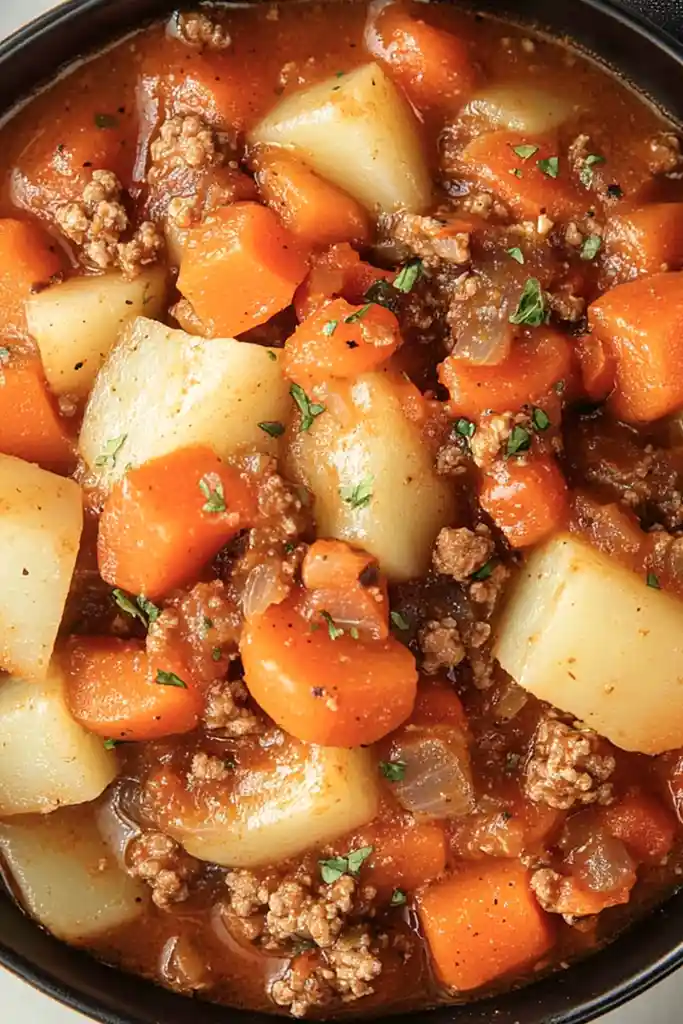
List of ingredients
- 1 pound ground beef – browned and drained for a savory base.
- 4 medium carrots – peeled and sliced into 1/2-inch thick pieces for consistent cooking.
- 2 cups beef broth – provides the primary liquid and deep flavor.
- 3 medium russet potatoes – peeled and diced into large chunks to maintain structure.
- 1 medium onion – diced to add aromatic depth.
- 1 can (14 oz) diced tomatoes – adds acidity and texture to the broth.
- 2 teaspoons Italian seasoning – a blend of herbs for classic savory notes.
- 1 teaspoon salt – enhances all other flavors in the pot.
- 1 teaspoon onion powder – adds a concentrated onion flavor.
- 2 teaspoons minced garlic – provides a sharp, aromatic punch.
- 1 teaspoon black pepper – adds a mild heat and spice.
step-by-step instructions
- Prepare Base Ingredients: Place the browned and drained ground beef, diced potatoes, sliced carrots, and chopped onions into the crock pot. Ensure the vegetables are spread evenly around the meat.
- Mix the Sauce: In a separate mixing bowl, combine the diced tomatoes, beef broth, salt, pepper, Italian seasoning, onion powder, and minced garlic. Stir until all seasonings are well blended and the garlic is evenly distributed.
- Combine and Cook: Pour the seasoned tomato and broth mixture over the ingredients in the crock pot. Cover with the lid and cook on low for 6-7 hours, or on high for 3-4 hours, until the potatoes are soft and tender.
- Final Serve: Serve the stew warm in bowls. Ensure you stir gently before serving to avoid breaking the potato chunks.
Techniques for Flavor Enhancement
Browning the Ground Beef
Brown the beef in a skillet over medium-high heat until no pink remains. Draining the excess grease prevents the stew from having an oily film on the surface. This searing process creates a deeper savory profile than simmering raw meat.
Sautéing Aromatics
For an extra layer of flavor, sauté the diced onions in the same pan used for the beef. Cooking the onions until translucent brings out their natural sweetness. This reduces the raw onion bite in the final stew.
Uniform Vegetable Cutting
Cut the carrots and potatoes into consistent sizes to ensure they cook at the same rate. If some pieces are significantly smaller, they may turn into mush before the larger pieces are tender. Aim for 1-inch chunks for potatoes and 1/2-inch slices for carrots.
Ingredient Substitutions
Alternative Root Vegetables
Parsnips or turnips can be used in place of carrots for a more earthy, peppery flavor. Rutabagas also work well as they hold their shape during long cook times. Use the same quantity and slicing thickness as the original carrots.
Different Potato Varieties
While russet potatoes are traditional for their starchiness, Yukon Gold potatoes offer a creamier texture. Red potatoes can be used if you prefer a firmer bite that does not break down. Adjust the cooking time slightly if using denser potato types.
Broth Alternatives
Vegetable broth can replace beef broth if you prefer a lighter base. For a thicker, richer consistency, you can use a beef consommé or a low-sodium beef stock. Ensure the liquid ratio remains the same to avoid thinning the stew.
Customizing the Seasoning
Adding Spicy Elements
Introduce a pinch of red pepper flakes or a dash of cayenne pepper for a spicy kick. Adding a chopped jalapeño with the onions provides a fresh heat. Adjust the amount based on your heat tolerance.
Enhancing Herbal Notes
If you prefer a more robust herb profile, add fresh thyme or rosemary during the last hour of cooking. Dried bay leaves added at the start provide a subtle woodsy background. Remove bay leaves before serving the stew.
Adjusting Acidity
A teaspoon of apple cider vinegar or lemon juice stirred in at the end can brighten the flavors. Acidity cuts through the richness of the beef and potatoes. Add this slowly and taste as you go.
Serving and Pairing Suggestions
Choosing the Right Bread
Serve this stew with a crusty sourdough or a warm French baguette. The bread is ideal for soaking up the flavorful broth. Garlic bread also complements the Italian seasoning in the recipe.
Serving Over Grains
For a heartier meal, ladle the stew over a bed of cooked white or brown rice. Quinoa or egg noodles are also excellent options for adding bulk. This is particularly useful when feeding a larger group.
Fresh Garnish Ideas
Top each bowl with freshly chopped parsley or sliced green onions. A sprinkle of grated parmesan cheese adds a salty, nutty finish. These fresh toppings contrast well with the slow-cooked richness of the stew.
Storage and Preservation
Refrigeration Guidelines
Store leftover stew in airtight glass or plastic containers in the refrigerator. It will remain fresh for up to 5 days. Keep the containers sealed to prevent the stew from absorbing other fridge odors.
Freezing Instructions
Transfer the stew into freezer-safe bags or containers, leaving a small amount of space for expansion. It can be stored in the freezer for up to 3 months. Freeze in individual portions for easy meal prep.
Proper Thawing Methods
Thaw frozen stew in the refrigerator overnight for the safest results. Avoid thawing at room temperature to prevent bacterial growth. You can also defrost it slowly in a microwave on a low setting.
Reheating Best Practices
Stovetop Reheating
Place the stew in a pot over medium-low heat and stir occasionally. Adding a splash of beef broth or water helps restore the original consistency. Heat until the center is steaming hot.
Microwave Method
Heat the stew in a microwave-safe bowl covered with a lid or damp paper towel. Use medium power and stir every two minutes to ensure even heating. This prevents hot spots and overcooking the potatoes.
Restoring Texture
If the stew has thickened too much during storage, stir in a tablespoon of water or broth. Conversely, if it is too thin, simmer it uncovered on the stove for 10 minutes. This evaporates excess liquid to thicken the sauce.
Troubleshooting Common Issues
Managing Watery Stew
If the broth is too thin, mash a few of the cooked potato chunks against the side of the pot. Stir the mashed potatoes back into the liquid to naturally thicken the stew. This method avoids adding flour or cornstarch.
Preventing Mushy Vegetables
To avoid overcooked vegetables, check the tenderness of the potatoes 30 minutes before the timer ends. If using the high setting, reduce the time slightly. Cutting vegetables into larger pieces also helps them maintain their shape.
Correcting Bland Flavor
If the stew tastes flat, add a small amount of salt or a splash of Worcestershire sauce. Often, a lack of salt prevents the other seasonings from standing out. Taste the broth frequently during the final hour of cooking.
Frequently Asked Questions
Can I use frozen vegetables?
Yes, frozen carrots and peas can be used. Add frozen vegetables during the last hour of cooking to prevent them from becoming overly soft. Do not freeze the stew with raw frozen vegetables already inside.
Which potatoes are best for this recipe?
Russet potatoes are best for those who like a thicker stew as they release more starch. Yukon Golds are better if you prefer potatoes that hold their shape. Red potatoes are the best choice for a firm texture.
Can I cook this on a stovetop instead?
Yes, you can simmer the ingredients in a heavy-bottomed pot or Dutch oven. Bring the mixture to a boil, then reduce heat to low and simmer for about 2 hours. Ensure the pot is covered to keep the moisture in.
How do I reduce the sodium content?
Use low-sodium beef broth and reduce the added salt in the recipe. You can also replace some of the broth with water. Using fresh garlic and onion instead of powders also helps lower processed salt intake.
Can I add other meats?
You can replace ground beef with diced stew meat or ground turkey. If using stew meat, increase the cooking time to ensure the tougher cuts become tender. Ground turkey may require a bit more seasoning to match the richness of beef.
Print
Slow Cooker Ground Beef and Vegetable Stew
- Total Time: 6 hours 15 minutes
- Yield: 6 servings 1x
- Diet: General
Description
A comforting and economical dish, Crock Pot Poor Man’s Stew is made with ground beef and a handful of simple ingredients. This hearty stew is both delicious and budget-friendly, perfect for a satisfying meal.
Ingredients
- 1 pound ground beef (browned and drained)
- 4 medium carrots (peeled and sliced into ½-inch thick pieces)
- 2 cups beef broth
- 3 medium russet potatoes (peeled and diced into large chunks)
- 1 medium onion (diced)
- 1 can (14 oz diced tomatoes)
- 2 teaspoons Italian seasoning
- 1 teaspoon salt
- 1 teaspoon onion powder
- 2 teaspoons minced garlic
- 1 teaspoon black pepper
Instructions
- Step 1: Place the browned ground beef, diced potatoes, sliced carrots, and chopped onions into the crock pot.
- Step 2: In a separate mixing bowl, combine the diced tomatoes, beef broth, salt, pepper, Italian seasoning, onion powder, and minced garlic. Stir until all seasonings are well blended.
- Step 3: Pour the mixture over the ingredients in the crock pot. Cover with the lid and cook on low for 6-7 hours, or on high for 3-4 hours, until the potatoes are soft and tender.
- Step 4: Serve the stew warm and enjoy!
Notes
Store any leftover stew in an airtight container in the refrigerator for up to 5 days. You can substitute chicken broth for beef broth if desired.
- Prep Time: 15 minutes
- Cook Time: 6 hours
- Category: Stew
- Method: Slow Cooking
- Cuisine: American
Nutrition
- Serving Size: 1 serving
- Calories: 320 kcal
- Sugar: 6 g
- Sodium: 630 mg
- Fat: 12 g
- Saturated Fat: 4 g
- Unsaturated Fat: 8 g
- Trans Fat: 0 g
- Carbohydrates: 20 g
- Fiber: 3 g
- Protein: 15 g
- Cholesterol: 45 mg