
This Slow Cooker Crockpot Beef Roast is an easy, classic, and comforting meal perfect for busy days when you want a hearty dinner waiting for you. By using a tender chuck roast, savory herbs, and fresh vegetables, you create a melt-in-your-mouth experience that is enhanced by a rich, homemade gravy. Simply sear, set, and let your slow cooker do the heavy lifting to deliver a satisfying, home-cooked feast for your family.
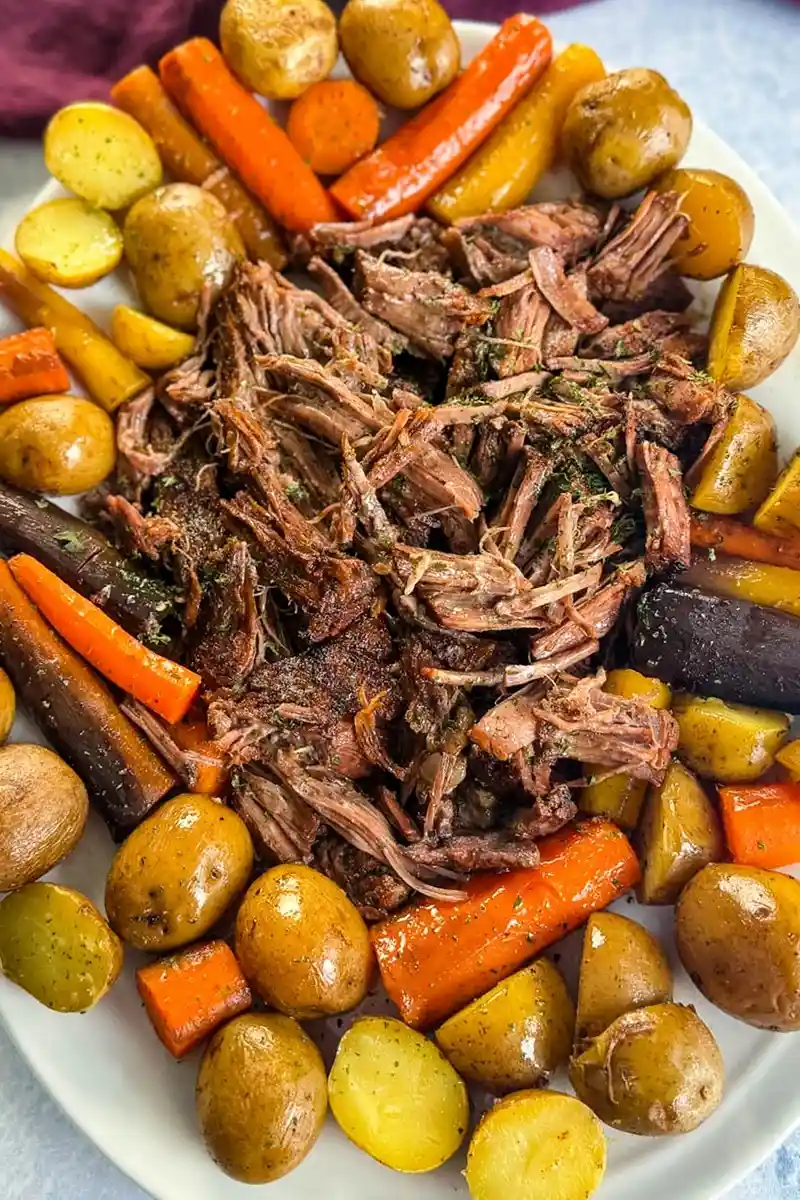
List of ingredients
- 2-4 pounds chuck roast
- 1 teaspoon brown sweetener or sugar
- 1/2 teaspoon garlic powder
- 1/2 teaspoon onion powder
- 1/2 teaspoon smoked paprika
- Salt and pepper to taste
- 1 teaspoon olive oil
- 1/2 cup diced or sliced onions
- 2-3 garlic cloves, minced
- 1 cup beef broth
- 1 teaspoon Worcestershire sauce
- 1 pound baby potatoes, whole
- 1 pound carrots, shaved and sliced into 3-4 inch pieces
- 3 tablespoons butter
- 1/4 cup flour
- 1-2 cups beef broth (for gravy)
- 1/2 cup cooked beef drippings
step-by-step instructions
- Step: Season all sides of the roast with the spices.
- Step: Place a skillet on medium-high heat on the stove and add the olive oil. Add the roast to the pan and sear both sides of the roast until a golden-brown crust forms.
- Step: Add the onions, garlic, broth, and Worcestershire sauce to the bottom of the slow cooker.
- Step: Add the seasoned roast.
- Step: Top with the carrots and potatoes.
- Step: Place the lid on the pot and slow cook on Low for 7-10 hours or High for 4-7 hours depending on roast size.
- Step: Once cooked, remove the lid and allow the meat to cool and rest before serving.
- Step: To make gravy, heat a skillet with butter, stir in flour to make a roux, then add broth and beef drippings, whisking until thickened.
Selecting the Best Beef Cuts
Why Chuck Roast Excels in Slow Cooking
A chuck roast, taken from the shoulder region, is the gold standard for slow cooking because of its abundant connective tissue and intramuscular fat. As this cut is subjected to low, steady heat over many hours, that collagen breaks down into gelatin, which makes the meat incredibly tender and juicy. This process also ensures the beef retains its flavor profile even after a long period in the slow cooker.
Exploring Leaner Alternatives
If you prefer a leaner meat, you can use a bottom round or rump roast, though you should expect a slightly different final texture. These cuts are lower in fat, so they may need extra attention to moisture levels during cooking. Because they lack the marbling of a chuck roast, consider searing them slightly longer to compensate for the reduction in natural fat rendering.
Refining the Searing Process
Developing Complex Flavor Profiles
While some recipes suggest placing meat directly into the slow cooker, searing the beef first is a vital step for a premium result. The Maillard reaction occurs on the surface of the meat during searing, creating a complex, caramelized crust that adds significant depth to the finished dish. This crust also helps hold the dry seasonings in place so they do not simply wash off into the broth immediately.
Maintaining Optimal Pan Temperature
When searing, ensure your skillet is adequately heated before adding the oil and meat to prevent sticking. Wait until the surface is golden brown before flipping with tongs to ensure you do not tear the surface of the meat. A quick, aggressive sear is more effective than a slow, low-heat cook which can lead to gray, unappealing meat rather than a deep, savory crust.
Strategic Vegetable Preparation
Maintaining Texture During Long Cycles
Vegetables such as carrots and potatoes are prone to becoming mushy if they sit submerged in boiling liquid for eight hours. By cutting carrots into large, 3-to-4 inch chunks and leaving baby potatoes whole, you provide the structural integrity required to withstand the slow cooking process. The goal is to have the vegetables tender enough to eat with a fork, yet firm enough to hold their shape on the plate.
Positioning Vegetables for Even Steam
Placement is crucial: keeping the vegetables above the meat and out of the broth allows them to cook primarily through steam. This gentle cooking method preserves the natural sugars in the carrots and keeps the potatoes from absorbing too much salt from the broth. It also keeps the vegetable skins intact, preventing them from bleeding starch into your cooking liquid and making it cloudy.
Managing Cooking Times and Heat
Impact of Roast Size and Bone Content
Cooking times are inherently linked to the physical properties of the meat, specifically the thickness and the presence of a bone. A boneless roast heats more evenly from the outside in, while a bone-in roast acts as a central insulator that requires a longer duration for heat to reach the innermost sections. Always adjust your timer according to your specific roast size to ensure the collagen has fully broken down into a pull-apart consistency.
Avoiding Excessive Lid Removal
Every time you lift the slow cooker lid, you lose a significant amount of heat and moisture, which can delay the overall cooking process by twenty to thirty minutes. Since slow cookers rely on trapped heat to maintain a constant environment, try to trust the timing rather than checking the meat repeatedly. If you must check, wait until the final hour of the suggested cooking duration to prevent drastic temperature swings.
Perfecting the Homemade Gravy
Building a Proper Roux
The secret to a velvety gravy lies in the initial roux, which is a blend of butter and flour cooked together before adding liquids. By adding the broth and drippings gradually, you prevent lumps and allow the starch to hydrate and thicken the sauce smoothly. Whisk continuously throughout this process to ensure the texture remains elegant rather than grainy or clumpy.
Balancing the Saltiness of Drippings
Since the drippings contain concentrated flavors from the beef and the initial seasoning rub, they can be quite salty. Always taste your gravy before adding extra salt, as the broth and the drippings themselves may already provide enough seasoning. If you find the gravy is too salty, you can stir in a small amount of extra unsalted broth or a pinch of sugar to help mellow the intensity.
FAQ
How do I know if the meat is fully cooked?
The beef is ready when you can easily pierce the thickest part of the roast with a fork and it offers no resistance or pulls apart completely. If the meat feels tough or rubbery when poked, it needs more time for the connective tissues to fully break down. Rely on visual signs, such as the meat naturally pulling away from the bone or shredding effortlessly.
Can I store the leftovers with the liquid?
Storing the beef in the cooking liquid is highly recommended because it prevents the meat from drying out in the refrigerator. The liquid also acts as a flavor soak, ensuring that every bite remains juicy for days after cooking. Keep the leftovers in an airtight container for up to four days for the best quality and flavor.
What should I do if the gravy is too thin?
If your gravy does not reach the desired thickness, whisk together equal parts of water and flour to create a slurry and stir it slowly into the simmering sauce. Continue to cook for a few extra minutes until the raw flour taste disappears and the gravy achieves your preferred viscosity. Ensure you do not add dry flour directly to the hot liquid, as this will create clumps that are difficult to remove.
Print
Slow Cooker Crockpot Beef Roast
- Total Time: PT510M
- Yield: 4 servings 1x
- Diet: high-protein
Description
This Slow Cooker Crockpot Beef Roast is an easy classic recipe. This hearty dish promises tender, melt-in-your-mouth chuck pot roast, slow-cooked to perfection in savory herbs, spices, and hearty vegetables drizzled in homemade gravy. Set it in the morning and return home to the irresistible aroma of a home-cooked meal ready to be enjoyed.
Ingredients
- 2–4 pounds chuck roast
- 1 teaspoon brown sweetener or sugar
- 1/2 teaspoon garlic powder
- 1/2 teaspoon onion powder
- 1/2 teaspoon smoked paprika
- Salt and pepper to taste
- 1 teaspoon olive oil
- 1/2 cup diced or sliced onions
- 2–3 garlic cloves, minced
- 1 cup beef broth
- 1 teaspoon Worcestershire sauce
- 1 pound baby potatoes, whole
- 1 pound carrots, shaved and sliced into 3–4 inch pieces
- 3 tablespoons butter
- 1/4 cup flour
- 1–2 cups beef broth (for gravy)
- 1/2 cup cooked beef drippings
Instructions
- Step: Season all sides of the roast with the spices.
- Step: Place a skillet on medium-high heat on the stove and add the olive oil. Add the roast to the pan and sear both sides of the roast until a golden-brown crust forms.
- Step: Add the onions, garlic, broth, and Worcestershire sauce to the bottom of the slow cooker.
- Step: Add the seasoned roast.
- Step: Top with the carrots and potatoes.
- Step: Place the lid on the pot and slow cook on Low for 7-10 hours or High for 4-7 hours depending on roast size.
- Step: Once cooked, remove the lid and allow the meat to cool and rest before serving.
- Step: To make gravy, heat a skillet with butter, stir in flour to make a roux, then add broth and beef drippings, whisking until thickened.
Notes
You may need additional spices depending on the size of the roast. Worcestershire sauce adds a slightly sweet and tangy note to the meat. Searing is optional but recommended for flavor and texture. For firm potatoes, use baby Yukon gold.
- Prep Time: PT30M
- Cook Time: PT480M
- Category: dinner
- Method: slow cooking
- Cuisine: American
Nutrition
- Serving Size: 8 oz with vegetables and gravy
- Calories: 653 kcal
- Sugar: 5 g
- Sodium: 850 mg
- Fat: 28 g
- Saturated Fat: 11 g
- Unsaturated Fat: 14 g
- Trans Fat: 0 g
- Carbohydrates: 37 g
- Fiber: 5 g
- Protein: 67 g
- Cholesterol: 190 mg