
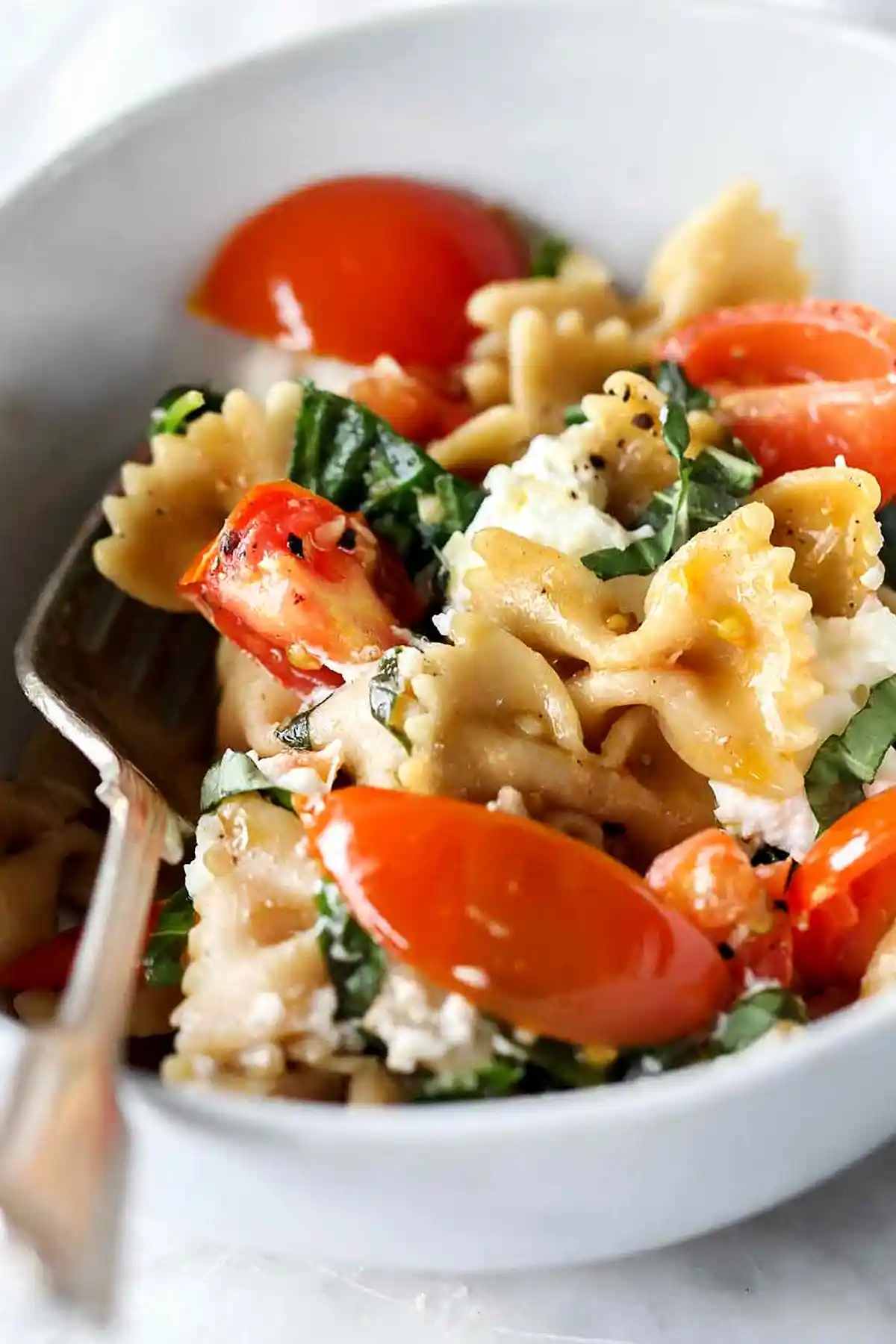
This quick pasta dish combines fresh garden tomatoes and creamy ricotta for a balanced, nutritious meal. It is an ideal option for weeknight dinners as it utilizes whole wheat pasta and fresh spinach for added health benefits.
List of ingredients
- 8 ounces whole wheat pasta (farfalle recommended) – provides a hearty base and nutty flavor.
- 1/3 cup extra-virgin olive oil – used for sautéing and as a finishing drizzle.
- 3 cloves garlic, minced or pressed – adds aromatic depth to the sauce.
- 1 pound cocktail size tomatoes (about 8-10), quartered – creates a light, fresh sauce.
- Kosher salt and freshly ground black pepper – used for seasoning throughout the process.
- 2 cups fresh spinach leaves – adds color and nutritional value.
- 1/3 cup fresh basil, slivered – provides a classic Italian herbal note.
- 1/2 cup Parmesan cheese, grated (microbial-rennet) – adds a salty, savory finish.
- 1 cup fresh ricotta cheese – provides creamy dollops of texture.
step-by-step instructions
- Boil Pasta: Cook the whole wheat pasta in salted water for 1 minute less than the package directions to ensure it is al dente. Drain the pasta, but reserve 1/4 cup of the cooking water for later use.
- Sauté Garlic: Heat the olive oil in a large sauté pan over medium heat. Once hot, add the minced garlic and reduce the heat to medium-low, cooking for about 5 minutes while stirring often to prevent burning.
- Warm Tomatoes: Add the quartered tomatoes and their juices to the pan. Season with kosher salt and freshly cracked black pepper, then cook for 2-3 minutes until the tomatoes are warmed through.
- Combine Ingredients: Stir the drained hot pasta into the tomato mixture. Add the fresh spinach and toss until the leaves begin to wilt, then fold in the slivered basil and grated Parmesan cheese.
- Adjust Consistency: Taste and add more salt and pepper as needed. If the pasta seems too dry, stir in 1-2 tablespoons of the reserved pasta water or a bit more olive oil.
- Final Garnish: Top the pasta with dollops of fresh ricotta cheese and a final drizzle of olive oil before serving warm.
Pasta Selection Guide
Choosing Whole Wheat Varieties
Whole wheat pasta offers more fiber and nutrients than refined white pasta. To avoid a mealy texture, select high-quality brands that maintain a firm structure during boiling. These varieties typically have a deeper, nuttier flavor that pairs well with fresh vegetables.
Best Pasta Shapes for Light Sauces
Farfalle, also known as bow-tie pasta, is excellent because its ridges and folds trap the light tomato oil. Penne or fusilli are also strong choices as they provide similar surface areas. Avoid very thin noodles like angel hair, as they may overwhelm the chunky tomato pieces.
Gluten-Free Pasta Alternatives
For a gluten-free version, use certified gluten-free pasta made from brown rice or chickpeas. Be cautious with cooking times, as gluten-free pasta can go from al dente to mushy very quickly. Always rinse gluten-free pasta if the package suggests it to remove excess starch.
Vegetable Customization
Using Different Tomato Types
While cocktail tomatoes are sweet and juicy, you can use cherry tomatoes for a smaller bite or Roma tomatoes for a meatier texture. If using large garden tomatoes, dice them into uniform chunks to ensure they heat through evenly without turning into a puree.
Adding Zucchini and Summer Squash
Sliced zucchini or yellow squash adds a wonderful tenderness to this dish. Sauté them along with the garlic for 3-4 minutes before adding the tomatoes. This ensures the squash is tender but still holds its shape.
Incorporating Mushrooms
Sliced cremini or button mushrooms provide an earthy contrast to the acidity of the tomatoes. Brown the mushrooms in the olive oil before adding the garlic to develop a rich, caramelized flavor. This step adds significant depth to the overall profile.
Substituting Spinach with Other Greens
Arugula provides a peppery bite that complements the ricotta cheese well. Swiss chard or kale are also viable options, though they may require an extra minute of cooking time to soften. Always add these greens at the end to preserve their color.
Cheese Alternatives and Enhancements
Substituting Parmesan Cheese
Pecorino Romano is a great substitute for Parmesan, offering a sharper and saltier taste. Ensure the cheese uses microbial rennet to maintain consistency with dietary preferences. If using Pecorino, reduce the added kosher salt to avoid over-seasoning.
Exploring Different Ricotta Styles
Whole milk ricotta provides the richest flavor and smoothest texture. Part-skim ricotta is a lighter alternative that still offers the necessary creaminess. For a thicker consistency, you can strain the ricotta through a fine-mesh sieve for 30 minutes before adding it.
Using Vegan Cheese Alternatives
For a plant-based version, replace Parmesan with nutritional yeast or a vegan Parmesan alternative. Use a cashew-based ricotta or almond ricotta for the dollops on top. These alternatives provide similar creaminess and a salty finish.
Cooking Techniques
Preventing Garlic from Burning
Garlic burns quickly over high heat, which creates a bitter taste that can ruin the sauce. Always reduce the heat to medium-low after the oil is hot. Stir the garlic constantly and remove it from the heat the moment it becomes fragrant.
Achieving the Perfect Al Dente Texture
Al dente pasta should have a slight resistance when bitten. Since the pasta will continue to cook slightly when tossed in the hot pan with tomatoes, undercooking it by one minute is essential. This prevents the noodles from becoming soft or gummy.
Using Reserved Pasta Water
Pasta water contains starch that helps emulsify the olive oil and tomato juices. Adding a tablespoon or two at the end creates a cohesive sauce that clings to the pasta. This is a professional technique to avoid a watery pool at the bottom of the plate.
Storage and Serving
Best Ways to Serve
Serve this pasta in shallow bowls to keep the heat contained. Garnish with a few extra fresh basil leaves for a professional presentation. A side of toasted sourdough bread is excellent for scooping up the remaining ricotta and tomato sauce.
Storage in the Refrigerator
Store leftovers in an airtight container for up to three days. Note that the spinach will continue to wilt and the pasta may absorb more of the sauce over time. Keep the ricotta separate if possible to maintain its fresh texture.
Proper Reheating Methods
Avoid using a microwave, as it often dries out the pasta and makes the cheese rubbery. Instead, reheat the pasta in a skillet over medium-low heat. Add a splash of water or a drizzle of olive oil to restore the sauce’s consistency.
Make-Ahead Planning
You can prep the minced garlic, quartered tomatoes, and slivered basil in advance. Store them in separate containers in the refrigerator. When ready to eat, the actual cooking process takes only 15 minutes.
Common Cooking Issues
Handling Watery Tomato Sauce
If the tomatoes release too much liquid, simmer the sauce for an extra 2 minutes before adding the pasta. This reduces the volume and concentrates the flavor. You can also add a pinch more Parmesan to help thicken the mixture.
Fixing Overcooked Pasta
If the pasta is overcooked, avoid tossing it too vigorously in the pan, as it may break. To compensate for the lack of texture, ensure the vegetables are slightly crisp. Next time, set a timer for two minutes before the package’s recommended time.
Adjusting the Flavor Profile
If the dish tastes too acidic, add a tiny pinch of sugar to balance the tomato juices. If it lacks depth, increase the amount of black pepper or add a small pinch of red pepper flakes for a subtle heat.
Frequently Asked Questions
Can I use dried herbs instead of fresh?
Yes, you can use dried basil and dried oregano. Use about one-third of the amount compared to fresh herbs, as dried herbs are more concentrated. Add them during the garlic sauté phase to wake up the flavors.
How do I store leftover ricotta?
Store ricotta in a sealed container covered with a piece of parchment paper pressing directly onto the cheese. This prevents a skin from forming on the surface. It generally stays fresh in the refrigerator for up to a week.
Is this dish suitable for kids?
This pasta is generally very kid-friendly due to the creamy ricotta and mild tomato flavor. If children are sensitive to the texture of spinach, you can finely chop the leaves before adding them to the pan.
Print
Pasta with Fresh Tomato Sauce and Ricotta Cheese
- Total Time: 15 minutes
- Yield: 4 servings 1x
- Diet: Vegetarian
Description
This fresh tomato sauce and pasta comes together in less than 15 minutes and is made even healthier with whole wheat pasta and fresh spinach. Perfect for busy weeknights!
Ingredients
- 8 ounces whole wheat pasta
- 1/3 cup extra-virgin olive oil
- 3 cloves garlic, minced or pressed
- 1 pound cocktail size tomatoes, quartered
- kosher salt and freshly ground black pepper
- 2 cups fresh spinach leaves
- 1/3 cup fresh basil, slivered
- 1/2 cup Parmesan cheese, grated
- 1 cup fresh ricotta cheese
Instructions
- Step 1: Cook the whole wheat pasta in salted water 1 minute less than the package directions, then drain and reserve ¼ cup of the pasta water.
- Step 2: Heat the olive oil in a large sauté pan over medium heat, add the minced garlic, and cook on medium-low for about 5 minutes until fragrant.
- Step 3: Add the tomatoes with any juice and season with kosher salt and freshly cracked black pepper, cooking for 2-3 minutes until warmed through.
- Step 4: Add the drained hot pasta and fresh spinach to the tomatoes, toss until spinach begins to wilt, then add fresh basil leaves, grated parmesan cheese, and salt and pepper to taste.
- Step 5: Top with dollops of fresh ricotta, drizzle with more olive oil, and serve warm.
Notes
Use any variety of pasta noodle you like. I usually make this with a shorter pasta noodle to get even bites of pasta and tomato with each forkful.
- Prep Time: 5 minutes
- Cook Time: 10 minutes
- Category: Main Course
- Method: Sautéing
- Cuisine: Italian
Nutrition
- Serving Size: 1 serving
- Calories: 540 kcal
- Sugar: 3 g
- Sodium: 275 mg
- Fat: 30 g
- Saturated Fat: 10 g
- Unsaturated Fat: 20 g
- Trans Fat: 0 g
- Carbohydrates: 51 g
- Fiber: 2 g
- Protein: 21 g
- Cholesterol: 40 mg