
This fusion dish combines the spicy kick of Korean ramen with the rich creaminess of an Italian-style carbonara. It is a fast, satisfying meal that delivers deep umami flavors in under 20 minutes.
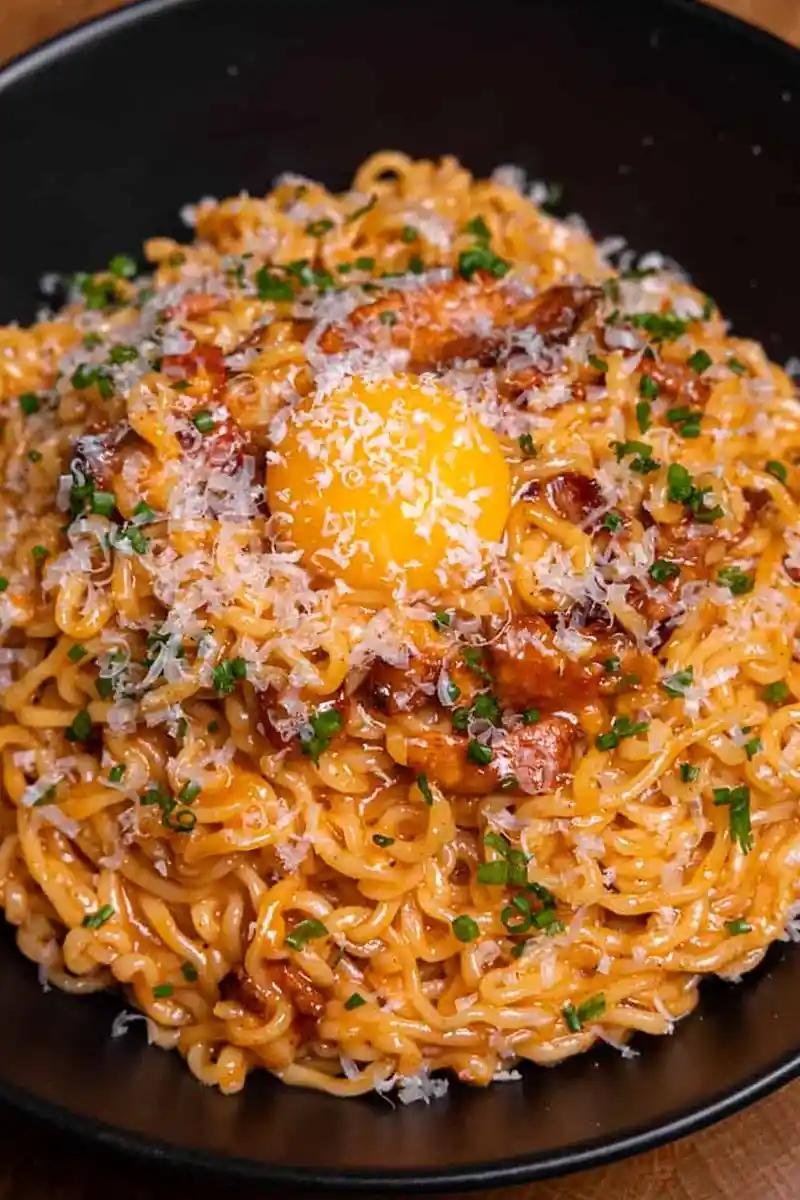
List of ingredients
- 2 packs of ramen (Shin Ramyun recommended) – provides the noodle base.
- 1 pack of ramen seasoning – used for concentrated umami flavor.
- 4 cloves of garlic, minced – adds an aromatic base to the pan.
- 4 strips of turkey bacon, thinly sliced – a smoky, savory protein alternative.
- 1 whole egg – helps thicken the sauce.
- 2 egg yolks – adds richness and a silky texture.
- 60g of parmesan cheese, finely grated – provides saltiness and creaminess.
- 1.5 tbsp of Gochujang or Korean Chili Paste – introduces a spicy, fermented depth.
- ½ tsp of black pepper – adds a subtle heat and balance.
- Chives – for a fresh, oniony garnish.
- Egg yolk (optional) – for a luxurious presentation.
- Sesame seeds – adds a nutty crunch.
step-by-step instructions
- Prepare Base Ingredients: Finely grate the parmesan cheese and thinly slice the turkey bacon. Set these aside for later use.
- Create the Sauce Paste: In a mixing bowl, combine the whole egg, two egg yolks, grated parmesan, Gochujang, and black pepper. Whisk until it forms a smooth, thick paste.
- Boil Noodles: Cook the ramen noodles according to the package instructions. Drain them, but keep a small amount of the cooking water.
- Fry the Protein: Place turkey bacon in a pan over medium-high heat. Fry for 5 minutes or until the fat has rendered and the edges are crispy.
- Sauté Garlic: Add the minced garlic to the pan with the bacon. Stir fry for approximately 30 seconds until fragrant.
- Combine Elements: Add the cooked ramen noodles to the pan, followed by the sauce paste and the ramen seasoning.
- Emulsify the Sauce: Immediately turn off the heat. Stir the mixture vigorously to emulsify the eggs and cheese into a creamy sauce.
- Adjust Consistency: Add ramen cooking water one tablespoon at a time, stirring constantly until the sauce reaches your desired creaminess.
- Final Plating: Transfer to a plate and top with additional parmesan cheese, fresh chives, sesame seeds, and an optional raw egg yolk.
Technical Cooking Tips
Preventing Egg Curdling
The most critical step is turning off the heat before adding the egg mixture. If the pan is too hot, the eggs will scramble instead of forming a smooth sauce. Using residual heat ensures a creamy emulsion.
Mastering the Emulsion Process
Vigorous stirring is necessary to bond the fats from the turkey bacon with the proteins in the eggs and cheese. This movement creates the signature glossy texture of carbonara. Do not stop stirring until the sauce looks uniform.
Optimizing Turkey Bacon Crispiness
Start the turkey bacon in a cold or medium-heat pan to allow the fat to render slowly. This ensures the strips become crispy on the outside while remaining chewy on the inside. Avoid overcrowding the pan to maintain high heat.
Utilizing Pasta Water for Texture
The starchy water from the ramen is essential for thinning the sauce without losing flavor. Add it incrementally to avoid making the dish watery. The starch helps the sauce cling to the noodles more effectively.
Achieving Fine Cheese Incorporation
Grate the parmesan cheese using the finest hole on your grater. Fine particles melt much faster into the egg mixture. This prevents clumps of cheese from forming in the final dish.
Ingredient Substitutions and Adjustments
Alternative Noodle Choices
While Shin Ramyun is recommended for its spice, any wheat-based instant ramen works well. For a different texture, try whole-grain noodles or fresh ramen noodles from a store. Adjust the seasoning pack accordingly if the noodles are unflavored.
Modifying the Cheese Base
If parmesan is unavailable, Pecorino Romano is a sharp alternative that fits the carbonara profile. You can also use a blend of parmesan and mozzarella for a stretchier, milder sauce. Ensure the cheese is hard and salty for the best result.
Adjusting the Spicy Level
To reduce the heat, decrease the Gochujang to one tablespoon. For those who prefer a more intense kick, add a teaspoon of crushed red pepper flakes during the garlic sauté. You can also add an extra pinch of the ramen seasoning pack.
Non-Meat Protein Options
Substitute turkey bacon with sautéed shiitake mushrooms for a vegetarian-friendly umami boost. Smoked tofu strips also work well to mimic the smokiness of bacon. Sauté these with the garlic using a small amount of olive oil.
Alternative Chili Pastes
If you cannot find Gochujang, a mixture of miso paste and Sriracha can provide a similar fermented, spicy profile. Ensure the substitute has a thick consistency to maintain the paste structure. Adjust the salt levels if using salted miso.
Serving and Presentation Ideas
Professional Plating Techniques
Use a carving fork to twirl the noodles into a tight nest in the center of a deep bowl. This creates height and makes the dish look restaurant-quality. Pour any remaining sauce from the pan over the top of the nest.
Adding Fresh Vegetable Elements
Stir in a handful of baby spinach or frozen peas during the final mixing stage. The residual heat will wilt the spinach without overcooking it. This adds color and a nutritional balance to the rich sauce.
Complementary Side Pairings
Serve this dish with a crisp green salad dressed in a light lemon vinaigrette. The acidity of the salad cuts through the richness of the egg and cheese. Garlic bread or steamed broccoli are also excellent accompaniments.
Garnishing for Visual Appeal
The contrast of green chives and white sesame seeds against the red-orange sauce is visually striking. Placing a raw egg yolk in the center adds a luxurious touch. Break the yolk just before eating to create an extra sauce layer.
Storage and Reheating Advice
Cooling and Refrigeration
Let the ramen cool completely before transferring it to an airtight container. This prevents excess steam from making the noodles mushy. Store the dish in the refrigerator for no more than three days.
Reheating in the Microwave
Microwave the pasta in short 30-second intervals, stirring in between. Add a splash of water or milk before heating to help loosen the thickened sauce. Avoid overheating, as this can cause the egg sauce to separate.
Stovetop Reheating Method
Place the leftovers in a pan over low heat with a tablespoon of water. Stir gently and constantly to rebuild the creamy emulsion. This method is generally better for maintaining the original texture than the microwave.
Preventing Noodle Soggy-ness
If you plan to store the dish, slightly undercook the ramen noodles during the initial boil. This ensures they do not become over-saturated when they absorb the sauce during refrigeration. They will reach the perfect texture during reheating.
Troubleshooting Common Issues
Fixing a Sauce That Is Too Thick
If the sauce becomes a thick paste rather than a cream, whisk in more ramen water one teaspoon at a time. Continue stirring over very low heat. This will loosen the emulsion without breaking the sauce.
Addressing a Broken or Grainy Sauce
A grainy sauce usually indicates the eggs were overheated. To fix this, quickly whisk in a small amount of warm water or a teaspoon of heavy cream. This can help re-bind the fats and proteins together.
Managing Overcooked Noodles
If the noodles are too soft, reduce the time they spend in the pan. Add them at the very last second and mix quickly. This prevents further softening and preserves some of the noodle’s structural integrity.
Reducing Excessive Saltiness
Ramen seasoning and parmesan are both high in sodium. If the dish is too salty, add a squeeze of fresh lemon juice. The acidity helps neutralize the salt perception and brightens the overall flavor profile.
Frequently Asked Questions
Can I use a different type of chili paste?
Yes, though Gochujang provides a specific fermented sweetness. You can use Doubanjiang for a saltier, bean-based flavor or Sriracha mixed with a bit of tomato paste for a simpler heat. Be mindful of the salt content in these alternatives.
Is this dish suitable for a quick lunch?
Yes, because it uses instant noodles, the entire process takes about 20 minutes. It is a high-calorie, filling meal that is much more sophisticated than standard instant ramen. It requires minimal cleanup since it mostly uses one pan.
How do I stop the sauce from breaking?
Ensure the pan is completely off the heat source before adding the egg paste. Stirring rapidly is the key to creating a stable emulsion. Avoid using high heat once the eggs are introduced to the pan.
Can I use a different cheese if I don’t have parmesan?
Hard cheeses like Grana Padano or Pecorino are the best substitutes. If you only have a melting cheese like cheddar, the texture will be more like a mac and cheese than a carbonara. Stick to aged, hard cheeses for the authentic feel.
Why is my turkey bacon not getting crispy?
This usually happens if the pan is too crowded or the heat is too low. Fry the bacon in batches to ensure there is enough space for moisture to evaporate. Use a medium-high heat setting to render the fat efficiently.
Print
Creamy Gochujang Ramen Carbonara
- Total Time: 20 minutes
- Yield: 2 servings 1x
- Diet: General
Description
A creamy and spicy fusion of Japanese ramen and Italian carbonara, blending savory umami flavors with a rich egg and cheese sauce.
Ingredients
- 2 packs of ramen (such as Shin Ramyun)
- 1 pack of ramen seasoning
- 4 cloves of garlic, minced
- 4 strips of beef bacon, thinly sliced
- 1 whole egg
- 2 egg yolks
- 60g of parmesan cheese
- 1.5 tbsp of Gochujang or Korean Chili Paste
- ½ tsp of black pepper
- Chives for garnish
- 1 egg yolk for garnish (optional)
- Sesame seeds for garnish
Instructions
- Step: Finely grate your parmesan cheese and thinly slice your beef bacon. Set aside.
- Step: In a bowl, combine 1 whole egg, 2 egg yolks, parmesan cheese, Gochujang and black pepper to form a paste.
- Step: Cook your ramen according to the package instructions.
- Step: In a pan, fry your beef bacon for 5 minutes over medium-high heat or until the fat has mostly rendered with crispy exterior and chewy inside.
- Step: Then, add the garlic and stir fry for 30 seconds.
- Step: Add the ramen followed by the paste or the sauce and ramen seasoning.
- Step: Turn off the heat. Stir vigorously until the sauce is emulsified and creamy.
- Step: Add ramen water 1 tablespoon at a time until the right consistency is achieved.
- Step: Serve on a plate, grate more parmesan cheese, garnish with chives and egg yolk.
Notes
To keep the sauce creamy and prevent the eggs from scrambling, ensure the heat is turned off before adding the egg and cheese paste.
- Prep Time: 10 minutes
- Cook Time: 10 minutes
- Category: Noodles
- Method: Stir-fry
- Cuisine: Asian Fusion
Nutrition
- Serving Size: 1 serving
- Calories: 780 kcal
- Sugar: 7 g
- Sodium: 2100 mg
- Fat: 38 g
- Saturated Fat: 16 g
- Unsaturated Fat: 18 g
- Trans Fat: 0 g
- Carbohydrates: 62 g
- Fiber: 4 g
- Protein: 36 g
- Cholesterol: 340 mg