
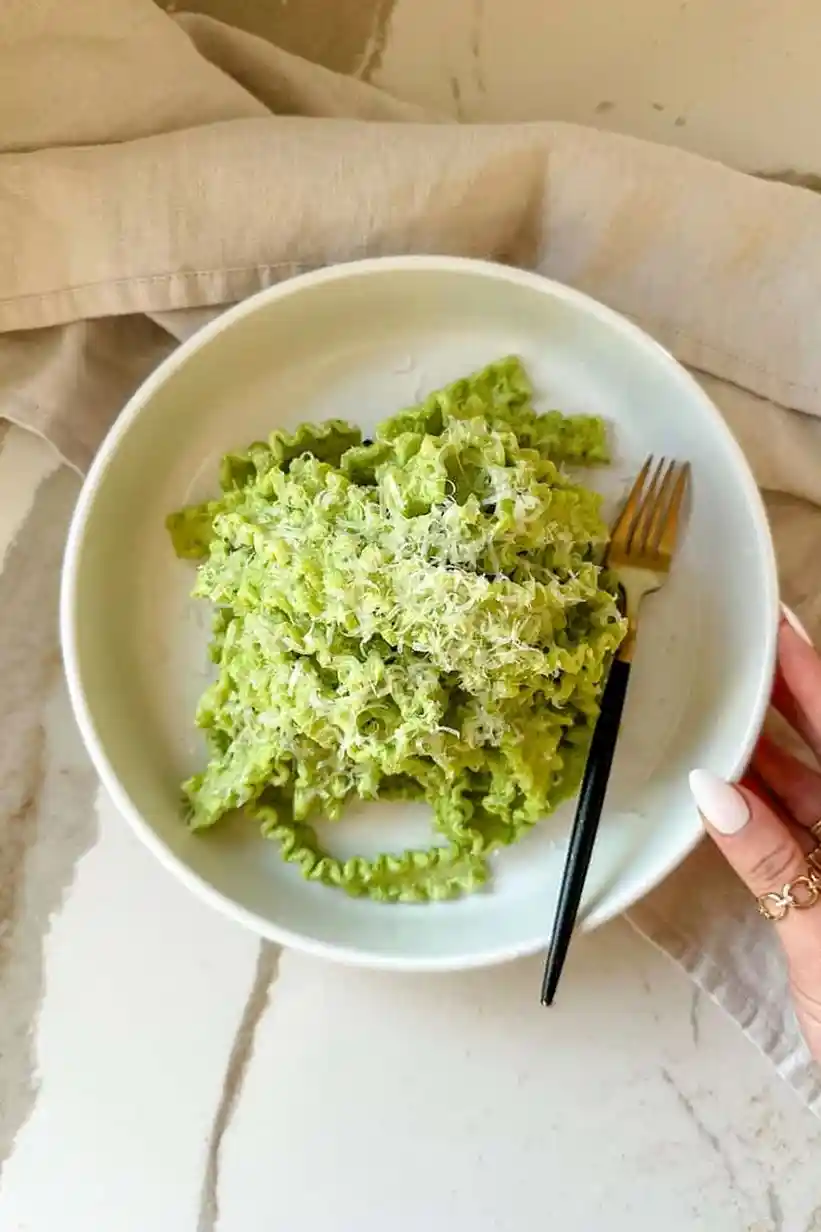
This vibrant Green Goddess Pasta combines fresh garden herbs with a protein-rich base of cottage cheese and Greek yogurt. It is a fast, nutritious meal that delivers a refreshing tang and a velvety smooth consistency.
List of ingredients
- 1/4 cup fresh dill – provides a bright, citrusy flavor.
- 1/4 cup fresh chives – adds a mild onion-like depth.
- 1/4 cup fresh cilantro – introduces a fresh, peppery note.
- 1/2 shallot – adds a subtle sweetness and savory base.
- 1/3 cup high quality extra virgin olive oil – creates a smooth emulsion.
- 1 tbsp fresh lemon juice – cuts through the richness with acidity.
- 1/2 cup cottage cheese – provides creaminess and high protein.
- 1/4 cup plain greek yogurt – adds a characteristic tang and thickness.
- 1/4 cup pasta water – used to bind the sauce to the noodles.
- 1/2 cup freshly grated parmesan cheese – adds saltiness and savory umami.
- 1 tsp salt – adjust based on the saltiness of the parmesan.
- 1/2 tsp pepper – provides a mild heat and woody aroma.
- 8 oz of your favorite pasta – Mafaldine is recommended for its ridges.
step-by-step instructions
- Cook the Pasta: Boil your chosen pasta in salted water until it reaches an al dente texture. Drain the pasta but remember to reserve some of the cooking water for the sauce.
- Blend the Sauce: Combine the fresh dill, chives, cilantro, shallot, extra virgin olive oil, lemon juice, cottage cheese, Greek yogurt, salt, pepper, and 1/4 cup of pasta water in a blender. Process until the mixture is completely smooth and creamy, then taste and add more salt if needed.
- Combine Ingredients: Pour the blended sauce into a skillet over low heat. Add the cooked noodles to the pan and toss them until every strand is fully coated. Mix in the freshly grated parmesan cheese until well incorporated.
- Final Presentation: Serve the pasta warm in bowls. Garnish with an extra sprinkle of parmesan cheese before serving.
Maximizing Sauce Texture and Consistency
Using a High-Speed Blender for Smoothness
To achieve a truly velvety consistency, a high-speed blender is the best tool. It breaks down the curds in the cottage cheese and the fibers of the shallots more efficiently than a food processor. This prevents a grainy texture and ensures the herbs are fully integrated.
The Role of Starch-Rich Pasta Water
Using reserved pasta water is critical for the emulsion process. The starch in the water acts as a bridge between the fats in the olive oil and the moisture in the yogurt. This prevents the sauce from separating when it hits the heat of the skillet.
Adjusting Thickness for Different Pasta Shapes
If you are using a pasta with more surface area, such as fusilli or penne, you may need a thinner sauce. Simply stir in an additional tablespoon of pasta water at a time until the sauce glides easily over the ridges of the pasta without clumping.
Avoiding Over-Processing the Herbs
While you want a smooth sauce, over-blending can sometimes cause the herbs to oxidize or warm up due to the blender blades’ friction. Use the pulse setting or keep the blending time short to maintain the bright green color and fresh flavor profiles.
Ingredient Substitutions and Modifications
Dairy-Free Alternatives for Cottage Cheese
To make this recipe dairy-free, replace the cottage cheese with an equal amount of coconut cream or a thick, unsweetened cashew-based cream. These options provide the necessary fat and thickness to maintain the creamy mouthfeel of the original sauce.
Greek Yogurt Swaps for Different Tanginess
If you prefer a milder taste, substitute the Greek yogurt with plain sour cream or a dairy-free almond-based yogurt. Ensure the yogurt is unsweetened and plain to avoid introducing unwanted sugars into the savory sauce.
Customizing the Herb Blend
While dill, chives, and cilantro are the core ingredients, you can incorporate fresh basil or flat-leaf parsley for a more traditional pesto-like flavor. Avoid using dried herbs, as they lack the vibrant color and fresh aromatic quality required for a Green Goddess sauce.
Parmesan Substitutes for Dietary Needs
For those avoiding traditional parmesan, nutritional yeast offers a similar nutty and cheesy flavor. Alternatively, use a microbial-rennet based hard cheese to maintain the savory profile while adhering to specific dietary restrictions.
Serving and Pairing Suggestions
Complementary Protein Additions
This pasta pairs exceptionally well with grilled chicken breast or sautéed shrimp. The acidity of the lemon and the freshness of the herbs cut through the richness of the proteins, creating a balanced meal.
Adding Roasted or Steamed Vegetables
To increase the nutrient density, toss in steamed broccoli, roasted asparagus, or sautéed baby spinach. These green vegetables complement the visual appeal of the sauce and add a satisfying crunch to the dish.
Garnishing for Enhanced Flavor
Beyond additional parmesan, consider adding a pinch of red pepper flakes for a subtle heat. Toasted pine nuts or slivered almonds can also be sprinkled on top to provide a contrasting texture to the creamy pasta.
Storage and Reheating Guidelines
Proper Refrigeration Techniques
Store leftover pasta in an airtight glass container to keep the herbs fresh and prevent the sauce from absorbing refrigerator odors. The dish will remain fresh and safe to consume for 3 to 4 days when kept at a constant cold temperature.
Preventing Sauce Separation During Storage
It is common for the oil and yogurt to separate slightly after sitting in the fridge. Before reheating, give the pasta a gentle stir to redistribute the fats, or add a tiny splash of water to help re-emulsify the sauce.
Microwave Reheating Tips
When reheating in the microwave, use medium power and heat in 30-second intervals. Stirring between intervals ensures that the sauce heats evenly and prevents the cottage cheese from curdling due to hot spots.
Stovetop Reheating Method
For the best results, reheat the pasta in a skillet over low heat. Add a tablespoon of water or milk to loosen the sauce, and toss gently until warmed through to maintain the creamy consistency without overcooking the noodles.
Make-Ahead Preparation Advice
Prepping the Herb Base
You can chop the dill, chives, and cilantro in advance and store them in a damp paper towel inside a sealed bag. This reduces the active prep time on the day of cooking while keeping the herbs hydrated and fragrant.
Making the Sauce in Advance
The sauce can be blended up to 24 hours before you intend to serve the meal. Keep the sauce chilled in the refrigerator and only combine it with the hot pasta immediately before serving to keep the colors vibrant.
Pre-Cooking the Pasta
If you must cook the pasta ahead of time, undercook it by one minute past the usual al dente stage. Toss the cooked noodles in a light coating of olive oil to prevent them from sticking together before they are added to the sauce.
Troubleshooting Common Cooking Issues
Handling a Grainy Sauce Texture
If the sauce appears grainy, it is usually due to the cottage cheese curds. Continue blending for another 30 to 60 seconds or pass the sauce through a fine-mesh sieve for a professional, silky-smooth finish.
Fixing an Overly Sour Sauce
If the lemon juice or Greek yogurt makes the sauce too tangy, balance the acidity with a pinch more salt or a small amount of extra olive oil. In some cases, adding a teaspoon of grated parmesan can neutralize the sharp citrus notes.
Preventing the Sauce from Breaking
If the sauce begins to separate in the skillet, it is likely because the heat is too high. Immediately remove the pan from the burner and stir in a tablespoon of warm pasta water to bring the emulsion back together.
Managing Pasta Clumping
If the noodles stick together, ensure you are using a large enough skillet to allow for proper tossing. If clumping persists, add a small amount of olive oil to the noodles before mixing them into the sauce base.
Frequently Asked Questions
Can I use frozen herbs instead of fresh?
Frozen herbs can be used, but they often release more moisture and have a less vibrant color. To use them, thaw them slightly and squeeze out excess water before blending to prevent the sauce from becoming too thin.
Which pasta shapes work best with this sauce?
Shapes with ridges or holes, such as Mafaldine, Fusilli, or Conchiglie, are ideal because they trap the thick sauce. Long, smooth pastas like spaghetti will work, but the sauce may slide off more easily.
Is this sauce suitable for meal prep?
Yes, it is excellent for meal prep as it tastes great both warm and cold. If eating cold, it serves as a refreshing pasta salad; if eating warm, follow the stovetop reheating method for best results.
How do I keep the green color vibrant?
Avoid boiling the sauce. By adding the blended mixture to the pasta over low heat and only tossing it briefly, you prevent the heat from breaking down the chlorophyll in the herbs, keeping the color bright.
Print
Creamy Green Goddess Pasta
- Total Time: 20 minutes
- Yield: 5 servings 1x
- Diet: Vegetarian
Description
This Green Goddess Pasta Sauce comes together in just minutes and is packed with fresh flavors and herbs. Made with cottage cheese and Greek yogurt, it’s creamy and delicious. Pair it with your favorite noodles and enjoy!
Ingredients
- 1/4 cup fresh dill
- 1/4 cup fresh chives
- 1/4 cup fresh cilantro
- 1/2 shallot
- 1/3 cup high quality extra virgin olive oil
- 1 tbsp fresh lemon juice
- 1/2 cup cottage cheese
- 1/4 cup plain greek yogurt
- 1/4 cup pasta water
- 1/2 cup freshly grated parmesan cheese (microbial rennet)
- 1 tsp salt
- 1/2 tsp pepper
- 8 oz pasta (such as Mafaldine)
Instructions
- Step: Boil pasta to al dente.
- Step: Add dill, chives, cilantro, shallot, extra virgin olive oil, lemon juice, cottage cheese, greek yogurt, salt, pepper and pasta water to a blender and blend until smooth and creamy.
- Step: Add pasta sauce to a skillet over low heat and add in cooked noodles. Toss until fully coated, and mix in parmesan cheese.
- Step: Serve warm with more parmesan cheese and enjoy!
Notes
If you don’t have a blender you can use a food processor or an immersion blender. If your sauce is too thick, you can thin it out by adding in more pasta water. Add salt and pepper to taste.
- Prep Time: 10 minutes
- Cook Time: 10 minutes
- Category: Entree
- Method: Blender, Stovetop
- Cuisine: Italian-inspired
Nutrition
- Serving Size: 1 serving
- Calories: 350 kcal
- Sugar: 6 g
- Sodium: 480 mg
- Fat: 18 g
- Saturated Fat: 5 g
- Unsaturated Fat: 13 g
- Trans Fat: 0 g
- Carbohydrates: 32 g
- Fiber: 3 g
- Protein: 14 g
- Cholesterol: 25 mg