
This one-pot garlic parmesan orzo is a fast and creamy side dish that requires minimal cleanup. It combines tender pasta with a rich, cheesy sauce in under 20 minutes.
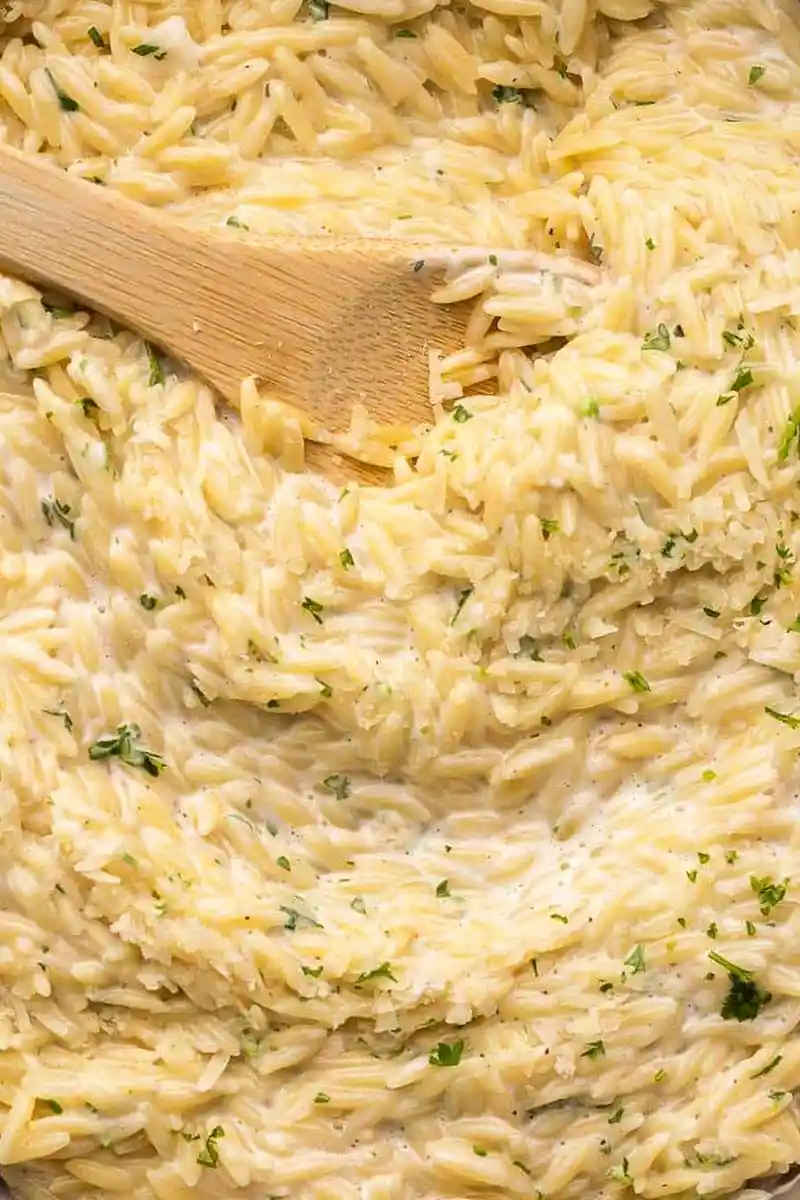
List of ingredients
- 2½ cups low sodium chicken broth – provides the primary cooking liquid and savory base.
- 1½ cups dry orzo pasta (about 278 grams) – small rice-shaped pasta that creates a creamy texture.
- 2 cloves garlic (finely minced) – adds aromatic depth and pungency.
- ¾ teaspoon salt – enhances all the other flavors in the dish.
- ¼ teaspoon black pepper – provides a subtle earthy heat.
- ½ cup cream (any kind) – heavy cream creates a richer sauce, while light cream is thinner.
- ¼ cup shredded Parmesan cheese – adds a salty, nutty finish and thickens the sauce.
- 2 tablespoons fresh parsley – adds color and a hint of freshness.
step-by-step instructions
- Simmer Broth: In a large saucepan, bring the chicken broth to a simmer over high heat.
- Combine Base: Add the dry orzo, minced garlic, salt, and black pepper to the simmering broth.
- Cook Pasta: Cover the pan and reduce the heat to medium-low. Simmer while stirring often until most of the liquid is absorbed and the pasta is cooked to your preference. If the liquid disappears before the pasta is tender, stir in a splash more broth.
- Finish Sauce: Stir in the cream, shredded Parmesan cheese, and fresh parsley.
- Final Touch: Taste the dish and adjust the salt or pepper if needed. Serve immediately.
Professional Cooking Tips
Use Freshly Grated Parmesan Cheese
Opt for a block of high-quality Parmesan and grate it yourself rather than using pre-shredded bags. Pre-shredded cheeses are coated in cellulose or cornstarch to prevent clumping, which can lead to a grainy texture in the sauce. Freshly grated cheese melts more smoothly into the hot pasta for a velvety finish.
Mince Garlic for Maximum Flavor
Use fresh garlic cloves instead of garlic powder to ensure a bold, aromatic taste. You can mince garlic by crushing the clove with the flat side of a knife before finely chopping it. For long-term convenience, pulse cloves in a food processor and freeze them in small portions on parchment paper.
Prevent Orzo from Sticking to the Pan
Orzo releases a significant amount of starch as it cooks, which can cause it to clump or stick to the bottom of the pot. Stir the pasta frequently during the simmering process to distribute the starch evenly. This action also helps the pasta cook uniformly and contributes to the creaminess of the final sauce.
Choose the Right Cream for Your Texture
The type of cream you select will dictate the richness of the dish. Heavy cream has a higher fat content, resulting in a thick, decadent sauce that clings to the pasta. Light cream or half-and-half will produce a lighter, thinner consistency that is less heavy on the palate.
Control the Simmer Temperature
Ensure the heat is reduced to medium-low immediately after covering the pan. If the heat remains too high, the broth will evaporate too quickly, leaving the orzo undercooked and hard in the center. A gentle simmer allows the pasta to absorb the liquid slowly and cook through completely.
Flavor Modifications and Substitutions
Incorporate Fresh Green Vegetables
You can easily add nutrition by mixing in cooked vegetables. Stir in frozen peas or baby spinach during the last two minutes of cooking so they maintain their color. For harder vegetables like asparagus or broccoli, sauté them separately or blanch them before adding them to the final stir.
Add Lean Protein Options
To transform this side dish into a complete meal, mix in pre-cooked lean proteins. Shredded roasted chicken breast or grilled shrimp are excellent choices that complement the garlic cream sauce. For a smoky element, use diced smoked turkey breast instead of pork-based meats.
Introduce Spicy Heat
If you prefer a bit of heat, add a pinch of red pepper flakes or a dash of cayenne pepper during the simmering stage. This adds a subtle kick that cuts through the richness of the cream and cheese. You can also stir in a teaspoon of sriracha at the end for a modern twist.
Use Fresh Lemon for Brightness
A squeeze of fresh lemon juice or a teaspoon of lemon zest added at the end can brighten the entire dish. The acidity of the lemon balances the heaviness of the Parmesan and cream. This is especially effective if you are serving the orzo with fish or seafood.
Experiment with Different Fresh Herbs
While parsley is the classic choice, other fresh herbs can change the profile of the dish. Fresh basil adds a sweet, peppery note, while thyme or oregano provides a more earthy, Mediterranean feel. Always stir fresh herbs in at the very end to preserve their delicate oils.
Try Alternative Small Pasta Shapes
If you do not have orzo, any small pasta shape will work similarly. Acini di pepe or stelline are good alternatives that maintain the rice-like consistency. Be sure to monitor the liquid absorption, as different shapes may require slightly different cooking times.
Substitute with Arborio Rice
You can substitute orzo with Arborio rice to create a dish similar to risotto. Note that rice takes longer to cook and requires more frequent stirring to release the starches. You may need to add extra broth in small increments until the rice reaches an al dente texture.
Best Serving Pairings
Serve as a Main Vegetarian Meal
This creamy pasta is hearty enough to be the star of the show for vegetarians. Pair it with a side of roasted root vegetables like carrots and parsnips for a complete dinner. A simple side of garlic bread can also complement the flavors perfectly.
Pair with Roasted Chicken
The garlic parmesan flavor profile is a natural match for roasted chicken. Serve the orzo alongside a lemon-herb roasted chicken breast or thighs. The creaminess of the pasta balances the charred skin and savory juices of the poultry.
Complement Pan-Seared Fish
Light fish such as cod, tilapia, or salmon pairs beautifully with this dish. The richness of the cheese sauce enhances the delicate flavor of the seafood. Garnish the fish with a slice of lemon to tie the flavors together.
Accompany Grilled Steak
For a more decadent meal, serve the orzo as a side to a grilled sirloin or ribeye steak. The garlic and cream notes provide a sophisticated contrast to the smoky, charred exterior of the meat. Ensure the steak rests before serving to keep the plate clean.
Combine with Roasted Root Vegetables
Pair the pasta with honey-glazed carrots or roasted Brussels sprouts. The sweetness of roasted vegetables cuts through the salty Parmesan cheese. This combination creates a balanced plate with a variety of textures.
Preservation and Storage
Safe Refrigeration Practices
Store any leftover garlic parmesan orzo in an airtight container in the refrigerator. It will remain fresh and safe to eat for 4 to 5 days. Ensure the container is sealed tightly to prevent the pasta from absorbing other odors from the fridge.
Guidelines for Freezing Orzo
This dish can be frozen for up to 2 to 3 months in a freezer-safe container. Be aware that the texture of the pasta may become slightly softer upon thawing due to the starch breakdown. To maintain quality, freeze the orzo in smaller portions for easier reheating.
Proper Thawing Procedures
The best way to thaw frozen orzo is to move it from the freezer to the refrigerator 24 hours before you plan to eat it. Avoid thawing it on the counter to prevent bacterial growth. If you are in a rush, use the defrost setting on your microwave.
Effective Reheating Techniques
Stovetop Reheating Method
For the best results, reheat the orzo in a small saucepan over low heat. Add a tablespoon of chicken broth or cream to restore the moisture. Stir gently and frequently until the pasta is warmed through and the sauce becomes creamy again.
Microwave Reheating Method
Place the leftovers in a microwave-safe bowl and add a splash of liquid. Cover the bowl with a damp paper towel to trap steam, which prevents the pasta from drying out. Heat in 30-second intervals, stirring between each session.
Restoring Sauce Consistency
Because pasta absorbs liquid as it sits, the sauce will likely be thick or sticky after refrigeration. Adding a small amount of broth or cream during reheating helps re-emulsify the fats in the cheese and cream. This brings back the original silky texture of the dish.
Cooking Troubleshooting
Fixing Dry Pasta
If the orzo has absorbed all the liquid but remains hard, do not panic. Simply stir in an additional 2 to 4 tablespoons of chicken broth. Cover the pan again and simmer for another minute or two until the desired tenderness is reached.
Thickening a Thin Sauce
If the sauce seems too runny after adding the cream and cheese, let it simmer uncovered for an additional minute. You can also stir in an extra tablespoon of Parmesan cheese to increase the viscosity. The cheese acts as a natural thickener as it melts.
Preventing Garlic from Burning
Garlic can burn quickly if the heat is too high, resulting in a bitter taste. Add the garlic along with the orzo and broth rather than sautéing it in oil first. This poaching method ensures the garlic flavors the liquid without scorching.
Resolving Cheese Clumps
If the Parmesan cheese clumps together, it is likely because the sauce was too hot or the cheese was added too quickly. Stir the cheese in gradually, one tablespoon at a time. If clumps persist, whisk the sauce vigorously or use a handheld frother for a few seconds.
Frequently Asked Questions
Can I use vegetable broth instead of chicken broth?
Yes, vegetable broth is an excellent substitute and makes the dish suitable for vegetarians. Ensure the vegetable broth is low in sodium to maintain control over the overall saltiness of the pasta.
What is a good substitute for cream?
If you do not have cream, you can use whole milk mixed with a teaspoon of cornstarch. For a dairy-free alternative, use full-fat coconut milk or cashew cream, though this will slightly alter the flavor profile.
How do I keep the pasta from becoming mushy?
Avoid overcooking the orzo. Start tasting the pasta a few minutes before the liquid is completely gone. Remove the pan from the heat while the pasta is still slightly al dente, as it will continue to cook in the residual heat of the sauce.
Can this recipe be made dairy-free?
Yes, replace the cream with a plant-based cream alternative and use nutritional yeast or a vegan Parmesan substitute. These replacements provide a similar salty, cheesy flavor while remaining entirely plant-based.
Print
Creamy Garlic Parmesan Orzo Pasta
- Total Time: 20 minutes
- Yield: 4 servings 1x
- Diet: General
Description
This Garlic Parmesan Orzo Pasta is a one-pot recipe for tender orzo tossed in a light and cheesy cream sauce. It’s simple to make and comes together in a total of 20 minutes!
Ingredients
- 2½ cups low sodium chicken broth
- 1½ cups dry orzo pasta
- 2 cloves garlic, finely minced
- ¾ teaspoon salt
- ¼ teaspoon black pepper
- ½ cup cream
- ¼ cup shredded Parmesan cheese
- 2 tablespoons fresh parsley
Instructions
- Step 1: In a large saucepan, bring the broth to a simmer over high heat.
- Step 2: Add the orzo, garlic, salt, and pepper.
- Step 3: Cover and reduce the heat to medium-low and simmer, stirring often, until most of the liquid is absorbed and the pasta is cooked to your preference.
- Step 4: Stir in the cream, Parmesan, and parsley.
- Step 5: Taste and adjust seasonings if desired. Serve.
Notes
Storage: Cooked garlic parmesan orzo pasta will last in an airtight container in the fridge for 4-5 days. To reheat, add a splash of broth or cream to thin and moisten and warm on the stove or in the microwave until fully warmed. This dish can also be frozen in an airtight container for 2-3 months.
- Prep Time: 5 minutes
- Cook Time: 15 minutes
- Category: Main Course, Side Dish
- Method: Stovetop
- Cuisine: American, Canadian
Nutrition
- Serving Size: 205 grams
- Calories: 279 kcal
- Sugar: 2 g
- Sodium: 445 mg
- Fat: 5 g
- Saturated Fat: 2 g
- Unsaturated Fat: 2 g
- Trans Fat: 0 g
- Carbohydrates: 45 g
- Fiber: 2 g
- Protein: 14 g
- Cholesterol: 9 mg