
Yum Woon Sen is a vibrant, refreshing Thai glass noodle salad that perfectly balances salty, spicy, sweet, and sour flavors. This classic dish features delicate mung bean threads tossed with lean protein, fresh herbs, and an aromatic dressing that clings to every strand for a truly satisfying meal.
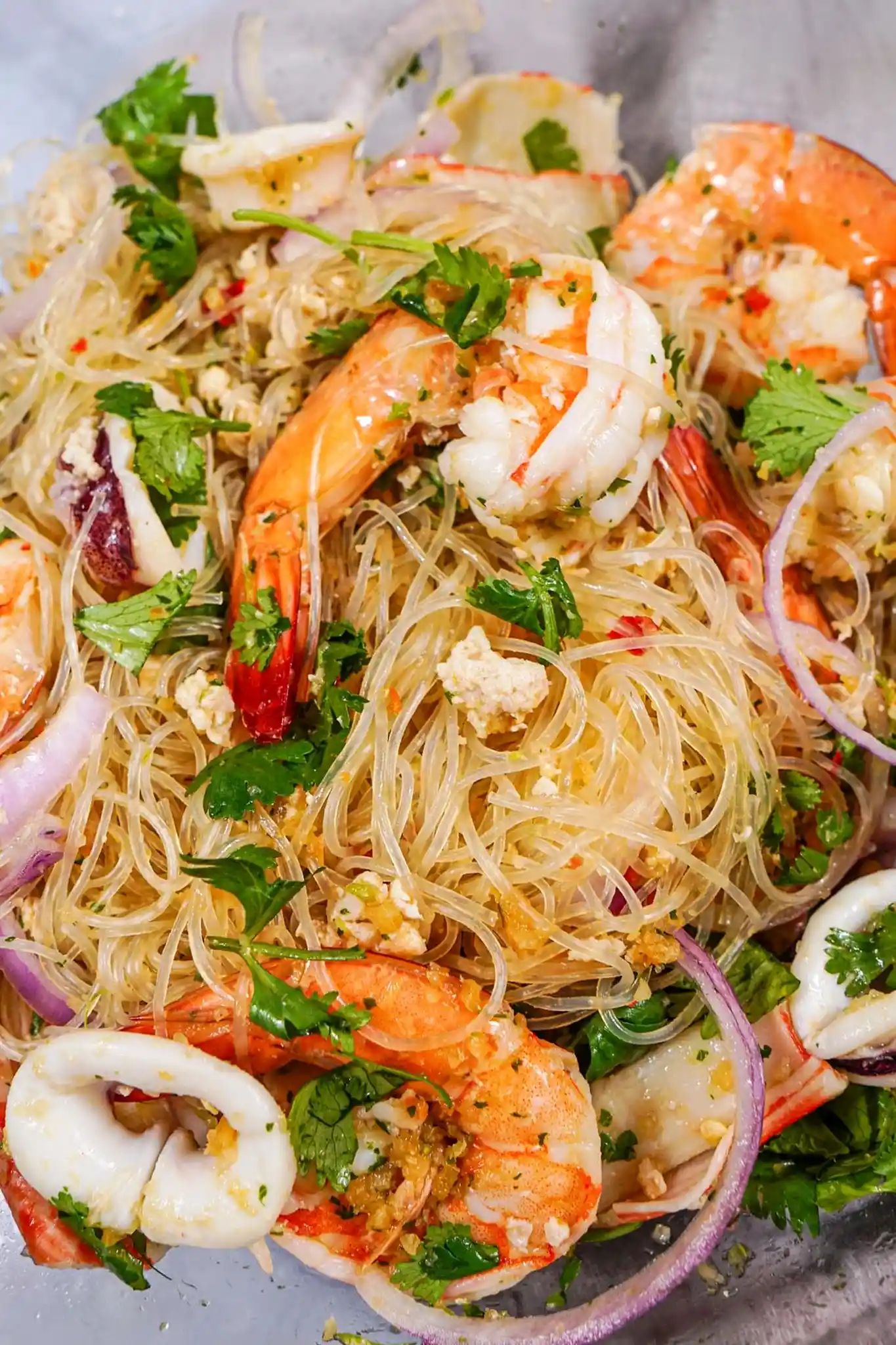
List of ingredients
- 80g glass noodles (bean thread noodles)
- 300ml water, for boiling
- Fish sauce (for seasoning boiling water)
- 100g minced chicken
- 4-5 prawns, peeled and deveined
- 1 small squid, cleaned and sliced
- 1/2 red onion, thinly sliced
- 1-2 stalks fresh cilantro, chopped
- 1 tbsp dried shrimps, soaked
- 1 tbsp fish sauce
- 1 tbsp lime juice
- 1 tbsp palm sugar
- 2 cloves garlic
- 1-2 Thai bird’s eye chillies
- 1-2 cilantro roots or stems, chopped
step-by-step instructions
- Step: Pour hot water over the dried shrimps and let soak for 5 minutes until soft.
- Step: Combine dried shrimps, 1 tbsp fish sauce, lime juice, palm sugar, garlic, chillies, and cilantro roots in a food processor or mortar and pestle. Blitz into a rough paste and set aside.
- Step: Fill a 24cm frying pan with water and bring to a boil.
- Step: Add minced chicken and a splash of fish sauce to the boiling water, stirring to break up the meat. Once cooked, remove meat and place into a mixing bowl.
- Step: Add prawns and squid to the same pan. Cook until opaque, remove from water, and add to the mixing bowl.
- Step: Add glass noodles to the water. Cook until clear and softened, then remove and transfer to the mixing bowl.
- Step: Pour the prepared sauce over the bowl contents and toss to combine. Add raw onions and cilantro halfway through tossing. Serve immediately.
Practical tips for success
Achieving the perfect noodle texture
The secret to great glass noodles lies in how they interact with the liquid. Because they are made from mung bean starch, they can become mushy if overcooked. Always keep a close eye on the pan during the final two minutes of boiling, as they transition from opaque to translucent very quickly. If you prefer a chewier bite, remove them from the water as soon as they turn clear and immediately toss them with the dressing, which will help cool them down and stop the cooking process.
Maximizing flavor with the poaching liquid
Using the same water to cook your protein and your noodles creates a cascading effect of seasoning. By poaching the chicken first, you infuse the water with savory juices. When the noodles are subsequently boiled in that same water, they act like a sponge, drawing in all the flavor that would otherwise be discarded. Avoid using too much water in the pan, as you want the flavor to be concentrated rather than diluted across a massive volume of liquid.
Balancing the four flavor pillars
Thai cuisine is built on the interplay of sour, salty, sweet, and spicy. When you prepare the dressing, taste it before adding it to the noodles. If the lime juice makes it too sharp, add a tiny bit more palm sugar to level it out. If it tastes too mild, add a touch more fish sauce. Having the sauce perfectly balanced in the bowl before adding it to the salad ensures the final dish hits all the right notes.
Substitutions and ingredient adjustments
Alternative protein options
While minced chicken and seafood are traditional, you can easily adapt this dish to suit your pantry. Finely sliced firm tofu is an excellent vegetarian choice that absorbs the dressing beautifully without overpowering the delicate noodles. If you prefer a different meat, thinly sliced lean beef or even imitation crab sticks can work well, provided you cook them just until they are tender. Ensure any meat replacement is chopped into small, bite-sized pieces so that every forkful contains a mix of ingredients.
Managing spice levels
Thai bird’s eye chillies provide a significant kick that is essential for the authentic profile of this salad. However, if you are serving those who are sensitive to heat, you can remove the seeds and white pith from the inside of the chillies before processing. The pith holds the highest concentration of capsaicin, and removing it significantly reduces the intensity. Alternatively, you can substitute the chillies with a small amount of sweet chili sauce or finely diced bell pepper for color without the heat.
Storage and reheating advice
Handling leftovers
Yum Woon Sen is best enjoyed fresh, but it can be stored if necessary. Place any leftovers in an airtight container in the refrigerator for up to 24 hours. Because glass noodles continue to absorb liquid over time, the salad may become slightly dry after sitting in the fridge. To freshen it up, keep a small portion of extra lime juice and a dash of fish sauce to stir in just before you eat it, which will revitalize the brightness of the ingredients.
Should you reheat this salad?
Generally, glass noodle salad is intended to be eaten at room temperature or chilled. Reheating the dish can cause the noodles to break down further and lose their desirable, springy texture. If you must serve it warm after it has been chilled, try placing it in a heat-proof bowl over a pot of simmering water for one or two minutes, rather than using a microwave. The gentle steam will warm the components without causing the noodles to turn to mush.
Commonly asked questions
Why did my noodles get sticky and clump together?
Glass noodles often clump if they sit in the hot water for too long after being cooked. To prevent this, drain the noodles immediately once they reach the correct doneness. If they are slightly sticky, a quick rinse under room-temperature water while still in the colander can help separate the strands before they are combined with the dressing and proteins.
Is it necessary to use dried shrimp?
Dried shrimp are a hallmark of authentic Thai street food salads, providing a chewy texture and a concentrated, savory flavor. While they are highly recommended for the best experience, you can omit them if you cannot find them. To compensate for the loss of that umami depth, consider adding a teaspoon of toasted sesame oil to the dressing or using a dash of mushroom-based seasoning powder.
Can I add more vegetables to this salad?
Absolutely, this recipe is incredibly forgiving and welcomes additional textures. Finely shredded carrots or cucumbers add a wonderful crunch that pairs well with the soft noodles. If you decide to add raw vegetables, slice them very thinly so they integrate seamlessly with the strands of the noodles. Be aware that watery vegetables like cucumbers can dilute the dressing, so you may need to add a pinch more salt or a squeeze of extra lime to keep the balance strong.
Why use palm sugar instead of brown sugar?
Palm sugar has a unique, earthy sweetness that is much closer to molasses than standard refined brown sugar. This depth is essential for creating the complex, layered flavor profile characteristic of Thai cuisine. If you cannot source palm sugar, you can use raw cane sugar or a mixture of brown sugar and a tiny drop of honey, though the result will be slightly different in complexity. Always ensure the sugar is fully dissolved in the dressing before tossing to avoid grainy bits in your final dish.
What is the best way to slice the onions for this salad?
For the best experience, slice your red onions as thinly as humanly possible, ideally using a mandoline or a very sharp chef’s knife. The goal is for the onions to act as a flavor accent that provides a sharp, clean crunch without overpowering the other ingredients with too much raw bite. If you find the raw onions too pungent, you can soak the slices in a bowl of ice water for ten minutes before adding them to the salad; this effectively tames the sharpness while keeping them crisp.
Print
Yum Woon Sen | Thai Glass Noodle Salad
- Total Time: 20 minutes
- Yield: 2 servings 1x
- Diet: Pescatarian
Description
A vibrant and tangy Thai glass noodle salad featuring tender chicken, fresh seafood, and a zesty, aromatic dressing. This quick and versatile dish is perfect for a light lunch or dinner.
Ingredients
- 80g glass noodles (bean thread noodles)
- 300ml water, for boiling
- Fish sauce (for seasoning boiling water)
- 100g minced chicken
- 4–5 prawns, peeled and deveined
- 1 small squid, cleaned and sliced
- 1/2 red onion, thinly sliced
- 1–2 stalks fresh cilantro, chopped
- 1 tbsp dried shrimps, soaked
- 1 tbsp fish sauce
- 1 tbsp lime juice
- 1 tbsp palm sugar
- 2 cloves garlic
- 1–2 Thai bird’s eye chillies
- 1–2 cilantro roots or stems, chopped
Instructions
- Step: Pour hot water over the dried shrimps and let soak for 5 minutes until soft.
- Step: Combine dried shrimps, 1 tbsp fish sauce, lime juice, palm sugar, garlic, chillies, and cilantro roots in a food processor or mortar and pestle. Blitz into a rough paste and set aside.
- Step: Fill a 24cm frying pan with water and bring to a boil.
- Step: Add minced chicken and a splash of fish sauce to the boiling water, stirring to break up the meat. Once cooked, remove meat and place into a mixing bowl.
- Step: Add prawns and squid to the same pan. Cook until opaque, remove from water, and add to the mixing bowl.
- Step: Add glass noodles to the water. Cook until clear and softened, then remove and transfer to the mixing bowl.
- Step: Pour the prepared sauce over the bowl contents and toss to combine. Add raw onions and cilantro halfway through tossing. Serve immediately.
Notes
Glass noodles, also known as cellophane noodles, do not need pre-soaking if boiled directly in the seasoned liquid. You can substitute the chicken and seafood with your preferred protein choices such as mushrooms or tofu.
- Prep Time: 10 minutes
- Cook Time: 10 minutes
- Category: Salad
- Method: Boiling
- Cuisine: Thai
Nutrition
- Serving Size: 1 serving
- Calories: 285 kcal
- Sugar: 8 g
- Sodium: 750 mg
- Fat: 4 g
- Saturated Fat: 1 g
- Unsaturated Fat: 2 g
- Trans Fat: 0 g
- Carbohydrates: 42 g
- Fiber: 2 g
- Protein: 18 g
- Cholesterol: 95 mg