
Prepare a quick and zesty meal with cheese ravioli and asparagus in a lemon-infused butter sauce. This dish takes only 15 minutes from prep to plate, making it suitable for rapid weeknight dinners.
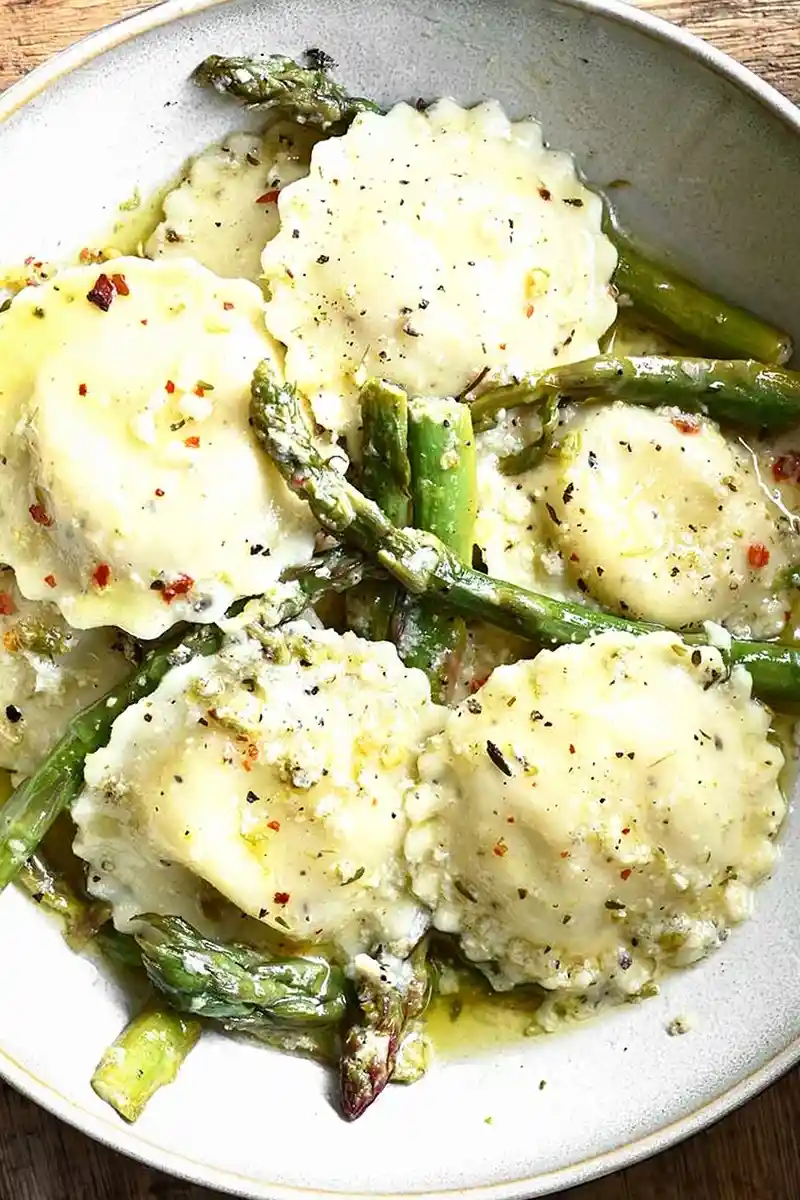
List of ingredients
- 1.1 pounds ravioli – use a high-quality store-bought cheese variety.
- 3 ounces unsalted butter – provides the creamy base for the sauce.
- 1/4 cup lemon juice – adds a bright, acidic contrast to the butter.
- 1 ounces grated Parmesan – creates a salty, savory finish.
- 1 tsp salt – enhances all the flavors in the pan.
- 1 tsp black pepper – adds a subtle heat.
- 1 tsp dried thyme – provides an earthy, herbal note.
- 2 garlic cloves, grated – creates a pungent aromatic base.
- 7 ounces green asparagus – adds texture and nutrition.
- crushed red pepper flakes – optional for serving heat.
- freshly ground black pepper – optional for final seasoning.
- lemon zest – optional for an intense citrus aroma.
step-by-step instructions
- Prepare ingredients: Grate the garlic cloves and snap off the woody ends of the asparagus. Cut any particularly thick asparagus stalks in half lengthwise for even cooking. Squeeze the lemon juice to have it ready.
- Boil water: Fill a large pot with water, add a generous pinch of salt, and bring it to a rolling boil over high heat.
- Sauté aromatics: Place a large skillet over low heat and add the butter, stirring until fully melted. Stir in the grated garlic and sweat it for approximately 1 minute without letting it brown.
- Season the sauce: Add the salt, black pepper, and dried thyme to the melted butter. Pour in the lemon juice and stir for 30 seconds to combine.
- Cook asparagus: Place the asparagus in the skillet in a single layer. Cook for 3 to 5 minutes until they are tender yet still have a slight crispness.
- Cook ravioli: While the asparagus is cooking, drop the ravioli into the boiling water. Cook for about 3 minutes or according to package instructions.
- Reserve water and drain: Drain the ravioli, but make sure to reserve at least 1/2 cup of the starchy cooking water.
- Emulsify sauce: Add 1/4 cup of the reserved pasta water to the skillet with the asparagus. Cook for 1 minute to thicken the sauce.
- Combine: Turn off the heat and stir in the grated Parmesan cheese until melted. Add the cooked ravioli to the skillet and toss gently to coat everything in the sauce.
- Garnish and serve: Finish the dish with freshly ground black pepper, crushed red pepper flakes, and lemon zest before serving immediately.
Pro Tips for Perfect Pasta Execution
How to Properly Snap Asparagus
To identify the natural breaking point of an asparagus stalk, hold the spear with both hands and bend it slowly. The stalk will snap at the exact point where the woody, fibrous part ends and the tender part begins. Discard the lower, tough portion to ensure every bite is tender. This method is more accurate than measuring with a ruler.
Managing Butter Temperature
Keep the skillet on low heat when melting the butter and sweating the garlic. Garlic burns quickly at high temperatures, which can introduce a bitter taste to the entire sauce. If the butter begins to foam too aggressively, reduce the heat further. Slow cooking the aromatics ensures a smoother flavor profile.
Timing the Ravioli Boil
Ravioli cooks much faster than dry pasta, typically requiring only 3 to 5 minutes. Start boiling the pasta while the asparagus is sautéing to ensure both are finished simultaneously. Under-boiling can leave the center raw, while over-boiling causes the pasta to burst. Use a timer for precision.
Emulsifying the Sauce with Pasta Water
The starchy water reserved from the ravioli pot is essential for the sauce’s texture. When added to the butter and lemon juice, the starch helps bind the fat and liquid together. This prevents the butter from separating and creates a glossy coating on the pasta. Always stir vigorously when adding the water.
Ingredient Substitutions and Customizations
Alternative Pasta Shapes
While ravioli is specified, this sauce works exceptionally well with tortellini or gnocchi. For a different texture, try penne or rigatoni, as the ridges help hold the butter sauce. If using dry pasta, remember to increase the boiling time accordingly. The lemon-parmesan profile is versatile across most Italian pasta styles.
Using Different Ravioli Fillings
Cheese ravioli is a classic choice, but spinach and ricotta fillings pair beautifully with lemon. Mushroom ravioli provides an earthy contrast that balances the bright citrus notes. Lobster or shrimp ravioli can elevate the dish for a more formal occasion. Ensure the filling complements the acidity of the lemon juice.
Vegetable Swaps for Asparagus
If asparagus is unavailable, fresh baby spinach is a great alternative that wilts quickly in the pan. Frozen green peas can be added during the last 2 minutes of sautéing for a pop of sweetness. Sliced zucchini or thinly sliced snap peas also provide a similar crunch and color. Adjust cooking times based on the density of the chosen vegetable.
Non-Dairy Butter Alternatives
For a dairy-free version, use a high-quality plant-based butter substitute with a similar melting point. Ensure the substitute is unsalted to maintain control over the seasoning. You can replace the Parmesan with nutritional yeast or a vegan parmesan alternative. The lemon juice will still provide the necessary brightness to the sauce.
Different Cheese Options
While Parmesan is traditional, Pecorino Romano offers a saltier, sharper flavor. Grana Padano is a milder alternative that blends smoothly into the butter. If you prefer a creamier texture, a small amount of goat cheese can be stirred in at the end. Avoid using hard cheeses that do not melt easily.
Serving and Presentation Ideas
Adding Fresh Herbs for Color
Freshly chopped parsley or basil added at the very end provides a vibrant green contrast. Chives can also be used to enhance the onion-like quality of the garlic. Stir these in just before serving to keep the herbs from wilting or losing their flavor. A sprinkle of fresh herbs makes the dish look professional.
Pairing with a Side Salad
A light arugula salad with a simple balsamic vinaigrette balances the richness of the butter sauce. A classic Caesar salad also pairs well, though it adds more dairy to the meal. Consider a mixed greens salad with cucumber and radish for extra crunch. The acidity of a side salad cuts through the creamy Parmesan.
Plating for a Dinner Party
Use wide, shallow bowls to allow the ravioli and asparagus to spread out visually. Place the asparagus stalks neatly on top of the pasta pile. Garnish with a thin slice of fresh lemon and a sprig of thyme. A light dusting of extra Parmesan over the top adds a final touch of elegance.
Protein Add-ons
Grilled shrimp or seared scallops complement the lemon butter sauce perfectly. Sliced grilled chicken breast can be added for a more filling main course. If you prefer a plant-based protein, sautéed chickpeas provide a nice textural contrast. Add these proteins to the pan just before combining with the ravioli.
Storage and Reheating Guide
Refrigerating Leftovers
Store any remaining ravioli in an airtight container in the refrigerator for up to 3 days. The sauce may thicken or separate as it cools, which is normal. Keep the pasta and sauce together to prevent the ravioli from drying out. Ensure the container is sealed tightly to avoid fridge odors.
Best Way to Reheat Pasta
The best method for reheating is using a saucepan over medium heat. Add a tablespoon of water or a small knob of butter to loosen the sauce. Heat gently and stir occasionally to avoid breaking the ravioli. This method preserves the texture better than a microwave.
Microwave Reheating Tips
If using a microwave, place the pasta in a microwave-safe dish and cover it with a damp paper towel. Heat in 30-second intervals, stirring in between to distribute the heat evenly. Add a splash of water or milk to restore the creaminess of the butter sauce. Be careful not to overcook, as the ravioli can become mushy.
Freezing Guidelines
While possible, freezing this dish is not recommended because the ravioli texture may change. The sauce can separate during the thawing process, resulting in a greasy consistency. If you must freeze it, store it in a vacuum-sealed bag to minimize air exposure. Thaw slowly in the refrigerator before reheating in a pan.
Troubleshooting Common Issues
Sauce is Too Thin
If the sauce feels watery, simmer the mixture for an extra minute before adding the cheese. Reducing the liquid slightly concentrates the flavor and thickens the consistency. Alternatively, stir in a small amount of extra Parmesan to bind the sauce. Ensure you are using the reserved pasta water, not plain water.
Sauce is Too Thick
If the sauce becomes too heavy or clings too tightly, stir in an additional tablespoon of pasta water. The starch in the water helps loosen the butter and cheese. Do this over low heat to ensure the sauce emulsifies properly. A small squeeze of extra lemon juice can also thin the consistency.
Asparagus is Overcooked
Overcooked asparagus becomes limp and loses its bright green color. To prevent this, remove the stalks from the pan as soon as they are tender-crisp. If they are already overcooked, avoid over-stirring them when adding the ravioli. In the future, cut thicker stalks in half to ensure they cook faster.
Garlic Burned During Sautéing
Burned garlic tastes bitter and can ruin the delicate lemon flavor. If the garlic turns dark brown, it is best to wipe the pan and start the butter base over. To avoid this, always use low heat and stir constantly. Adding the lemon juice quickly can also help lower the pan temperature.
Frequently Asked Questions
Can I use fresh lemon instead of bottled juice?
Yes, fresh lemon juice is highly recommended for a brighter, more authentic flavor. Freshly squeezed juice contains natural oils that bottled versions often lack. Use a citrus juicer to maximize the yield from your lemon. Fresh zest from the same lemon adds extra aromatic depth.
How do I keep the ravioli from breaking?
Avoid overcrowding the pot when boiling the ravioli to give them room to move. Use a slotted spoon or a spider strainer to gently remove them from the water. When tossing them with the sauce, use a folding motion rather than stirring vigorously. This prevents the delicate pasta skins from tearing.
Is this recipe suitable as a starter?
Yes, this dish works well as an appetizer if you reduce the portion size. Serve 3 to 4 ravioli per person with a few pieces of asparagus. It provides a sophisticated start to a meal without being overly filling. Plate it in a small appetizer bowl for the best presentation.
Can I omit the dried thyme?
You can omit the thyme if you do not enjoy the flavor, though it adds a necessary earthy balance. Replace it with dried oregano or Italian seasoning for a similar effect. Fresh parsley added at the end can also provide the missing herbal note. The dish will still be delicious with just garlic and lemon.
What is the best type of Parmesan to use?
Use a block of Parmigiano-Reggiano and grate it yourself for the best melting quality. Pre-grated cheeses often contain anti-clumping agents like cellulose, which can prevent the sauce from becoming perfectly smooth. Freshly grated cheese emulsifies better into the butter and pasta water. This results in a creamier, more cohesive sauce.
Print
Zesty Lemon Parmesan Butter Ravioli with Asparagus
- Total Time: 15 minutes
- Yield: 4 servings 1x
- Diet: Vegetarian
Description
Irresistibly delicious cheese ravioli in a quick 15-minute parmesan butter sauce, highlighted with zesty lemon and paired with tender-crispy asparagus.
Ingredients
- 1.1 pounds ravioli
- 3 ounces unsalted butter
- ¼ cup lemon juice
- 1 ounce grated Parmesan
- 1 tsp salt
- 1 tsp black pepper
- 1 tsp dried thyme
- 2 garlic cloves, grated
- 7 ounces green asparagus
- crushed red pepper flakes, for serving
- freshly ground black pepper, for serving
- lemon zest, for serving
Instructions
- Prep: Grate the garlic, snap off the woody ends of the asparagus, cut larger ones in half lengthwise, squeeze out the lemon juice, and bring a large pot of salted water to a boil.
- Sauté: Heat a large skillet over low, melt the butter, add garlic and sweat for 1 minute, stir in salt, pepper, and thyme, add lemon juice and stir for 30 seconds, then add asparagus in a single layer and cook for 3-5 minutes.
- Boil: Cook ravioli in boiling water for about 3 minutes, then drain and reserve ½ cup of cooking water.
- Combine: Add ¼ cup cooking water to the asparagus and cook for 1 minute, turn off the heat, stir in the parmesan, and toss in the ravioli to combine.
- Finish: Garnish with freshly ground black pepper, red pepper flakes, and lemon zest.
Notes
You can substitute ravioli with tortellini or pasta like penne or rigatoni. Alternatively, use spinach or green peas instead of asparagus.
- Prep Time: 5 minutes
- Cook Time: 10 minutes
- Category: Main Course
- Method: Sautéing
- Cuisine: Italian
Nutrition
- Serving Size: 1 serving
- Calories: 605 kcal
- Sugar: 3 g
- Sodium: 897 mg
- Fat: 34 g
- Saturated Fat: 17 g
- Unsaturated Fat: 6 g
- Trans Fat: 1 g
- Carbohydrates: 54 g
- Fiber: 4 g
- Protein: 21 g
- Cholesterol: 119 mg