
This creamy, plant-based pasta comes together in a single pot in just 20 minutes. It is an ideal solution for busy weeknights when you want a flavorful meal with minimal cleanup.
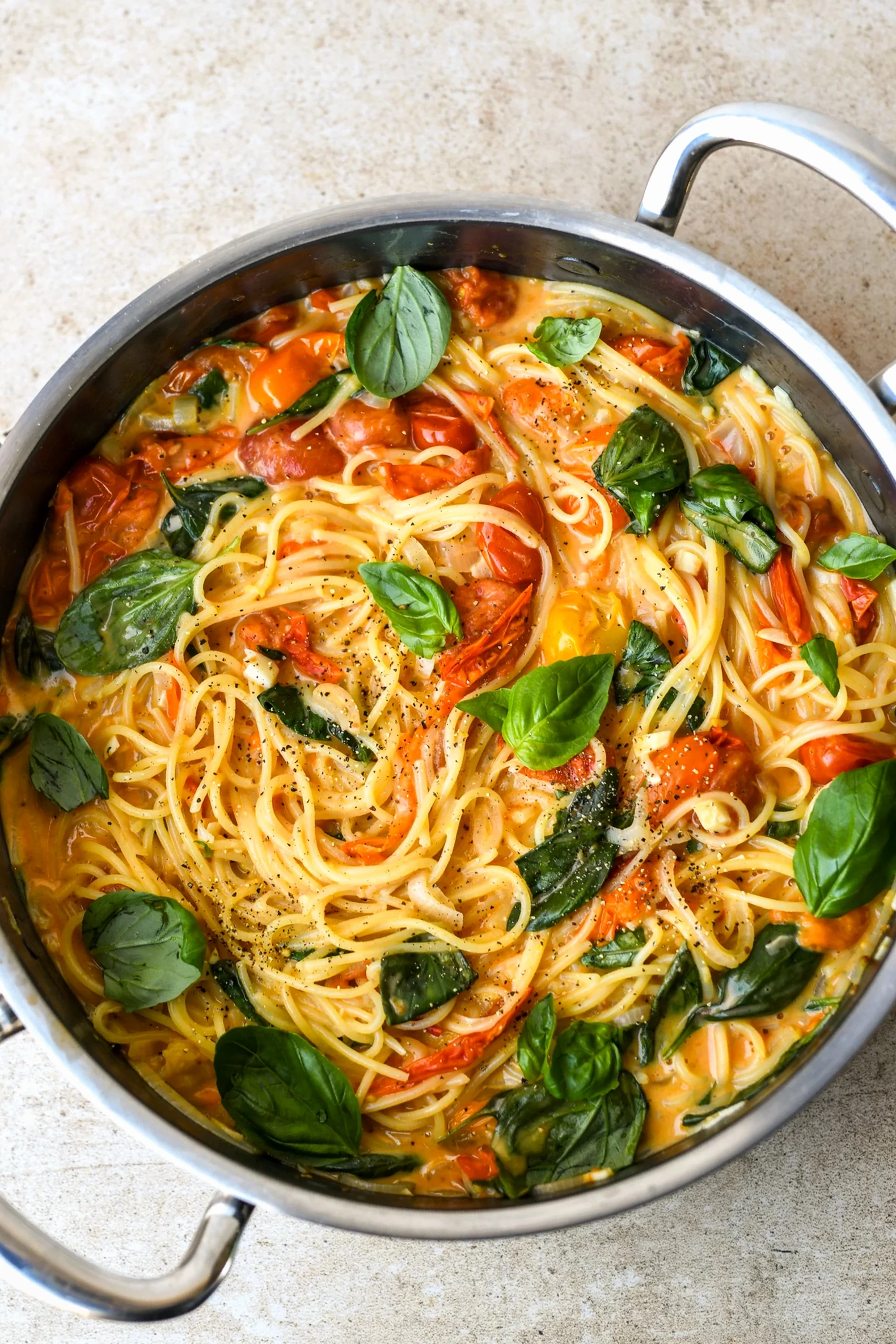
List of ingredients
- 2 tablespoons dairy-free butter or olive oil – provides the fat base for sautéing.
- 2 shallots, sliced (or 1 small onion) – adds a mild, sweet aromatic base.
- 4 cloves garlic, minced – adds depth and pungent flavor.
- 1 Lemon, zest and juice divided (approx. 2 tablespoons juice) – provides essential acidity and brightness.
- 1 lb grape or cherry tomatoes – these burst during cooking to create a natural sauce.
- 1 teaspoon light brown sugar – balances the acidity of the tomatoes and lemon.
- 1/4 teaspoon sea salt, plus more to taste – enhances all the savory elements.
- 1/3 cup alcohol-free white wine or extra vegetable broth – used to deglaze the pan and add complexity.
- 3 cups vegetable broth – the primary cooking liquid for the pasta.
- 7 oz spaghetti, dry weight – the main starch that thickens the sauce as it cooks.
- 1 handful fresh basil leaves or chopped baby spinach – adds freshness and color at the end.
- 1/3 cup full fat coconut cream or dairy-free crème fraiche – creates the rich, creamy texture.
- 1/4 teaspoon black pepper, freshly cracked – adds a sharp, spicy finish.
step-by-step instructions
- Sauté Aromatics: Melt the dairy-free butter in a pot over medium-high heat. While it melts, peel and slice the shallots, then add them to the pot. Add the grape tomatoes and minced garlic.
- Season and Soften: Stir in the lemon zest, sugar, and salt. Sauté the mixture for 2 minutes using a spatula or wooden spoon to prevent sticking.
- Deglaze and Liquid Addition: Pour in the alcohol-free white wine or extra broth and cook for one minute to deglaze the pan. Stir in the vegetable broth and add the spaghetti, pressing the noodles down as they soften to ensure they are fully submerged.
- Initial Boil: Cover the pot with a lid and bring the liquid to a boil over high heat. Once boiling, cook the pasta for 5 minutes.
- Simmer and Reduce: Remove the lid and reduce the heat to medium-high. Cook for another 4-5 minutes, stirring occasionally. For a softer pasta texture beyond al dente, cook for an additional 2 minutes.
- Final Emulsion: Remove the pot from the heat. Stir in the coconut cream, fresh basil (or spinach), and lemon juice. Taste the sauce and add more salt if necessary.
- Serving: Plate the pasta and garnish with freshly cracked black pepper, extra basil leaves, or a lemon wedge for added brightness.
Optimizing Your Ingredient Choices
Selecting the Right Dairy-Free Butter
For the best results, use a solid plant-based butter block rather than a spreadable margarine. Solid butters typically have a higher fat content and a more neutral flavor profile that mimics traditional butter. If you prefer not to use butter, olive oil is an excellent substitute, though you should reduce the quantity to one tablespoon to avoid a greasy sauce.
Shallot vs. Onion Substitutions
Shallots provide a delicate balance between garlic and onion, but a small yellow or white onion works well if shallots are unavailable. If using a standard onion, dice it finely to ensure it cooks at the same rate as the garlic. For an even quicker prep, you can use a small amount of onion powder, though you will lose the textural benefit of sautéed aromatics.
Tomato Varieties and Preparation
Grape and cherry tomatoes are recommended because their skins burst easily, releasing juices that emulsify with the starch. If you use larger tomatoes, such as Roma or vine tomatoes, chop them into small, uniform pieces to ensure they break down effectively. Avoid using canned diced tomatoes unless you reduce the vegetable broth by about half a cup to prevent the sauce from becoming too watery.
Choosing the Best Coconut Cream
Full-fat coconut cream is essential for the richness of this dish. Use the thick cream found at the top of a chilled can of coconut milk or buy a dedicated coconut cream product. If you find the coconut flavor too dominant, you can substitute it with an unsweetened dairy-free crème fraîche or a plant-based heavy cooking cream made from soy or oats.
Pasta Selection and Texture Control
Working with Different Pasta Shapes
While spaghetti is the standard for this recipe, linguine or fettuccine work equally well. If you use shorter pasta like penne or fusilli, the cooking time may vary slightly. Always monitor the liquid level, as different shapes absorb water at different rates.
Managing Gluten-Free Pasta
Gluten-free pasta often releases more or less starch than wheat-based pasta, which affects the sauce thickness. Brown rice pasta may require slightly more broth and an extra minute of cooking time. Corn-based pastas can become mushy quickly, so check for doneness 2 minutes before the timer ends.
Achieving the Perfect Al Dente Texture
To achieve a firm bite, stick strictly to the 4-5 minute uncovered cooking window. Because the pasta continues to cook slightly in the residual heat after being removed from the stove, pulling it off the heat just before it is fully soft is key. If you prefer a softer, more traditional style, extend the simmer by 2 minutes.
Pro Cooking Techniques for One-Pot Meals
The Importance of Deglazing
Adding the alcohol-free wine or extra broth after sautéing the vegetables is called deglazing. This process lifts the browned bits (fond) from the bottom of the pot, incorporating those concentrated flavors back into the sauce. This step is what gives the dish its professional, layered taste.
Preventing Pasta Clumping
As the spaghetti softens, it tends to curl and stick together. Use a wooden spoon to gently press the noodles down into the liquid as they loosen. Stirring occasionally during the uncovered simmer phase ensures the starch is distributed evenly and the noodles don’t fuse into a single mass.
Heat Management on Different Stoves
If you are using a high-powered induction cooktop, be careful with the ‘high heat’ setting to avoid scorching the bottom. In such cases, keep the heat at medium-high throughout the boiling process. For electric coil stoves, which retain heat longer, remove the pot from the burner immediately after the final stir to stop the cooking process.
Flavor Balancing and Variations
Adjusting the Acidity
The combination of lemon juice and tomatoes provides a sharp contrast to the creamy coconut. If the sauce feels too tart, add a pinch more brown sugar to mellow the flavor. Conversely, if the sauce tastes too heavy or bland, an extra squeeze of fresh lemon juice at the very end will brighten the entire dish.
Adding Spicy Elements
For those who prefer a kick, add a pinch of cayenne pepper or half a teaspoon of red chili flakes during the sautéing phase. This infuses the oil with heat, which then permeates the entire sauce. You can also stir in a teaspoon of sriracha or harissa for a smokier, spicier profile.
Incorporating Other Greenery
While basil is classic, baby spinach is a great alternative that adds more nutritional value. Kale can also be used, but it should be added during the final 2 minutes of the simmer phase because it takes longer to wilt than spinach or basil.
Storage, Reheating, and Make-Ahead Tips
Storing Leftovers Safely
Transfer any remaining pasta to an airtight container once it has cooled slightly. This dish keeps well in the refrigerator for up to three days. Because the pasta continues to absorb the sauce while stored, you may notice it looks much thicker when you open the container the next day.
The Best Way to Reheat
To restore the creamy consistency, avoid the microwave if possible. Instead, place the pasta in a small pan over medium heat and add a splash of water, vegetable broth, or a teaspoon of olive oil. Stir gently as it heats to emulsify the coconut cream back into a smooth sauce.
Preparing Ingredients in Advance
You can save time on busy weeknights by prepping the ‘aromatic mix’ in advance. Slice the shallots, mince the garlic, and zest the lemon, then store them together in a small container. The tomatoes can also be washed and prepped, though they are best added fresh to the pan.
Troubleshooting Common Issues
What to Do if the Sauce is Too Thin
If the sauce hasn’t thickened enough by the end of the cooking time, simmer the pasta for an additional 2-3 minutes without the lid. This allows more liquid to evaporate and concentrates the starch. You can also stir in an extra tablespoon of coconut cream to increase the viscosity.
Solving the Problem of Gummy Pasta
Gummy pasta usually occurs from overstirring or overcooking. Stir only occasionally during the simmer phase rather than constantly. If the pasta becomes too soft, the best solution is to serve it immediately and add a bit of fresh lemon juice to cut through the starchiness.
Dealing with a Strong Coconut Taste
If the coconut flavor is too prominent for your liking, increase the amount of lemon juice and add a pinch more salt. The acidity and salinity help neutralize the sweetness of the coconut, shifting the flavor profile back toward a savory tomato cream sauce.
Frequently Asked Questions
Can I use water instead of vegetable broth?
Yes, you can use water, but you will lose a significant amount of savory depth. If you use water, increase the amount of sea salt by a quarter teaspoon and consider adding a teaspoon of nutritional yeast or a pinch of mushroom powder to replicate the umami of the broth.
Which lemon variety is best for this recipe?
Standard Eureka or Lisbon lemons are ideal for their balanced acidity. If you have access to Meyer lemons, they are a wonderful choice as they are sweeter and more floral, though you may want to slightly reduce the amount of brown sugar used in the recipe.
How do I prevent the coconut cream from separating?
To prevent the cream from breaking or separating, ensure you remove the pot from the heat before stirring it in. Adding the cream to a boiling liquid can sometimes cause the fats to separate, resulting in a grainy texture rather than a smooth emulsion.
} Print
Quick 20-Minute One Pot Creamy Tomato Pasta
- Total Time: 20 minutes
- Yield: 2 servings 1x
- Diet: Vegan
Description
A delicious 1-Pot Pasta recipe you can make in 20 minutes! This dish is creamy, flavorful, and so easy to make. It’s also dairy-free and completely plant-based.
Ingredients
- 2 tablespoons dairy-free butter (or olive oil)
- 2 shallots, sliced
- 4 cloves garlic, minced
- 1 lemon (zest and juice, divided)
- 1 lb grape tomatoes
- 1 teaspoon light brown sugar
- 1/4 teaspoon sea salt
- 1/3 cup alcohol-free white wine
- 3 cups vegetable broth
- 7 oz spaghetti
- 1 handful fresh basil leaves
- 1/3 cup full fat coconut cream
- 1/4 teaspoon black pepper
Instructions
- Step 1: Melt the dairy-free butter in a pot over medium high heat. While the butter is melting, peel and slice the shallots, then add them to the pot. Next, add the grape tomatoes, and minced garlic.
- Step 2: Add the lemon zest (set the lemon juice aside), sugar, and salt, then sauté for 2 minutes (stir using a spatula or wooden spoon.)
- Step 3: Add the alcohol-free white wine and cook for another minute to deglaze, then add the broth. Finally, add the spaghetti (be sure to press them down once they begin to soften, so they’re fully submerged.)
- Step 4: Cover with a lid, bring to a boil over high heat, and cook the pasta for 5 minutes.
- Step 5: Remove the lid and reduce the heat to medium-high, then cook for another 4-5 minutes, stirring occasionally to keep the pasta from sticking to the pot.
- Step 6: Once ready, remove the pot from the heat and mix in the coconut cream, basil, and lemon juice. Taste test and add more salt as needed.
- Step 7: Serve with freshly cracked pepper.
Notes
This recipe makes 2 large or 3-4 smaller servings. For a thicker sauce, use up to 1/2 cup less broth; for a thinner sauce, use up to 1/2 cup more broth.
- Prep Time: 5 minutes
- Cook Time: 15 minutes
- Category: Main Course
- Method: One Pot
- Cuisine: Italian
Nutrition
- Serving Size: 1 serving
- Calories: 610 kcal
- Sugar: 7 g
- Sodium: 880 mg
- Fat: 23 g
- Saturated Fat: 16 g
- Unsaturated Fat: 7 g
- Trans Fat: 0 g
- Carbohydrates: 74 g
- Fiber: 6 g
- Protein: 14 g
- Cholesterol: 0 mg