
This vegan creamy pasta is a rich and satisfying meal that comes together in just 20 minutes. It uses simple plant-based ingredients to create a velvety sauce that clings perfectly to any noodle shape.
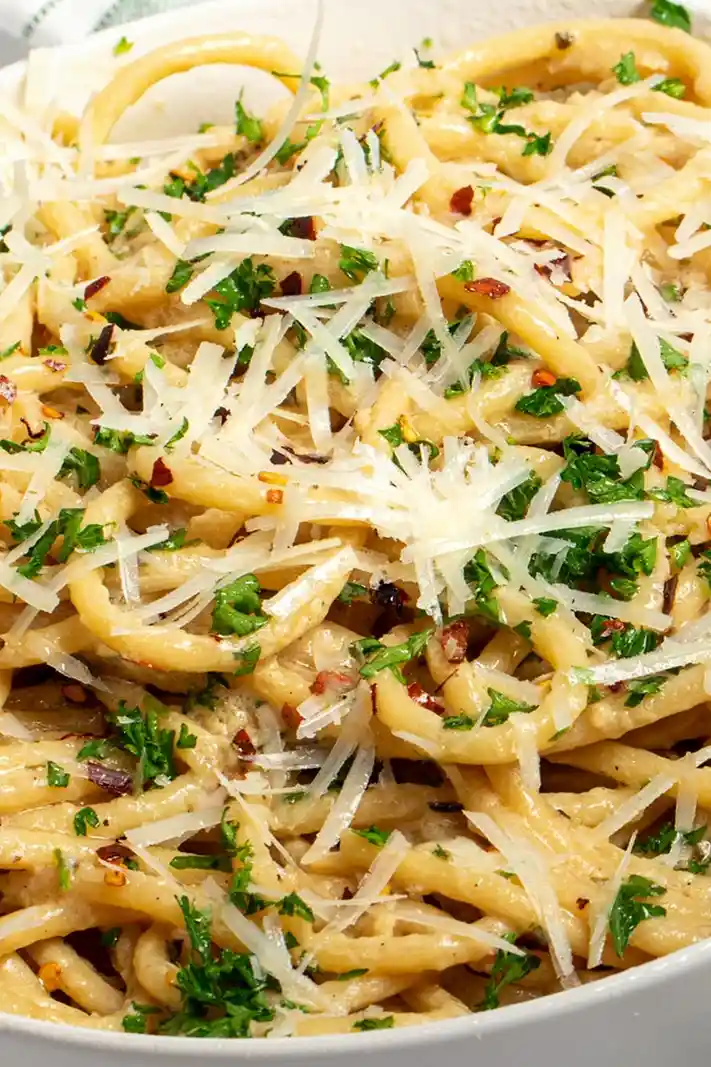
List of ingredients
- 1 pound (454 grams or 16 ounces) dry uncooked pasta, such as bucatini – provides the base of the dish.
- 4 tablespoons vegan butter or 2-3 tablespoons vegetable broth – used for sautéing aromatics.
- 1 large shallot, very finely diced (or ½ medium yellow or sweet onion) – adds a delicate onion flavor.
- 6-8 cloves garlic, peeled and minced – provides a strong, savory aromatic punch.
- 1 ½ cups thick, creamy unsweetened non-dairy milk – creates the creamy body of the sauce.
- ¾ cup pasta water – reserved from the cooking pot to bind the sauce.
- ½ cup vegan Parmesan cheese, finely grated – adds saltiness and thickness.
- 1 teaspoon agave or organic sugar (optional) – balances the savory flavors.
- 3 tablespoons reduced sodium soy sauce or gluten-free tamari (optional) – adds depth and umami.
- ½ teaspoon sea salt – adjusts seasoning to taste.
- ½ teaspoon fresh cracked black pepper – provides a subtle spicy kick.
- 1 teaspoon dried oregano – adds an earthy herbal note.
- ½ teaspoon or more red pepper flakes (optional) – introduces a hint of heat.
- ¼ cup fresh parsley, finely chopped (optional) – used for a fresh finish and garnish.
step-by-step instructions
- Cook the pasta: Prepare your chosen pasta according to the specific directions on the package.
- Reserve pasta water: Before draining the noodles, place a glass measuring cup or bowl in the sink beneath the colander. Collect and set aside approximately ¾ cup of the starchy cooking water.
- Begin the sauce: While the pasta is about halfway through its cooking time, or once it is finished, start the sauce process.
- Sauté aromatics: Melt vegan butter in a large nonstick skillet or pot over medium-high heat. Add the diced shallots and sauté for 1-2 minutes, then stir in the minced garlic and sauté for another minute until fragrant. For an oil-free version, use 2-3 tablespoons of vegetable broth instead of butter, adding extra splashes if the vegetables stick.
- Simmer the milk: Lower the heat to medium and stir in the thick non-dairy milk. Bring the mixture to a gentle simmer with small bubbles, avoiding a full boil, and let it cook for 3-5 minutes until it thickens slightly.
- Season the sauce: Stir in the reserved pasta water, salt, black pepper, oregano, red pepper flakes, and soy sauce (if using). Allow the sauce to simmer for an additional 2-3 minutes to meld the flavors.
- Combine and finish: Remove the skillet from the heat and let it rest for a minute or two. Stir in the finely grated vegan parmesan until fully melted, then toss in the cooked pasta.
- Garnish and serve: Sprinkle with finely chopped fresh parsley and serve immediately.
Selecting the Best Pasta Shape
The Benefits of Bucatini
Bucatini is an excellent choice for this recipe because it is a thick, hollow spaghetti. The hole in the center allows a small amount of sauce to enter the noodle, ensuring every bite is flavorful. Its hearty texture stands up well to the richness of the creamy sauce.
Using Short-Cut Pasta
Short pasta shapes like penne, fusilli, or rigatoni are great alternatives. The ridges and spirals on these noodles are designed to trap thick sauces, making them ideal for this creamy blend. They are also easier to toss and serve for large groups.
Choosing Gluten-Free Noodles
If you prefer gluten-free options, a blend of brown rice and quinoa pasta often maintains the best texture. Legume-based pastas also work well but may absorb more sauce than wheat-based versions. Always cook gluten-free pasta exactly to the package instructions to avoid mushiness.
Optimizing Non-Dairy Milk for Creaminess
Using Full-Fat Oat Milk
Oat milk is highly recommended due to its natural creaminess and neutral flavor profile. Ensure you use an unsweetened version to avoid adding unwanted sugar to a savory dish. Full-fat options provide the best emulsion for a thick sauce.
Coconut Milk for Added Richness
Canned full-fat coconut milk creates an incredibly luxurious and thick sauce. While it adds a slight coconut flavor, the addition of garlic, soy sauce, and parmesan usually masks it. Use the thick cream from the top of the can for the most intense creaminess.
Cashew Milk as a Neutral Base
Homemade cashew milk, made by blending soaked cashews with water, offers a very rich and buttery consistency. It is less likely to separate during the simmering process compared to thinner milks. Store-bought cashew milk should be the unsweetened, creamy variety.
Thickening Thin Milks with a Slurry
If you only have thin almond milk or rice milk, you can use a cornstarch or arrowroot slurry. Whisk 1 tablespoon of the thickener with 2 tablespoons of cold water until smooth. Pour this mixture into the simmering sauce and whisk constantly until the sauce reaches your desired thickness.
Flavor Enhancements and Customizations
Integrating Sautéed Mushrooms
Adding mushrooms provides a meaty texture and an earthy flavor that complements the garlic. Sauté sliced cremini or shiitake mushrooms in the skillet before adding the shallots. Cook them until they are golden brown to maximize their savory impact.
Adding Fresh Spinach or Kale
Fresh leafy greens can be stirred in at the very end of the cooking process. Add two cups of baby spinach or chopped kale just after removing the sauce from the heat. The residual heat will wilt the greens without overcooking them.
Incorporating Roasted Broccoli
Roasted broccoli florets add a nice charred flavor and a healthy element to the meal. Roast them separately in the oven with a bit of olive oil and salt. Toss the roasted florets into the pasta just before serving to keep them crisp.
Substituting Soy Sauce for Umami
While soy sauce adds depth, you can use gluten-free tamari or coconut aminos for a similar effect. If you prefer not to use these, a teaspoon of nutritional yeast or a pinch of mushroom powder can provide that same savory umami quality. Adjust the salt levels accordingly.
Adjusting the Heat Level
The red pepper flakes provide a mild warmth, but this can be adjusted based on preference. For a spicier version, increase the flakes to a full teaspoon or add a dash of sriracha. For those who prefer no heat, simply omit the red pepper flakes entirely.
Mastering the Sauce Texture
The Importance of Starchy Pasta Water
Pasta water contains starch released from the noodles during the boiling process. When added to the sauce, this starch acts as an emulsifier, helping the fat from the butter and milk bind together. This results in a glossy sauce that sticks to the pasta rather than pooling at the bottom of the plate.
Preventing the Sauce from Separating
To prevent the sauce from breaking, avoid boiling the non-dairy milk aggressively. Keep the heat at a steady, gentle simmer with small bubbles. Adding the vegan parmesan after removing the pan from the heat also helps the cheese melt smoothly without clumping.
Achieving the Right Consistency
If the sauce feels too thick after adding the cheese, stir in an extra tablespoon of pasta water. Conversely, if it is too thin, let it simmer for an extra two minutes before tossing with the noodles. The sauce will naturally thicken slightly as it cools and coats the pasta.
Serving and Presentation Ideas
Pairing with Roasted Vegetables
This pasta pairs exceptionally well with roasted brussels sprouts or asparagus. The bitterness of these vegetables cuts through the richness of the creamy sauce. Serve them on the side or toss them directly into the pasta for a complete meal.
Adding Plant-Based Proteins
To make the dish more filling, top the pasta with crispy tofu cubes or seitan chicken. Sauté these proteins separately until browned and place them on top of the plated pasta. This adds a contrasting texture to the soft noodles and sauce.
Fresh Herb Garnishes
While parsley is the primary suggestion, other fresh herbs work beautifully. Fresh basil leaves or chopped chives add a bright, aromatic finish. A sprinkle of fresh chives specifically complements the shallots and garlic in the sauce.
Storage and Reheating Tips
Refrigeration Guidelines
Store leftover pasta in an airtight glass container in the refrigerator for 3 to 4 days. Glass containers are preferable as they do not absorb odors and are easier to heat. Keep in mind that the pasta will continue to absorb the sauce while stored.
Preventing Dryness During Storage
Because the noodles absorb the liquid over time, the pasta may seem dry when you first take it out of the fridge. Do not worry, as this is normal for creamy pasta dishes. You can restore the creaminess by adding a small amount of liquid during the reheating process.
The Best Way to Reheat
For the best results, reheat the pasta in a skillet over low heat. Add a splash of non-dairy milk or water to loosen the sauce and stir gently until heated through. This method prevents the sauce from becoming oily or clumping, which can happen in a microwave.
Troubleshooting Common Issues
Fixing a Sauce That is Too Thin
If your sauce remains watery after simmering, you can add more finely grated vegan parmesan or a small amount of nutritional yeast. Alternatively, whisk in a tiny bit more cornstarch slurry. Simmer for another minute to ensure the thickener is fully activated.
Correcting Overly Salty Sauce
If the soy sauce or vegan parmesan makes the dish too salty, add a squeeze of fresh lemon juice. The acidity helps neutralize the saltiness and brightens the overall flavor profile. You can also add a bit more unsweetened non-dairy milk to dilute the salt concentration.
Managing Burnt Garlic
Garlic burns quickly and can turn the entire sauce bitter. To avoid this, ensure the heat is medium-high for the shallots but lower it slightly before adding the garlic. If the garlic turns dark brown or black, it is best to start the sauce over to ensure a clean taste.
Frequently Asked Questions
Can I use nutritional yeast instead of vegan parmesan?
Yes, nutritional yeast is a great alternative. Use about 3-4 tablespoons of nutritional yeast to replace the half cup of vegan parmesan. It provides a similar nutty, cheesy flavor, though the sauce may be slightly thinner.
How do I make this recipe completely oil-free?
You can make this oil-free by substituting the vegan butter with vegetable broth. Use 2-3 tablespoons of broth to sauté the shallots and garlic, adding more as needed to prevent sticking. Use a high-quality non-stick skillet for the best results.
Which vegan butter works best for this sauce?
Butters that are based on coconut oil or olive oil generally melt well and provide a rich flavor. Avoid margarine-style spreads that have a very high water content, as they may not sauté the aromatics as effectively.
Is this recipe freezer-friendly?
It is generally not recommended to freeze creamy pasta as the emulsion can break upon thawing. However, you can freeze the cooked pasta separately and make a fresh batch of sauce when you are ready to eat. If you must freeze the whole dish, reheat it very slowly on the stove with extra milk.
Print
Creamy Vegan Pasta with Garlic and Shallots
- Total Time: 20 minutes
- Yield: 10 cups 1x
- Diet: Vegan
Description
Ultra luscious and flavorful, this Vegan Creamy Pasta takes only 20 minutes to make with simple ingredients you to have in your kitchen.
Ingredients
- 1 pound dry uncooked pasta
- 4 tablespoons vegan butter
- 1 large shallot, very finely diced
- 8 cloves garlic, minced
- 1 ½ cups thick, creamy unsweetened non-dairy milk
- ¾ cup pasta water
- ½ cup vegan Parmesan cheese, finely grated
- 1 teaspoon agave or organic sugar
- 3 tablespoons reduced sodium soy sauce
- ½ teaspoon sea salt
- ½ teaspoon fresh cracked black pepper
- 1 teaspoon dried oregano
- ½ teaspoon red pepper flakes
- ¼ cup fresh parsley, finely chopped
Instructions
- Make pasta: Start by making your pasta according to package directions.
- Reserve water: Before you drain the cooked pasta, save about ¾ cup of the pasta water.
- Saute aromatics: Melt the vegan butter in a large nonstick skillet or pot over medium high heat; add shallots and saute for 1-2 minutes, then add garlic and saute for another minute.
- Simmer milk: Reduce the heat to medium, add in the thick non-dairy milk, stir, and simmer for 3-5 minutes until the sauce has thickened.
- Season: Add reserved pasta water, salt, pepper, oregano, red pepper flakes, and reduced sodium soy sauce; simmer for another 2-3 minutes.
- Assemble: Remove from heat, let sit for a minute or two, stir in the vegan parmesan until melted, and toss with pasta. Garnish with fresh parsley.
Notes
Refrigerate leftovers for 3-4 days in an airtight container. For an oil-free version, saute the shallot and garlic in 2-3 tablespoons of vegetable broth.
- Prep Time: 5 minutes
- Cook Time: 15 minutes
- Category: Entree
- Method: Stove top
- Cuisine: American
Nutrition
- Serving Size: 1 cup
- Calories: 225 kcal
- Sugar: 3 g
- Sodium: 450 mg
- Fat: 7 g
- Saturated Fat: 3 g
- Unsaturated Fat: 4 g
- Trans Fat: 0 g
- Carbohydrates: 32 g
- Fiber: 3 g
- Protein: 8 g
- Cholesterol: 0 mg