
This nutrient-dense pasta salad combines fresh vegetables with a creamy, plant-based avocado dressing. It is a refreshing option for meal prep or outdoor gatherings that provides a balance of healthy fats and proteins.
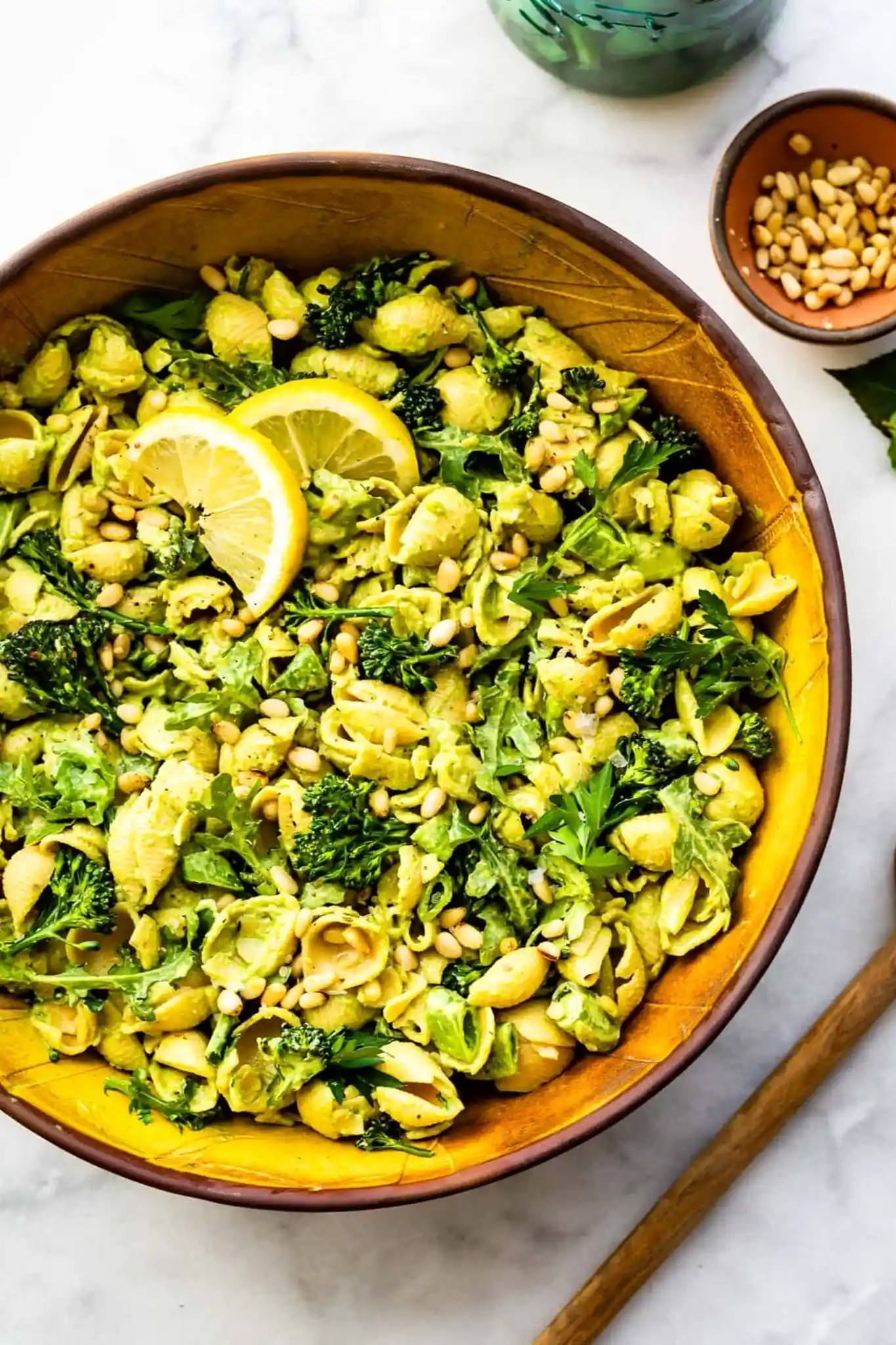
List of ingredients
- 1/2 ripe medium avocado (50 grams) – provides creaminess and healthy fats.
- 1/2 cup chopped green onion (green portion) – adds a mild onion flavor.
- 1/3 cup torn flat leaf parsley (some stem is fine) – adds freshness.
- 3 Tablespoons torn leafy herbs (such as basil, dill, mint, and/or cilantro) – enhances the herbaceous profile.
- 2 Tablespoons chopped chives – adds a delicate onion taste.
- 1/3 cup canned coconut milk or light coconut milk – serves as the creamy base.
- 1 teaspoon minced garlic or 2 garlic cloves – provides pungent depth.
- 2 teaspoon lemon juice – adds necessary acidity.
- 2 teaspoons tamari (gluten-free soy sauce) or coconut aminos – provides umami saltiness.
- 1/4 teaspoon kosher salt – enhances overall flavors.
- 1/4 teaspoon black pepper – adds a subtle spice.
- 1 to 3 Tablespoons extra virgin olive oil (optional) – used to thin the dressing consistency.
- 14 to 16 ounces gluten free pasta of choice – the main base of the salad.
- 1 Tablespoon olive oil – prevents pasta from sticking.
- 1 teaspoon lemon juice – brightens the pasta flavor.
- 3/4 cup vegan goddess dressing – the prepared sauce from the ingredients above.
- 1 cup chopped snap peas – adds a crisp texture.
- 2 cups chopped broccoli florets – adds volume and crunch.
- Handful baby spinach or arugula – adds a fresh leafy element.
- Sea salt and black pepper, to taste – for final seasoning.
- 3 Tablespoons toasted pine nuts or hemp seeds – used for garnish and added protein.
- Lemon slices – used for final presentation.
step-by-step instructions
- Prepare the dressing: Combine the avocado, green onion, parsley, leafy herbs, coconut milk, garlic, lemon juice, and tamari in a food processor or blender. Process until the mixture is smooth and fully combined.
- Season the sauce: Add the salt and pepper to the blender and process again. Taste the dressing and adjust the seasonings as needed.
- Adjust consistency: If the dressing is too thick, drizzle in olive oil one tablespoon at a time. Blend after each addition until the desired consistency is reached. Set the dressing aside.
- Cook the pasta: Boil the gluten-free pasta according to the package instructions until it reaches an al dente texture. Strain the pasta and transfer it to a large mixing bowl.
- Coat the warm pasta: Drizzle one tablespoon of olive oil and one teaspoon of lemon juice over the warm pasta. Toss thoroughly to ensure every piece is evenly coated.
- Combine ingredients: Add the chopped snap peas, broccoli florets, and baby spinach or arugula to the bowl. Pour in 3/4 cup of the green goddess dressing and toss until all ingredients are well coated.
- Final seasoning: Add sea salt and black pepper to taste.
- Garnish and chill: Top the salad with toasted pine nuts or hemp seeds and place lemon slices on top. Chill in the refrigerator until ready to serve.
- Store leftovers: Place any remaining salad in an airtight container and keep it refrigerated for up to 4 days.
Optimizing Gluten-Free Pasta Selection
Using Chickpea Pasta for Higher Protein
Chickpea pasta is an excellent choice for this recipe because it significantly increases the protein and fiber content. It provides a heartier texture that holds up well during the chilling process. Be careful not to overcook it, as legume pastas can become mushy more quickly than grain-based options.
Selecting Brown Rice Pasta for Smooth Texture
Brown rice pasta offers a more traditional pasta mouthfeel and a neutral flavor profile. It allows the taste of the green goddess dressing to remain the primary focus of the dish. Ensure you rinse the pasta after draining to remove excess starch and prevent clumping.
Using Corn-Based Pasta for Firmness
Corn pasta tends to maintain a firmer structure, which is ideal for salads that will sit for several hours. It resists absorbing the dressing as quickly as other gluten-free varieties. This makes it a superior choice for picnics or potlucks.
Choosing the Best Pasta Shape
Opt for shapes with ridges or hollow centers, such as rotini, shells, or orecchiette. These shapes capture more of the creamy dressing in every bite. Avoid long noodles like spaghetti, as they are more difficult to toss and serve in a salad format.
Customizing the Green Goddess Dressing
Substituting Tahini for Avocado
If avocados are unavailable, substitute 1/4 to 1/3 cup of creamy tahini. Tahini provides a rich, nutty flavor and a similarly thick consistency. This substitution also makes the dressing more stable and less prone to oxidation over time.
Managing Dressing Thickness
The thickness of the dressing depends on the ripeness of the avocado and the brand of coconut milk. Use extra virgin olive oil to thin the sauce if it feels too heavy. Add the oil in small increments to avoid breaking the emulsion.
Replacing Tamari with Coconut Aminos
For a soy-free alternative, use coconut aminos instead of tamari. Coconut aminos are slightly sweeter and lower in sodium, which may require a small increase in added salt. Both options maintain the necessary umami depth of the dressing.
Using Different Leafy Herbs
The herbaceous profile can be shifted by varying the herb blend. Increasing the amount of mint provides a cooling effect, while more basil adds a classic sweetness. Fresh cilantro is ideal for those who prefer a zesty, bright flavor.
Vegetable Variations and Additions
Incorporating Blanched Asparagus
Fresh asparagus adds a sophisticated crunch and deep green color to the salad. Briefly blanch the spears in boiling water for 60 seconds before shocking them in ice water. Cut them into one-inch pieces before tossing them with the pasta.
Adding Cherry Tomatoes for Acidity
Halved cherry tomatoes introduce a burst of acidity and sweetness that cuts through the richness of the avocado. They provide a color contrast that makes the dish more visually appealing. Add them just before serving to keep them from releasing too much juice.
Using Baby Arugula for Peppery Notes
While baby spinach is mild, baby arugula adds a sharp, peppery flavor. This can balance the creaminess of the coconut milk and avocado. Use a mixture of both greens for a complex flavor profile.
Adding Sliced Cucumber for Hydration
English cucumbers add extra hydration and a refreshing crispness. Remove the seeds before slicing to prevent the salad from becoming watery. This is especially useful for salads served in high-heat environments.
Serving and Pairing Suggestions
Serving as a Complete Main Course
Due to the combination of gluten-free pasta, avocado, and seeds, this salad can serve as a full meal. To increase the satiety, add cooked chickpeas or cubed firm tofu. These additions provide extra plant-based protein and substance.
Pairing with Vegan Burgers
This salad serves as a bright, acidic accompaniment to rich vegan burgers. The fresh herbs and lemon juice cleanse the palate between bites of a savory patty. Serve it chilled on the side for the best contrast.
Serving as a Side for Wraps
Pair the pasta salad with fresh vegetable wraps or hummus-based sandwiches. The creaminess of the dressing complements a variety of wrap fillings. It works well as a side dish for a light lunch.
Presentation for Outdoor Events
For picnics, serve the salad in a large glass bowl to showcase the vibrant green colors. Garnish with extra lemon slices and a sprinkle of fresh herbs right before presenting. Keep the bowl nestled in a larger container of ice to maintain food safety.
Storage and Preservation Techniques
Storing Components Separately
To maximize freshness, store the cooked pasta, the chopped vegetables, and the dressing in three separate containers. Combine them only when you are ready to eat. This prevents the pasta from absorbing all the sauce and becoming dry.
Preventing Avocado Oxidation
The lemon juice in the dressing helps slow down the browning of the avocado. To further prevent oxidation, press a piece of plastic wrap directly onto the surface of the dressing. This eliminates the air contact that causes discoloration.
Refrigeration Guidelines
Keep the assembled salad in an airtight glass container in the coldest part of the refrigerator. Use the salad within four days for optimal taste and texture. Stir the salad gently before serving to redistribute the dressing.
Freezing and Thawing the Salad
While fresh vegetables do not freeze well, the cooked pasta can be frozen. Avoid freezing the assembled salad, as the dressing will separate and the greens will wilt. Thaw frozen pasta in the refrigerator overnight before adding fresh ingredients.
Troubleshooting Common Issues
Fixing Separated Dressing
If the dressing separates after refrigeration, do not discard it. Give it a vigorous shake in a jar or whisk it quickly with a fork. Adding a teaspoon of warm water or olive oil can help re-emulsify the mixture.
Preventing Pasta from Clumping
Gluten-free pasta often sticks together as it cools. The addition of olive oil and lemon juice while the pasta is still warm creates a barrier. This ensures the noodles remain individual and easy to toss.
Managing Overcooked Vegetables
Avoid cooking the broccoli or snap peas if you prefer a raw crunch. If you choose to steam them, undercook them slightly so they remain firm. Overcooked vegetables will release moisture and make the dressing runny.
Balancing Excessive Saltiness
If the tamari or salt makes the dish too savory, add an extra squeeze of fresh lemon juice. The acidity helps neutralize the perception of salt. Alternatively, add more baby spinach to dilute the salt concentration.
Frequently Asked Questions
Can I make this recipe nut-free?
Yes, simply replace the toasted pine nuts with hemp seeds or toasted sunflower seeds. Both provide a similar nutty flavor and healthy fats without using tree nuts.
How do I keep the greens from wilting?
Add the baby spinach or arugula at the very last moment before serving. If the salad is for a party, keep the greens in a separate bowl and toss them in just before the guests arrive.
Which coconut milk is best for this dressing?
Full-fat canned coconut milk provides the creamiest results. Light coconut milk can be used for a lower-calorie version, though the dressing will be slightly thinner.
Can I use a store-bought vegan dressing?
Yes, you can use any store-bought vegan green goddess or pesto dressing. If using a store-bought version, check the labels to ensure it is gluten-free if necessary.
Is this salad suitable for meal prep?
Yes, it is excellent for meal prep. Follow the advice of storing the dressing separately to ensure the pasta and vegetables stay fresh throughout the week.
Print
Creamy Green Goddess Vegan Pasta Salad (Gluten-Free)
- Total Time: 20 minutes
- Yield: 6 to 8 servings 1x
- Diet: Vegan, Gluten Free
Description
Make this gluten-free green goddess pasta salad recipe with fresh veggies and a homemade dressing for a flavorful vegan side dish or main course!
Ingredients
- 1/2 ripe medium avocado (50 grams)
- 1/2 cup chopped green onion (green portion)
- 1/3 cup torn flat leaf parsley
- 3 Tablespoons torn leafy herbs (such as basil, dill, mint, and/or cilantro)
- 2 Tablespoons chopped chives
- 1/3 cup canned coconut milk or light coconut milk
- 1 teaspoon minced garlic or 2 garlic cloves
- 2 teaspoon lemon juice
- 2 teaspoons tamari or coconut aminos
- 1/4 teaspoon kosher salt
- 1/4 teaspoon black pepper
- 1 to 3 Tablespoons extra virgin olive oil (optional)
- 14 to 16 ounces gluten free pasta of choice
- 1 Tablespoon olive oil
- 1 teaspoon lemon juice
- 1 cup chopped snap peas
- 2 cups chopped broccoli florets
- Handful baby spinach or arugula
- Sea salt and black pepper, to taste
- 3 Tablespoons toasted pine nuts or hemp seeds to garnish
- Lemon slices to garnish
Instructions
- Prepare Dressing: Place the avocado, green onion, parsley, chopped herbs, coconut milk, garlic, lemon juice, and tamari in the bowl of a food processor or blender; process until smooth, then add salt and pepper and blend again.
- Adjust Consistency: For thinner dressing, drizzle in the olive oil, 1 Tablespoon at a time, and blend until desired consistency is formed.
- Cook Pasta: Cook the pasta according to package instructions; once cooked to al dente, strain and add to a large bowl, then drizzle olive oil and lemon juice over the warm pasta and toss to evenly coat.
- Assemble Salad: Add the chopped snap peas, broccoli, spinach, and 3/4 cup green goddess dressing to the bowl of pasta and toss to coat evenly; add sea salt and black pepper to taste.
- Finish: Garnish with pine nuts, hemp seeds, and/or lemon slices, then chill until ready to serve.
Notes
Substitute Tips: 1/4 to 1/3 cup creamy tahini may be substituted in place of avocado in the dressing for a richer flavor. The dressing will thicken once chilled in the fridge.
- Prep Time: 10 minutes
- Cook Time: 10 minutes
- Category: side dish
- Method: stove top
- Cuisine: American
Nutrition
- Serving Size: 1 serving
- Calories: 311 kcal
- Sugar: 4.2 g
- Sodium: 305.3 mg
- Fat: 13.3 g
- Saturated Fat: 1.3 g
- Unsaturated Fat: 12 g
- Trans Fat: 0 g
- Carbohydrates: 39 g
- Fiber: 6.8 g
- Protein: 14.6 g
- Cholesterol: 0 mg