
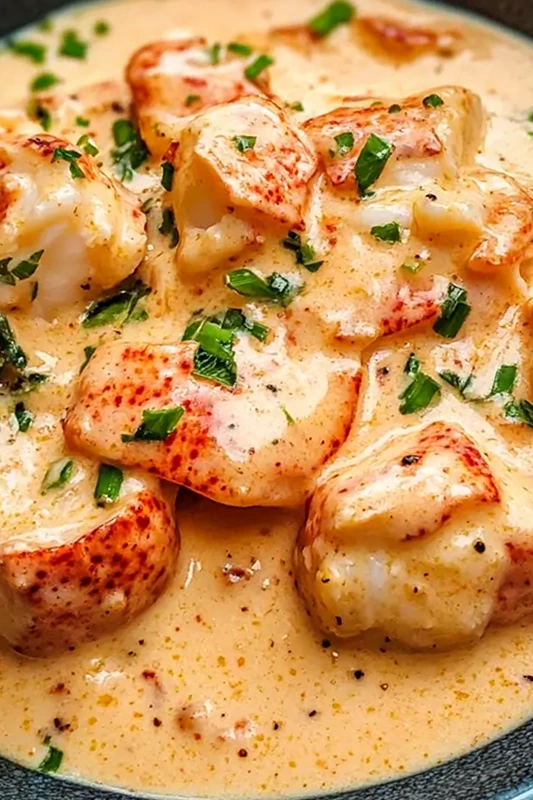
This rich and velvety lobster sauce is a gourmet addition that transforms simple ingredients into a luxury meal. It is incredibly versatile, pairing perfectly with pasta, seafood, or roasted vegetables for a restaurant-quality experience at home.
List of ingredients
- 2 lobster tails (fresh or frozen) – provides the core sweet seafood flavor.
- 2 tbsp butter – creates a rich, silky base.
- 1/2 cup heavy cream – adds thickness and decadence.
- 1/4 cup lobster broth (or chicken broth) – enhances the savory depth.
- 1/4 cup white grape juice mixed with a squeeze of lemon (non-alcoholic alternative to wine) – adds essential acidity.
- 1 small shallot or garlic (minced, optional) – provides a subtle aromatic foundation.
- 1 tsp Worcestershire sauce – introduces a savory, salty kick.
- 1 tsp mustard – adds depth and a slight tang.
- 1 tsp fresh tarragon (chopped) – provides a delicate, anise-like herbal note.
- 1 tbsp lemon juice – brightens the overall flavor profile.
- Salt and pepper to taste – essential for balancing all seasonings.
step-by-step instructions
- Cook the Lobster: Steam or boil the lobster tails for 5-7 minutes until the shells are bright red and the meat is opaque. Carefully remove the meat from the shells and chop it into bite-sized pieces.
- Make the Sauce: Melt butter in a large skillet over medium heat. If using, sauté the minced shallot or garlic until softened. Stir in the heavy cream, lobster broth, and the white grape juice mixture, then simmer for 5-7 minutes until the liquid thickens.
- Add Seasonings: Stir in the Worcestershire sauce, mustard, salt, and pepper. Allow the sauce to simmer for another 2-3 minutes to meld the flavors.
- Combine Ingredients: Gently fold the chopped lobster meat into the sauce. Cook for an additional 2-3 minutes, then adjust the final taste with more salt, pepper, or lemon juice as needed.
- Garnish and Serve: Garnish the sauce with chopped tarragon or fresh parsley. Serve immediately over your choice of pasta, grilled fish, or steamed vegetables.
Ideal Serving Pairings
Pairing with Fettuccine or Linguine
Fettuccine and linguine are the ideal pasta choices because their wide or flat surfaces provide more area for the heavy cream sauce to adhere. When tossing the pasta in the sauce, add a small splash of the reserved pasta water to help the sauce emulsify and coat the noodles evenly. For an added layer of flavor, sprinkle freshly grated Parmesan cheese over the final dish to introduce a sharp, salty contrast to the sweet lobster meat.
Serving over Pan-Seared White Fish
This sauce works beautifully as a topping for mild white fish such as halibut, cod, or sea bass. Pan-sear the fish in butter until the edges are golden and the center is just cooked through, then spoon the creamy lobster sauce over the top. The richness of the cream complements the lean protein of the fish without overpowering its natural delicacy.
Using it as a Topping for Roasted Vegetables
Elevate a side dish by drizzling this sauce over roasted asparagus, Brussels sprouts, or steamed broccoli. The buttery notes of the sauce balance the earthiness of the vegetables, while the lemon juice in the recipe cuts through the richness. This is an excellent way to make a vegetable-forward meal feel more indulgent and satisfying.
Creating a Gourmet Risotto Base
For a truly decadent dinner, stir the lobster sauce into a creamy arborio rice risotto. Instead of adding the sauce as a topping, fold it in during the final few minutes of the risotto cooking process to create a unified, velvety texture. This pairing is particularly effective when served in shallow bowls with a garnish of fresh chives.
Ingredient Substitutions and Alternatives
Replacing Lobster with Crab or Shrimp
If lobster is unavailable or too expensive, lump crab meat or peeled shrimp are excellent substitutes. For shrimp, sauté them quickly in butter before adding the cream to avoid overcooking them. Crab meat should be folded in at the very end, similar to the lobster, to keep the lumps intact and tender.
Using Half-and-Half for a Lighter Texture
If heavy cream feels too rich, you can substitute it with half-and-half or whole milk. Note that using a lower-fat dairy option will result in a thinner sauce that may not thicken as naturally during the simmering process. You can compensate for this by simmering the sauce slightly longer or adding a small cornstarch slurry to achieve the desired consistency.
Substituting Tarragon with Other Herbs
Tarragon provides a distinct flavor, but you can use fresh parsley, chives, or thyme for a different profile. Parsley offers a clean, fresh taste, while chives add a mild onion-like brightness. Thyme is a great choice if you want a more earthy, aromatic finish that pairs well with the butter and garlic.
Non-Alcoholic Alternatives for Depth
To replace the acidity and complexity of white wine, use a mixture of white grape juice and a teaspoon of lemon juice or apple cider vinegar. This provides the necessary sugar and acid balance that cuts through the fat of the cream and butter. Vegetable broth can also be increased if you prefer a more savory, less fruity undertone.
Expert Cooking Techniques
Avoiding Overcooked Lobster Meat
Lobster meat becomes rubbery and tough very quickly if it is exposed to high heat for too long. To prevent this, ensure the lobster is fully cooked during the initial steaming or boiling phase and only added to the sauce at the very end. Simmering the meat for only two to three minutes is sufficient to warm it through and allow it to absorb the flavors of the cream without compromising its tender texture.
Managing Sauce Thickness
The thickness of the sauce depends largely on the reduction of the heavy cream and broth. If the sauce is too thin after simmering, continue to cook it on medium-low heat for a few more minutes, stirring constantly. If it becomes too thick, whisk in a tablespoon of broth or milk to loosen the consistency until it coats the back of a spoon smoothly.
Enhancing the Umami Profile
The combination of Worcestershire sauce and mustard provides the foundational umami that makes this sauce taste professional. Ensure you use a high-quality Dijon mustard for a smoother integration and a more sophisticated tang. If the sauce feels like it is missing something, a tiny pinch of paprika or a drop of soy sauce can deepen the savory notes.
Ensuring a Smooth Emulsion
To prevent the sauce from separating, avoid boiling the cream at a violent roll; keep it at a gentle simmer. Gradually whisking in the broth and lemon juice helps maintain a stable emulsion. If the sauce does begin to separate, remove it from the heat and whisk vigorously with a small amount of cold butter to bring the texture back together.
Preservation and Reheating Advice
Refrigeration Guidelines for Leftovers
Store any remaining lobster sauce in an airtight glass container in the refrigerator for up to two to three days. Because of the high dairy content, it is important to cool the sauce quickly before sealing it to maintain freshness. Ensure the container is fully sealed to prevent the sauce from absorbing other odors from the fridge.
Freezing the Cream Base
While the lobster meat does not freeze well once cooked in a sauce, the cream base can be frozen for up to a month. Prepare the sauce without the lobster, cool it completely, and freeze it in portions. When you are ready to use it, thaw the base in the refrigerator overnight before reheating and adding fresh lobster meat.
Reheating Methods to Prevent Separation
Avoid reheating the sauce in the microwave, as the high, uneven heat can cause the cream to curdle or the butter to separate. Instead, place the sauce in a small saucepan over low heat and stir gently. Add a splash of milk or broth to restore the original creamy consistency as the sauce warms through.
Common Sauce Troubleshooting
Fixing a Sauce That is Too Thin
If your sauce remains watery after simmering, you can create a quick thickening agent. Mix one teaspoon of cornstarch with a tablespoon of cold water to create a slurry, then whisk it into the simmering sauce. Stir for one to two minutes until the sauce reaches a velvety, coat-the-spoon thickness.
Correcting an Overly Salty Sauce
Between the lobster broth and Worcestershire sauce, it is possible for the salt levels to become too high. To balance this, add a small amount of additional heavy cream or a squeeze of fresh lemon juice. The fat in the cream and the acid in the lemon help neutralize the perception of excess salt on the palate.
Dealing with Curdled Cream
Curdling usually happens when the sauce is boiled too hard or when a strong acid is added too quickly to the cream. If this occurs, you can sometimes save the sauce by whisking in a small amount of cornstarch slurry or using an immersion blender for a few seconds. To prevent this in the future, always add lemon juice at the very end of the cooking process.
Frequently Asked Questions
Can I use frozen lobster tails?
Yes, frozen lobster tails are a great alternative to fresh ones. Make sure to thaw them completely in the refrigerator overnight before cooking. Avoid thawing them in the microwave, as this can cook the outer edges of the meat and result in an uneven, rubbery texture.
Is this sauce suitable for make-ahead meals?
You can prepare the cream base up to a day in advance, but you should wait to add the lobster meat until just before serving. This ensures the lobster remains tender and does not overcook during the reheating process. Simply warm the base and fold in the pre-cooked lobster.
What is the best way to prep the lobster tails?
For the most tender meat, steaming is generally preferred over boiling as it preserves more of the natural juices. Use kitchen shears to cut the top of the shell, allowing the meat to be pulled out in one piece before chopping it into uniform, bite-sized cubes for the sauce.
Can I make this without dairy?
To make a dairy-free version, replace the heavy cream with full-fat coconut milk or a cashew-based cream. Use a plant-based butter substitute for the sautéing process. Be aware that the flavor will shift slightly toward the coconut, but adding a bit more lemon juice can help maintain the bright, seafood-centric taste.
Print
Creamy Lobster Sauce Guide
- Total Time: 25 minutes
- Yield: 2 servings 1x
- Diet: Gluten Free
Description
A rich, velvety sauce made with tender lobster meat, heavy cream, butter, and seasonings like tarragon, mustard, and lemon juice. Perfect for elevating pasta, grilled fish, vegetables, or roasted meats into a luxurious meal.
Ingredients
- 2 lobster tails (fresh or frozen)
- 2 tbsp butter
- 1/2 cup heavy cream
- 1/4 cup lobster broth (or chicken broth)
- 1/4 cup white grape juice or additional lobster broth (optional)
- 1 small shallot or garlic (minced, optional)
- 1 tsp Worcestershire sauce
- 1 tsp mustard
- 1 tsp fresh tarragon (chopped)
- 1 tbsp lemon juice
- Salt and pepper to taste
Instructions
- Cook the Lobster: Steam or boil lobster tails for 5-7 minutes until the shells turn bright red and the meat is opaque. Remove lobster meat from the shells and chop into bite-sized pieces.
- Make the Sauce: In a large skillet, melt butter over medium heat. If using, add minced shallot or garlic and sauté until softened. Pour in heavy cream, lobster broth, and optional white grape juice. Simmer for 5-7 minutes to thicken.
- Add Seasonings: Stir in Worcestershire sauce, mustard, salt, and pepper. Simmer for an additional 2-3 minutes.
- Add Lobster: Gently fold in the lobster meat and cook for another 2-3 minutes. Adjust seasoning with salt, pepper, or more lemon juice as desired.
- Garnish and Serve: Garnish with chopped tarragon or parsley. Serve immediately over pasta, grilled fish, or vegetables.
Notes
For a lighter version, substitute heavy cream with half-and-half or milk. You can make the sauce in advance, but add the lobster just before serving. Use frozen lobster tails if fresh lobster isn’t available.
- Prep Time: 10 minutes
- Cook Time: 15 minutes
- Category: Sauce
- Method: Stovetop
- Cuisine: French-inspired
Nutrition
- Serving Size: 1 serving
- Calories: 300 kcal
- Sugar: 2 g
- Sodium: 400 mg
- Fat: 25 g
- Saturated Fat: 14 g
- Unsaturated Fat: 8 g
- Trans Fat: 0 g
- Carbohydrates: 6 g
- Fiber: 0 g
- Protein: 20 g
- Cholesterol: 90 mg