
This simple and comforting Italian-American dish blends the natural sweetness of peas with a rich, creamy Parmesan finish. It serves as a perfect quick weeknight dinner or a seasonal spring meal for the whole family.
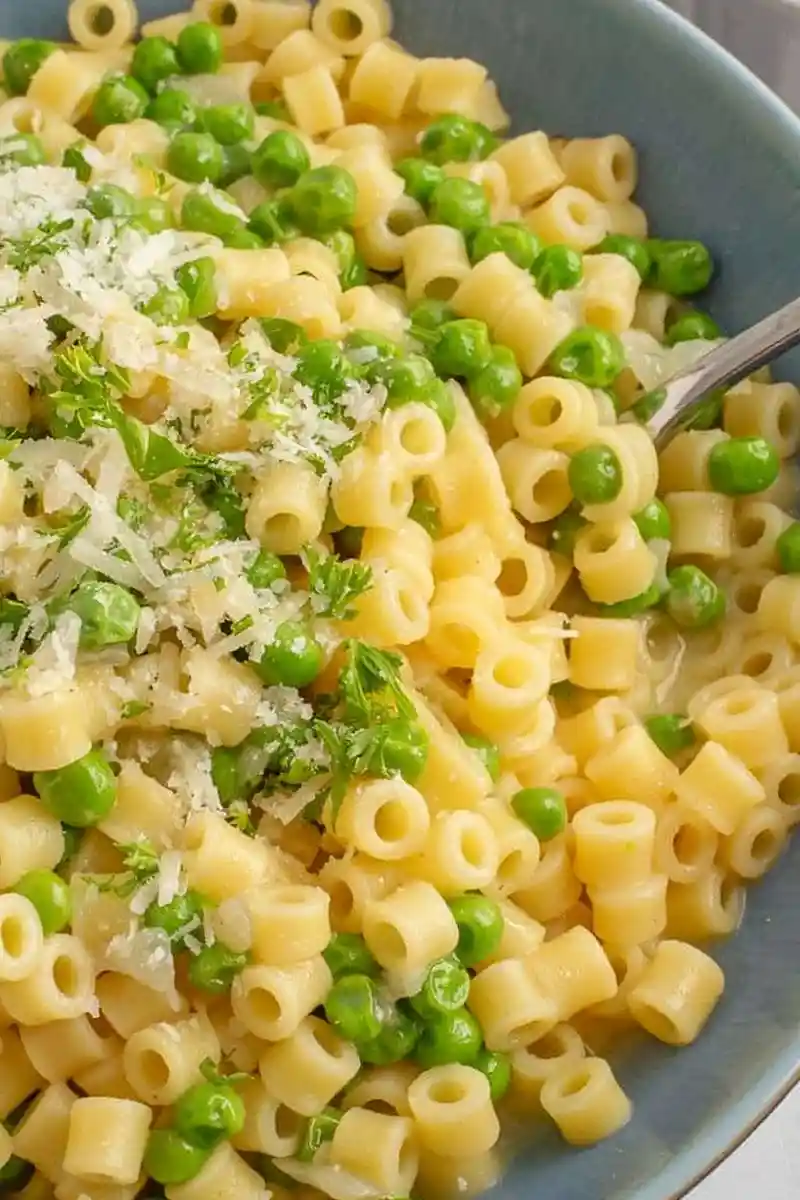
List of ingredients
- 2 Tablespoons olive oil – used for sautéing the aromatics.
- 1 shallot, finely chopped – adds a delicate, sweet onion flavor.
- 1 onion, chopped – provides a savory and deep base for the sauce.
- 450g (1 pound) fresh or frozen peas – the main vegetable component of the dish.
- 410g Ditalini pasta – small tubular pasta that perfectly captures the peas.
- 1 and 1/4 cups Parmesan cheese, freshly grated, divided – provides saltiness and creamy texture.
- Salt & Pepper – used to season the dish to taste.
step-by-step instructions
- Boil the Pasta: Bring a large pot of salted water to a boil. Cook the pasta according to the package directions until it is al dente, as it will continue to cook when combined with the pea mixture.
- Sauté Aromatics: Heat the olive oil in a large, deep skillet or Dutch oven. Sauté the chopped shallot and onions over medium heat until they have softened, which typically takes four to five minutes.
- Simmer Peas: Add the peas to the onion mixture along with 2 cups of the reserved pasta water. Simmer for 5 to 8 minutes, or until the peas are tender.
- Combine: Gently stir the cooked al dente pasta into the mixture. If you prefer a more soupy consistency, stir in additional reserved pasta water and simmer gently for another 3 minutes.
- Finish with Cheese: Stir in 1 cup of the freshly grated Parmesan cheese. Taste the dish, then season with salt and black pepper as needed.
- Serve: Divide the pasta into bowls and sprinkle individual servings with the remaining Parmesan cheese.
Optimizing Your Pasta Selection
Using Ditalini for Best Texture
Ditalini is the traditional choice because its small, tubular shape allows the peas to nestle inside. This ensures a balanced ratio of pasta and vegetables in every single spoonful.
Small Shells as a Practical Substitute
If you cannot find ditalini, small pasta shells are an excellent alternative. Their concave shape similarly catches the peas and the creamy cheese sauce, maintaining the desired consistency.
Acini di Pepe for a Soupier Style
For those who prefer a dish that leans closer to a thick soup, acini di pepe is a great choice. These tiny bead-like pasta pieces create a more porridge-like texture when combined with the pasta water.
Ingredient Customization and Substitutions
Choosing Between Frozen and Fresh Peas
Frozen baby peas are readily available and maintain a great color and snap. If fresh sweet peas are in season, they offer a superior brightness and sweetness to the final dish.
Handling Canned Peas Carefully
Canned peas can be used in a pinch, but they are much softer than fresh or frozen options. Add them toward the end of the simmering process to prevent them from becoming too mushy.
Pecorino Romano for a Sharper Taste
While Parmesan is standard, you can substitute it with Pecorino Romano for a saltier, tangier flavor profile. If using Pecorino, reduce the additional salt you add at the end of the recipe.
Vegetable Broth for Enhanced Depth
If you run out of reserved pasta water, vegetable broth is the best substitute. It adds an extra layer of savory flavor compared to plain water while maintaining the liquid consistency.
Flavor Variations for Extra Depth
Adding Fresh Mint for a Bright Contrast
Peas and mint are a classic pairing that brings a refreshing quality to the dish. Finely chop a few mint leaves and stir them in at the very end to keep the flavor vibrant.
Incorporating Fresh Basil Leaves
For a more traditional Italian aroma, stir in torn fresh basil leaves just before serving. Basil complements the sweetness of the peas and the richness of the Parmesan cheese.
Adding Crushed Tomatoes for Heartiness
To transform this into a red sauce dish, add a can of crushed tomatoes when you add the peas. This creates a thicker, more robust meal that pairs well with crusty bread.
Red Pepper Flakes for a Spicy Kick
If you enjoy a bit of heat, add a pinch of red pepper flakes during the sautéing process. This infuses the oil with spice and cuts through the creaminess of the cheese.
Smoked Tofu for a Savory Element
To add a smoky, savory depth without using meat, add small cubes of smoked tofu. Sauté them with the onions to ensure they are browned and flavorful before adding the peas.
Essential Cooking Tips for Success
Maintaining the Al Dente Texture
It is critical to undercook the pasta slightly in the first step. Because the pasta simmers in the skillet for several minutes, overcooking it initially will result in mushy noodles.
Utilizing Starchy Pasta Water
Do not discard all your pasta water immediately. The starch released from the noodles acts as an emulsifier, helping the Parmesan cheese blend into a smooth, creamy sauce.
Sweating Aromatics Without Browning
When sautéing the shallots and onions, keep the heat at a medium level. You want the vegetables to become translucent and soft rather than browned or caramelized to keep the flavor mild.
Serving and Presentation Ideas
Pairing with Toasted Garlic Bread
Serve this pasta alongside warm garlic bread to scoop up the creamy sauce. The crunch of the toast provides a satisfying textural contrast to the soft pasta and peas.
Balancing with a Crisp Side Salad
A simple green salad with a lemon vinaigrette is the perfect accompaniment. The acidity of the dressing cuts through the richness of the cheese and olive oil.
Finishing with Fresh Flat-Leaf Parsley
Garnish the final plates with chopped flat-leaf parsley. This adds a pop of bright green color and a clean, herbal finish that enhances the visual appeal.
Storage and Reheating Guide
Safe Refrigeration Practices
Store any leftover pasta in an airtight container in the refrigerator. This dish remains fresh and flavorful for up to four days when properly sealed.
Stovetop Reheating for Best Quality
To reheat on the stove, add a small splash of water or vegetable broth to the pan. Heat over low to medium heat, stirring occasionally, until the sauce becomes creamy again.
Microwave Reheating Instructions
If using a microwave, heat the pasta in thirty-second intervals. Stir between each interval and add a teaspoon of water to prevent the pasta from drying out.
Freezing and Thawing Considerations
You can freeze this dish for up to two months in a freezer-safe container. Be aware that the peas may lose some of their structure and become slightly mushy after thawing.
Troubleshooting Common Issues
Fixing a Sauce That is Too Thick
If the pasta absorbs too much liquid and becomes dry, simply stir in more pasta water or vegetable broth. Do this slowly until you reach your preferred consistency.
Correcting Overly Salty Results
Since Parmesan cheese is naturally salty, it is easy to overseason. If the dish is too salty, stir in a handful of unsalted frozen peas or a bit more plain pasta.
Preventing Peas from Losing Color
To keep the peas bright green, avoid overcooking them during the simmering phase. Once they are tender, proceed immediately to adding the pasta and cheese.
Frequently Asked Questions
Can I make this recipe vegan?
Yes, you can substitute the Parmesan cheese with a plant-based Parmesan alternative or nutritional yeast. Use olive oil as usual and ensure the pasta is egg-free.
Which olive oil is best for this recipe?
Extra virgin olive oil is recommended for its superior flavor and quality. It provides a fruity undertone that complements the sweetness of the peas.
Do I need to peel the shallots before chopping?
Yes, remove the papery outer skin of the shallot before finely chopping. This ensures that only the tender, flavorful part of the bulb enters the skillet.
Can I use a different type of onion?
Sweet Vidalia onions or standard yellow cooking onions both work well. Sweet onions will emphasize the sweetness of the peas, while yellow onions provide a more pungent base.
Print
Creamy Italian Pasta and Peas (Pasta e Piselli)
- Total Time: 30 minutes
- Yield: 4 servings 1x
- Diet: Vegetarian
Description
Ready in less than 30 minutes, Pasta e Piselli (Italian Pasta and Peas) is a simple yet delicious pasta recipe. Comforting on a cold winter day and spring-like with fresh or frozen peas in season, this creamy pasta with peas will win over your heart once you try it!
Ingredients
- 2 Tablespoons olive oil
- 1 shallot, finely chopped
- 1 onion, chopped
- 450g (1 pound) fresh or frozen peas
- 410g Ditalini pasta
- 1 and 1/4 cups Parmesan cheese (freshly grated, divided)
- Salt & Pepper
Instructions
- Step: Bring a large pot of salted water to a boil. Cook pasta according to package directions until al dente.
- Step: Heat the olive oil in a large, deep skillet or Dutch oven. Sauté the chopped shallot and onions until softened, about four to five minutes.
- Step: Add the peas to the onion mixture, along with 2 cups of the reserved pasta water and simmer for 5 to 8 minutes, until peas are tender.
- Step: Gently stir cooked pasta into the mixture. If you would like a more soupy consistency, add in more of the reserved pasta water. Simmer gently for another 3 minutes.
- Step: Stir in the 1 cup freshly grated Parmesan cheese, taste, then season with salt & black pepper.
- Step: Sprinkle individual servings with remaining Parmesan cheese.
Notes
Store leftovers in an airtight container in the refrigerator for up to four days. Reheat leftovers on the stovetop by adding a splash of water and cooking over low heat until heated through, or reheat in the microwave in 30-second intervals. Can be frozen in an airtight container for up to two months, though peas may become softer upon reheating.
- Prep Time: 5 minutes
- Cook Time: 25 minutes
- Category: Dinner
- Method: stovetop
- Cuisine: Italian-American
Nutrition
- Serving Size: 1 and 1/2 cups
- Calories: 519 kcal
- Sugar: 8.4 g
- Sodium: 914.8 mg
- Fat: 12.7 g
- Saturated Fat: 4.6 g
- Unsaturated Fat: 8.1 g
- Trans Fat: 0 g
- Carbohydrates: 77.5 g
- Fiber: 7.3 g
- Protein: 23.4 g
- Cholesterol: 14.4 mg