
This one-pot dinner combines tender chicken and pasta in a rich, creamy Tuscan sauce. It is a convenient meal solution that minimizes cleanup while delivering deep flavors from sun-dried tomatoes and fresh basil.
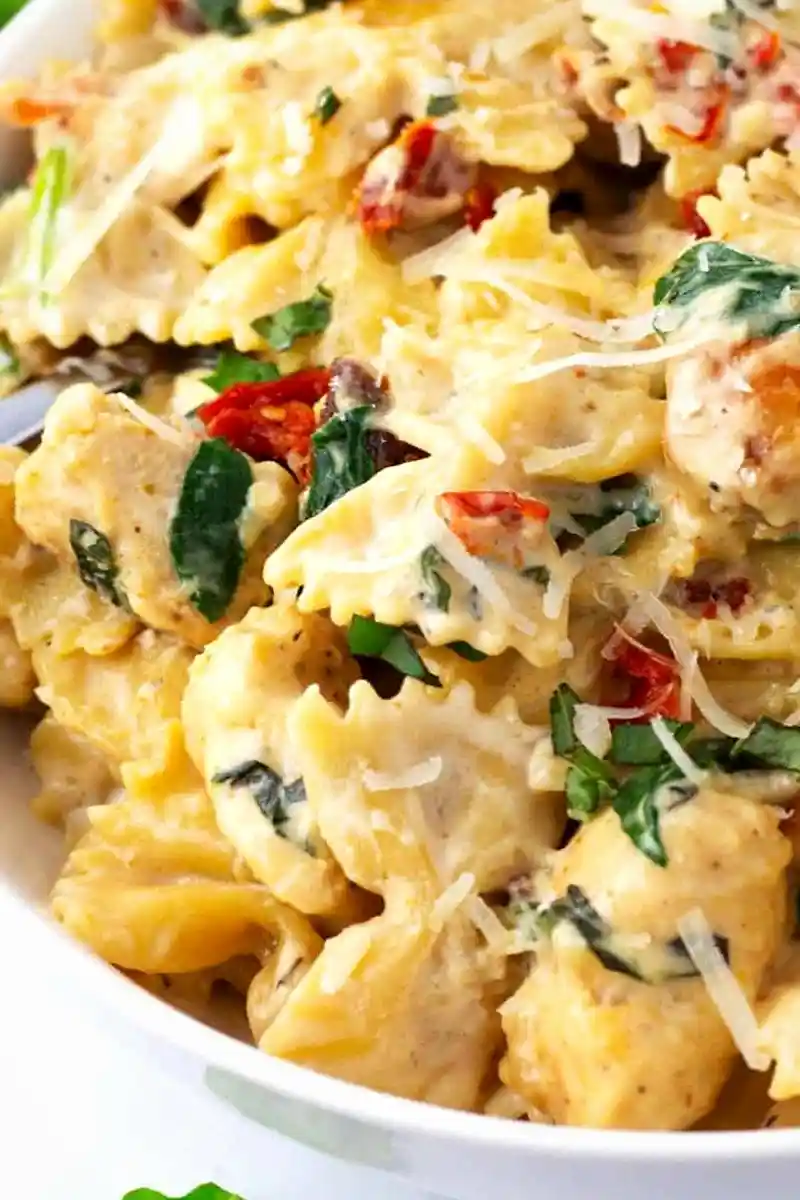
List of ingredients
- 3 pounds boneless skinless chicken breasts – cut into bite-sized pieces.
- ½ teaspoon kosher salt – for seasoning the meat.
- ¼ teaspoon pepper – for basic flavor.
- ½ cup flour – used for a light coating to maintain tenderness.
- 3 tablespoons olive oil – divided for searing and sautéing.
- 2 tablespoons butter – adds richness to the browning process.
- 1 tablespoon garlic, minced – provides a pungent aromatic base.
- 1 teaspoon red chili flakes – adds a subtle spicy kick.
- ½ teaspoon dried thyme – adds earthy herbal notes.
- ½ teaspoon dried oregano – complements the Italian flavor profile.
- 4.5 cups chicken stock – the primary cooking liquid for the pasta.
- 2.5 cups heavy cream – creates a thick, velvety sauce.
- 1 pound farfalle pasta – bowtie shape, or substitute with penne.
- ½ cup sun dried tomatoes – roughly chopped for tart sweetness.
- 3 tablespoons fresh basil – finely chopped for a fresh finish.
- 2 cups spinach – chopped for added color and nutrients.
- 1 cup parmesan cheese – grated for saltiness and thickness.
step-by-step instructions
- Prepare the pan: Preheat an extra large skillet or dutch oven over medium heat.
- Coat the chicken: Season the boneless chicken breast pieces generously with salt and black pepper. Lightly toss in flour, shaking off all the excess to ensure a thin coating rather than heavy breading.
- Brown the meat: Melt butter and 2 tablespoons of oil in the pan. Add chicken and cook until golden brown, about 8 minutes. Remove chicken from pan and set aside, cooking in batches if necessary to avoid overcrowding.
- Sauté aromatics: Add 1 tablespoon olive oil to the pan and sauté minced garlic on the bottom for 30 seconds. Stir in red pepper flakes, thyme, and oregano and cook for another 30 seconds.
- Cook the pasta: Pour in chicken broth and cream along with the noodles. Bring to a simmer over medium-high heat, cover, and stir occasionally until pasta is al dente, which typically takes 15 to 20 minutes. If the liquid evaporates too quickly, add a splash of water bit by bit.
- Final assembly: Once the pasta is cooked, stir in the chopped spinach, sun-dried tomatoes, basil, grated parmesan cheese, and the browned chicken. Garnish with extra cheese and basil if desired.
Pro Cooking Techniques for One-Pot Pasta
Searing Chicken in Batches
To achieve a golden-brown crust, avoid adding all the chicken to the pan at once. Overcrowding lowers the pan temperature, causing the meat to steam in its own juices rather than sear. Cooking in two batches ensures the Maillard reaction occurs for maximum flavor.
The Purpose of the Flour Coating
A light dusting of flour serves as a protective barrier for the chicken breasts. This thin layer prevents the protein from toughening during the searing process, helping the meat remain juicy. It also acts as a slight thickening agent for the final cream sauce.
Managing the Simmer Temperature
It is critical to keep the liquid at a simmer rather than a rolling boil once the pasta is added. Boiling too vigorously can cause the cream to separate and the liquid to evaporate before the pasta is cooked. Keep the lid slightly offset to allow a small amount of steam to escape.
Determining Al Dente Texture
Al dente pasta should be tender but still offer a slight resistance when bitten. Because the pasta continues to cook in the residual heat of the sauce, remove it from the heat just before it reaches full softness. This prevents the noodles from becoming mushy.
Deglazing the Cooking Surface
The brown bits left in the pan after searing the chicken are called fond. When you pour in the chicken stock, use a wooden spoon to scrape these bits off the bottom. This process integrates concentrated chicken flavor directly into the sauce.
Ingredient Selection and Substitutions
Choosing the Right Pasta Shape
While farfalle is recommended for its ability to hold sauce in its folds, other medium shapes work well. Penne, rigatoni, or fusilli are excellent alternatives because they have holes or ridges that capture the cream sauce. Avoid very thin pastas like spaghetti, as they may overcook in a one-pot method.
Selecting High-Quality Parmesan
For the best emulsion and flavor, use a block of Parmigiano-Reggiano and grate it yourself. Pre-shredded cheeses often contain anti-clumping agents like cellulose, which can prevent the cheese from melting smoothly into the sauce. Freshly grated cheese provides a sharper, more authentic taste.
Sun-Dried Tomato Varieties
You can use either sun-dried tomatoes packed in oil or dry-packed versions. If using dry-packed tomatoes, soak them in warm water for 10 minutes to soften them before chopping. Those packed in oil offer a richer flavor and can provide a tablespoon of oil for the sautéing step.
Heavy Cream Alternatives
Heavy cream provides the necessary fat content to stabilize the sauce at higher temperatures. Substituting with milk or half-and-half may result in a thinner sauce that separates more easily. For a dairy-free option, full-fat coconut cream or cashew cream can be used, though the flavor profile will shift slightly.
Swapping Chicken Breasts for Thighs
Boneless skinless chicken thighs are a great alternative to breasts for those who prefer a richer taste. Thighs are more forgiving and less likely to overcook during the searing and simmering phases. If using thighs, trim excess fat before cutting them into bite-sized pieces.
Flavor Enhancements and Variations
Adjusting the Heat Level
The red chili flakes provide a mild warmth, but this can be adjusted based on preference. For a spicier dish, increase the flakes to two teaspoons or add a pinch of cayenne pepper. To keep the dish kid-friendly, reduce the chili flakes to a small pinch or omit them entirely.
Incorporating More Leafy Greens
While spinach is the standard choice, other greens can be substituted for different nutritional profiles. Kale or Swiss chard provide a heartier texture and more robust flavor. If using kale, stir it in a few minutes earlier than spinach as it takes longer to soften.
Increasing the Garlic Profile
For a deeper garlic flavor, replace some of the minced garlic with roasted garlic cloves. Mash the roasted cloves into a paste and stir them in during the sautéing phase. This adds a mellow, caramelized sweetness that complements the creamy sauce.
Adding Brightness with Lemon
A squeeze of fresh lemon juice or a teaspoon of lemon zest stirred in at the end can cut through the richness of the cream. The acidity brightens the overall flavor profile and enhances the taste of the fresh basil. Add the lemon juice just before serving to keep the flavor fresh.
Adding Mushrooms for Depth
Sautéed mushrooms add an earthy, umami dimension to the Tuscan sauce. Brown sliced cremini or button mushrooms in the pan after the chicken is removed and before adding the garlic. This variation adds bulk to the meal and increases the vegetable content.
Storage and Reheating Strategies
Optimal Refrigerator Storage
Store leftover pasta in an airtight glass or plastic container to maintain freshness. The dish will keep well in the refrigerator for 5 to 6 days. Ensure the pasta is completely cooled before sealing the lid to prevent excess condensation from making the noodles soggy.
Microwave Reheating Precautions
Cream-based sauces can separate or become oily when heated too quickly in a microwave. Set your microwave to a power level of 7 or 8 instead of full power. Stir the pasta every 60 seconds and add a tablespoon of water or cream to loosen the sauce.
Stovetop Reheating Method
Reheating in a skillet over medium-low heat is the best way to preserve the texture. Add a small splash of chicken broth or heavy cream to the pan to emulate the original sauce consistency. Stir gently to avoid breaking the pasta shapes as the sauce warms through.
Freezing Creamy Pasta
Freezing is not recommended for this specific recipe due to the high dairy content. The emulsion of heavy cream and parmesan often breaks upon thawing, resulting in a grainy texture. For the best quality, consume the dish within a week or avoid freezing it.
Preparing Ingredients in Advance
To speed up the cooking process, utilize mise en place by prepping all ingredients before turning on the heat. Chop the chicken, mince the garlic, and grate the cheese in advance. Store the chopped vegetables in separate containers for a faster assembly process.
Troubleshooting the Cream Sauce
Fixing a Sauce That Is Too Thick
Pasta continues to absorb liquid even after it is removed from the heat, which can make the sauce overly thick. To fix this, stir in additional chicken stock or a splash of water one tablespoon at a time. Continue stirring over low heat until the desired consistency is reached.
Preventing Sauce Separation
Sauce separation usually occurs when the heat is too high, causing the fats to split from the liquids. If you notice oil pooling on the surface, immediately reduce the heat and stir in a small amount of cold cream. This helps re-emulsify the sauce into a smooth consistency.
Balancing Overly Salty Flavors
If the sauce tastes too salty, it is likely due to the combination of chicken stock and parmesan. To balance this, add an extra splash of heavy cream or a squeeze of lemon juice. The fat in the cream and the acidity of the lemon help mask excess sodium.
Resolving Undercooked Pasta
If the pasta is still too firm after the recommended simmer time, add another half cup of chicken stock. Replace the lid and simmer for an additional 2 to 5 minutes. Always check the pasta every few minutes to ensure it does not go past the al dente stage.
Correcting a Bland Sauce
A bland sauce usually needs more salt or acid to wake up the flavors. Taste the dish and add a small amount of grated parmesan or a pinch of salt. If it still lacks depth, a small amount of additional dried oregano or a pinch of sugar can balance the flavors.
Serving Suggestions and Pairing Ideas
Pairing with Fresh Salads
Because this pasta is rich and creamy, it pairs best with a light, acidic salad. An arugula salad with a simple lemon-olive oil vinaigrette provides a sharp contrast. A classic Caesar salad with crisp romaine is another traditional Italian pairing that works well.
Choosing the Best Bread Accompaniments
Warm, crusty bread is ideal for soaking up the remaining sauce on the plate. Garlic knots or toasted focaccia are excellent choices for this meal. To keep the meal lighter, serve with toasted whole-grain baguette slices.
Plating for Professional Presentation
Serve the pasta in shallow bowls to keep the sauce concentrated around the noodles. Garnish with a generous sprinkle of fresh parmesan and a few whole basil leaves on top. A final crack of fresh black pepper adds visual contrast and a hit of flavor.
Non-Alcoholic Beverage Pairings
Sparkling water with a slice of lemon or lime helps cleanse the palate between bites of the rich sauce. A chilled sparkling apple cider can also provide a sweet and tart balance. For a warmer option, a light herbal tea complements the thyme and oregano.
Balancing the Meal’s Richness
To add more balance to the plate, serve the pasta alongside steamed broccoli or roasted asparagus. These green vegetables add a snap of freshness and fiber. The bitterness of roasted Brussels sprouts also pairs well with the sweetness of sun-dried tomatoes.
Frequently Asked Questions
Can I use frozen spinach?
Yes, you can use frozen spinach as a substitute for fresh. Ensure the spinach is fully thawed and squeezed dry in a kitchen towel to remove excess moisture. Stir it in at the very end of the cooking process just until heated through.
Is this recipe suitable for a slow cooker?
No, this is designed as a one-pot skillet meal to ensure the chicken is seared and the pasta is cooked to the correct texture. Slow cooking the pasta would likely result in a mushy consistency and a broken sauce emulsion.
What is the best chicken stock to use?
Low-sodium chicken stock is recommended so that you can control the salt levels of the final dish. Since parmesan cheese is naturally salty, using a standard stock can sometimes make the sauce overly salty.
Can I use a different cheese?
Pecorino Romano is a great substitute for parmesan, though it is slightly saltier. Gruyere or fontina can be used for a nuttier, meltier sauce, but you may need to reduce the added salt in the recipe to compensate.
How do I prevent the chicken from getting dry?
The combination of the flour coating and avoiding overcrowding the pan prevents the chicken from drying out. Additionally, removing the chicken from the pan after browning and adding it back at the end ensures it doesn’t overcook during the pasta simmer.
Print
Creamy Tuscan Chicken Pasta One Pot Meal
- Total Time: 40 minutes
- Yield: 6 servings 1x
- Diet: General
Description
Marry Me Chicken Pasta is the perfect solution to busy weeknights! This Tuscan chicken pasta is a one-pot dinner that combines tender chicken, sun-dried tomatoes, spinach, and garlic, all simmered in a creamy sauce. Top this comforting and convenient dinner with grated parmesan and fresh basil for a finishing touch.
Ingredients
- 3 pounds boneless skinless chicken breasts (cut into bite-sized pieces)
- ½ teaspoon kosher salt
- ¼ teaspoon pepper
- ½ cup flour
- 3 tablespoons olive oil (divided)
- 2 tablespoons butter
- 1 tablespoon garlic, minced
- 1 teaspoon red chili flakes
- ½ teaspoon dried thyme
- ½ teaspoon dried oregano
- 4.5 cups chicken stock
- 2.5 cups heavy cream
- 1 pound farfalle pasta (or medium pasta like penne)
- ½ cup sun dried tomatoes (roughly chopped)
- 3 tablespoons fresh basil (finely chopped)
- 2 cups spinach (chopped)
- 1 cup parmesan cheese
Instructions
- Step 1: Preheat an extra large skillet or dutch oven over medium heat.
- Step 2: Season the boneless chicken breast pieces generously with salt and black pepper. Lightly toss in flour, shaking off all the excess.
- Step 3: Melt butter and 2 tablespoons of oil in the pan. Add chicken and cook until golden brown, about 8 minutes. Remove from pan and set aside.
- Step 4: Add 1 tablespoon olive oil to the pan and saute garlic on the bottom of the pan for 30 seconds. Then add in red pepper flakes, thyme and oregano and cook for 30 more seconds.
- Step 5: Pour in chicken broth and cream along with noodles. Bring to a simmer over medium-high heat. Cover and stir occasionally until pasta is al dente, which is between 15-20 minutes depending on the type of pasta.
- Step 6: Once the pasta is done, stir in spinach, sun-dried tomatoes, basil, grated parmesan cheese, and chicken.
Notes
Once the pasta is added, simmer the liquid, but do not boil or there won’t be enough liquid. Use quality parmesan cheese for the best flavor.
- Prep Time: 10 minutes
- Cook Time: 30 minutes
- Category: Dinner
- Method: Stovetop
- Cuisine: American, Italian
Nutrition
- Serving Size: 1 serving
- Calories: 1170 kcal
- Sugar: 11 g
- Sodium: 1066 mg
- Fat: 61 g
- Saturated Fat: 31 g
- Unsaturated Fat: 23 g
- Trans Fat: 0.2 g
- Carbohydrates: 80 g
- Fiber: 4 g
- Protein: 74 g
- Cholesterol: 284 mg