
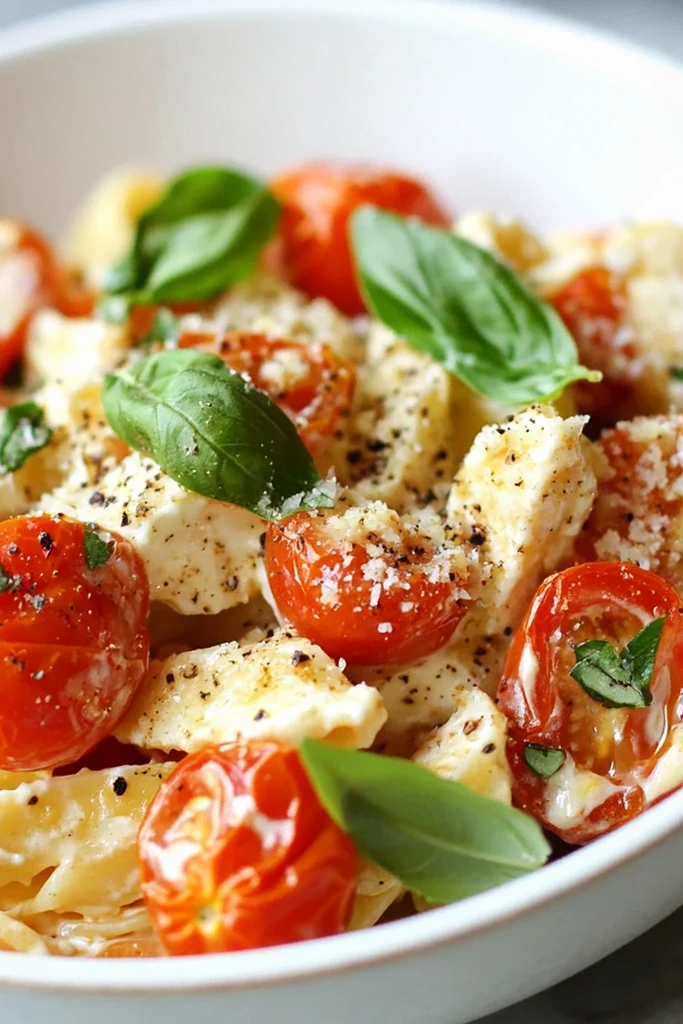
This dish combines the concentrated sweetness of oven-roasted cherry tomatoes with a velvety ricotta cheese base. It is a fast, high-flavor meal that delivers a gourmet experience in under 40 minutes.
List of ingredients
- 12 ounces pasta (spaghetti or your choice) – use a high-quality bronze-cut pasta for better sauce adhesion.
- 2 cups cherry tomatoes, halved – ensure they are ripe for maximum sweetness.
- 4 cloves garlic, unpeeled – roasting them in the skin prevents burning and creates a creamy paste.
- 2 tablespoons olive oil – use extra virgin olive oil for a rich, fruity flavor.
- 1 teaspoon salt – used for seasoning the vegetables and salting the pasta water.
- 1/2 teaspoon black pepper – freshly ground pepper provides the best aromatic punch.
- 1 cup ricotta cheese – whole milk ricotta offers the creamiest texture.
- 1/2 cup grated Parmesan cheese – provides a salty, nutty depth to the sauce.
- 1/4 cup fresh basil, chopped – add at the end to preserve the bright green color.
- Zest of 1 lemon – adds a citrusy high note to cut through the richness.
- Juice of 1/2 lemon – provides the necessary acidity to balance the creamy cheese.
step-by-step instructions
- Preheat the oven: Set your oven to 400°F (200°C). Ensuring the oven is fully heated prevents the tomatoes from steaming and helps them roast and blister.
- Prepare the roast: On a baking sheet, combine the halved cherry tomatoes and unpeeled garlic cloves. Drizzle with olive oil and sprinkle with salt and black pepper, then toss to coat evenly.
- Roast the vegetables: Bake for 20-25 minutes until the tomatoes are blistered and the garlic is soft. Remove from the oven and let them cool slightly to avoid burning your hands.
- Boil the pasta: Cook the pasta in a large pot of salted boiling water according to package instructions until al dente. Reserve 1 cup of starchy pasta water before draining the noodles.
- Create the cheese base: Squeeze the roasted garlic out of its skins into a large bowl. Mix in the ricotta cheese, Parmesan cheese, lemon zest, and lemon juice until the mixture is smooth.
- Combine elements: Add the drained pasta and roasted tomatoes to the ricotta mixture. Toss gently, adding reserved pasta water one tablespoon at a time until the sauce is silky and clings to the pasta.
- Final touch: Stir in the fresh chopped basil and adjust salt and pepper to taste. Serve immediately with extra basil or Parmesan on top.
Expert Cooking Tips for Best Results
Use High-Quality Extra Virgin Olive Oil
The olive oil serves as the primary fat for roasting and infusing the sauce. Choose a cold-pressed extra virgin oil to ensure the flavor remains stable at 400°F. This adds a peppery finish that complements the acidity of the tomatoes.
Optimize Your Oven Rack Position
Place your baking sheet on the center rack of the oven for even heat distribution. If you prefer more charred, blistered tomatoes, move the tray to the top rack for the final five minutes. Avoid the bottom rack to prevent the garlic from scorching.
Master the Pasta Water Emulsion
The reserved pasta water contains starch that acts as a binder between the ricotta and the pasta. Always add the water gradually while tossing the noodles. This process emulsifies the sauce, preventing it from separating or appearing clumpy.
Ensure Ricotta is at Room Temperature
Cold ricotta can cause the pasta to cool down too quickly upon mixing. Take the cheese out of the refrigerator 30 minutes before using it. This ensures a smoother integration with the roasted garlic and lemon juice.
Squeeze Garlic Efficiently
To remove the roasted garlic easily, make a small slice in the top of the clove skin. Squeeze from the bottom to push the soft garlic paste directly into the mixing bowl. This method minimizes waste and keeps your hands cleaner.
Recommended Ingredient Substitutions
Switching Pasta Shapes
While spaghetti is traditional, short pastas like penne, fusilli, or rigatoni are excellent choices. These shapes have ridges and holes that trap the ricotta sauce and roasted tomato pieces more effectively. Adjust boiling times based on the specific pasta brand.
Plant-Based Cheese Alternatives
For a dairy-free version, replace the ricotta with a cashew-based ricotta or a firm almond-based alternative. Use nutritional yeast or a vegan Parmesan substitute to replicate the salty, nutty flavor of the original cheese.
Using Different Tomato Varieties
If cherry tomatoes are unavailable, grape tomatoes work equally well as they have a similar sugar content. For a heartier texture, you can use halved plum tomatoes, though they may require an additional 5-10 minutes of roasting time to concentrate their flavor.
Alternative Citrus Options
If you do not have lemons, lime zest can provide a similar brightness, though it changes the flavor profile slightly. A teaspoon of white balsamic vinegar can also replace the lemon juice for a more complex, fermented acidity.
Creative Flavor Variations
Integrating Leafy Greens
Stir in two cups of fresh baby spinach or chopped kale during the final mixing stage. The residual heat from the pasta will wilt the greens perfectly without overcooking them. This adds color and nutritional value to the dish.
Adding Lean Protein Options
For a more filling meal, fold in grilled chicken breast strips or sautéed shrimp. Roasted chickpeas are another great addition for a plant-based protein boost. Ensure the protein is seasoned with salt and pepper to match the sauce.
Introducing a Spicy Element
Add a pinch of red pepper flakes to the baking sheet before roasting the tomatoes. The heat infuses into the olive oil and permeates the entire dish. Alternatively, stir in a teaspoon of sriracha or chili oil at the end for a sharper kick.
Experimenting with Fresh Herbs
While basil is classic, fresh oregano or thyme can be used during the roasting process for an earthier taste. Parsley added at the end provides a clean, grassy contrast to the rich ricotta cheese.
Serving and Pairing Suggestions
Pairing with Crisp Fresh Salads
Serve this pasta alongside a simple arugula salad tossed with lemon vinaigrette. The peppery nature of the arugula cuts through the creamy ricotta. This balance prevents the meal from feeling too heavy.
Complementary Bread Choices
Warm garlic bread or a toasted baguette is ideal for scooping up any leftover ricotta sauce. Brush the bread with olive oil and a pinch of sea salt before toasting in the oven. This adds a crunchy texture to the meal.
Visual Garnish Techniques
Garnish the final plate with whole small basil leaves and a generous dusting of freshly grated Parmesan. A light drizzle of high-quality olive oil over the top adds a professional sheen. Use a wide bowl to showcase the colors of the tomatoes.
Non-Alcoholic Beverage Pairings
A chilled sparkling water with a slice of lime complements the citrus notes in the sauce. Alternatively, an iced herbal tea with honey provides a subtle sweetness that balances the acidity of the roasted tomatoes.
Storage and Reheating Guide
Proper Refrigeration Methods
Store leftover pasta in an airtight glass container to maintain freshness. Ensure the pasta is completely cooled before sealing the lid to prevent excess moisture buildup. The dish will stay fresh in the refrigerator for up to three days.
Best Reheating Techniques
Reheat the pasta on the stovetop over low heat. Avoid the microwave if possible, as it can make the ricotta grainy. Add a splash of water or milk to the pan to loosen the sauce and restore its creaminess.
Managing Sauce Thickness After Cooling
Ricotta tends to thicken significantly when chilled. When reheating, the sauce may appear dry or clumpy at first. Stirring in a tablespoon of olive oil or a bit of cream can bring back the original silky texture.
Freezing Considerations
This dish is not recommended for freezing due to the high water content in ricotta. Freezing and thawing often cause the cheese to separate and become watery. It is best enjoyed fresh or from the refrigerator.
Make-Ahead Strategies
Pre-Roasting the Vegetables
You can roast the tomatoes and garlic a day in advance and store them in the fridge. When ready to eat, simply reheat the vegetables in a pan or microwave. This reduces the total active cooking time on the day of serving.
Pre-Mixing the Cheese Base
Combine the ricotta, Parmesan, lemon zest, and lemon juice into a bowl and cover with plastic wrap. This mixture can be stored for 24 hours. Just whisk it briefly before adding it to the hot pasta to ensure it is smooth.
Strategic Pasta Timing
To speed up the process, boil your water while the vegetables are roasting. This ensures that the pasta is finished at the exact moment the tomatoes come out of the oven. This timing prevents the pasta from sitting too long and becoming mushy.
Troubleshooting Common Issues
Correcting a Sauce That Becomes Too Thick
If the sauce is too thick or sticky, add more reserved pasta water one tablespoon at a time. If you have already drained the water, a small amount of vegetable broth or milk will work. Stir continuously until the sauce coats the pasta smoothly.
Balancing Excessive Acidity
If the lemon juice makes the dish too tart, stir in an extra tablespoon of ricotta or a pinch of sugar. The fats in the cheese neutralize the acid. Adding more Parmesan can also help balance the flavor with its saltiness.
Preventing Grainy Ricotta Texture
Graininess usually occurs if the ricotta is overheated or added to a boiling pot. Always mix the cheese in a separate bowl or toss it with the pasta off the direct heat. This preserves the smooth, creamy consistency.
Handling Overcooked Pasta
If the pasta is overcooked, it will absorb the sauce too quickly and become gummy. To fix this, use less pasta water and add the sauce quickly. Serving the dish immediately is the best way to mitigate the effect of overcooking.
Frequently Asked Questions
Can I use frozen cherry tomatoes?
Yes, you can use frozen cherry tomatoes, but they release more water during roasting. Roast them on a wire rack over the baking sheet to allow moisture to escape. You may need to increase the roasting time by 5-10 minutes.
Is this recipe suitable for gluten-free diets?
This recipe is easily adaptable for gluten-free diets by swapping the wheat pasta for a corn, brown rice, or chickpea-based alternative. Ensure the gluten-free pasta is cooked according to its specific package instructions to avoid mushiness.
How do I keep the basil from turning brown?
Always add fresh basil at the very end of the cooking process. High heat causes the basil to oxidize and turn dark. Stirring it in just before serving keeps the leaves vibrant and the flavor fresh.
What is the best way to peel roasted garlic?
The easiest method is to squeeze the garlic from the bottom of the bulb. If the clove is stubborn, use a small knife to nick the skin. The garlic should slide out as a soft, creamy paste.
Print
Creamy Roasted Tomato and Garlic Ricotta Pasta
- Total Time: 40 minutes
- Yield: 4 servings 1x
- Diet: Vegetarian
Description
A delightful pasta dish featuring roasted cherry tomatoes and garlic mixed with creamy ricotta cheese.
Ingredients
- 12 ounces pasta (spaghetti or your choice)
- 2 cups cherry tomatoes, halved
- 4 cloves garlic, unpeeled
- 2 tablespoons olive oil
- 1 teaspoon salt
- 1/2 teaspoon black pepper
- 1 cup ricotta cheese
- 1/2 cup grated Parmesan cheese
- 1/4 cup fresh basil, chopped
- Zest of 1 lemon
- Juice of 1/2 lemon
Instructions
- Preheat: Preheat the oven to 400°F (200°C).
- Prepare: On a baking sheet, combine the halved cherry tomatoes and unpeeled garlic cloves. Drizzle with olive oil, and sprinkle with salt and black pepper. Toss to coat evenly.
- Roast: Roast in the preheated oven for 20-25 minutes, or until the tomatoes are blistered and the garlic is soft. Remove from the oven and let cool slightly.
- Cook Pasta: While the tomatoes and garlic are roasting, cook the pasta according to package instructions in a large pot of salted boiling water until al dente. Reserve 1 cup of pasta water, then drain the pasta.
- Make Mixture: Once the garlic is cool enough to handle, squeeze the roasted garlic out of its skins into a large bowl. Add the ricotta cheese, Parmesan cheese, lemon zest, and lemon juice. Mix until smooth and creamy.
- Combine: Add the drained pasta to the bowl with the ricotta mixture, along with the roasted tomatoes. Toss to combine, adding reserved pasta water a little at a time until the desired creaminess is achieved.
- Finish: Stir in the fresh basil and adjust seasoning with additional salt and pepper if needed. Serve immediately, garnished with extra basil and Parmesan if desired.
Notes
For a vegan option, substitute ricotta and Parmesan with plant-based alternatives. Feel free to add other vegetables or proteins to the pasta for variation.
- Prep Time: 10 minutes
- Cook Time: 30 minutes
- Category: Pasta
- Method: Baking and Boiling
- Cuisine: Italian
Nutrition
- Serving Size: 1 serving
- Calories: 450 kcal
- Sugar: 3 g
- Sodium: 600 mg
- Fat: 20 g
- Saturated Fat: 8 g
- Unsaturated Fat: 12 g
- Trans Fat: 0 g
- Carbohydrates: 55 g
- Fiber: 3 g
- Protein: 15 g
- Cholesterol: 40 mg