
Enjoy a restaurant-quality meal at home with this lemon garlic shrimp scampi. This recipe pairs succulent seafood with crisp asparagus and pasta in under 30 minutes.
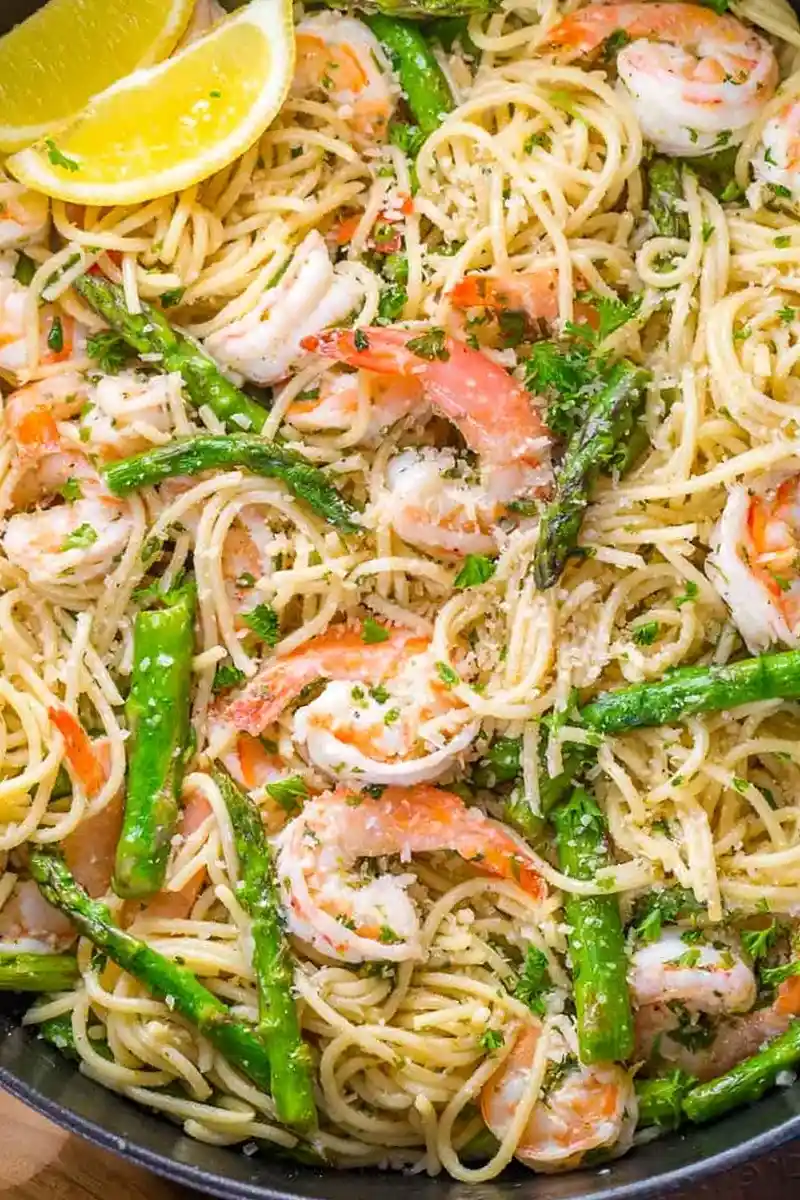
List of ingredients
- 1/2 lb spaghetti – homemade or your preferred pasta variety.
- 1 lb asparagus – trimmed and cut into 2-inch pieces.
- 3 Tbsp unsalted butter – divided for sautéing vegetables and shrimp.
- 3 Tbsp olive oil – divided to prevent butter from burning.
- 4 cloves garlic – minced, approximately 1 1/2 Tbsp.
- 1/4 tsp red pepper flakes – adjust according to your spice preference.
- 1 lb large shrimp – peeled and deveined, 16-20 or 21-25 count.
- 1 1/4 tsp fine sea salt – divided, with additional salt for pasta water.
- 1/4 tsp black pepper – ground, or adjusted to taste.
- 1 Tbsp grated lemon zest – for a concentrated citrus aroma.
- 1/4 cup fresh lemon juice – extracted from 1 large or 2 small lemons.
- 1/3 cup fresh parsley – finely chopped for brightness.
- freshly grated parmesan – used for serving and finishing.
step-by-step instructions
- Cook the Pasta: Bring a large pot of water to a boil, add 1 Tbsp salt, and cook pasta according to package instructions until al dente. Reserve 1/2 cup of the starchy pasta water before draining the noodles, then return the pasta to the pot and cover to maintain heat.
- Sauté the Asparagus: Place a large, deep pan over medium-high heat and add 1 Tbsp olive oil and 1 Tbsp butter. Add the asparagus pieces, season with 1/4 tsp salt and 1/8 tsp pepper, and cook uncovered for 5 minutes or until crisp-tender, stirring occasionally. Remove the asparagus from the pan and set aside.
- Sear the Shrimp: In the same hot skillet, add the remaining 2 Tbsp oil and 2 Tbsp butter. Once melted, add minced garlic and red pepper flakes, sautéing for 1 minute while stirring frequently. Add the shrimp in a single layer and season with 1 tsp salt and 1/4 tsp black pepper; sauté until pink and opaque, about 1 minute per side, being careful not to overcook.
- Finish the Sauce: Turn off the heat and stir in the lemon zest, lemon juice, and chopped parsley. Add the cooked pasta and sautéed asparagus to the pan, tossing everything together to coat evenly. If the sauce appears too dry, stir in small amounts of the reserved pasta water. Serve immediately with freshly grated Parmesan cheese.
Ingredient Selection and Quality
Choosing Wild-Caught Shrimp
Opt for wild-caught large shrimp to ensure a firmer texture and a more natural sea flavor. The 16-20 or 21-25 count sizes provide the best balance of bite and cooking speed, preventing the meat from shrinking too much.
Preparing Frozen Shrimp
If using frozen shrimp, thaw them completely in the refrigerator overnight or under cold running water. Thoroughly pat the shrimp dry with paper towels before cooking to ensure they sear properly rather than steaming in the pan.
Selecting Fresh Asparagus Spears
Choose asparagus with tight, closed tips and a vibrant green color to ensure freshness. Avoid spears that look woody or have shriveled tips, as these will be tough and lack flavor after cooking.
Trimming Asparagus Efficiently
The easiest way to trim asparagus is to snap the bottom of a spear; it will naturally break where the woody, fibrous part ends. Alternatively, use a vegetable peeler to shave off the tough outer skin from the bottom two inches of each stalk.
Selecting the Ideal Pasta Shape
While spaghetti is traditional, linguine offers a wider surface area that holds the garlic butter sauce more effectively. For a different texture, penne or fusilli can be used, though you may need a small amount of extra sauce to coat the interiors.
Fresh Garlic vs. Pre-minced
Always use fresh garlic cloves rather than jarred pre-minced garlic for this recipe. Fresh garlic contains essential oils that provide a sharp, aromatic punch that is lost during the processing of jarred versions.
Advanced Cooking Techniques
Managing Butter and Oil Smoke Points
Combining butter with olive oil is a strategic choice because olive oil has a higher smoke point than butter. This prevents the butter solids from burning and turning brown at the medium-high temperatures needed to sear the shrimp.
Preventing Overcooked Shrimp
Shrimp cook very quickly and can become rubbery if left in the pan too long. Remove them from the heat the moment they turn pink and form a ‘C’ shape; avoid letting them curl into a tight ‘O’, which indicates overcooking.
Timing the Garlic Sauté
Garlic burns quickly and becomes bitter if overheated. Sauté it for only about 60 seconds just until fragrant before adding the shrimp, which lowers the pan temperature and stops the garlic from browning too deeply.
Preserving Fresh Lemon and Parsley
Always turn off the heat before adding the lemon juice, zest, and parsley. High heat can dull the bright, citrusy notes of the lemon and cause the fresh parsley to wilt and lose its vibrant green color.
Emulsifying the Sauce with Starch
The reserved pasta water is a critical ingredient for creating a cohesive sauce. The starch in the water acts as an emulsifier, binding the fat from the butter and oil with the acidity of the lemon juice for a silky finish.
Achieving Al Dente Pasta
Cook your pasta for one minute less than the package instructions suggest. Since the pasta is tossed in the pan with the sauce and shrimp at the end, it will finish cooking in the sauce without becoming mushy.
Customizations and Substitutions
Alternative Pasta Types
For a gluten-free version, use brown rice pasta or chickpea pasta. Keep in mind that these varieties often release more starch or have different absorption rates, so you may need to adjust the amount of reserved pasta water used.
Low-Carb Vegetable Substitutions
If you want to avoid pasta entirely, replace the spaghetti with zucchini noodles or spaghetti squash. Sauté the vegetable noodles briefly in the pan at the very end just to warm them through and prevent them from releasing too much water.
Substituting the Asparagus
If asparagus is out of season, substitute it with broccoli florets, snap peas, or baby spinach. Broccoli and snap peas require a similar sauté time, while spinach should be stirred in at the very end until just wilted.
Using Different Proteins
You can replace shrimp with scallops or chunks of firm white fish like cod or halibut. Scallops should be seared separately for 2 minutes per side to get a golden crust before being added back to the lemon garlic sauce.
Dairy-Free Adjustments
To make this recipe vegan or dairy-free, replace the unsalted butter with a high-quality plant-based butter alternative or extra olive oil. Skip the Parmesan cheese or use a nutritional yeast-based vegan parmesan for a similar salty, nutty flavor.
Adjusting Heat Levels
If you prefer a milder flavor, omit the red pepper flakes entirely. For those who enjoy more heat, increase the amount to 1/2 teaspoon or add a pinch of cayenne pepper during the shrimp searing process.
Serving and Pairing Suggestions
Best Side Salad Pairings
A crisp Caesar salad with creamy dressing and croutons complements the acidity of the lemon scampi perfectly. Alternatively, a light arugula salad with a simple balsamic vinaigrette provides a peppery contrast to the rich butter sauce.
Complementing with Garlic Bread
Serve this dish with toasted focaccia or a warm garlic baguette. The bread is ideal for soaking up the remaining lemon garlic butter sauce left on the plate, ensuring no flavor goes to waste.
Fresh Vegetable Sides
A Caprese salad with fresh mozzarella, tomatoes, and basil adds a cool, refreshing element to the meal. The creamy cheese and juicy tomatoes balance the savory garlic and zesty lemon profile of the pasta.
Beverage Pairing Ideas
Pair this meal with sparkling water infused with cucumber or a chilled iced tea with lemon. These refreshing, non-alcoholic options cleanse the palate between bites of the rich, buttery seafood pasta.
Storage and Reheating
Proper Refrigeration Techniques
Store leftovers in an airtight container in the refrigerator for up to two days. To prevent the pasta from absorbing all the sauce, toss it with a tiny bit of extra olive oil before storing.
The Best Way to Reheat Seafood Pasta
Reheat the pasta in a skillet over low to medium heat with a tablespoon of water or broth. Avoid the microwave if possible, as it can overcook the shrimp and make the sauce separate or become oily.
Avoiding Freezer Burn
This dish is not recommended for freezing because the texture of the shrimp and asparagus degrades significantly upon thawing. The pasta also tends to become mushy, so it is best enjoyed fresh or from the refrigerator.
Maintaining Sauce Consistency
When reheating, if the sauce has thickened too much, add a splash of water or a small knob of butter. Stir gently to re-emulsify the sauce without breaking the delicate shrimp pieces.
Troubleshooting Common Issues
Fixing a Too-Thin Sauce
If the sauce feels too watery, simmer it for an extra minute before adding the pasta, or stir in a tablespoon of freshly grated Parmesan cheese. The cheese acts as a thickener and adds body to the emulsion.
Solving a Dry Pasta Problem
Dryness usually occurs if the pasta is added too late or the heat is too high. Stir in the reserved pasta water one tablespoon at a time until the sauce reaches a glossy, coating consistency.
Managing Over-Salted Sauce
If the sauce is too salty, add a squeeze of extra lemon juice or a pinch of sugar. The acidity and sweetness help neutralize the saltiness without altering the core flavor profile of the dish.
Handling Clumping Pasta
If the pasta clumps together after draining, toss it immediately with a small amount of olive oil. Ensure you use a large enough pot to allow the noodles to move freely during the boiling process.
Frequently Asked Questions
Can I use frozen shrimp?
Yes, frozen shrimp work perfectly as long as they are completely thawed and patted dry. This ensures they sear properly in the pan rather than releasing excess moisture and boiling.
How do I know when shrimp are done?
Shrimp are cooked when they change from translucent to an opaque pinkish-white color and curl into a ‘C’ shape. Be careful not to let them curl into a tight ‘O’, as this means they are overcooked.
Can I use a different lemon?
Meyer lemons can be used for a sweeter, more floral citrus flavor. If using standard lemons, ensure they are juicy and fresh for the best acidity and brightness in the sauce.
Is this suitable for a crowd?
Yes, this recipe scales well. When doubling the recipe, use a larger pan to avoid crowding the shrimp, which would prevent them from searing and cause them to steam instead.
Print
Zesty Lemon Garlic Shrimp Scampi Pasta
- Total Time: 30 minutes
- Yield: 4 servings 1x
- Diet: General
Description
Shrimp Scampi with Pasta and Asparagus has a lemon garlic and herb sauce that packs so much fresh and amazing flavor. A 30 minute shrimp scampi pasta recipe!
Ingredients
- 1/2 lb spaghetti
- 1 lb asparagus (trimmed and cut into 2″ pieces)
- 3 Tbsp unsalted butter (divided)
- 3 Tbsp olive oil (divided)
- 4 cloves garlic (minced)
- 1/4 tsp red pepper flakes
- 1 lb large shrimp (peeled and deveined)
- 1 1/4 tsp fine sea salt (divided)
- 1/4 tsp black pepper (ground)
- 1 Tbsp grated lemon zest
- 1/4 cup fresh lemon juice
- 1/3 cup fresh parsley (finely chopped)
- freshly grated parmesan (to serve)
Instructions
- Step: Bring a large pot of water to a boil, add 1 Tbsp salt and cook pasta according to package instructions until Al’dente (meanwhile, continue with recipe). Reserve 1/2 cup of pasta water, then drain pasta, return to the pot, and cover to keep warm.
- Step: Place a large, deep pan over medium/high heat and add 1 Tbsp olive oil and 1 Tbsp butter. Add asparagus, season lightly with 1/4 tsp salt and 1/8 tsp pepper, and cook uncovered for 5 minutes or until crisp-tender, stirring occasionally. Remove from pan.
- Step: In the same hot skillet, add 2 Tbsp oil and 2 Tbsp butter. Once the butter is melted, add minced garlic and red pepper flakes if using, and sautee, stirring frequently for 1 minute. Add shrimp in a single layer and season with 1 tsp salt and 1/4 tsp black pepper. Saute until shrimp are pink and not translucent (about 1 minute per side). Be careful not to overcook or the shrimp will be tough.
- Step: Turn off the heat and add lemon zest, juice, and parsley, and stir to combine. Add pasta and asparagus, and toss everything to combine. If the sauce seems dry, add some of the hot pasta water. Serve with freshly grated Parmesan cheese.
Notes
Turn off the heat before adding the lemon zest, juice, and parsley to maintain the most vibrant flavor.
- Prep Time: 10 minutes
- Cook Time: 20 minutes
- Category: Main Course
- Method: Sautéing
- Cuisine: Italian
Nutrition
- Serving Size: 1 serving
- Calories: 493 kcal
- Sugar: 4 g
- Sodium: 1381 mg
- Fat: 21 g
- Saturated Fat: 7 g
- Unsaturated Fat: 14 g
- Trans Fat: 0.4 g
- Carbohydrates: 51 g
- Fiber: 5 g
- Protein: 26 g
- Cholesterol: 165 mg