
This zesty and rich pasta dish is an ideal solution for a fast weeknight dinner. It balances the brightness of fresh lemon with a velvety parmesan sauce and tender chicken pieces.
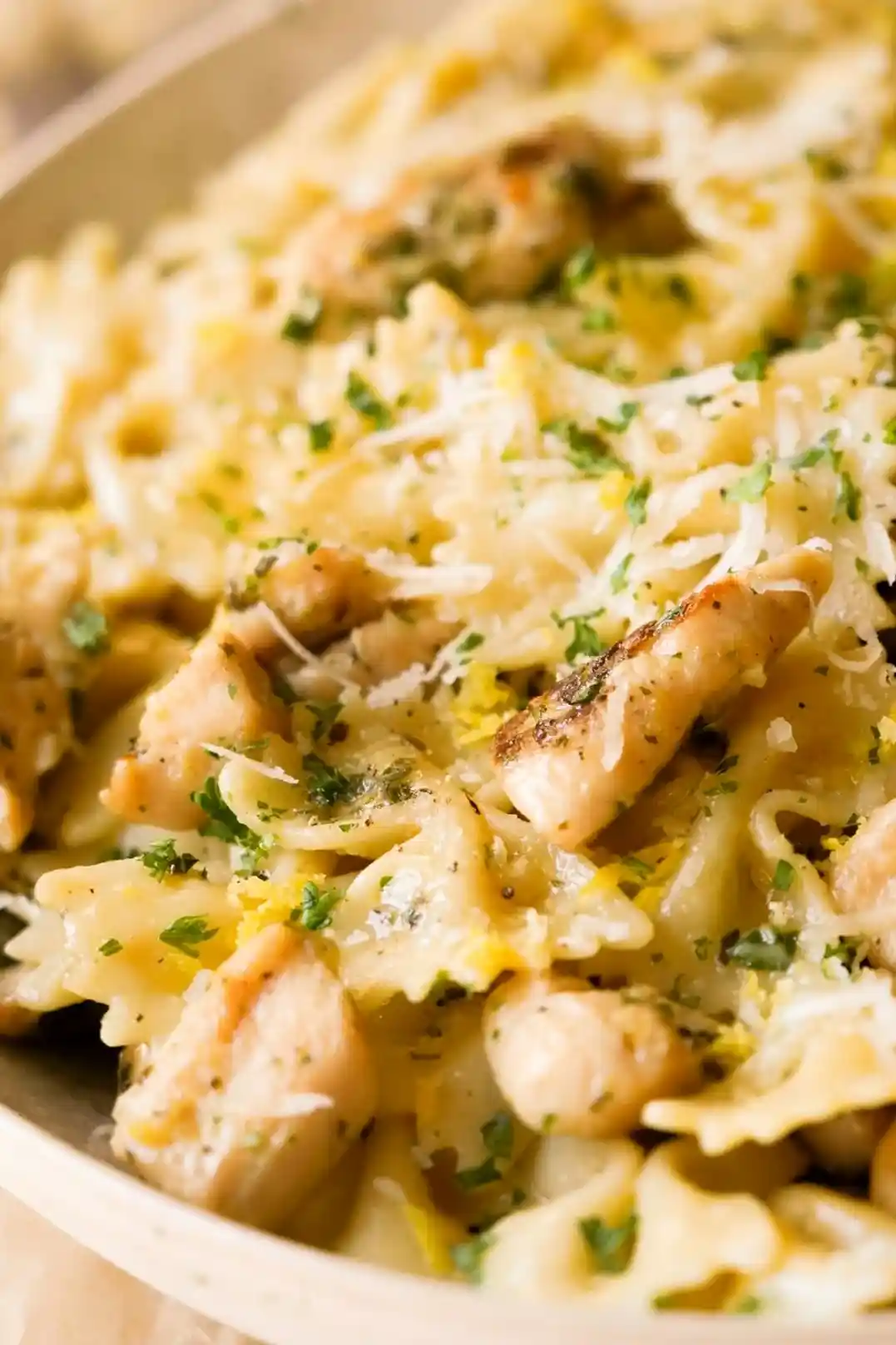
List of ingredients
- 1 lb chicken breast – cut into bite-sized pieces
- 1 tbsp olive oil – for sautéing
- 1 tsp garlic powder – for seasoning chicken
- Salt & pepper – to taste
- 8 oz farfalle pasta – bowtie shape
- 4 tbsp salted butter – divided into two portions
- 3 garlic cloves – minced fresh
- 1 tsp oregano, dried – for aromatic flavor
- 1 tsp parsley, dried – for herb notes
- 1 1/2 cup chicken broth – the sauce base
- 1/3 cup heavy cream – for richness
- 1 lemon – both zest and juice
- 1/2 cup parmesan cheese – freshly grated
- 2/3 cup pasta water – reserved from the pot
- Fresh parsley – for garnish
step-by-step instructions
- Boil the pasta: Cook the farfalle in a large pot of salted boiling water according to the package directions.
- Cook the chicken: Chop chicken into bite-sized pieces. Heat olive oil in a pan over medium-high heat and add chicken. Season with garlic powder, salt, and pepper, then sauté until golden brown and cooked through. Set aside.
- Sauté aromatics: Add 2 tbsp of butter and minced garlic to a large skillet over medium-high heat. Stir in oregano, dried parsley, salt, and pepper, sautéing until the garlic is translucent.
- Simmer the sauce: Pour in the chicken broth, heavy cream, lemon zest, and lemon juice. Let the mixture simmer for a few minutes until it thickens slightly.
- Emulsify the sauce: Lower the heat. Stir in the grated parmesan cheese and reserved pasta water until the sauce is smooth and the cheese has melted completely.
- Combine: Fold the cooked pasta and the sautéed chicken into the sauce. Mix well to ensure everything is evenly coated.
- Final touch: Stir in the remaining 2 tbsp of butter. Add salt and pepper to taste.
- Garnish: Serve the pasta topped with fresh parsley, extra lemon zest, and additional parmesan cheese.
Customizing Your Pasta Dish
Using Chicken Thighs for More Flavor
You can substitute chicken breasts with boneless, skinless chicken thighs. Thighs contain more fat, which makes the meat juicier and more resistant to overcooking during the sautéing process.
Alternative Pasta Shapes
While farfalle is recommended, other shapes like penne, fusilli, or fettuccine work well. These shapes provide different surface areas for the creamy lemon sauce to cling to.
Lighter Cream Alternatives
To reduce the richness, you can replace heavy cream with half-and-half or whole milk. Note that the sauce will be thinner and may require a slightly longer simmering time to thicken.
Broth and Stock Options
Standard chicken broth works best, but you can use low-sodium chicken stock for better salt control. If you want more acidity, add a small splash of apple cider vinegar or extra lemon juice.
Fresh Herb Upgrades
Swap dried oregano and parsley for fresh versions to increase the aromatic profile. Fresh basil or thyme also pair exceptionally well with the lemon and garlic flavors in this recipe.
Adding Nutritious Vegetables
Increase the nutrition by stirring in blanched asparagus, frozen sweet peas, or sliced zucchini. Add these during the final combining step so they maintain their texture and color.
Adding Savory Depth
To add a salty, savory element without using pork, incorporate sun-dried tomatoes or capers. These ingredients provide a concentrated flavor that complements the citrus notes of the sauce.
Pro Tips for the Best Result
Properly Salting the Pasta Water
Ensure the pasta water is heavily salted before adding the noodles. This is the only chance to season the pasta itself, which prevents the final dish from tasting flat.
Using Freshly Grated Parmesan
Avoid pre-shredded cheese, as it often contains cellulose to prevent clumping. Freshly grated parmesan melts more smoothly into the sauce without becoming grainy.
The Role of Reserved Pasta Water
Always reserve a portion of the starchy pasta water before draining. This liquid helps emulsify the butter and cheese, creating a cohesive sauce that sticks to the pasta.
Time-Saving with Rotisserie Chicken
For an even faster meal, use shredded rotisserie chicken instead of raw breasts. Simply stir the pre-cooked chicken into the sauce at the end to warm it through.
Preventing Sauce Separation
Keep the heat low when adding the parmesan cheese. High heat can cause the fats in the cheese and cream to separate, resulting in an oily texture rather than a creamy one.
Serving and Presentation Suggestions
Ideal Garnishes
Finish the dish with a sprinkle of fresh parsley and extra lemon zest. A final grating of parmesan cheese adds a professional touch and a boost of salty flavor.
Complementary Side Dishes
Pair this pasta with a light side salad featuring a lemon vinaigrette. Steamed broccoli or garlic knots are also excellent options to round out the meal.
Plating for Guests
Use shallow bowls to serve the pasta, allowing the sauce to pool slightly at the bottom. Add a fresh lemon wedge on the side of the plate for guests to add extra acidity.
Storage and Preservation
Refrigeration Guidelines
Store leftover pasta in an airtight container in the refrigerator. It will remain fresh and safe to eat for three to five days.
Freezing Considerations
It is not recommended to freeze this dish because the cream and cheese sauce can break during the freezing and thawing process. The texture may become grainy or watery.
Reheating Methods
Microwave Instructions
Heat individual portions in the microwave for 30 to 60 seconds. Stir halfway through the heating process to ensure the sauce is evenly distributed.
Stovetop Reheating
Place the pasta in a skillet over low heat. Add a splash of chicken broth or water to loosen the sauce and bring it back to its original creamy consistency.
Reviving the Sauce Texture
If the sauce has thickened too much in the fridge, stir in a small pat of butter while reheating. This restores the glossy finish and rich mouthfeel.
Troubleshooting Common Issues
Sauce is Too Thin
If the sauce is too watery, simmer it for an additional two to three minutes without the pasta. You can also stir in an extra tablespoon of parmesan cheese to thicken it.
Sauce is Too Thick
If the sauce becomes too heavy, stir in more reserved pasta water or a tablespoon of chicken broth. Do this gradually until the desired consistency is reached.
Overcooked Chicken
Prevent dry chicken by sautéing over medium-high heat and removing the pieces as soon as they are golden. Let the chicken rest briefly before adding it back to the sauce.
Excessive Lemon Tartness
If the lemon flavor is too strong, balance it by adding a small amount of extra heavy cream. A pinch of sugar can also help neutralize excessive acidity.
Frequently Asked Questions
Can I make this without heavy cream?
Yes, you can use a mixture of Greek yogurt or a plant-based cream alternative. Be sure to stir these in at the very end on low heat to prevent curdling.
Which lemon is best for this recipe?
Standard Eureka lemons work well, but Meyer lemons provide a sweeter, more floral citrus flavor. Either variety will work as long as they are fresh and juicy.
How do I keep the chicken tender?
Avoid overcrowding the pan when sautéing the chicken. Cooking in batches ensures the meat sears properly rather than steaming in its own juices.
Can I use frozen chicken breasts?
You can use frozen chicken, but it must be completely thawed in the refrigerator first. Cooking frozen chicken directly will release too much water and prevent browning.
Print
Creamy Lemon Chicken Pasta
- Total Time: 40 minutes
- Yield: 4 servings 1x
- Diet: General
Description
Creamy Lemon Chicken Pasta is the perfect weeknight dinner recipe for the whole family! Made with tender chicken, fresh lemon, heavy cream, herbs, and parmesan cheese, this simple pasta dish is bright, rich, and not too heavy.
Ingredients
- 1 lb chicken breast
- 1 tbsp olive oil
- 1 tsp garlic powder
- Salt & pepper
- 8 oz farfalle pasta
- 4 tbsp salted butter, separated
- 3 garlic cloves, minced
- 1 tsp oregano, dried
- 1 tsp parsley, dried
- 1 1/2 cup chicken broth
- 1/3 cup heavy cream
- 1 lemon, zest & juice
- 1/2 cup parmesan cheese, freshly grated
- 2/3 cup pasta water
- Fresh parsley
Instructions
- Step: Start by boiling the pasta according to the package directions
- Step: Chop the chicken into bite-sized pieces. Then heat the olive oil in pan over medium-high heat and add in the chicken pieces. Season chicken with the garlic powder, salt, and pepper. Sauté until cooked through and golden brown. Set aside.
- Step: Add 2 tbsp butter and the minced garlic to a large skillet or pan on the stove over medium-high heat. Add the oregano, parsley, salt, and pepper. Sauté until fragrant and the garlic is translucent.
- Step: Add in the chicken broth, heavy cream, lemon zest, and lemon juice. Simmer for a few minutes until slightly thickened.
- Step: Turn the heat a bit lower. Add in the parmesan cheese and pasta water. Stir until the sauce is smooth and cheese is melted.
- Step: Add the cooked pasta and chicken to the pasta sauce. Combine evenly.
- Step: Add the remaining 2 tbsp butter. Combine again. Add salt and pepper to taste.
- Step: Serve with fresh parsley, lemon zest, and parmesan cheese.
Notes
For a lighter sauce, try half & half or whole milk instead of heavy cream. Ensure you use microbial-rennet parmesan cheese. Remember to reserve the pasta water to help the sauce cling to the noodles.
- Prep Time: 10 minutes
- Cook Time: 30 minutes
- Category: Dinner
- Method: Stovetop
- Cuisine: American
Nutrition
- Serving Size: 1 serving
- Calories: 680 kcal
- Sugar: 7 g
- Sodium: 920 mg
- Fat: 34 g
- Saturated Fat: 19 g
- Unsaturated Fat: 13 g
- Trans Fat: 0 g
- Carbohydrates: 45 g
- Fiber: 3 g
- Protein: 46 g
- Cholesterol: 165 mg