
This comforting meal is a quick, budget-friendly option perfect for busy weeknights. It combines tender pasta shells with a rich, velvety cheese sauce and savory ground beef for a crowd-pleasing dinner.
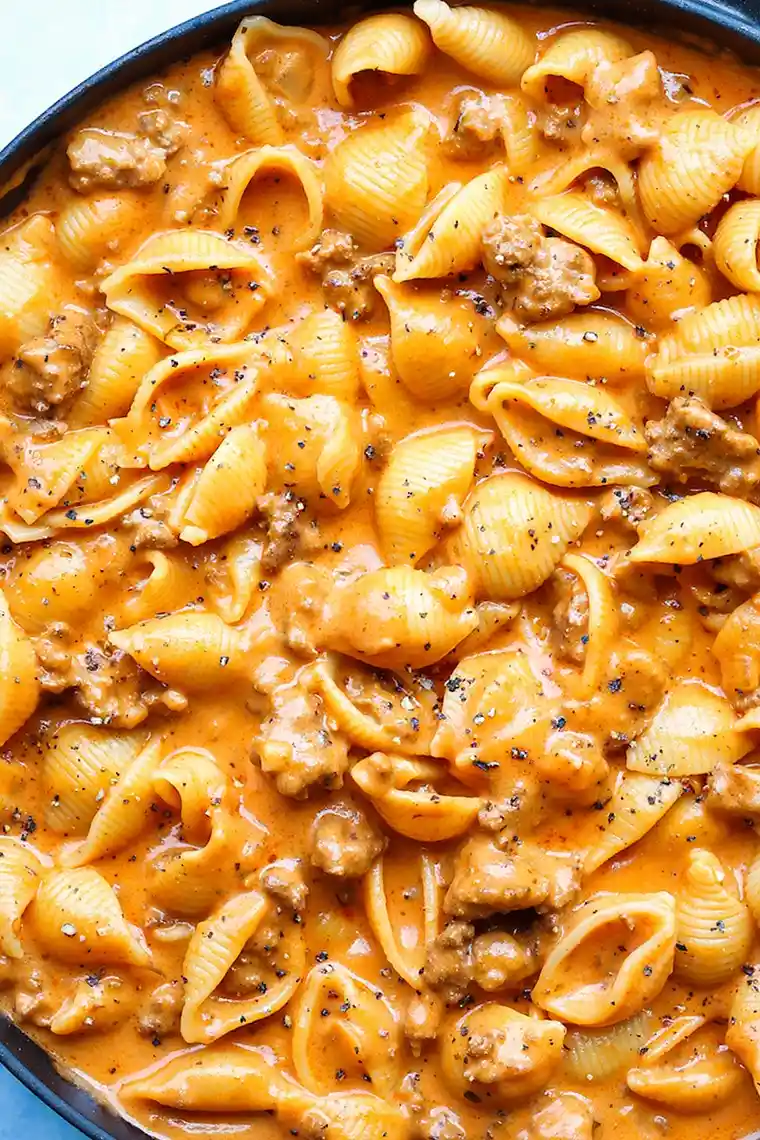
List of ingredients
- 8 ounces medium pasta shells – provides the perfect shape to hold the sauce.
- 1 tablespoon olive oil – used for searing the meat and sautéing vegetables.
- 1 pound ground beef – the primary protein source for the dish.
- 1/2 medium sweet onion, diced – adds a mild, aromatic base.
- 2 cloves garlic, minced – provides a pungent, savory depth.
- 1 1/2 teaspoons Italian seasoning – a blend of herbs for classic flavor.
- 2 tablespoons all-purpose flour – used as a thickening agent for the sauce.
- 2 cups beef stock – creates a rich liquid base for the gravy.
- 1 (15-ounce) can tomato sauce – adds acidity and a smooth red base.
- 3/4 cup heavy cream – makes the sauce creamy and luxurious.
- Kosher salt and freshly ground black pepper – adjusted to taste for seasoning.
- 6 ounces shredded extra-sharp cheddar cheese (about 1 1/2 cups) – provides sharpness and a melted texture.
step-by-step instructions
- Boil the Pasta: Cook pasta in a large pot of boiling salted water according to the package directions, then drain well.
- Brown the Beef: Heat olive oil in a large cast iron skillet over medium-high heat, add ground beef, cook until browned (3-5 minutes) while crumbling the meat, and then drain the excess fat. Set the beef aside.
- Sauté the Onion: Add the diced onion to the same skillet and cook, stirring frequently, until the pieces become translucent (2-3 minutes).
- Add Aromatics: Stir in the minced garlic and Italian seasoning, cooking for about 1 minute until fragrant.
- Create the Roux: Whisk in the all-purpose flour and cook for about 1 minute until the flour is lightly browned.
- Simmer the Sauce: Gradually whisk in the beef stock and tomato sauce. Bring the mixture to a boil, then reduce the heat and simmer, stirring occasionally, for 6-8 minutes until the sauce has reduced and thickened.
- Combine Ingredients: Stir the cooked pasta, browned beef, and heavy cream into the skillet. Heat through for 1-2 minutes and season with salt and pepper to taste.
- Melt the Cheese: Stir in the shredded cheddar cheese and continue stirring for about 2 minutes until completely melted.
- Serve: Dish out the pasta immediately while hot and creamy.
Expert Cooking Techniques for Better Results
Selecting the Ideal Skillet
Using a large cast iron skillet is recommended because it distributes heat evenly and maintains a consistent temperature. This prevents the ground beef from steaming and helps it achieve a proper brown sear. If you do not have cast iron, a heavy-bottomed stainless steel pan is a suitable alternative.
Managing Beef Fat for a Cleaner Taste
Draining the excess fat after browning the beef is crucial to prevent the final sauce from becoming greasy. Use a spoon to remove the oil or carefully pour the beef into a colander. This ensures the flour and beef stock emulsify into a smooth sauce without oil separation.
Achieving the Perfect Pasta Texture
Cook the pasta shells slightly under the package directions, often called al dente. Since the shells will simmer in the cream sauce for a few minutes at the end, undercooking them slightly prevents them from becoming mushy. This maintains the structural integrity of the shell.
Developing Flavor through Sautéing
Allow the onions to cook until they are translucent and slightly soft before adding the garlic. Garlic burns much faster than onions, so adding it later in the process ensures it releases its flavor without turning bitter. Stirring frequently prevents the aromatics from scorching on the bottom of the pan.
Recommended Ingredient Substitutions
Using Ground Turkey or Chicken
If you prefer a leaner meat, ground turkey or ground chicken works very well in this recipe. Since these meats have less fat than beef, you may need to add an extra teaspoon of olive oil to the pan. The flavor remains savory, though the richness is slightly reduced.
Alternative Dairy Options
For a lighter version, you can replace heavy cream with half-and-half or whole milk. Keep in mind that these alternatives will result in a thinner sauce and a less velvety mouthfeel. If using milk, you may need to simmer the flour mixture slightly longer to ensure adequate thickening.
Variations in Cheese Selection
While extra-sharp cheddar provides a bold flavor, you can use Monterey Jack for a milder taste and superior melt. A blend of mozzarella and parmesan can also be used for a more Italian-style flavor profile. Ensure the cheese is freshly shredded for the smoothest melt.
Substituting Tomato Sauce
If you do not have canned tomato sauce, you can use tomato passata or finely pureed canned tomatoes. Passata is uncooked and smoother, which integrates well into the cream sauce. Avoid using chunky crushed tomatoes unless you prefer a textured sauce.
Gluten-Free Pasta Alternatives
To make this dish gluten-free, substitute the medium pasta shells with brown rice or corn-based shells. Replace the all-purpose flour with a 1:1 gluten-free flour blend or cornstarch. If using cornstarch, mix it with a small amount of cold water before adding it to the skillet to avoid lumps.
Nutritional Enhancements and Add-ins
Incorporating Fresh Spinach
Adding two cups of fresh baby spinach during the final heating stage adds color and nutrients. Stir the leaves in just before adding the cheese; the residual heat will wilt the spinach perfectly without overcooking it. This adds a subtle earthy flavor to the creamy beef.
Adding Diced Root Vegetables
For extra texture, dice carrots and celery very finely and sauté them along with the onions. This creates a mirepoix base that adds sweetness and complexity to the beef sauce. Cook these vegetables for an extra 3-5 minutes to ensure they are tender.
Mixing in Frozen Peas
Frozen peas can be added during the last two minutes of simmering. They provide a pop of sweetness and brightness that cuts through the richness of the cheese and cream. There is no need to thaw the peas beforehand; they will heat through quickly in the sauce.
Adding Chopped Bell Peppers
Red or green bell peppers add a mild sweetness and a vibrant look to the dish. Sauté them with the onions to soften their texture. This addition makes the meal feel more like a complete one-pot meal with a variety of vegetable flavors.
Serving Suggestions and Pairings
Complementing with Garlic Bread
Serve this pasta alongside warm, toasted garlic bread to scoop up any remaining sauce. A crusty baguette sliced and brushed with garlic butter and parsley is an ideal choice. The crunch of the toast contrasts well with the softness of the shells.
Pairing with Steamed Broccoli
To balance the richness of the cheese sauce, serve a side of steamed broccoli florets. The slight bitterness of the broccoli helps cleanse the palate between bites of creamy pasta. You can also stir the steamed broccoli directly into the shells for convenience.
Adding a Fresh Garden Salad
A crisp green salad with a light vinaigrette provides a refreshing contrast to the heavy beef and cream. Use mixed greens, cucumbers, and cherry tomatoes with a lemon-olive oil dressing. This acidity helps balance the fats in the cheddar and heavy cream.
Serving with Roasted Zucchini
Slices of roasted zucchini seasoned with salt, pepper, and dried oregano make a healthy side dish. Roasting the zucchini at a high temperature brings out its natural sugars. This pairing keeps the meal hearty while adding a serving of summer vegetables.
Storage and Reheating Guidelines
Refrigerator Storage Methods
Store leftovers in an airtight container in the refrigerator for up to 3-4 days. Ensure the pasta has cooled slightly before sealing the container to prevent excess condensation. This keeps the shells from becoming too soggy during storage.
How to Freeze Portions
Allow the beef and shells to cool completely before portioning them into freezer-safe plastic bags. Squeeze out as much air as possible to prevent freezer burn. Lay the bags flat in the freezer to save space and allow for faster freezing.
Thawing Frozen Pasta
The best way to thaw the pasta is to move it from the freezer to the refrigerator overnight. This slow thaw preserves the texture of the pasta shells. Avoid thawing in the microwave, as this can cause the cream sauce to separate.
Best Reheating Methods
Reheat the pasta on the stovetop over low to medium heat. Add a splash of beef stock or milk to loosen the sauce, as pasta tends to absorb liquid while sitting. Stir gently and occasionally until the cheese is melted and the dish is heated through.
Troubleshooting Common Issues
Fixing a Sauce That Is Too Thick
If the sauce becomes too thick after simmering or reheating, gradually stir in a small amount of beef stock or milk. Add one tablespoon at a time and stir until the desired consistency is reached. This restores the creaminess without diluting the flavor.
Preventing Cream from Curdling
To prevent the heavy cream from curdling, add it at the very end of the cooking process. Pour the cream in slowly and keep the heat on medium-low. Extreme high heat combined with the acidity of the tomato sauce can cause the fats in the cream to separate.
Adjusting Saltiness in the Dish
If the dish tastes too salty, it may be due to the beef stock or the cheddar cheese. Stir in a small amount of unsalted heavy cream or a pinch of sugar to balance the salt. Always taste the sauce before adding additional kosher salt.
Managing Excess Beef Fat
If you notice oil pooling on top of the sauce, you may not have drained the beef sufficiently. You can gently skim the oil off the surface with a spoon before adding the cream. Alternatively, stirring in a bit more flour during the roux stage can help emulsify the remaining fats.
Common Questions About Beef and Shells
Can I use passata instead of tomato sauce?
Yes, you can use passata, which is a smooth, uncooked tomato puree. It will result in a similar consistency, though it may have a slightly fresher tomato taste than processed tomato sauce. The ratio remains the same.
What is the best beef fat percentage?
Using ground beef with a 80/20 or 85/15 lean-to-fat ratio is ideal. The fat provides the necessary flavor for the sauce, but too much can make the dish greasy. If using very lean beef (90/10), you may need to add a bit more olive oil for browning.
Can I cook the pasta in the same pan?
While possible, it is not recommended for this specific recipe to maintain the sauce’s texture. Cooking the pasta separately ensures it is perfectly al dente and doesn’t release too much starch into the sauce, which could make it gummy.
How to prevent the shells from breaking?
Avoid overcooking the pasta in the initial boiling phase. Stir the pasta gently with a wooden spoon and do not over-stir once the shells are added to the sauce. This prevents the delicate edges of the shells from breaking during the final mixing process.
Print
Cheesy Ground Beef and Pasta Shells
- Total Time: 40 minutes
- Yield: 4 servings 1x
- Diet: General
Description
Quick, easy, budget-friendly (using ground beef), and made in just 30-40 minutes, a weeknight hero! A crowd-favorite for the entire family!
Ingredients
- 8 ounces medium pasta shells
- 1 tablespoon olive oil
- 1 pound ground beef
- 1/2 medium sweet onion, diced
- 2 cloves garlic, minced
- 1 1/2 teaspoons Italian seasoning
- 2 tablespoons all-purpose flour
- 2 cups beef stock
- 1 (15-ounce) can tomato sauce
- 3/4 cup heavy cream
- Kosher salt to taste
- freshly ground black pepper to taste
- 6 ounces shredded extra-sharp cheddar cheese
Instructions
- Step 1: In a large pot of boiling salted water, cook pasta according to package instructions; drain well.
- Step 2: Heat olive oil in a large cast iron skillet over medium high heat. Add ground beef and cook until browned, about 3-5 minutes, making sure to crumble the beef as it cooks; drain excess fat. Set aside.
- Step 3: Add onion to the skillet, and cook, stirring frequently, until translucent, about 2-3 minutes.
- Step 4: Stir in garlic and Italian seasoning until fragrant, about 1 minute.
- Step 5: Whisk in flour until lightly browned, about 1 minute.
- Step 6: Gradually whisk in beef stock and tomato sauce. Bring to a boil; reduce heat and simmer, stirring occasionally, until reduced and slightly thickened, about 6-8 minutes.
- Step 7: Stir in pasta, beef and heavy cream until heated through, about 1-2 minutes; season with salt and pepper, to taste. Stir in cheese until melted, about 2 minutes.
- Step 8: Serve immediately.
Notes
You can substitute ground beef with ground turkey or chicken. For added nutrition, stir in leafy greens like spinach or kale. Serve with crusty bread for dipping.
- Prep Time: 15 minutes
- Cook Time: 25 minutes
- Category: Main Course
- Method: Stovetop
- Cuisine: American
Nutrition
- Serving Size: 1 serving
- Calories: 850 kcal
- Sugar: 12 g
- Sodium: 1150 mg
- Fat: 58 g
- Saturated Fat: 32 g
- Unsaturated Fat: 22 g
- Trans Fat: 2 g
- Carbohydrates: 48 g
- Fiber: 4 g
- Protein: 42 g
- Cholesterol: 145 mg