
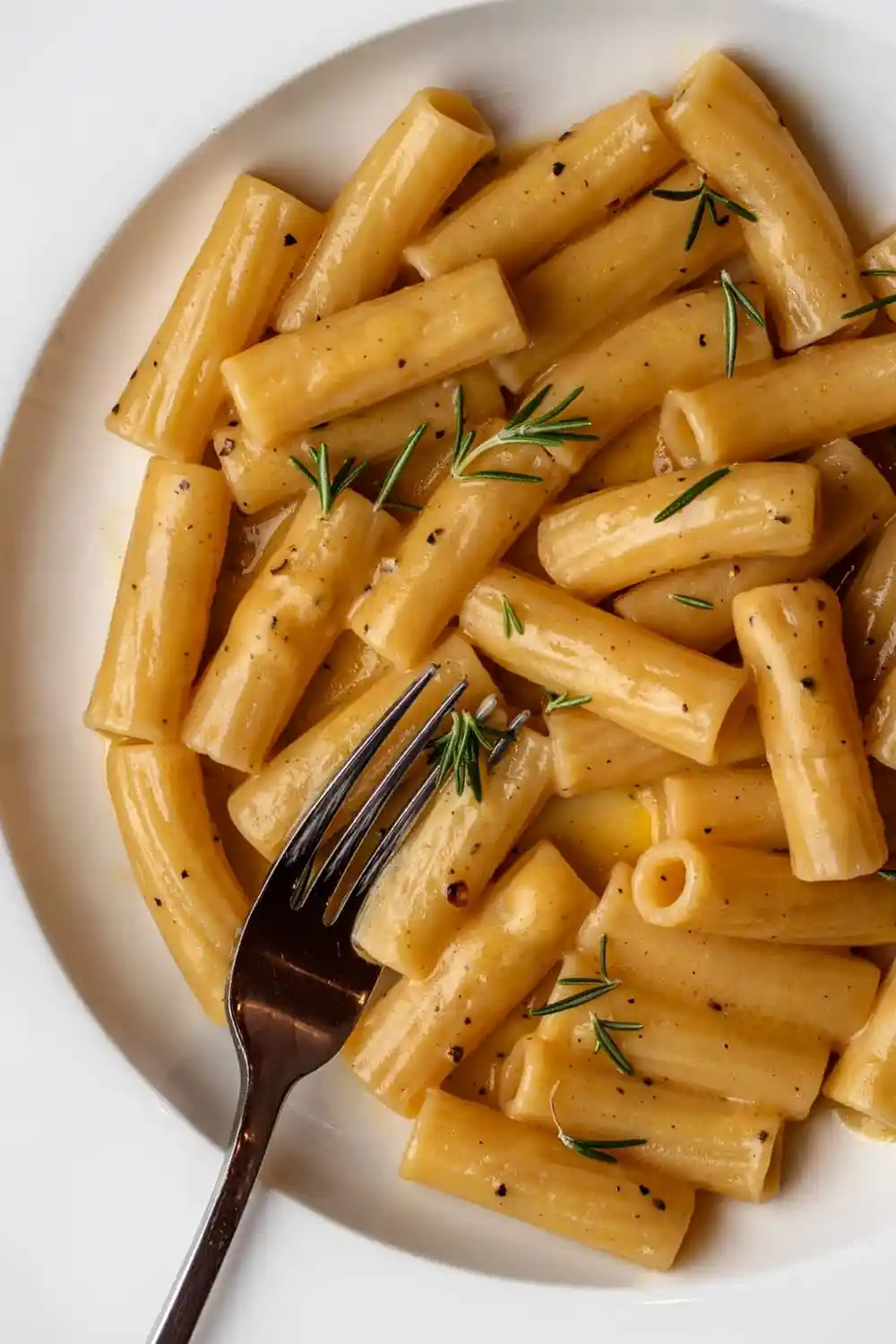
This luxurious garlic butter pasta relies on the mellow, jammy sweetness of slow-roasted garlic cloves infused into high-quality butter. By blending aromatic confit garlic with room-temperature butter, you create a rich, velvety base that transforms simple pasta into a restaurant-quality meal. It is a perfect dish for those seeking an elegant yet accessible dinner that highlights simple, high-quality pantry staples.
List of ingredients
- 1 whole bulb of garlic (cloves peeled)
- 1 cup extra virgin olive oil
- 2 – 3 sprigs fresh rosemary (plus extra for serving)
- 100 grams butter (room temperature)
- 1/4 – 1/2 teaspoon black pepper
- 200 grams dried pasta
- Parmesan cheese (to serve)
step-by-step instructions
- Step: Place the peeled garlic cloves and rosemary sprigs into a small baking dish and cover with the olive oil.
- Step: Bake in the oven at 160°C (320°F) for 45 minutes to 1 hour until the garlic is golden and soft.
- Step: Once cooled, drain excess oil and blend the garlic cloves with the room temperature butter until smooth.
- Step: Wrap the garlic butter in plastic wrap or parchment paper and refrigerate until hardened.
- Step: Boil the pasta in a large pot of well-salted water, reserving 1 cup of starchy pasta water before draining.
- Step: Melt the prepared garlic butter in a large skillet over medium heat, then stir in the black pepper.
- Step: Add 1/2 cup of reserved pasta water and whisk vigorously to emulsify into a silky sauce.
- Step: Add the cooked pasta to the skillet, toss well to coat, and serve topped with freshly grated Parmesan and rosemary.
Refining Your Confit Garlic Technique
Selecting the Ideal Baking Vessel
When roasting garlic for this recipe, the size of your baking dish is critical for success. Using a container that is too wide will spread the cloves out, requiring significantly more olive oil to ensure they are fully submerged. A small ramekin, loaf pan, or even a small cast-iron skillet allows you to achieve the perfect confit texture with minimal oil waste.
Storing Your Infused Cooking Oil
The olive oil remaining after your garlic has finished roasting is essentially a liquid gold infused with deep garlic and rosemary notes. Do not discard this byproduct; strain it through a fine-mesh sieve and store it in a clean glass jar in the refrigerator. Use this oil to sauté vegetables, brush onto toasted sourdough, or drizzle over roasted potatoes for an instant flavor upgrade.
Perfecting the Butter Emulsion Process
Understanding the Role of Pasta Starch
The magic behind this recipe lies in the starch released from the pasta as it boils. When you combine the reserved cooking water with melted butter, the starches act as a binding agent that keeps the sauce from separating. Without the starchy water, you would simply have greasy pasta rather than a luxurious, clingy sauce that coats the noodles evenly.
Mastering the Whisking Technique
To achieve that signature silky consistency, continuous motion is your best friend during the final stage. Use a flat whisk to move the butter and water rapidly around the pan while simultaneously tilting the pan to help the sauce aerate. This vigorous agitation breaks the fat molecules down into the water, creating a stable, opaque sauce that clings beautifully to the pasta surface.
Adjusting for Personal Preferences
Flavor Variations and Additions
While the garlic and rosemary profile is classic, you can easily experiment with the flavor base by adding different herbs during the roasting phase. Thyme and sage work exceptionally well with garlic, providing a slightly different aromatic complexity that pairs beautifully with butter. For those who enjoy a bit of heat, adding a pinch of crushed red pepper flakes during the final sauce toss introduces a gentle warmth that balances the richness of the butter.
Selecting Your Preferred Pasta Shapes
While long noodles like spaghetti or linguine are traditional, the sauce is versatile enough to work with almost any pasta shape. If you prefer short pasta, try using shapes with ridges or pockets like rigatoni or orecchiette, which are excellent at trapping the silky sauce. Ensure that whichever shape you choose, you keep a close eye on the cooking time to ensure the pasta retains a firm texture before moving it to the sauce skillet.
Essential Troubleshooting Advice
Fixing a Sauce That Has Broken
If you notice the oil separating from the butter and water, do not panic; this is easily reversible. Simply remove the skillet from the heat, add a tablespoon of cold water, and whisk rapidly until the emulsion comes back together. Keeping the heat source controlled at a medium-low level throughout the process is the most effective way to prevent the sauce from breaking in the first place.
Achieving the Correct Garlic Texture
The garlic should be completely soft and spreadable after its time in the oven. If you find the cloves are still firm or have a rubbery texture, they need more time at a lower heat. Always test a clove by pressing it with a fork before blending; if it does not mash effortlessly, return the baking dish to the oven for an additional ten minutes.
Frequently Asked Questions
How can I make this dish heartier?
You can bulk up the meal by tossing in sautéed baby spinach, blanched asparagus spears, or roasted cherry tomatoes just before serving. These additions provide color and nutritional variety without overpowering the delicate garlic butter sauce.
Can I use unsalted butter if that is all I have?
Yes, you can use unsalted butter, but you must compensate by increasing the amount of salt you add to your pasta boiling water and potentially adding a pinch of sea salt directly to the sauce. Salt is essential for drawing out the sweetness of the roasted garlic, so make sure to taste and adjust the seasoning carefully as you combine the ingredients.
Why is the pasta water so important?
Pasta water contains high concentrations of gelatinized starch, which is the secret ingredient for professional-style sauces. It changes the viscosity of the sauce and helps the flavor adhere to the pasta rather than sliding off to the bottom of the bowl. Always remember to reserve the water before you dump your pasta into the colander, as it is difficult to mimic this texture with plain water.
What is the best way to reheat leftovers?
Butter-based sauces are best served immediately, but if you do have leftovers, place them in a skillet over very low heat with a small splash of water. Stir constantly to bring the sauce back to a creamy consistency without overheating it, which can cause the butter to burn or split. Microwaving is generally discouraged as it tends to break the emulsion rapidly.
Print
Insanely Delicious Garlic Butter Pasta Recipe
- Total Time: PT75M
- Yield: 2 servings 1x
- Diet: Vegetarian
Description
An insanely delicious garlic butter sauce made with luscious confit garlic. Using only a handful of pantry staples, this luxurious but easy pasta sauce is the ultimate comfort food.
Ingredients
- 1 whole bulb of garlic (cloves peeled)
- 1 cup extra virgin olive oil
- 2 – 3 sprigs fresh rosemary (plus extra for serving)
- 100 grams butter (room temperature)
- 1/4 – 1/2 teaspoon black pepper
- 200 grams dried pasta
- Parmesan cheese (to serve)
Instructions
- Step: Place the peeled garlic cloves and rosemary sprigs into a small baking dish and cover with the olive oil.
- Step: Bake in the oven at 160°C (320°F) for 45 minutes to 1 hour until the garlic is golden and soft.
- Step: Once cooled, drain excess oil and blend the garlic cloves with the room temperature butter until smooth.
- Step: Wrap the garlic butter in plastic wrap or parchment paper and refrigerate until hardened.
- Step: Boil the pasta in a large pot of well-salted water, reserving 1 cup of starchy pasta water before draining.
- Step: Melt the prepared garlic butter in a large skillet over medium heat, then stir in the black pepper.
- Step: Add 1/2 cup of reserved pasta water and whisk vigorously to emulsify into a silky sauce.
- Step: Add the cooked pasta to the skillet, toss well to coat, and serve topped with freshly grated Parmesan and rosemary.
Notes
Store extra confit garlic in the oil in a jar for up to two weeks in the fridge. Use salted butter for the best flavor; if using unsalted, add a pinch of salt to the sauce.
- Prep Time: PT60M
- Cook Time: PT15M
- Category: Vegetarian
- Method: Stovetop
- Cuisine: Italian Inspired
Nutrition
- Serving Size: 1 serving
- Calories: 580 kcal
- Sugar: 2 g
- Sodium: 450 mg
- Fat: 48 g
- Saturated Fat: 15 g
- Unsaturated Fat: 30 g
- Trans Fat: 0 g
- Carbohydrates: 32 g
- Fiber: 2 g
- Protein: 8 g
- Cholesterol: 65 mg