
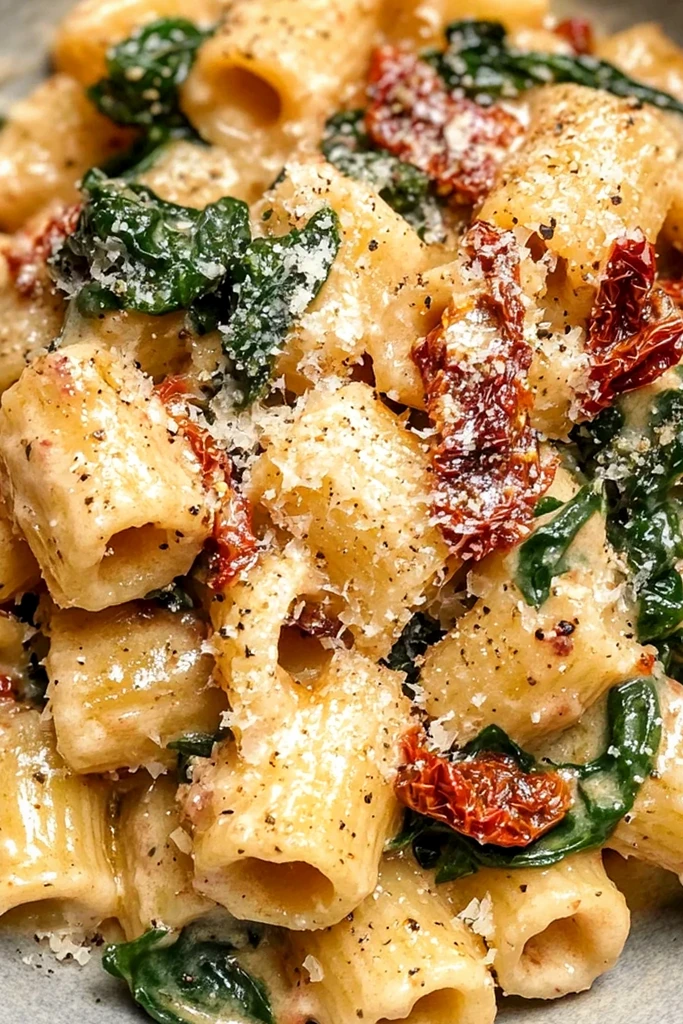
Sun-dried tomato pasta is a sophisticated yet approachable dinner solution designed for those who appreciate robust, savory flavors without requiring hours in the kitchen. By balancing the intense tang of sun-dried tomatoes with a velvety cream base and fresh, iron-rich spinach, this meal offers a restaurant-quality experience right at your dining table. It is the perfect choice for a busy weeknight when time is limited but quality cannot be sacrificed, providing a nourishing and comforting result every single time you cook it.
List of ingredients
- 8 ounces uncooked pasta
- 2 tablespoons butter
- 1/2 tablespoon flour
- 3 cloves garlic, minced
- 1/2 cup dry white apple vinegar or vegetable broth
- 1/2 cup sun-dried tomatoes, chopped
- 3/4 cup heavy cream
- 2 cups fresh baby spinach
- 1/3 cup freshly grated parmesan cheese
step-by-step instructions
- Step 1: Boil salted water in a large pot; cook pasta until al dente according to package instructions.
- Step 2: In a skillet, melt butter over medium heat. Add flour and minced garlic; cook until fragrant, about 30 seconds.
- Step 3: Whisk in apple vinegar and simmer until reduced by half.
- Step 4: Stir in chopped sun-dried tomatoes and heavy cream; let bubble gently for about 5 minutes.
- Step 5: Mix in parmesan cheese and spinach until wilted; combine with drained pasta and season to taste.
Refining your pasta texture
Selecting the right pasta shape for sauce retention
The geometry of your pasta matters significantly when dealing with cream-based sauces. Choose shapes like rigatoni or fusilli that feature ridges or holes because they provide a larger surface area for the sun-dried tomato cream to adhere to. Long, thin strands like angel hair tend to become overwhelmed by the richness of this specific sauce, whereas medium-sized shapes maintain a better structural balance on the fork.
Mastering the al dente stage for better mouthfeel
Always drain your pasta approximately one minute earlier than the package instructions suggest for al dente. Because you will be incorporating the pasta into the hot sauce in the final step, the noodles will continue to absorb liquid and soften as they sit in the pan. By stopping the boiling process slightly early, you prevent the pasta from becoming mushy or losing its integrity during the final tossing phase.
Secrets to a perfectly balanced cream sauce
Maintaining the emulsion between fat and liquid
The key to a silky sauce lies in how you manage the heat after adding the heavy cream. If the heat is too high, the fat in the cream can separate, leading to a greasy sauce rather than a cohesive, emulsified one. Keep the heat at a gentle, consistent bubble, and avoid rapid boiling, which can lead to thinning and separation of the milk solids.
Deglazing the pan for deeper flavor profiles
When you add your liquid base—whether the vinegar or broth—it is crucial to use your spoon to lift the browned bits, known as fond, from the pan. These caramelized garlic and butter remnants provide a savory foundation that elevates the entire dish. This simple deglazing technique transforms a standard sauce into one with professional-level complexity and depth of flavor.
Variations for your pantry staples
Introducing additional plant-based proteins
If you wish to make the dish more filling without using meat, consider adding legumes such as cannellini beans or chickpeas. These ingredients provide a mild, creamy texture that complements the sun-dried tomatoes perfectly. Simply stir them in during the final stage of sauce reduction so they have just enough time to warm through without breaking down into a paste.
Adding different vegetables for crunch
While spinach is the classic choice, you can easily incorporate other vegetables depending on what is in your crisper drawer. Thinly sliced zucchini, sautéed bell peppers, or even roasted artichoke hearts integrate seamlessly into this flavor profile. Ensure that any higher-moisture vegetables are sautéed separately to remove excess liquid before adding them to your sauce, otherwise, they may dilute the richness of the cream.
Storage and reheating best practices
Managing leftovers for maximum freshness
If you have leftovers, place them into an airtight container immediately after the food has cooled to room temperature. This prevents the sauce from drying out or forming a film on the surface. When stored in the refrigerator, the pasta will continue to soak up the sauce, which is why it is beneficial to add a tiny splash of water or broth before reheating to restore the original, glossy consistency.
Safe methods for bringing back heat
The best way to reheat this pasta on the stovetop is to add one or two tablespoons of water or milk to the skillet before adding the pasta. Cover the pan and keep the heat on low, stirring frequently to ensure the cream does not curdle or scorch. Using a microwave is acceptable in a pinch, but remember to stir every thirty seconds and cover the bowl with a damp paper towel to trap steam and keep the noodles hydrated.
Answers to common cooking questions
Question: Is it possible to use oil-packed sun-dried tomatoes for this recipe?
Yes, absolutely. In fact, using oil-packed sun-dried tomatoes often provides an even deeper flavor because the tomatoes have been marinating in a savory oil. Make sure to drain them well on a paper towel before chopping, but consider using a tiny bit of that flavorful oil in the skillet instead of using all the butter for an extra layer of richness.
Question: Can I prepare this meal using a dairy-free cream alternative?
Yes, you can substitute the heavy cream with full-fat coconut milk or a high-quality cashew cream. Keep in mind that coconut milk will impart a slight sweetness, so you may want to increase the salt and pepper to balance the profile. Cashew cream is often considered the most neutral substitute, matching the texture of dairy cream quite closely.
Question: Should I rinse my pasta after boiling it?
No, you should never rinse your cooked pasta. The starch released by the noodles into the boiling water is what helps the sauce cling to the pasta. Rinsing removes this essential starchy layer, which can cause the sauce to slide off the noodles, resulting in a disconnected and lackluster final dish.
Question: Is there a way to make the sauce thicker if it feels too thin?
If your sauce looks too thin, continue to simmer it gently for an additional two to three minutes, which will allow more evaporation to occur. Alternatively, you can add an extra tablespoon of grated parmesan cheese, as the solids in the cheese will naturally act as a thickener when combined with the warm sauce. Avoid adding more flour at this late stage, as it can create a raw, powdery texture.
Print
Sun-Dried Tomato Pasta
- Total Time: 30 minutes
- Yield: 4 servings 1x
- Diet: Vegetarian
Description
Indulge in the rich and creamy delight of Sun-Dried Tomato Pasta, a dish that beautifully balances convenience and elegance. This quick recipe features al dente pasta enveloped in a luxurious sauce made with sun-dried tomatoes, garlic, and fresh spinach, all finished with a sprinkle of parmesan cheese.
Ingredients
- 8 ounces uncooked pasta
- 2 tablespoons butter
- 1/2 tablespoon flour
- 3 cloves garlic, minced
- 1/2 cup dry white apple vinegar or vegetable broth
- 1/2 cup sun-dried tomatoes, chopped
- 3/4 cup heavy cream
- 2 cups fresh baby spinach
- 1/3 cup freshly grated parmesan cheese
Instructions
- Step 1: Boil salted water in a large pot; cook pasta until al dente according to package instructions.
- Step 2: In a skillet, melt butter over medium heat. Add flour and minced garlic; cook until fragrant, about 30 seconds.
- Step 3: Whisk in apple vinegar and simmer until reduced by half.
- Step 4: Stir in chopped sun-dried tomatoes and heavy cream; let bubble gently for about 5 minutes.
- Step 5: Mix in parmesan cheese and spinach until wilted; combine with drained pasta and season to taste.
Notes
Reserve a small amount of pasta water before draining to adjust sauce consistency if needed. Feel free to garnish with fresh herbs like basil or parsley.
- Prep Time: 10 minutes
- Cook Time: 20 minutes
- Category: Dinner
- Method: Boiling & Sautéing
- Cuisine: Italian
Nutrition
- Serving Size: 1 serving
- Calories: 430 kcal
- Sugar: 2 g
- Sodium: 400 mg
- Fat: 24 g
- Saturated Fat: 13 g
- Unsaturated Fat: 10 g
- Trans Fat: 0 g
- Carbohydrates: 42 g
- Fiber: 3 g
- Protein: 12 g
- Cholesterol: 60 mg