
This vibrant and wholesome pasta dish combines the earthy heartiness of chickpeas with the crisp, clean flavor of fresh broccoli florets. Infused with a fragrant garlic and olive oil base, it offers a sophisticated yet accessible meal that can be prepared in just half an hour. It is a perfect solution for busy weeknights when you want something satisfying, nutritious, and free from complicated techniques or hard-to-find ingredients.
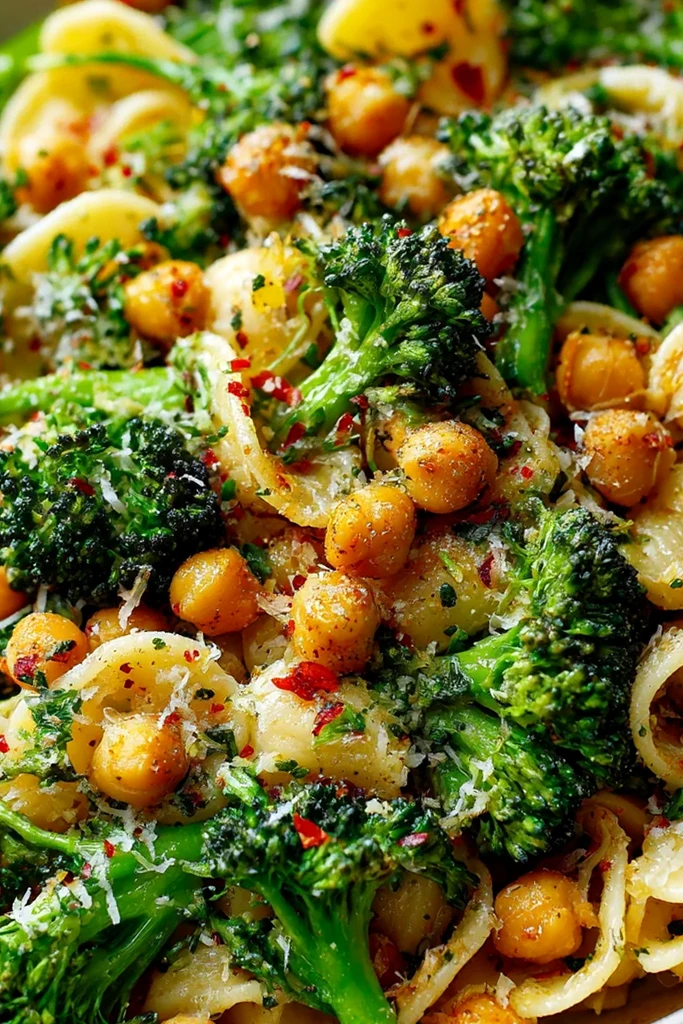
List of ingredients
- 250g (8.8 oz) Pasta (penne, rotini, fusilli)
- 300g (10.5 oz) Broccoli Florets (fresh or frozen)
- 1 can (400g / 14 oz) Chickpeas, drained & rinsed
- 4–5 cloves Garlic, minced
- 60ml (¼ cup) Olive Oil
- ¼ teaspoon Red Pepper Flakes
- 60ml (¼ cup) Vegetable Broth
- 1 tablespoon Lemon Juice
- 30g (¼ cup) Grated Parmesan Cheese (optional)
- Salt & Black Pepper to taste
step-by-step instructions
- Step: Cook pasta al dente, reserve ½ cup pasta water, then drain.
- Step: Sauté garlic and red pepper flakes in olive oil for 1 minute.
- Step: Add broccoli and cook for 5–7 minutes.
- Step: Add chickpeas, vegetable broth, and lemon juice; simmer for 2–3 minutes.
- Step: Toss pasta with the mixture, adding reserved pasta water if needed for consistency.
- Step: Season with salt and pepper. Serve with Parmesan if using.
Refining Your Pasta Techniques
Understanding Al Dente Texture
Achieving the perfect al dente texture—meaning “to the tooth”—is fundamental to this dish. You want the pasta to offer a slight resistance when bitten, which provides a satisfying contrast to the soft broccoli and chickpeas. If you cook the pasta until it is completely soft in the water, it will likely lose its structural integrity and become mushy once combined with the hot skillet contents.
The Role of Starchy Pasta Water
The water used to boil the pasta is often referred to as liquid gold in culinary circles because it contains dispersed starches released by the grains during the boiling process. When you incorporate a few tablespoons of this cloudy water into your olive oil and broth mixture, the starch molecules help bridge the gap between the fat and the liquid. This results in a cohesive, silky sauce that clings to the pasta rather than pooling at the bottom of the bowl.
Customizing Ingredients and Flavor Profiles
Expanding the Vegetable Selection
While broccoli is the star of this recipe, you can easily introduce other seasonal vegetables to change the texture and flavor profile. Thinly sliced zucchini or yellow squash can be added at the same time as the broccoli for a softer texture, or you can stir in fresh baby spinach at the very end until it just wilts. For a more robust profile, sautéing thinly sliced shallots alongside the garlic provides a deeper, sweeter onion flavor that complements the earthiness of the chickpeas.
Adjusting the Heat Levels
The current measurement of red pepper flakes offers a mild, warming background that appeals to most palates. If you prefer a more pronounced spice, you can double the amount of red pepper flakes or add a small amount of finely diced fresh chili pepper during the initial sauté step. Conversely, if you prefer no heat at all, you can replace the red pepper flakes with a pinch of smoked paprika, which adds a subtle, earthy depth without the spice.
Substituting the Legume Base
Chickpeas are excellent for their mild flavor and firm texture, but this recipe works equally well with other legumes if you happen to be out of stock. Cannellini beans or small white navy beans are fantastic alternatives that also provide a creamy interior and a thin skin that holds up well during sautéing. Always remember to rinse any canned legumes thoroughly under cold water to remove the excess sodium and thick storage liquid.
Serving and Storage Recommendations
Pairing for a Complete Meal
To turn this pasta into a more substantial feast, consider pairing it with a side that provides acidic or bitter contrast. A simple arugula salad tossed with a sharp vinaigrette helps cut through the richness of the olive oil coating the pasta. Alternatively, warm, crusty rustic bread is perfect for mopping up any remaining garlic-infused sauce left at the bottom of the serving bowl.
Managing Leftovers Safely
If you have leftovers, store them in a clean, airtight container in the refrigerator as soon as they have cooled down to room temperature. The dish will keep well for up to three or four days, though the texture of the broccoli may soften slightly over time. For the best quality, try to consume the pasta within the first forty-eight hours to maintain the intended crispness of the vegetables.
Reheating Without Drying Out
To reheat, it is best to use a skillet on the stovetop rather than a microwave. Heat the pasta over medium-low heat with a tiny splash of water or vegetable broth to rehydrate the sauce. Stir gently until the pasta is warmed through; the added liquid will help reform the emulsion and bring back that glossy, freshly-tossed quality.
Common Queries Addressed
Can this recipe be prepared ahead of time?
While the dish tastes best when prepared fresh, you can partially prepare the components ahead of time. You can boil the pasta until just shy of al dente and keep it in the refrigerator with a drizzle of olive oil, and you can also pre-chop the garlic and broccoli. When you are ready to eat, simply toss everything together in the hot skillet, which will save you roughly ten minutes of active preparation time during a busy evening.
Is there a way to make the sauce creamier without heavy dairy?
If you desire a creamier sauce without using standard dairy, you can mash a small portion of the chickpeas before adding them to the skillet. The starchy, mashed interior of the chickpeas will thicken the broth and olive oil mixture significantly. Alternatively, a teaspoon of mild, unflavored tahini whisked into the broth before adding it to the skillet will provide a rich, nutty, and creamy mouthfeel that adheres perfectly to the pasta shapes.
How do I handle frozen broccoli properly?
Frozen broccoli is a perfectly acceptable substitute and is often harvested at its peak. To use it, simply place the frozen florets in a colander and rinse them under warm water for thirty seconds to thaw and remove ice crystals. Pat the florets dry with a clean kitchen towel before adding them to the skillet; this prevents them from steaming excessively or watering down the garlic oil during the cooking process.
Why does the garlic turn bitter so quickly?
Garlic has a very low smoke point compared to other aromatics, which is why it requires careful attention in the pan. If the heat is too high, the natural sugars in the garlic caramelize and then burn almost instantaneously. By using medium-low heat and keeping the garlic moving with a wooden spoon or spatula, you ensure it releases its flavorful oils into the base without crossing the threshold into bitterness.
Print
Broccoli Chickpea Pasta with Garlic Olive Oil
- Total Time: 30 minutes
- Yield: 4 servings 1x
- Diet: Vegetarian
Description
Quick & easy Broccoli Chickpea Pasta with Garlic Olive Oil – a healthy, flavorful dish ready in 30 mins!
Ingredients
- 250g (8.8 oz) Pasta (penne, rotini, fusilli)
- 300g (10.5 oz) Broccoli Florets (fresh or frozen)
- 1 can (400g / 14 oz) Chickpeas, drained & rinsed
- 4–5 cloves Garlic, minced
- 60ml (¼ cup) Olive Oil
- ¼ teaspoon Red Pepper Flakes
- 60ml (¼ cup) Vegetable Broth
- 1 tablespoon Lemon Juice
- 30g (¼ cup) Grated Parmesan Cheese (optional)
- Salt & Black Pepper to taste
Instructions
- Step: Cook pasta al dente, reserve ½ cup pasta water, then drain.
- Step: Sauté garlic and red pepper flakes in olive oil for 1 minute.
- Step: Add broccoli and cook for 5–7 minutes.
- Step: Add chickpeas, vegetable broth, and lemon juice; simmer for 2–3 minutes.
- Step: Toss pasta with the mixture, adding reserved pasta water if needed for consistency.
- Step: Season with salt and pepper. Serve with Parmesan if using.
Notes
Garnish with fresh parsley or basil. For a vegan option, omit the Parmesan cheese or use a plant-based alternative.
- Prep Time: 10 minutes
- Cook Time: 20 minutes
- Category: Pasta
- Method: Sauté
- Cuisine: Mediterranean
Nutrition
- Serving Size: 1 cup
- Calories: 350
- Sugar: 5g
- Sodium: 200mg
- Fat: 12g
- Saturated Fat: 2g
- Unsaturated Fat: 9g
- Trans Fat: 0g
- Carbohydrates: 50g
- Fiber: 8g
- Protein: 15g
- Cholesterol: 5mg