
This vibrant chickpea pasta with garlic and fresh herbs is a nourishing, plant-based dinner that comes together in just 25 minutes. By combining crispy sautéed chickpeas with fragrant aromatics and perfectly al dente noodles, you create a satisfying meal that balances texture and deep flavor. It is an ideal solution for busy weeknights when you want something healthy, budget-friendly, and packed with wholesome nutrients.
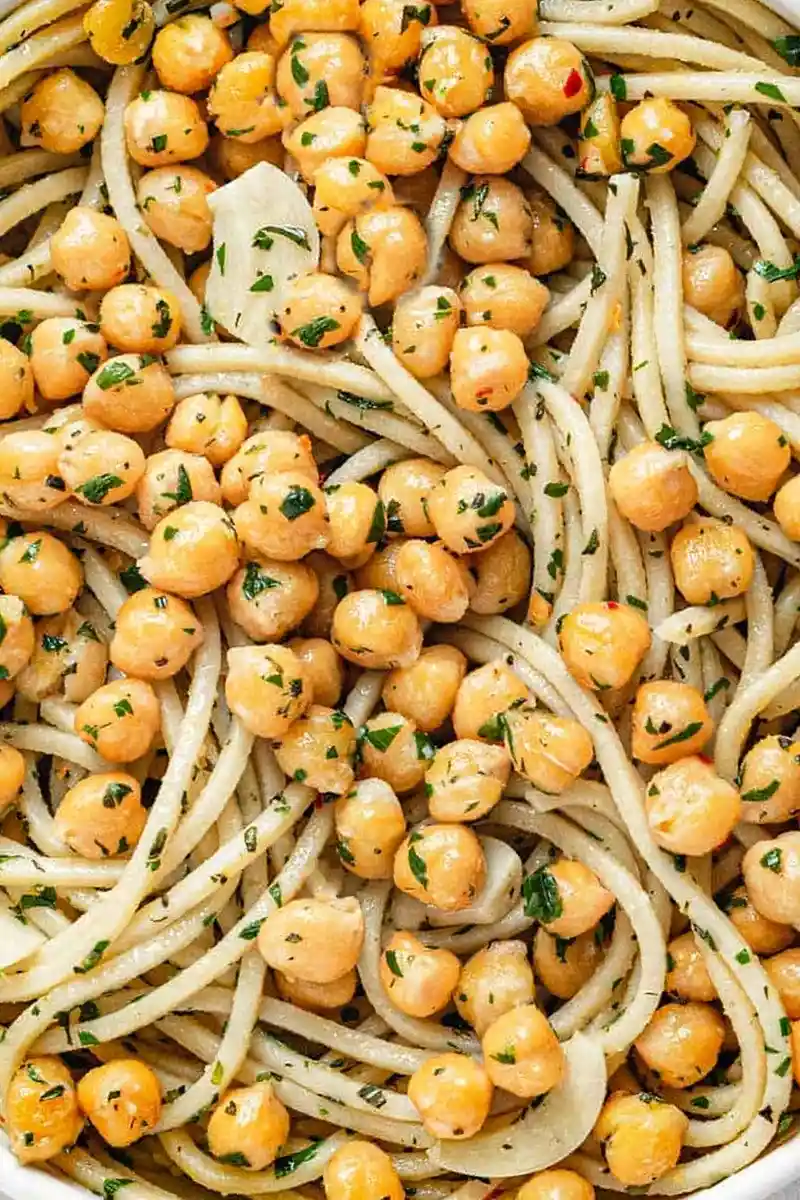
List of ingredients
- 2 teaspoons olive oil
- 15 ounces chickpeas (canned, drained and rinsed)
- 2 tablespoons vegan butter (or olive oil)
- 3 large garlic cloves (sliced)
- ¼ cup chopped fresh parsley
- 2 ½ tablespoons chopped fresh herbs (oregano, thyme, and rosemary)
- ½ teaspoon red chili flakes
- 8 ounces dry spaghetti
- ¼ cup nutritional yeast
- Salt and freshly ground black pepper (to taste)
step-by-step instructions
- Step: Bring a large pot of salted water to a boil for the pasta.
- Step: Heat the olive oil in a large skillet over medium-high heat. Sauté the chickpeas for about 7 minutes, or until golden brown and crispy. Transfer to a medium bowl and set aside.
- Step: Heat the vegan butter in the skillet over medium-high heat until it is just melted. Add the garlic, parsley, fresh herbs, and red chili flakes. Cook for 1 to 2 minutes until the parsley is just wilted and the garlic is fragrant. Remove from the heat and set aside.
- Step: Cook the pasta until al dente. Reserve 1 cup of the pasta cooking water before draining. Drain the pasta and transfer to a large bowl.
- Step: Add the fresh herb mixture to the pasta and mix to combine. Add the chickpeas, and nutritional yeast. Use a pair of tongs to incorporate the ingredients. Add the desired amount of reserved pasta water to loosen the pasta. Add salt and freshly ground black pepper.
Practical cooking advice
Building flavor with pasta water
The secret to achieving a restaurant-quality finish in simple pasta dishes is the starchy water left behind after boiling the noodles. This water contains dissolved starches that act as an emulsifier, helping the herbs, butter, and yeast coat the pasta strands rather than sliding off. Always set aside at least one cup before you drain the noodles so you have enough liquid to adjust the consistency if the pasta feels dry or sticky during the final toss.
Selecting the right herbs for depth
While this recipe calls for a specific blend of oregano, thyme, and rosemary, you can adapt the herbs based on what is available in your kitchen or garden. Woody herbs like rosemary and thyme are robust enough to withstand the heat of the skillet, releasing oils that permeate the dish. If you decide to include softer herbs like basil or chives, stir them in at the very last second before serving to maintain their vibrant color and delicate volatile oils.
Substitutions and adjustments
Replacing nutritional yeast
Nutritional yeast is a staple for adding a savory, umami-rich flavor to vegan recipes, but if you do not have it, you have options. Many stores carry plant-based parmesan alternatives made from cashews or sunflower seeds that offer a similar salty and aged profile. Alternatively, a small squeeze of fresh lemon juice at the end can provide a different kind of brightness that helps cut through the richness of the butter and starch.
Adapting the pasta base
While spaghetti is the classic choice for a light oil-based sauce, you can experiment with other shapes depending on your pantry. Short, textured pastas like penne or fusilli are excellent for capturing bits of garlic and herbs within their ridges and holes. If you are aiming for higher protein content, traditional chickpea or lentil-based pasta varieties are sturdy enough to hold up well to the crispy chickpea topping and provide a cohesive, heartier dining experience.
Serving and storage tips
Maximizing the texture of leftovers
Leftover pasta can sometimes become dry when stored in the refrigerator, as the noodles tend to soak up the residual moisture. To store, place the pasta in an airtight container for up to five days. When you are ready to eat again, add a tiny splash of water or a small piece of vegan butter before reheating to ensure the sauce returns to its silky consistency rather than clumping together.
Reheating the dish correctly
Avoid overheating the pasta, which can lead to mushy textures. If using a microwave, heat in 30-second increments and stir thoroughly to redistribute the moisture. On the stovetop, place the pasta in a skillet over low heat with a tablespoon of water or broth, stirring gently until the heat is uniform and the ingredients are once again fragrant and well-combined.
Commonly asked questions
Is it possible to make this dish without any oil or butter?
Yes, you can achieve a similar result by roasting the chickpeas in the oven at 425 degrees Fahrenheit until crispy instead of sautéing them in oil. For the sauce, simply use a few tablespoons of the reserved pasta cooking water or a high-quality vegetable broth in the skillet to wilt the herbs and soften the garlic. This method keeps the dish light while still allowing the garlic and herb flavors to shine through the pasta.
Can I prepare the herb mixture in advance?
You can certainly chop your herbs and slice your garlic ahead of time to save on prep work when you are ready to cook. Store the dry ingredients in a sealed container in the refrigerator for up to 24 hours before use. Keeping the herb mixture ready makes this a true quick-fix dinner, though the final sautéing step should always happen fresh to ensure the garlic remains pungent and the herbs stay bright.
What should I do if the sauce feels too oily?
If you find that the pasta seems too greasy, ensure that you are fully emulsifying the sauce by adding the pasta water in small increments while tossing. The starch in the water should turn the oil into a light, creamy sauce rather than leaving it as a separate liquid at the bottom of the bowl. If you added too much oil initially, adding a little more starchy water and perhaps an extra pinch of nutritional yeast can help balance the texture and absorb the excess liquid.
Are there any other vegetables that work well with this combination?
This dish is very versatile, and you can easily toss in other quick-cooking vegetables like baby spinach, kale, or sun-dried tomatoes. If you choose to add greens, throw them into the skillet right after the garlic has softened and cook until just wilted. Sun-dried tomatoes add a nice tangy contrast to the earthy chickpeas and can be stirred in at the final stage to add another layer of flavor and color.
Print
Chickpea Pasta with Garlic and Fresh Herbs
- Total Time: 25 minutes
- Yield: 3 servings 1x
- Diet: Vegan
Description
This recipe for Chickpea Pasta with Garlic and Herbs is quick and easy to make, budget-friendly, kid-friendly, and vegan.
Ingredients
- 2 teaspoons olive oil
- 15 ounces chickpeas (canned, drained and rinsed)
- 2 tablespoons vegan butter (or olive oil)
- 3 large garlic cloves (sliced)
- ¼ cup chopped fresh parsley
- 2 ½ tablespoons chopped fresh herbs (oregano, thyme, and rosemary)
- ½ teaspoon red chili flakes
- 8 ounces dry spaghetti
- ¼ cup nutritional yeast
- Salt and freshly ground black pepper (to taste)
Instructions
- Step: Bring a large pot of salted water to a boil for the pasta.
- Step: Heat the olive oil in a large skillet over medium-high heat. Sauté the chickpeas for about 7 minutes, or until golden brown and crispy. Transfer to a medium bowl and set aside.
- Step: Heat the vegan butter in the skillet over medium-high heat until it is just melted. Add the garlic, parsley, fresh herbs, and red chili flakes. Cook for 1 to 2 minutes until the parsley is just wilted and the garlic is fragrant. Remove from the heat and set aside.
- Step: Cook the pasta until al dente. Reserve 1 cup of the pasta cooking water before draining. Drain the pasta and transfer to a large bowl.
- Step: Add the fresh herb mixture to the pasta and mix to combine. Add the chickpeas, and nutritional yeast. Use a pair of tongs to incorporate the ingredients. Add the desired amount of reserved pasta water to loosen the pasta. Add salt and freshly ground black pepper.
Notes
Most combinations of fresh herbs can be used. The nutritional yeast can be substituted for vegan parmesan. This dish can be reheated with a splash of reserved pasta water.
- Prep Time: 5 minutes
- Cook Time: 20 minutes
- Category: Main Course
- Method: Stovetop
- Cuisine: Vegan
Nutrition
- Serving Size: 1 serving
- Calories: 498 kcal
- Sugar: 4 g
- Sodium: 83 mg
- Fat: 12 g
- Saturated Fat: 2 g
- Unsaturated Fat: 8 g
- Trans Fat: 0 g
- Carbohydrates: 82 g
- Fiber: 8 g
- Protein: 21 g
- Cholesterol: 0 mg