
Singapore noodles are a vibrant and aromatic stir-fry dish featuring thin rice noodles tossed with protein, crisp vegetables, and a signature yellow curry seasoning. This classic takeout-style meal comes together quickly, making it a perfect choice for busy weeknight dinners that require minimal fuss but deliver maximum flavor. By following these straightforward techniques, you can recreate the authentic texture and bold taste of your favorite restaurant version right in your own kitchen.
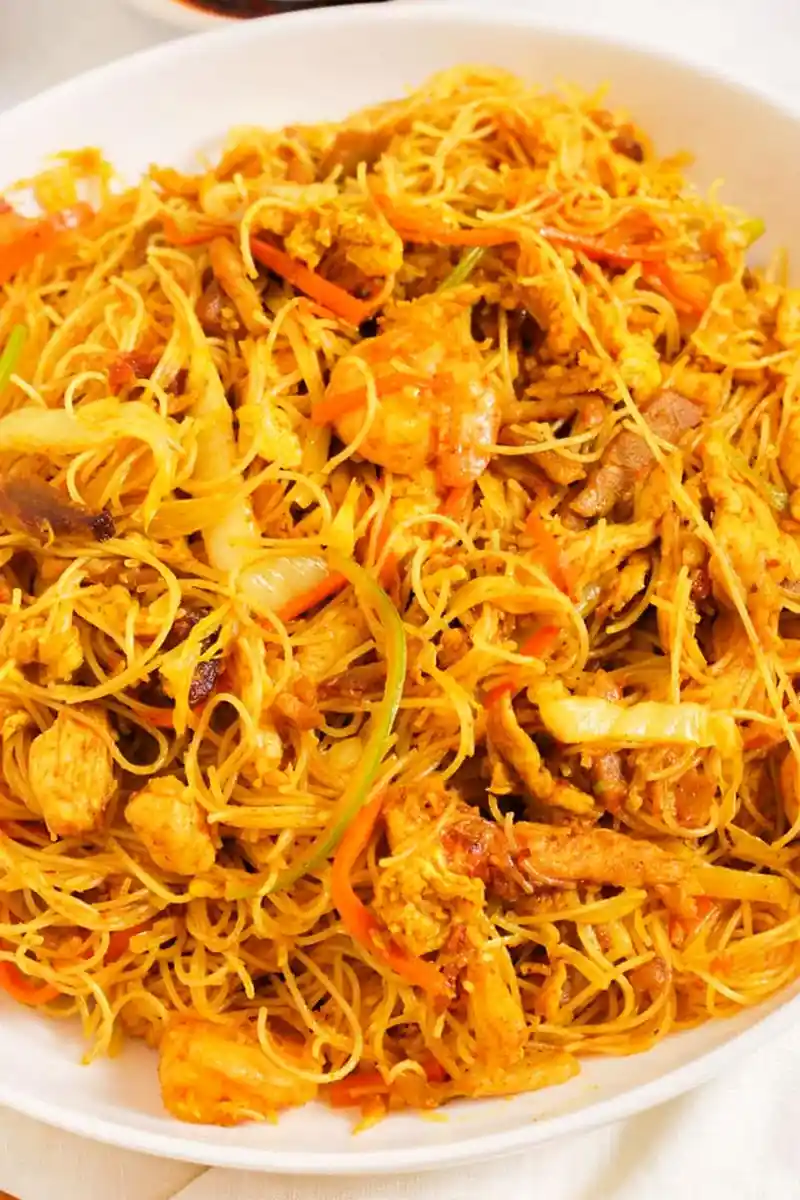
List of ingredients
- 6 ounces thin rice noodle
- 2 large eggs (beaten)
- 1½ tablespoons garlic (minced)
- 3 ounces savory plant-based roast protein strips
- 2 leaves napa cabbage (cut into thin strips)
- ½ large carrot (peeled and cut into matchstick pieces)
- 1 stalk celery (cut into thin matchstick pieces)
- 1 tablespoon vegetable broth
- 1½ tablespoons curry powder
- 1 teaspoon ground turmeric (optional)
- 1 tablespoon oyster-style vegetarian sauce
- 1½ teaspoon chicken-style bouillon powder
- 1 teaspoon salt
- ½ teaspoon granulated sugar
- 1 tablespoon chili oil (optional)
- 2 stalks green onion (cut into 2 inch pieces)
- Neutral cooking oil (as needed)
- 3 ounces skinless boneless chicken breast (cut into thin strips)
- 3 ounces small shrimps (peeled and deveined)
- ½ tablespoon water
- ½ teaspoon vegetable broth
- ½ teaspoon salt
- 2 teaspoon cornstarch
- ½ teaspoon neutral cooking oil
step-by-step instructions
- Step: Soak the rice noodles in room temperature water for 10 to 15 minutes until soft, then drain.
- Step: Marinate chicken and shrimp with water, vegetable broth, salt, cornstarch, and oil for 10 minutes.
- Step: Blanch the marinated chicken and shrimp in boiling water until cooked through. Drain and set aside.
- Step: In a wok, scramble the beaten eggs in oil, then remove and set aside.
- Step: Sauté garlic in the wok until fragrant.
- Step: Add the savory roast protein strips, cabbage, carrots, and celery, stir-frying briefly.
- Step: Return the cooked chicken, shrimp, and eggs to the wok.
- Step: Drizzle with vegetable broth and toss.
- Step: Stir in curry powder, turmeric, oyster-style sauce, bouillon, salt, sugar, and chili oil.
- Step: Briefly dip the soaked rice noodles in hot water, drain, and add to the wok.
- Step: Toss everything together with green onions until evenly coated and heated through.
Techniques for Mastering Stir-Fried Noodles
Managing Heat for Optimal Texture
Maintaining a high flame is the secret to restaurant-quality stir-fry. High heat ensures that your vegetables retain a crisp texture rather than turning soft or releasing excess moisture, which can make your noodles mushy. If you are using a standard home burner, keep your pan movement consistent to avoid burning the spices while ensuring even distribution.
Preventing Clumping During Preparation
Rice vermicelli is delicate and prone to sticking together if blanched too early or left in a strainer for too long. Always aim to blanch your noodles at the very final stage of your cooking process. If they do start to stick, a light drizzle of oil while they are in the colander can help maintain separation.
Balancing the Curry Flavor Profile
Curry powder blends vary significantly in intensity and spiciness depending on the manufacturer. Start with the lower suggested amount and taste your dish before adding the full measurement, as some brands can be quite potent. You can always increase the quantity during the final tossing phase if you want a bolder flavor profile.
Customizing Your Singapore Noodles
Vegetable Additions
While the classic recipe calls for napa cabbage, carrots, and celery, you can incorporate other vegetables that stand up well to high-heat cooking. Thinly sliced bell peppers or sugar snap peas add a sweet crunch, while bean sprouts provide a traditional texture that complements the thin noodles perfectly. Just ensure that any additional vegetables are sliced into matchsticks to match the cook time of the other ingredients.
Protein Swaps and Variations
If you prefer a different protein combination, sliced mushrooms or firm pressed tofu cubes work excellently as direct replacements for the meat or seafood in this recipe. Because rice noodles are versatile, they absorb flavors efficiently, meaning your choice of protein serves more as a textural element than the primary source of flavor. When using tofu, pat it extremely dry before adding it to the wok to ensure it browns properly rather than steaming in the pan.
Practical Serving and Storage
Maintaining Noodle Integrity
When preparing this dish for guests, serve it immediately while the noodles are hot and the vegetables are at their freshest. The texture of rice vermicelli is best experienced within the first few minutes of cooking. If you find the noodles have cooled down too much before serving, a quick flash-toss in a hot pan can restore the desired consistency.
Best Practices for Refrigeration
If you have leftovers, allow the noodles to reach room temperature before placing them in an airtight container. Refrigerating them while steaming hot can cause condensation to build up inside the container, leading to softened, unevenly textured noodles the next day. They will stay fresh in the refrigerator for up to four days when stored properly.
Reviving Leftovers
When reheating, avoid the microwave if possible, as it tends to heat unevenly and can make the noodles rubbery. Instead, place them in a wide, shallow pan with a tiny splash of water or broth. Over medium heat, gently toss the noodles until the water evaporates and the heat penetrates the center of the bundle, restoring the original bounce to the rice strands.
Frequently Asked Questions
Can I make this dish without chili oil?
Yes, the chili oil is entirely optional. If you prefer a milder version, simply omit it or replace it with a touch of toasted sesame oil for a nutty aroma without the heat.
Why are my noodles falling apart during the toss?
This usually happens if the noodles were soaked for too long or if the tossing motion is too vigorous. Ensure the noodles remain slightly firm after the initial soak, as they will finish cooking and softening when combined with the hot sauce and vegetables in the final step.
How can I adjust the saltiness?
The saltiness of this dish is primarily driven by the oyster-style vegetarian sauce and the chicken-style bouillon. If you are sensitive to sodium, start by adding half of the recommended bouillon and salt, then adjust to your personal preference after sampling the mixture before you add the noodles.
Are these noodles suitable for a gluten-free diet?
Most ingredients are naturally gluten-free, but you must ensure your vegetable-based stir-fry sauce is explicitly labeled as gluten-free. Many standard sauces contain traces of wheat, so checking the label is essential for those with dietary restrictions.
What is the purpose of the cornstarch in the marinade?
The cornstarch acts as a protective layer, often called velvetting, which keeps the proteins tender and prevents them from drying out during the high-heat stir-frying process. It also helps the sauce adhere more evenly to the pieces of chicken and shrimp.
Can I prepare the ingredients ahead of time?
Yes, you can chop all your vegetables and marinate the proteins several hours in advance to save time. Keep the proteins in the refrigerator until you are ready to cook, and pull your chopped vegetables out about 15 minutes before you start, so they aren’t ice cold when they hit the hot pan.
Print
Singapore Noodles (Singapore Mei Fun)
- Total Time: 30 minutes
- Yield: 3 servings 1x
- Diet: Pescatarian-friendly
Description
Singapore noodles, also known as Singapore mei fun, is a popular takeout-style dish made with thin rice noodles, chicken, shrimp, plant-based savory protein strips, veggies, and seasoned with fragrant curry powder for its iconic yellow color.
Ingredients
- 6 ounces thin rice noodle
- 2 large eggs (beaten)
- 1½ tablespoons garlic (minced)
- 3 ounces savory plant-based roast protein strips
- 2 leaves napa cabbage (cut into thin strips)
- ½ large carrot (peeled and cut into matchstick pieces)
- 1 stalk celery (cut into thin matchstick pieces)
- 1 tablespoon vegetable broth
- 1½ tablespoons curry powder
- 1 teaspoon ground turmeric (optional)
- 1 tablespoon oyster-style vegetarian sauce
- 1½ teaspoon chicken-style bouillon powder
- 1 teaspoon salt
- ½ teaspoon granulated sugar
- 1 tablespoon chili oil (optional)
- 2 stalks green onion (cut into 2 inch pieces)
- Neutral cooking oil (as needed)
- 3 ounces skinless boneless chicken breast (cut into thin strips)
- 3 ounces small shrimps (peeled and deveined)
- ½ tablespoon water
- ½ teaspoon vegetable broth
- ½ teaspoon salt
- 2 teaspoon cornstarch
- ½ teaspoon neutral cooking oil
Instructions
- Step: Soak the rice noodles in room temperature water for 10 to 15 minutes until soft, then drain.
- Step: Marinate chicken and shrimp with water, vegetable broth, salt, cornstarch, and oil for 10 minutes.
- Step: Blanch the marinated chicken and shrimp in boiling water until cooked through. Drain and set aside.
- Step: In a wok, scramble the beaten eggs in oil, then remove and set aside.
- Step: Sauté garlic in the wok until fragrant.
- Step: Add the savory roast protein strips, cabbage, carrots, and celery, stir-frying briefly.
- Step: Return the cooked chicken, shrimp, and eggs to the wok.
- Step: Drizzle with vegetable broth and toss.
- Step: Stir in curry powder, turmeric, oyster-style sauce, bouillon, salt, sugar, and chili oil.
- Step: Briefly dip the soaked rice noodles in hot water, drain, and add to the wok.
- Step: Toss everything together with green onions until evenly coated and heated through.
Notes
Use a high-quality vegetable-based broth to replace traditional cooking wines for depth of flavor. The plant-based protein strips provide a savory texture that complements the chicken and shrimp.
- Prep Time: 15 minutes
- Cook Time: 15 minutes
- Category: Main Course
- Method: Stir Fry
- Cuisine: Chinese
Nutrition
- Serving Size: 1 serving
- Calories: 450 kcal
- Sugar: 5 g
- Sodium: 1800 mg
- Fat: 12 g
- Saturated Fat: 2 g
- Unsaturated Fat: 9 g
- Trans Fat: 0 g
- Carbohydrates: 60 g
- Fiber: 3 g
- Protein: 26 g
- Cholesterol: 200 mg