
Creating a comforting, hearty meal at home does not have to be a complicated endeavor. This slow cooker chicken stew brings together tender poultry, wholesome root vegetables, and fragrant herbs in a single pot, allowing the flavors to meld perfectly over several hours. It is an ideal solution for busy days when you want a nutritious, restaurant-quality dinner waiting for you the moment you walk through the door.
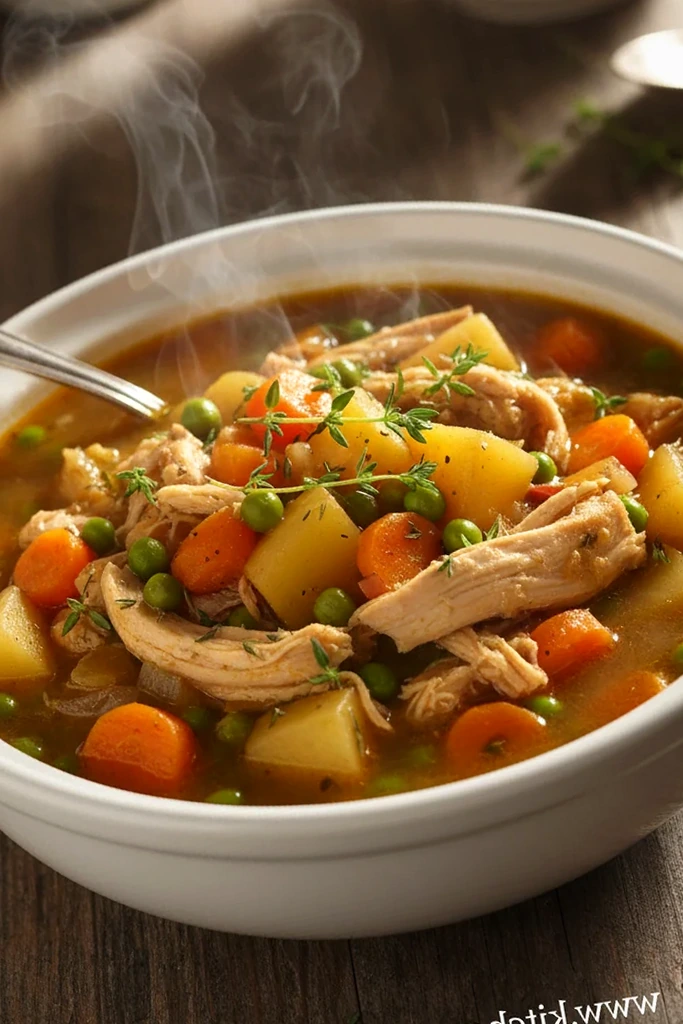
List of ingredients
- 2 lbs boneless, skinless chicken thighs, cut into 2-inch chunks
- 2 tablespoons olive oil
- 1 large yellow onion, chopped
- 4 carrots, peeled and cut into 1-inch thick coins
- 3 celery stalks, cut into 1-inch pieces
- 1.5 lbs Yukon Gold potatoes, cut into 1.5-inch chunks
- 4 cloves garlic, minced
- 6 cups low-sodium chicken broth
- 2 sprigs fresh thyme
- 1 sprig fresh rosemary
- 1 bay leaf
- 1 teaspoon salt
- ½ teaspoon black pepper
- 1 cup frozen peas
- 2 tablespoons cornstarch
- 2 tablespoons cold water
- Fresh parsley, chopped, for garnish
step-by-step instructions
- Step: Pat chicken dry, season with salt and pepper, and sear in olive oil over medium-high heat until golden brown. Transfer to the slow cooker.
- Step: Sauté onion, carrots, and celery in the same skillet until softened. Add garlic and cook for one minute, then scrape the pan and transfer the mixture to the slow cooker.
- Step: Add potatoes, broth, thyme, rosemary, and bay leaf to the slow cooker. Cover and cook on LOW for 6-8 hours.
- Step: Remove herb stems and bay leaf. Whisk cornstarch and cold water to create a slurry and stir into the stew. Add peas, cover, and cook on HIGH for 15-20 minutes until thickened. Serve garnished with parsley.
Keys to Success for Your Slow Cooker
The Importance of Searing
Never bypass the step of browning the chicken before it enters the slow cooker. Searing meat triggers the Maillard reaction, which transforms the surface proteins and sugars into a complex, savory flavor profile. This step adds a depth of taste that a simple slow-boil cannot replicate, turning a standard stew into a culinary highlight.
Preventing Overcrowding the Pan
When browning the chicken, ensure the pieces have enough space in the skillet. If you pack the pan too tightly, the temperature drops rapidly and moisture becomes trapped, resulting in boiled, gray chicken rather than golden-brown pieces. Working in two separate batches is a small inconvenience that yields significantly better results.
Selecting the Right Potato Variety
Yukon Gold potatoes are the gold standard for long-simmering dishes because they are a medium-starch, waxy variety. Unlike starchy Russets, which can turn into mush under prolonged heat, Yukon Golds retain their bite and creamy texture. This ensures that every serving of your stew includes distinct, satisfying pieces of potato.
Understanding Ingredient Substitutions
Using Alternative Proteins
If you prefer to use turkey, thighs are once again the best choice to withstand the long cooking time. For those interested in a beefier version of this recipe, lean stewing beef or chuck can be substituted for the chicken. Note that beef will require the full 8-hour cooking time on the LOW setting to become tender enough to cut with a spoon.
Replacing Root Vegetables
If your pantry is lacking specific root vegetables, you have flexibility. Parsnips offer a sweet, slightly spicy flavor that mimics carrots well, while rutabaga provides a pleasant, slightly bitter contrast that works beautifully in savory broths. When using butternut squash, be aware that it cooks much faster than potatoes and should be added during the final 3 hours of cooking to prevent it from dissolving.
Managing Herb Variations
Fresh herbs are the foundation of this stew, but they can be swapped if needed. If using dried herbs, use only one-third of the recommended volume, as dried seasonings are much more concentrated. For example, use one-third teaspoon of dried thyme instead of the fresh sprigs, and add them early in the cooking process to allow them to rehydrate properly.
Serving Ideas and Pairings
Artisan Bread for Dipping
This stew features a thick, velvety broth that demands to be enjoyed with bread. A crusty sourdough or a warm, rustic French baguette is the ideal partner. The bread acts as an edible tool to soak up every drop of the aromatic liquid, ensuring nothing is left behind in the bowl.
Balancing the Meal with Greens
Since the stew is a dense, warming dish, a crisp side salad is a perfect counterpoint. Consider a simple mix of baby greens, sliced radishes, and a light lemon-based vinaigrette. The sharp acidity of the lemon cuts through the richness of the chicken and potato, brightening the entire palate experience.
Storing and Reheating Best Practices
Managing Leftovers
If you find yourself with leftovers, store the stew in airtight containers in the refrigerator for up to three days. As the stew rests, the flavors will continue to marry, often making the leftovers taste even better than the initial serving. When transferring to containers, ensure the stew has cooled down to room temperature to prevent condensation from affecting the consistency.
Reheating for Optimal Texture
To reheat, transfer the stew to a heavy-bottomed pot on the stove. Heat it gently over medium-low heat, stirring occasionally to ensure even temperature distribution. If the broth seems too thick after being refrigerated, simply add a tablespoon or two of water or extra chicken broth to bring the sauce back to its desired consistency.
Freezing Recommendations
Chicken stew is an excellent candidate for the freezer. To freeze, divide the cooled stew into individual portion sizes, leaving a little headspace in your containers for expansion. While the vegetables may lose a tiny fraction of their structural integrity during the freezing process, the overall quality remains high. Thaw overnight in the refrigerator and warm gently before serving.
Common Questions Regarding the Recipe
Can I make this on the stovetop?
Yes, you can adapt this recipe for a Dutch oven. Follow the same searing and sautéing steps, then add the remaining ingredients, cover tightly, and simmer on the lowest heat setting for 1.5 to 2 hours. Ensure the lid stays closed to prevent too much liquid from evaporating.
Why does my stew seem watery?
Wateriness is usually the result of adding too much liquid or not thickening it enough at the end. If your stew lacks body, you can create a second cornstarch slurry and whisk it in during the final minutes of cooking. Alternatively, remove a few of the cooked potato chunks, mash them, and stir them back into the pot to add natural, starch-based thickness.
How do I prevent the garlic from burning?
Garlic has a very low burn point, which is why it is added at the end of the vegetable sauté process. By sautéing the onion, carrots, and celery until they are mostly softened, you create a buffer for the garlic. Only introduce the garlic for the final 60 seconds, which is more than enough time to release its essential oils without turning it bitter.
Can I add heavy cream for a richer flavor?
You can transform this into a creamy variation by whisking in a half-cup of heavy cream during the final 15 minutes of cooking. This addition creates a luxurious, opaque sauce that pairs beautifully with the vegetables. Be sure to stir gently so you do not break down the tender chicken pieces during the process.
Print
Slow Cooker Chicken Stew Recipe: Easy & Hearty Comfort Food
- Total Time: 8 hours 20 minutes
- Yield: 6–8 Servings 1x
- Diet: Dairy-Free
Description
Make this easy slow cooker chicken stew with tender veggies and herbs. A hearty, set-and-forget meal perfect for a cozy dinner.
Ingredients
- 2 lbs boneless, skinless chicken thighs, cut into 2-inch chunks
- 2 tablespoons olive oil
- 1 large yellow onion, chopped
- 4 carrots, peeled and cut into 1-inch thick coins
- 3 celery stalks, cut into 1-inch pieces
- 1.5 lbs Yukon Gold potatoes, cut into 1.5-inch chunks
- 4 cloves garlic, minced
- 6 cups low-sodium chicken broth
- 2 sprigs fresh thyme
- 1 sprig fresh rosemary
- 1 bay leaf
- 1 teaspoon salt
- ½ teaspoon black pepper
- 1 cup frozen peas
- 2 tablespoons cornstarch
- 2 tablespoons cold water
- Fresh parsley, chopped, for garnish
Instructions
- Step: Pat chicken dry, season with salt and pepper, and sear in olive oil over medium-high heat until golden brown. Transfer to the slow cooker.
- Step: Sauté onion, carrots, and celery in the same skillet until softened. Add garlic and cook for one minute, then scrape the pan and transfer the mixture to the slow cooker.
- Step: Add potatoes, broth, thyme, rosemary, and bay leaf to the slow cooker. Cover and cook on LOW for 6-8 hours.
- Step: Remove herb stems and bay leaf. Whisk cornstarch and cold water to create a slurry and stir into the stew. Add peas, cover, and cook on HIGH for 15-20 minutes until thickened. Serve garnished with parsley.
Notes
This recipe is perfect for meal prep. The flavors develop further if cooked in advance, and leftovers store well in the refrigerator or freezer.
- Prep Time: 20 minutes
- Cook Time: 8 hours
- Category: Main Course
- Method: Slow Cooker
- Cuisine: American
Nutrition
- Serving Size: 1 bowl
- Calories: 410 kcal
- Sugar: 6 g
- Sodium: 890 mg
- Fat: 15 g
- Saturated Fat: 3 g
- Unsaturated Fat: 11 g
- Trans Fat: 0 g
- Carbohydrates: 28 g
- Fiber: 5 g
- Protein: 38 g
- Cholesterol: 120 mg