
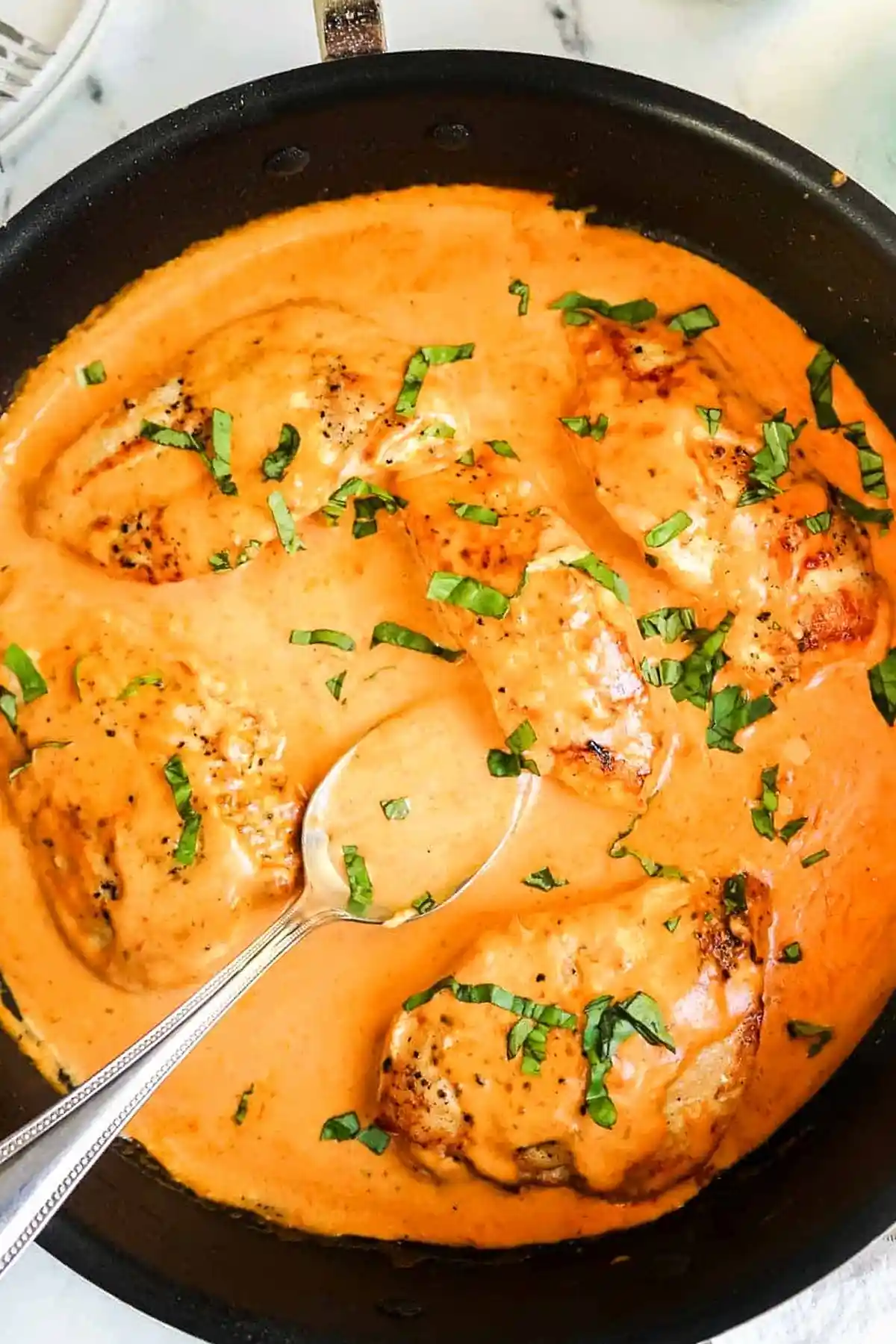
This Sun Dried Tomato Pesto Chicken is the ultimate solution for a flavorful, restaurant-quality meal that fits easily into a busy weeknight schedule. By simmering tender, seared chicken breasts in a rich and velvety sauce made from sun-dried tomato pesto, you achieve a depth of flavor that usually requires hours of slow cooking. Whether you choose to serve it over a bed of al dente pasta, fluffy rice, or even with a side of roasted vegetables, this dish provides a satisfying and comforting experience that your entire family will enjoy. With a total preparation and cooking time of under 30 minutes, it is a masterclass in efficiency without sacrificing any culinary satisfaction.
List of ingredients
- 1 tbsp olive oil
- 1 lb. boneless, skinless chicken breast, cut in half lengthwise
- 1 tsp garlic powder
- 1/2 tsp sea salt
- 1/2 tsp black pepper
- 2 tbsp flour
- 1 cup chicken broth or stock
- 1/2 cup sun dried tomato pesto
- 1 cup heavy cream
- Fresh basil and Parmesan cheese (optional, for serving)
step-by-step instructions
- Prep: Cut each chicken breast in half lengthwise to ensure thinner pieces. Season chicken on both sides with salt, pepper and garlic powder.
- Cook Chicken: In a large skillet, heat olive oil over medium-high heat. Add chicken and cook 3-4 minutes on each side until cooked through (165°F). Remove chicken from the pan and set aside.
- Make Sauce: Whisk together chicken broth and flour. Add to the same pan and cook over medium heat, stirring, until it starts to thicken, scraping up any brown bits.
- Add: Stir in sun dried tomato pesto and heavy cream. Allow sauce to simmer for 1-2 minutes.
- Add Chicken: Return chicken and any juices from the plate to the pan. Spoon sauce over the chicken and cook for another minute until warmed through.
- Serve: Top with fresh basil and Parmesan cheese and serve over pasta or rice.
Practical Tips for Excellence
One of the most important aspects of searing chicken is ensuring the pan is hot enough before you add the meat. If the skillet is not sufficiently heated, the chicken will steam rather than brown, which prevents the development of the rich, savory flavor profile necessary for a truly great sauce. Always pat your chicken dry with a paper towel before seasoning to ensure it sears properly rather than releasing excess moisture. Additionally, consider using a high-smoke point oil like avocado or refined olive oil if you find that extra-virgin olive oil burns too quickly under high heat.
Achieving the Perfect Sauce Consistency
To ensure your sauce coats the back of a spoon perfectly, keep a close watch during the simmering phase. If the sauce becomes too thick while the chicken is reheating, simply add a tablespoon of extra chicken broth to thin it back out to the desired consistency. Conversely, if you prefer a thicker coating for your pasta, simmer the sauce for an additional minute before returning the chicken to the pan. This adjustment allows you to customize the dish to suit your personal preference for sauciness levels.
Enhancing the Flavor Depth
The secret to a complex sauce lies in the deglazing process, which involves loosening the caramelized proteins stuck to the bottom of the pan after searing the chicken. These brown bits are concentrated flavor pockets that, when combined with the chicken broth and flour slurry, provide the foundational savory note of the dish. Never skip this step, as the difference between a flat-tasting sauce and one with professional-grade depth is entirely dependent on incorporating those pan drippings. Furthermore, using a high-quality, full-fat heavy cream ensures the sauce maintains its luxurious, velvety texture without curdling when introduced to the acidic sun-dried tomato pesto.
Substitutions and Customization Ideas
While this recipe is excellent as written, it is highly adaptable based on the ingredients you have on hand in your pantry or refrigerator. If you do not have chicken breasts, boneless, skinless chicken thighs are an incredible alternative that offers even more moisture and a slightly deeper chicken flavor. If you prefer to avoid wheat-based thickeners, you can substitute the flour with an equal amount of cornstarch mixed into cold broth, though keep in mind that cornstarch creates a slightly more glossy, translucent finish. For a dairy-free version, consider using full-fat canned coconut milk or a high-quality plant-based heavy cream substitute, as the strong flavor of the sun-dried tomatoes will easily mask the underlying notes of the coconut.
Adding Nutritional Variety
To incorporate more vegetables into this meal, consider adding finely chopped shallots or minced garlic to the pan right before you add the chicken broth. Baby spinach also works remarkably well; simply fold two or three large handfuls into the sauce during the final minute of simmering until it wilts perfectly. For added texture, consider stirring in roasted artichoke hearts or halved sun-dried tomatoes preserved in oil, which provide an extra pop of flavor and visual appeal to the finished plate. These additions maintain the integrity of the sauce while allowing you to turn this main dish into a more rounded, nutritionally dense meal.
Serving and Pairing Suggestions
The creamy nature of this sauce makes it an ideal candidate for pairing with a wide variety of side dishes. If you are serving this for a special occasion, consider plating the chicken over a bed of freshly boiled pappardelle or fettuccine, as the wider noodles are designed specifically to carry heavier, cream-based sauces. For a lighter approach, serve the chicken alongside roasted asparagus or steamed broccolini seasoned with a touch of lemon zest to cut through the richness of the cream. A simple side of crusty garlic bread is also an essential component for many, as it serves as the perfect tool to ensure every last drop of the sun-dried tomato sauce is enjoyed from the plate.
Building a Balanced Menu
When planning a dinner menu, the acidity and saltiness of the sun-dried tomato pesto should be balanced by fresh, crisp elements. A side salad consisting of mixed baby greens, thinly sliced cucumbers, and a light balsamic vinaigrette provides a refreshing counterpoint to the intensity of the pesto. If you choose to serve this with rice, opt for a long-grain variety like basmati or jasmine, which will soak up the sauce beautifully without becoming mushy. For those looking for a low-carb alternative, a bed of cauliflower rice or even spiralized zucchini noodles can provide a similar structural support without the refined carbohydrates of traditional pasta.
Storage and Reheating Principles
Because this dish relies on a dairy-based cream sauce, proper storage is essential to maintain the quality of the meal for leftovers. Place any remaining chicken and sauce in a shallow, airtight container to encourage even cooling before storing it in the coldest part of your refrigerator. It will typically remain fresh and safe for consumption for up to three days. Avoid storing the dish at room temperature for extended periods, as the dairy content in the sauce can facilitate bacterial growth if not cooled down rapidly.
Maintaining Texture During Reheating
Reheating is best accomplished gently to prevent the cream sauce from breaking or separating. When using a microwave, place the chicken and sauce in a microwave-safe bowl and heat it in thirty-second intervals, stirring in between to ensure even distribution of heat. If you have the time, reheating on the stovetop over low heat is superior, as it allows you to whisk in a tiny splash of broth or water if the sauce has thickened too much in the fridge. Bringing the sauce to a very gentle simmer while stirring constantly will help the emulsion stay intact and prevent the chicken from becoming overcooked and tough during the warming process.
Common Kitchen Inquiries
How can I identify if the chicken is properly cooked?
The most accurate method is to use a digital meat thermometer inserted into the thickest part of the chicken breast. The internal temperature must reach exactly 165°F to ensure it is safe and cooked through. If you do not have a thermometer, you can check by piercing the thickest part with a knife; the juices should run clear, and the meat should be opaque all the way through without any pink residue.
Why did my sauce curdle?
Curdling usually occurs if the cream is added to a pan that is too hot or if the sauce is allowed to boil vigorously. Always keep the heat on low to medium-low when incorporating the cream into the pesto and broth mixture. If the sauce does begin to look slightly grainy, removing the pan from the heat and whisking vigorously for thirty seconds can often help to re-emulsify the fats and liquids into a smooth, cohesive sauce.
Is this recipe suitable for meal prepping?
Yes, this recipe is excellent for meal prep, provided you store the sauce and the chicken together in the same container. By combining them, the chicken continues to marinate in the flavor of the pesto sauce, making it even more delicious upon reheating. Keep in mind that the sauce may thicken during storage, so you may want to keep a small amount of extra chicken broth on hand to stir in when you are ready to heat up your lunch for the following day.
Can I use different types of pesto?
While the recipe specifically calls for sun-dried tomato pesto (Pesto Rosso), you could technically use a traditional basil pesto if that is all you have available. However, please note that the final flavor profile will be significantly different, leaning more toward nutty and herbal notes rather than the sweet and tangy profile of the sun-dried tomato. If you do make the switch, consider adding a teaspoon of tomato paste to the sauce to maintain that signature savory tomato depth that defines this particular dish.
Print
Sun Dried Tomato Pesto Chicken
- Total Time: 20 minutes
- Yield: 4 1x
- Diet: Low-carb
Description
This Sun Dried Tomato Pesto Chicken is a go-to easy weeknight meal! Tender chicken is simmered in a creamy sun dried tomato pesto sauce, topped with fresh basil, and served over rice or pasta! You can make your own homemade red pesto or grab a jar at the grocery store. Either way, this meal is done in under 30 minutes!
Ingredients
- 1 tbsp olive oil
- 1 lb. boneless, skinless chicken breast, cut in half lengthwise
- 1 tsp garlic powder
- 1/2 tsp sea salt
- 1/2 tsp black pepper
- 2 tbsp flour
- 1 cup chicken broth or stock
- 1/2 cup sun dried tomato pesto
- 1 cup heavy cream
- Fresh basil and Parmesan cheese (optional, for serving)
Instructions
- Prep: Cut each chicken breast in half lengthwise to ensure thinner pieces. Season chicken on both sides with salt, pepper and garlic powder.
- Cook Chicken: In a large skillet, heat olive oil over medium-high heat. Add chicken and cook 3-4 minutes on each side until cooked through (165°F). Remove chicken from the pan and set aside.
- Make Sauce: Whisk together chicken broth and flour. Add to the same pan and cook over medium heat, stirring, until it starts to thicken, scraping up any brown bits.
- Add: Stir in sun dried tomato pesto and heavy cream. Allow sauce to simmer for 1-2 minutes.
- Add Chicken: Return chicken and any juices from the plate to the pan. Spoon sauce over the chicken and cook for another minute until warmed through.
- Serve: Top with fresh basil and Parmesan cheese and serve over pasta or rice.
Notes
Nutrition is only an estimate. Store leftovers in an airtight container for up to 3 days. Reheat in the microwave, loosely covered.
- Prep Time: 10 minutes
- Cook Time: 10 minutes
- Category: Dinner
- Method: Stovetop
- Cuisine: American
Nutrition
- Serving Size: 1 serving
- Calories: 288 kcal
- Sugar: 1 g
- Sodium: 566 mg
- Fat: 18.6 g
- Saturated Fat: 7.7 g
- Unsaturated Fat: 10.9 g
- Trans Fat: 0 g
- Carbohydrates: 2.9 g
- Fiber: 0.5 g
- Protein: 26.3 g
- Cholesterol: 114 mg