
This Mongolian Ground Beef Noodles recipe provides a savory, sweet, and incredibly fast solution for busy weeknights. By combining hearty ground beef with tender noodles in a rich, restaurant-style glaze, you get a satisfying homemade meal that comes together in a single pan. It is an excellent way to enjoy bold, aromatic flavors without the wait or expense of ordering takeout.
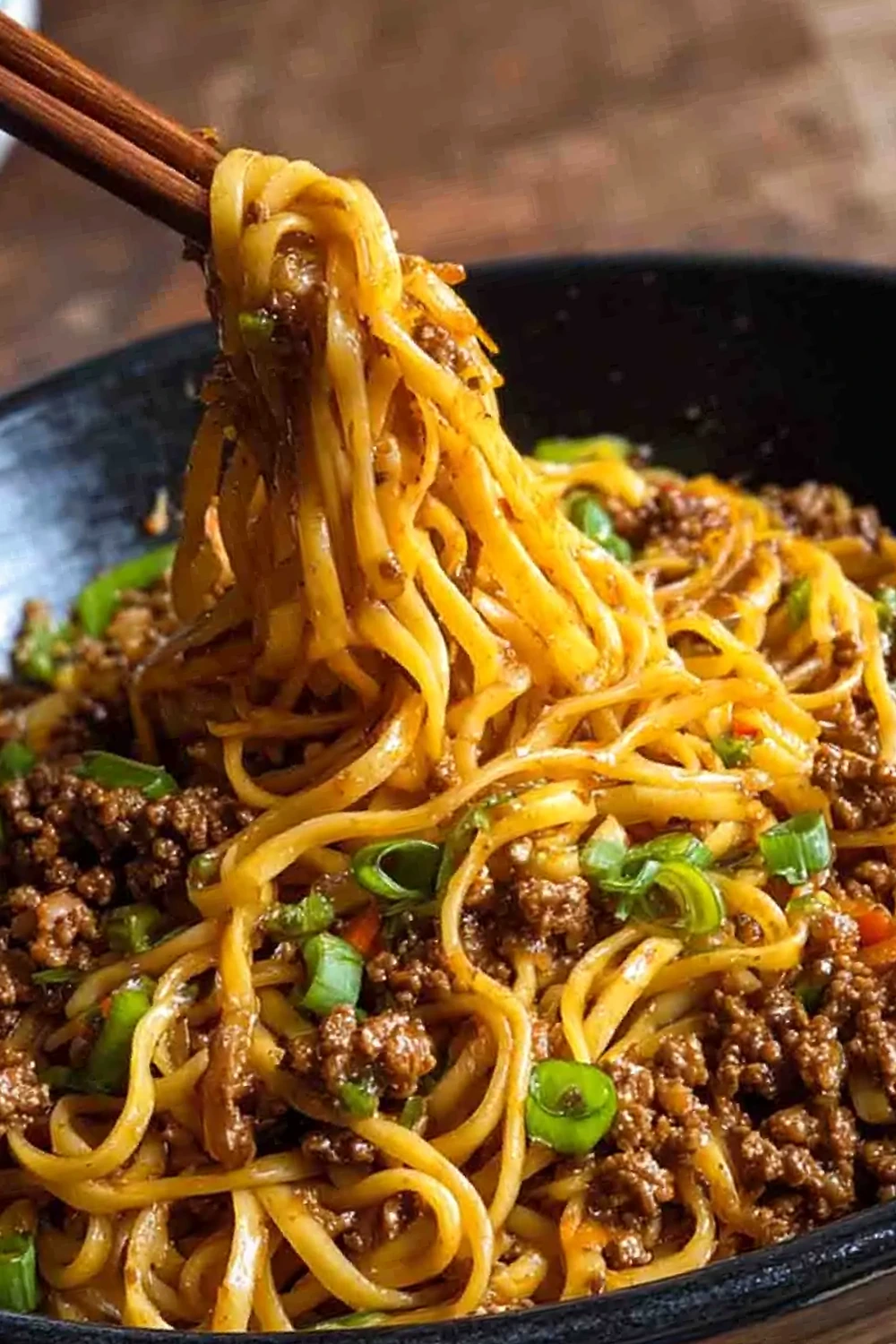
List of ingredients
- 8 oz lo mein noodles
- 1 lb lean ground beef
- 3 cloves garlic, minced
- 1 tablespoon fresh ginger, grated
- 1/3 cup low sodium soy sauce
- 1/4 cup brown sugar
- 2 tablespoons hoisin sauce
- 1 tablespoon sesame oil
- 1/2 cup water
- 1 tablespoon cornstarch
- 2 tablespoons water (for cornstarch slurry)
- 1/2 teaspoon red pepper flakes (optional)
- 1/2 cup sliced green onions
- 1 cup broccoli florets (optional)
- 1/2 cup shredded carrots (optional)
- 1 bell pepper, sliced (optional)
- Salt, for boiling noodles
step-by-step instructions
- Step: Bring a large pot of salted water to a boil. Cook the lo mein noodles according to the package instructions, then drain and set aside.
- Step: Heat a large skillet over medium-high heat. Add the ground beef and cook until browned, breaking it into small pieces as it cooks. Drain excess grease if needed.
- Step: Add the minced garlic and grated ginger to the skillet. Cook for 1 to 2 minutes, stirring constantly, until fragrant.
- Step: In a medium bowl, whisk together the soy sauce, brown sugar, hoisin sauce, sesame oil, and 1/2 cup water.
- Step: Pour the sauce into the skillet with the beef and bring it to a gentle simmer.
- Step: In a small bowl, mix the cornstarch with 2 tablespoons water to make a slurry. Stir it into the skillet and cook until the sauce thickens and becomes glossy.
- Step: If using broccoli, carrots, or bell pepper, add them to the skillet and cook for 2 to 3 minutes until just tender.
- Step: Add the cooked noodles to the skillet and toss until they are fully coated in the sauce.
- Step: Cook for 1 to 2 more minutes so the noodles absorb the sauce.
- Step: Top with sliced green onions and serve warm.
Refining Your Stir-Fry Technique
Managing Heat for Optimal Browning
Using medium-high heat is vital when browning the ground beef. If the skillet is not hot enough, the meat will steam in its own juices rather than developing the deep, rich flavor that makes this dish stand out. Always ensure the pan is preheated before adding the beef to guarantee the best results.
Achieving the Perfect Sauce Consistency
The cornstarch slurry acts as the binding agent that transforms the thin liquid into a glaze that clings to every noodle. Never add dry cornstarch directly to the pan, as it will clump; always mix it with cold water first. If you prefer a thicker sauce, let it bubble for an extra thirty seconds after adding the slurry.
Preventing Overcooked Noodles
Since the noodles will continue to cook slightly when tossed in the hot sauce, it is best to boil them just until they are al dente. If you are using thin noodles like ramen, reduce the initial boiling time by thirty seconds to prevent them from becoming too soft during the final step of the recipe.
Customizing Your Flavor Profile
Balancing Sweet and Savory Notes
The brown sugar provides the classic Mongolian sweetness, but you can easily adjust the amount based on your preference. If you find the flavor too sweet, add a teaspoon of rice vinegar or an extra splash of soy sauce to cut through the sugar. Tasting the sauce before adding the noodles allows you to make these small adjustments early.
Adding Fresh Vegetables for Texture
Including vegetables is a great way to add volume and freshness to this hearty noodle dish. Broccoli florets, sliced bell peppers, and shredded carrots provide crunch that contrasts well with the soft noodles. To ensure they remain crisp, add them late in the cooking process so they stay vibrant and retain their nutritional snap.
Frequently Asked Questions
Can I prepare this meal in advance?
This dish is excellent for meal prep as the flavors actually deepen after sitting in the refrigerator. Store it in an airtight container for up to four days and simply reheat it in a skillet with a tiny splash of water or soy sauce to restore the sauce’s glossy texture.
What are the best noodles for this recipe?
While fresh lo mein noodles provide the most authentic chewy texture, you can use any variety you have on hand. Spaghetti is a fantastic budget-friendly substitute that holds up well, while rice noodles offer a lighter alternative for those who need a gluten-free option.
How can I make the dish less salty?
Always use low-sodium soy sauce as the base for your cooking, as it gives you better control over the final salt levels. If the dish feels too salty, you can stir in a small amount of extra water or add some shredded carrots, which naturally add sweetness and balance out the sodium.
What is the secret to fragrant stir-fry?
The combination of fresh ginger and garlic is the backbone of Asian-inspired cooking. Never use pre-bottled or dried versions if you can avoid it; freshly minced or grated aromatics offer a much more potent flavor that blooms significantly when touched by the heat of the skillet.
Meal Planning and Serving Strategies
Pairing with Complementary Sides
Since the noodles and beef create such a substantial meal, keep your sides simple and refreshing. A light cucumber salad tossed with rice vinegar, a pinch of sugar, and sesame seeds works wonders to refresh the palate. Steamed snap peas or bok choy can also round out the meal without adding too many extra calories.
Freezing for Long-Term Storage
If you plan on freezing portions, do so immediately after the food cools down to maintain the best quality. Use freezer-safe bags or containers and try to consume the meal within two months. When ready to eat, allow it to thaw in the refrigerator overnight before warming it on the stovetop for the best texture.
Adjusting for Different Dietary Needs
This recipe is highly adaptable to various dietary needs. You can easily make this vegetarian by substituting the ground beef with plant-based crumbles or mushrooms. If you require a gluten-free version, simply use tamari instead of soy sauce and choose a noodle made from rice or corn starch, ensuring the hoisin sauce used is also certified gluten-free.
Enhancing the Presentation
Even a simple noodle dish can look professional with the right finishing touches. Beyond the green onions, consider adding a sprinkle of toasted sesame seeds for an extra nutty aroma. You could also include a dash of chili oil right before serving to provide a beautiful pop of red color against the dark, glossy sauce.
Print
Mongolian Ground Beef Noodles Recipe
- Total Time: 30 minutes
- Yield: 4 servings 1x
- Diet: Non-Vegetarian
Description
Mongolian Ground Beef Noodles is a quick and flavorful dinner made with tender noodles, savory ground beef, garlic, ginger, and a rich sweet-and-savory Mongolian-style sauce. It is perfect for busy weeknights and tastes even better than takeout.
Ingredients
- 8 oz lo mein noodles
- 1 lb lean ground beef
- 3 cloves garlic, minced
- 1 tablespoon fresh ginger, grated
- 1/3 cup low sodium soy sauce
- 1/4 cup brown sugar
- 2 tablespoons hoisin sauce
- 1 tablespoon sesame oil
- 1/2 cup water
- 1 tablespoon cornstarch
- 2 tablespoons water (for cornstarch slurry)
- 1/2 teaspoon red pepper flakes (optional)
- 1/2 cup sliced green onions
- 1 cup broccoli florets (optional)
- 1/2 cup shredded carrots (optional)
- 1 bell pepper, sliced (optional)
- Salt, for boiling noodles
Instructions
- Step: Bring a large pot of salted water to a boil. Cook the lo mein noodles according to the package instructions, then drain and set aside.
- Step: Heat a large skillet over medium-high heat. Add the ground beef and cook until browned, breaking it into small pieces as it cooks. Drain excess grease if needed.
- Step: Add the minced garlic and grated ginger to the skillet. Cook for 1 to 2 minutes, stirring constantly, until fragrant.
- Step: In a medium bowl, whisk together the soy sauce, brown sugar, hoisin sauce, sesame oil, and 1/2 cup water.
- Step: Pour the sauce into the skillet with the beef and bring it to a gentle simmer.
- Step: In a small bowl, mix the cornstarch with 2 tablespoons water to make a slurry. Stir it into the skillet and cook until the sauce thickens and becomes glossy.
- Step: If using broccoli, carrots, or bell pepper, add them to the skillet and cook for 2 to 3 minutes until just tender.
- Step: Add the cooked noodles to the skillet and toss until they are fully coated in the sauce.
- Step: Cook for 1 to 2 more minutes so the noodles absorb the sauce.
- Step: Top with sliced green onions and serve warm.
Notes
Lo mein noodles work best, but spaghetti or ramen noodles can be used as substitutes. Use fresh garlic and ginger for the best flavor. Reduce the brown sugar slightly if you prefer a less sweet sauce. Add a splash of soy sauce or water when reheating to loosen the sauce. This recipe stores well in the refrigerator for up to 4 days. For a spicy version, add sriracha or extra red pepper flakes.
- Prep Time: 10 minutes
- Cook Time: 20 minutes
- Category: Dinner
- Method: Stovetop
- Cuisine: Chinese-American
Nutrition
- Serving Size: 1 serving
- Calories: 510 kcal
- Sugar: 14g
- Sodium: 980mg
- Fat: 21g
- Saturated Fat: 7g
- Unsaturated Fat: 12g
- Trans Fat: 0.5g
- Carbohydrates: 52g
- Fiber: 3g
- Protein: 27g
- Cholesterol: 70mg