
This vibrant Shrimp Scampi with Pasta brings a restaurant-quality meal into your home in just thirty minutes. Combining succulent shrimp with fresh asparagus and a zesty lemon-garlic butter sauce, it offers a perfect balance of bright flavors and satisfying texture. It is a reliable, one-pan weeknight dinner that feels sophisticated yet remains incredibly easy to prepare for any busy household.
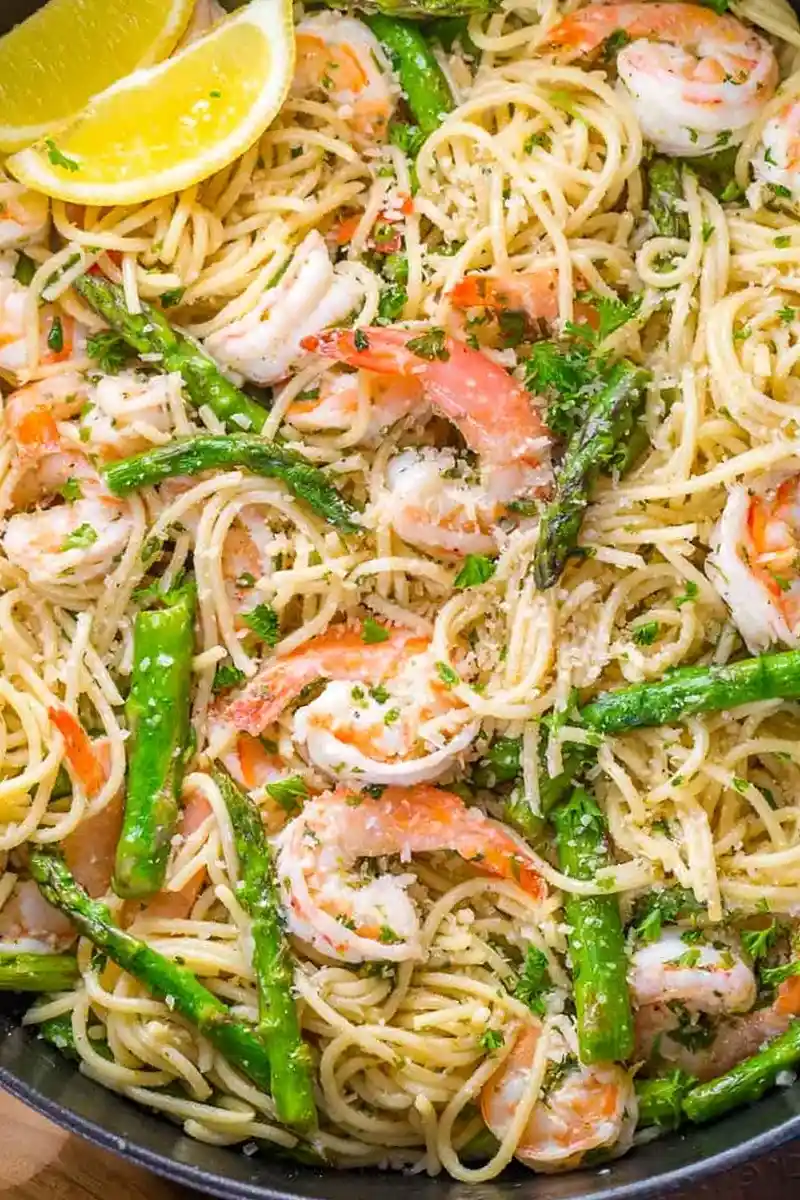
List of ingredients
- 1/2 lb spaghetti
- 1 lb asparagus, trimmed and cut into 2″ pieces
- 3 Tbsp unsalted butter, divided
- 3 Tbsp olive oil, divided
- 4 cloves garlic, minced
- 1/4 tsp red pepper flakes
- 1 lb large shrimp, peeled and deveined
- 1 1/4 tsp fine sea salt, divided
- 1/4 tsp black pepper, ground
- 1 Tbsp grated lemon zest
- 1/4 cup fresh lemon juice
- 1/3 cup fresh parsley, finely chopped
- freshly grated parmesan, to serve
step-by-step instructions
- Step: Bring a large pot of water to a boil, add 1 Tbsp salt and cook pasta according to package instructions until al dente. Reserve 1/2 cup of pasta water, then drain pasta, return to the pot, and cover to keep warm.
- Step: Place a large, deep pan over medium/high heat and add 1 Tbsp olive oil and 1 Tbsp butter. Add asparagus, season lightly with 1/4 tsp salt and 1/8 tsp pepper, and cook uncovered for 5 minutes or until crisp-tender, stirring occasionally. Remove from pan.
- Step: In the same hot skillet, add 2 Tbsp oil and 2 Tbsp butter. Once the butter is melted, add minced garlic and red pepper flakes if using, and sautee, stirring frequently for 1 minute.
- Step: Add shrimp in a single layer and season with 1 tsp salt and 1/4 tsp black pepper. Saute until shrimp are pink and not translucent (about 1 minute per side).
- Step: Turn off the heat and add lemon zest, juice, and parsley, and stir to combine. Add pasta and asparagus, and toss everything to combine. If the sauce seems dry, add some of the hot pasta water. Serve with freshly grated Parmesan cheese.
Refining Your Cooking Process
Managing Heat Levels
Because shrimp cook extremely quickly, it is vital to keep your skillet at a consistent medium-high heat. If the heat is too low, the shrimp will steam rather than sear, resulting in a rubbery texture. Maintaining the right temperature ensures a light char on the outside while keeping the inside tender and juicy.
Selecting the Best Shrimp
For the best results, source high-quality raw, peeled, and deveined shrimp. If you prefer, leaving the tails on can improve the presentation of the dish. Always ensure the shrimp are thoroughly patted dry with paper towels before adding them to the hot oil, as excess moisture prevents proper browning and can cause excessive splattering.
Achieving the Ideal Pasta Texture
Al dente pasta provides the necessary structural backbone to hold up against the creamy, citrusy sauce. Since the noodles will be tossed with the warm shrimp and sauce at the final stage, it is helpful to drain them just a few seconds before the package instructions dictate to prevent them from becoming too soft during the final assembly.
Practical Ingredient Adjustments
Alternative Vegetable Additions
While asparagus provides a wonderful crunch, you can easily substitute it with snap peas or baby spinach if you have those on hand. Snap peas should be sautéed similarly to the asparagus, while baby spinach should be wilted into the pan at the very end when you add the lemon juice and parsley.
Enhancing the Sauce Body
The secret to a restaurant-style finish is the integration of starch from the pasta water. The small amount of reserved water binds the olive oil and butter together, creating a light, emulsified coating that clings to the noodles. Do not skip this step, as it prevents the sauce from separating or pooling at the bottom of the plate.
Balancing the Lemon Brightness
If you find the sauce too acidic for your taste, you can balance the brightness by stirring in an extra tablespoon of butter at the very end of the process. Conversely, if you prefer a sharper profile, add an additional teaspoon of fresh lemon zest before serving to provide an extra burst of floral citrus flavor.
Serving and Storage Suggestions
Pairing for a Complete Meal
This dish works beautifully as a standalone main course due to the presence of both greens and protein. If you wish to expand the meal, consider serving it alongside a crisp salad with a light vinaigrette. Crusty bread is also an excellent addition for mopping up any remaining lemon-garlic butter sauce from the bottom of the bowl.
Handling Leftovers
If you have leftovers, store the pasta in an airtight container in the refrigerator for up to two days. Note that shrimp have a very delicate window of quality, so consuming them promptly is recommended. When storing, keep the parmesan cheese separate to avoid the dish becoming overly thick or gummy when chilled.
Effective Reheating Techniques
When reheating, use a non-stick skillet over low heat rather than a microwave. Adding a tiny splash of water or broth to the pan while heating will help re-emulsify the sauce and restore the moisture to the pasta. Heat gently, stirring constantly, until the shrimp are just warmed through, taking care not to cook them further.
Frequently Asked Questions
Can I prepare this dish ahead of time?
It is best to assemble this dish fresh. You can prepare the pasta and trim the asparagus in advance, but the actual cooking of the shrimp and the final tossing of the sauce should happen right before serving to maintain the best flavor and texture.
Why did my sauce turn out watery?
If the sauce seems watery, ensure your pasta was drained well before adding it to the pan. Additionally, be cautious with the amount of reserved pasta water you add; start with a tablespoon or two and only add more if the noodles appear dry and need extra lubrication.
How do I know when the shrimp are perfectly cooked?
Shrimp are finished the moment they turn an opaque, pink color and form a loose ‘C’ shape. If they curl into a tight ‘O’ shape, they have likely been overcooked. Watch the color change closely to ensure they remain tender and succulent.
Is it necessary to use fresh herbs?
Fresh parsley provides a clean, herbaceous finish that dried herbs cannot replicate in this specific recipe. Since this is a light sauce that relies on fresh components like lemon and garlic, fresh parsley is highly recommended to maintain the vibrancy of the final dish.
Can I use frozen asparagus for this recipe?
Using fresh asparagus is preferred for its texture and appearance. If you must use frozen asparagus, ensure it is completely thawed and dried thoroughly before cooking. Frozen varieties often contain excess moisture, which can thin out your scampi sauce if not managed carefully.
‘ Print
Shrimp Scampi with Pasta
- Total Time: PT30M
- Yield: 4 servings 1x
- Diet: Pescatarian
Description
Shrimp Scampi with Pasta and Asparagus has a lemon garlic and herb sauce that packs so much fresh and amazing flavor. A 30 minute shrimp scampi pasta recipe!
Ingredients
- 1/2 lb spaghetti
- 1 lb asparagus, trimmed and cut into 2” pieces
- 3 Tbsp unsalted butter, divided
- 3 Tbsp olive oil, divided
- 4 cloves garlic, minced
- 1/4 tsp red pepper flakes
- 1 lb large shrimp, peeled and deveined
- 1 1/4 tsp fine sea salt, divided
- 1/4 tsp black pepper, ground
- 1 Tbsp grated lemon zest
- 1/4 cup fresh lemon juice
- 1/3 cup fresh parsley, finely chopped
- freshly grated parmesan, to serve
Instructions
- Step: Bring a large pot of water to a boil, add 1 Tbsp salt and cook pasta according to package instructions until al dente. Reserve 1/2 cup of pasta water, then drain pasta, return to the pot, and cover to keep warm.
- Step: Place a large, deep pan over medium/high heat and add 1 Tbsp olive oil and 1 Tbsp butter. Add asparagus, season lightly with 1/4 tsp salt and 1/8 tsp pepper, and cook uncovered for 5 minutes or until crisp-tender, stirring occasionally. Remove from pan.
- Step: In the same hot skillet, add 2 Tbsp oil and 2 Tbsp butter. Once the butter is melted, add minced garlic and red pepper flakes if using, and sautee, stirring frequently for 1 minute.
- Step: Add shrimp in a single layer and season with 1 tsp salt and 1/4 tsp black pepper. Saute until shrimp are pink and not translucent (about 1 minute per side).
- Step: Turn off the heat and add lemon zest, juice, and parsley, and stir to combine. Add pasta and asparagus, and toss everything to combine. If the sauce seems dry, add some of the hot pasta water. Serve with freshly grated Parmesan cheese.
Notes
Ensure shrimp are patted dry before cooking if using previously frozen shrimp to avoid excess water in the sauce.
- Prep Time: PT10M
- Cook Time: PT20M
- Category: Main Course
- Method: Stovetop
- Cuisine: Italian
Nutrition
- Serving Size: 1 serving
- Calories: 493 kcal
- Sugar: 4 g
- Sodium: 1381 mg
- Fat: 21 g
- Saturated Fat: 7 g
- Unsaturated Fat: 12 g
- Trans Fat: 0.4 g
- Carbohydrates: 51 g
- Fiber: 5 g
- Protein: 26 g
- Cholesterol: 165 mg